New Orleans Grease Trap works out of New Orleans and drives grease trap cleaning to kitchens in fifteen towns across Jefferson, St. Bernard, St. Charles, Plaquemines and St. Tammany parishes. If your restaurant, diner, hotel kitchen or plant cafeteria sits in one of the towns below, we do your job, and the town's own entry tells you which service fits the kitchens there best.
Every trap and interceptor in the city is permitted through the Sewerage & Water Board's FOG Program, and the same habits keep a kitchen out of trouble in any town: pump at least every 90 days, and within two working days once the contents reach 25 percent of design capacity. We run to those rules wherever the truck goes. Call (504) 360-9231 and tell us the town and the size of your trap, and we will tell you when we can be there.
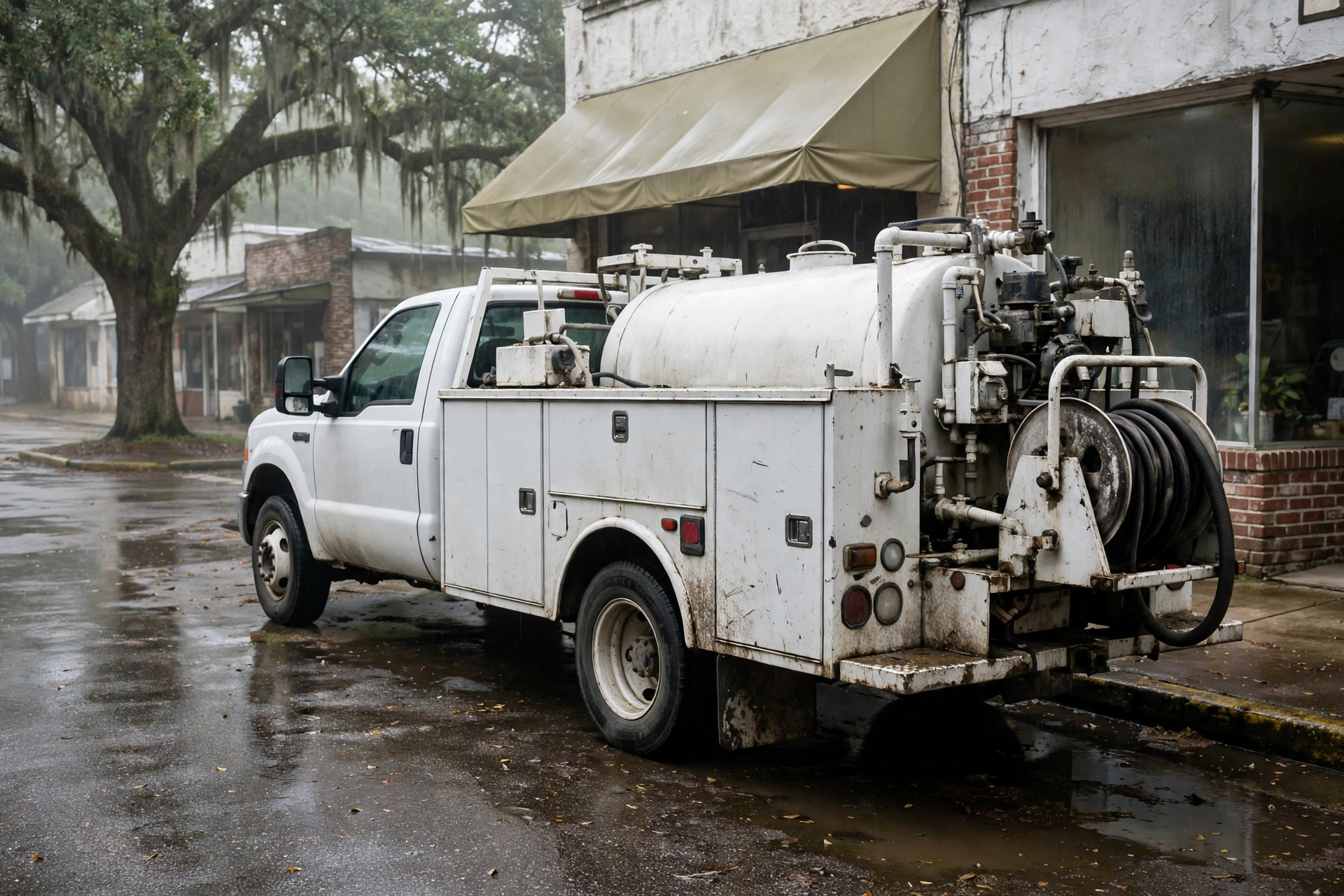
Featured locations
The service named is the one that best fits the kitchens we find there, and it is not the only service we offer in that town.
Gretna: interior trap cleaning. Old Gretna's Huey P. Long Avenue is a concentrated row of independent restaurants with its own business association, and most of those kitchens run small indoor traps that need steady cleaning.
Westwego: trap cleaning with used-oil collection. This is a seafood-led working river town, and the seafood houses and market-restaurants along Sala Avenue fry a lot of product and have oil to move as well as traps to clean.
Harahan: interior trap cleaning. Jefferson Highway carries a run of small independents, Vietnamese, Italian, Honduran and Chinese among them. Elmwood, the retail district inside Harahan's ground, is served as part of Harahan.
Chalmette: interceptor pumping with trap cleaning. As the parish seat and main commercial strip, with the seafood houses on Judge Perez Drive, Chalmette has kitchens large enough to carry exterior interceptors alongside indoor traps.
Slidell: interceptor pumping with trap cleaning. Slidell is a full small city, with a mix of chains and independents along Gause Boulevard and Fremaux Avenue, so exterior interceptors are common.
Call us for the nearest day we run your side
[INVITATION BAND, mid-page]
If your town is on the list, call (504) 360-9231, Monday to Friday, 9:00 AM to 5:30 PM. Give us your trap size if you know it and the last time it was pumped. If you do not know either, we will measure on the first visit.
How our routes run
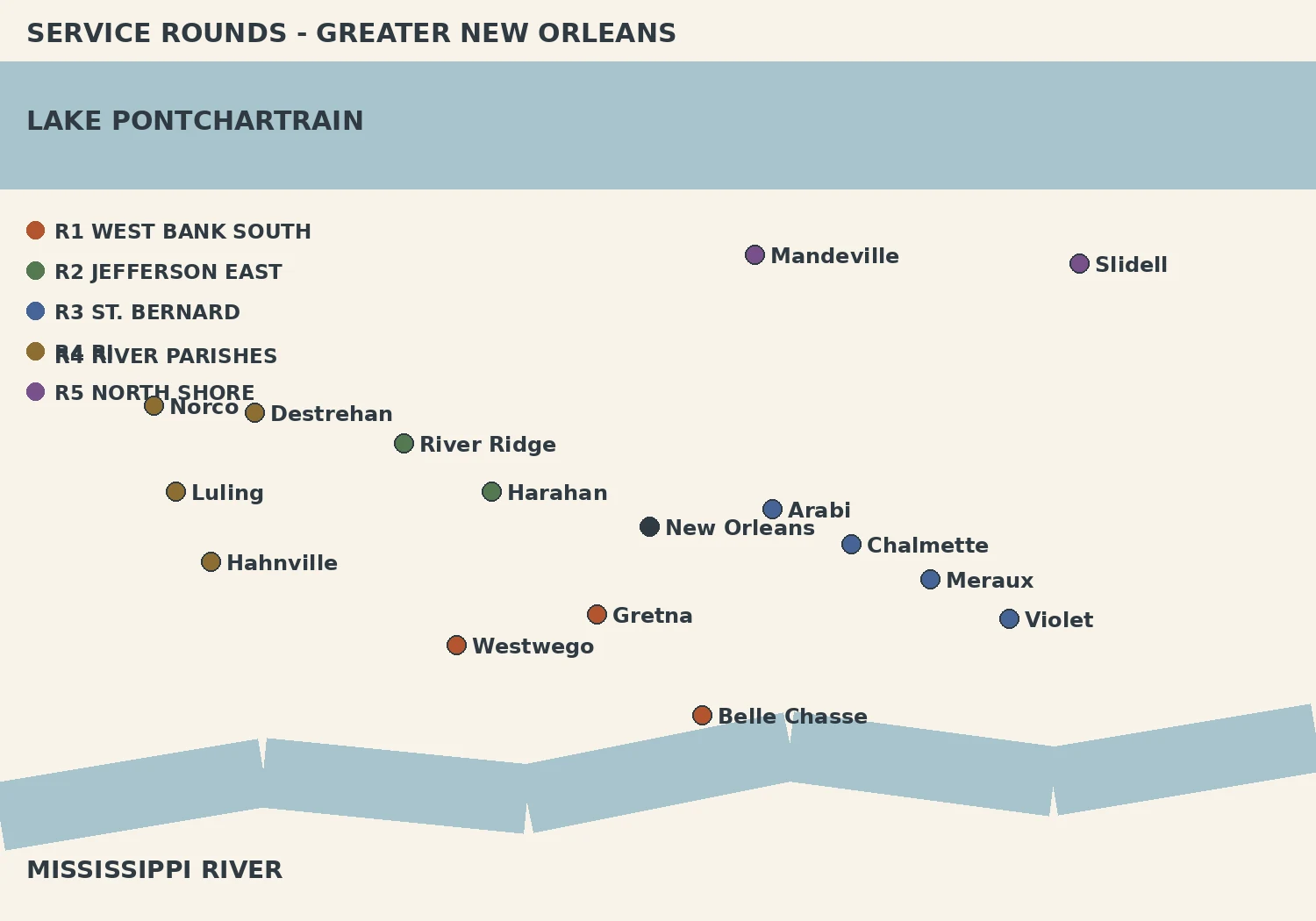
We group scheduled rounds by side of the river so the truck is not crossing back and forth in a day. West bank towns, Gretna, Westwego and Belle Chasse, run together. Harahan and River Ridge run along Jefferson Highway. Arabi, Meraux, Chalmette and Violet run downriver together, and the river parishes upriver, Destrehan, Luling, Norco and Hahnville, run as their own round.
Slidell and Mandeville are across Lake Pontchartrain, so they have their own north shore days. That keeps the lake crossing to a single trip for several kitchens, rather than one trip per call. A kitchen in either town does best on a standing schedule, because we are not nearby on a day's notice.
What service costs, wherever you are
Our prices are set by the size and type of trap or interceptor, and they are the same figures in every town we serve.
- Indoor trap up to 200 gallons: $125 to $180 on a scheduled visit.
- Indoor trap 201 to 500 gallons: $175 to $475.
- Interceptor 1,000 to 1,500 gallons: $225 to $450.
- Interceptor 1,501 to 2,000 gallons: $600 to $1,200.
- Interceptor 2,001 to 3,000 gallons: $800 to $2,500.
- Emergency call-out, indoor trap: $190 to $240.
- Emergency call-out, interceptor 1,000 to 1,500 gallons: $400 to $900.
- Line jetting: $100 when done with a service visit. Heavy jetting runs $300 to $600.
- Used cooking oil collection: no charge for clean oil, in containers from 30 to 320 gallons.
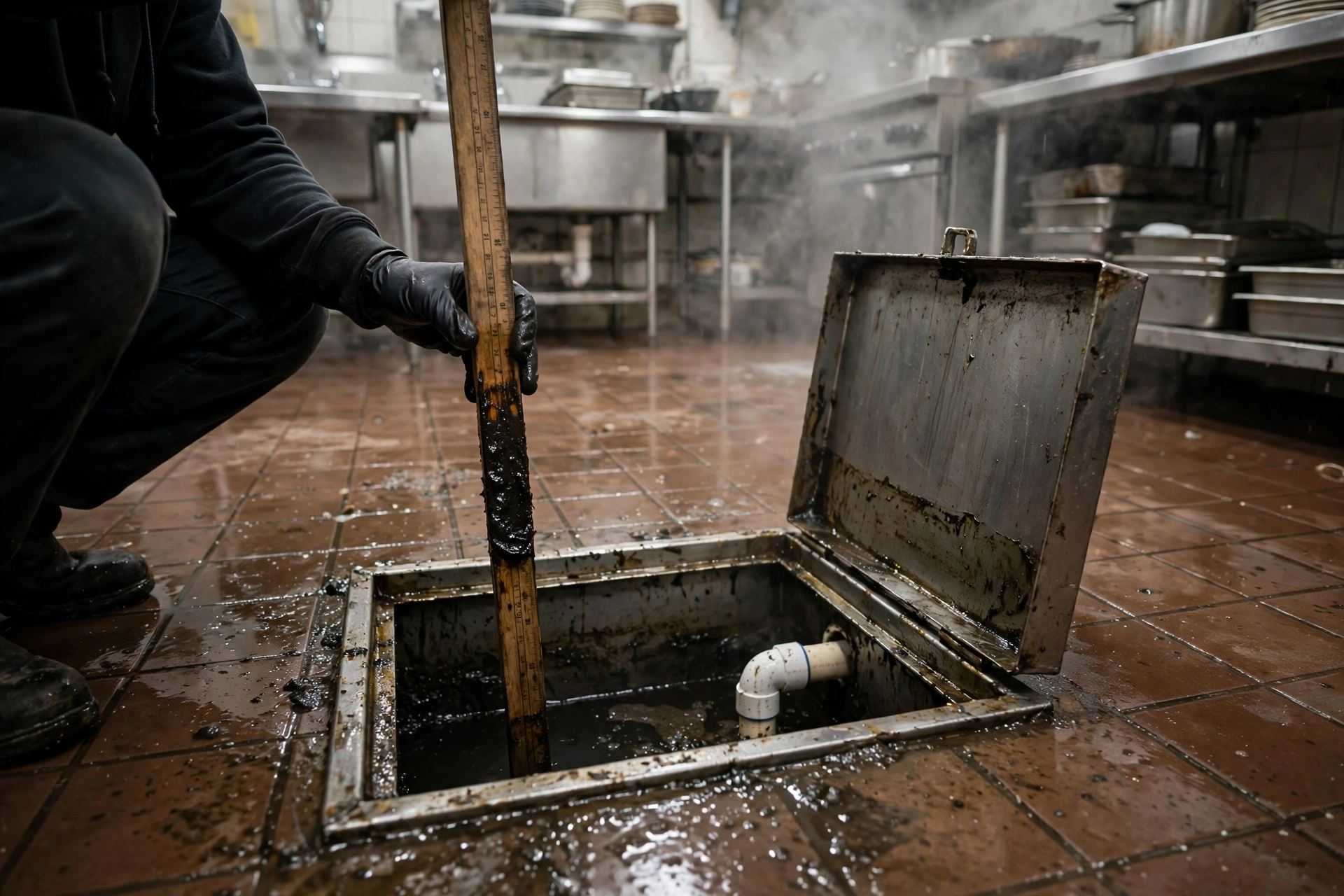
Where in that range your kitchen lands depends on how full the trap is, how easy the lid and line are to reach, and how much solid there is to haul.
What your kitchen gets, in any town
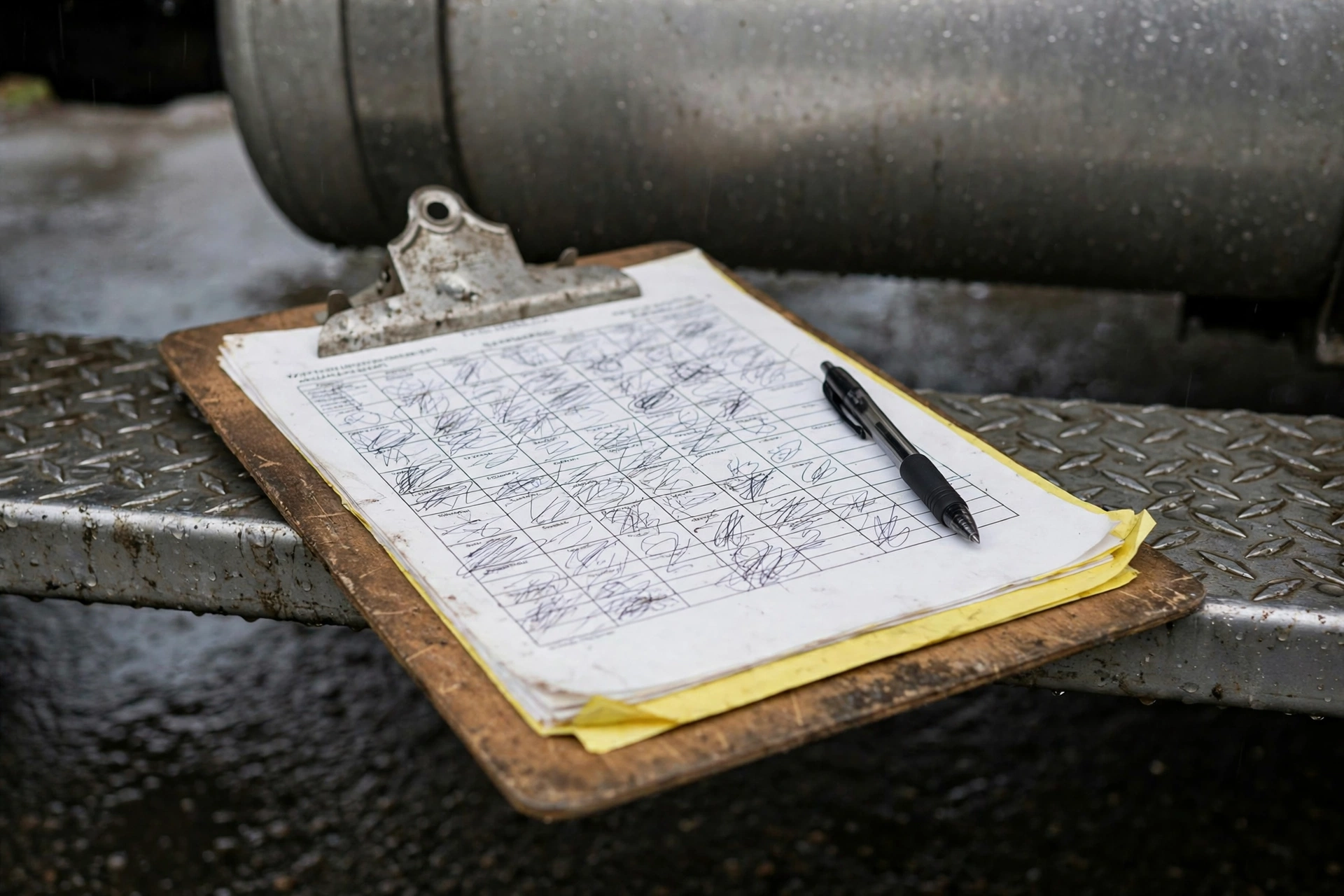
Each visit ends with a service record and a state manifest for the grease we haul. Louisiana DEQ requires grease trap waste to move on manifest forms carrying the hauler's name, address, phone, vehicle number and LDEQ hauler registration number, with the date and volume. The city requires you to keep manifests and service records on site for three years, and the inspector from the SWBNO FOG Program asks to see them. If an inspector finds a defect, you have 90 days to correct it, and we help you do that.
Small indoor traps in most local restaurants are cleaned every one to four weeks. Passive traps run roughly 40 to 200 gallons, and interceptors are the large exterior tanks. That interval is why we run scheduled rounds in preference to waiting for a backup.
Start a service in your town
[INVITATION BAND, final, with form]
Tell us who you are and where you cook, and we will call you back with a day. The more details you give, the better we are able to help you.
Submit to New Orleans Grease Trap, or call (504) 360-9231, Monday to Friday, 9:00 AM to 5:30 PM.
Questions
Which towns do you serve?
We serve Gretna, Westwego, Harahan, Arabi, Chalmette, Meraux, Violet, Belle Chasse, Destrehan, Luling, Norco, Hahnville, River Ridge, Slidell and Mandeville, along with New Orleans itself.
Do you serve Metairie or Kenner?
No. Neither is on our service list at present, and we would rather say so plainly than take a call we cannot keep to a schedule. If your kitchen is in Harahan, which includes the Elmwood district, or in River Ridge, we do serve you.
Do you serve Covington?
No. Covington sits past the drive time we keep. Mandeville is the farthest north shore town we reach, and that is a long run for us.
How do I know which service fits my kitchen?
The service named for your town is what fits most kitchens there. Small indoor traps are the common case in most of the towns on our list, while Chalmette, Belle Chasse and Slidell have more kitchens with exterior interceptors. We confirm size and type on the first call or the first visit.
How often will you come to my kitchen?
That depends on the trap. Most local restaurants clean small traps every one to four weeks. The city requires every trap and interceptor to be pumped at least every 90 days, and within two working days once the contents reach 25 percent of design capacity. The 25 percent depth is what governs when your trap is due.
What does service cost in a farther town?
Our price is set by trap or interceptor size and type. An indoor trap up to 200 gallons runs $125 to $180 on a scheduled visit, a 201 to 500 gallon trap runs $175 to $475, and interceptors run $225 to $450 at 1,000 to 1,500 gallons, $600 to $1,200 at 1,501 to 2,000 gallons, and $800 to $2,500 at 2,001 to 3,000 gallons. Those are the figures we work from in every town.
Do you offer emergency service, and what does it cost?
Yes. An emergency indoor trap call-out runs $190 to $240, and an emergency interceptor call-out at 1,000 to 1,500 gallons runs $400 to $900. We set our emergency terms for larger interceptors and for traps of 201 to 500 gallons on the phone, once we know the job.
Will I get paperwork I can show an inspector?
Yes. Every visit gives you a service record, and grease hauled leaves on an LDEQ manifest with our hauler details, the date and the volume. Keep both on site for three years, as the city requires.
Can I get on a standing schedule instead of calling each time?
Yes, and in the thinner towns we recommend it. A set schedule keeps the trap under the 25 percent line and puts our truck on your side of the river on a known day.
Do you collect used cooking oil?
Yes. We collect clean used cooking oil at no charge, in containers from 30 to 320 gallons. This is a natural pairing in Westwego and the other seafood and fry-heavy kitchens.
Can you jet my drain line when you come?
Yes. Line jetting is $100 when done with a service visit. Heavy jetting is $300 to $600.
When can I reach you?
Monday to Friday, 9:00 AM to 5:30 PM, at (504) 360-9231.