New Orleans Grease Trap runs grease trap maintenance on a set schedule for restaurants and commercial kitchens in New Orleans, so your trap is pumped before the city's limits come into play and nobody in your kitchen has to watch a calendar. If you want your traps serviced on a regular route with the paperwork handled, this is the job we do.
Under a program, scheduled grease trap service means the same crew comes back at the interval your kitchen needs, anywhere from weekly to quarterly. Each visit covers grease trap cleaning on the indoor unit, grease interceptor pumping if you have a large outdoor tank, and the record that goes with the work.
You get FOG compliance documentation in your hands at the end of every visit: a service record and manifest copies to keep on site, with used cooking oil collection and line jetting riding the same route, so one stop handles all three. To set up a program, call (504) 360-9231, Monday to Friday, 9:00 AM to 5:30 PM, or send the form at the bottom of this page.
How we set your interval
Two things set the schedule: how hard your kitchen works the trap, and how big the trap is. A fryer-heavy po'boy shop with a small trap behind the dish station fills it far faster than a hotel kitchen with a big outdoor tank. So we start with your trap size, your menu and how many covers you do on a busy week.
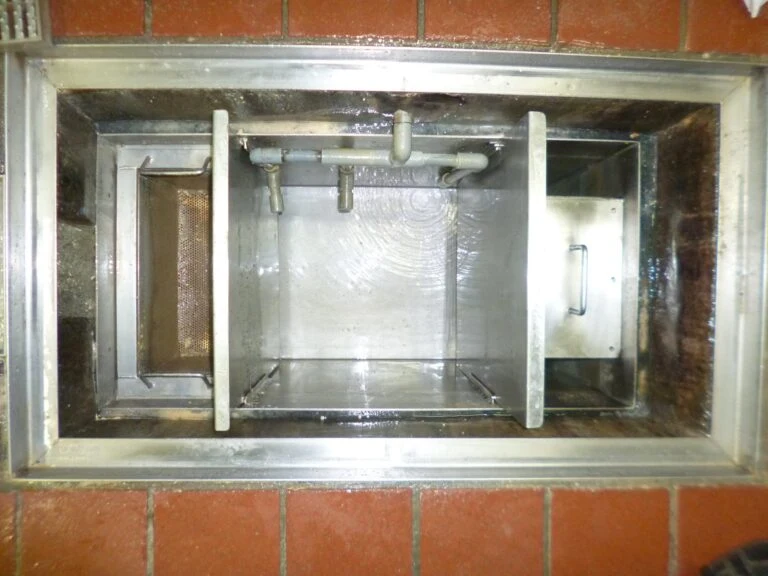
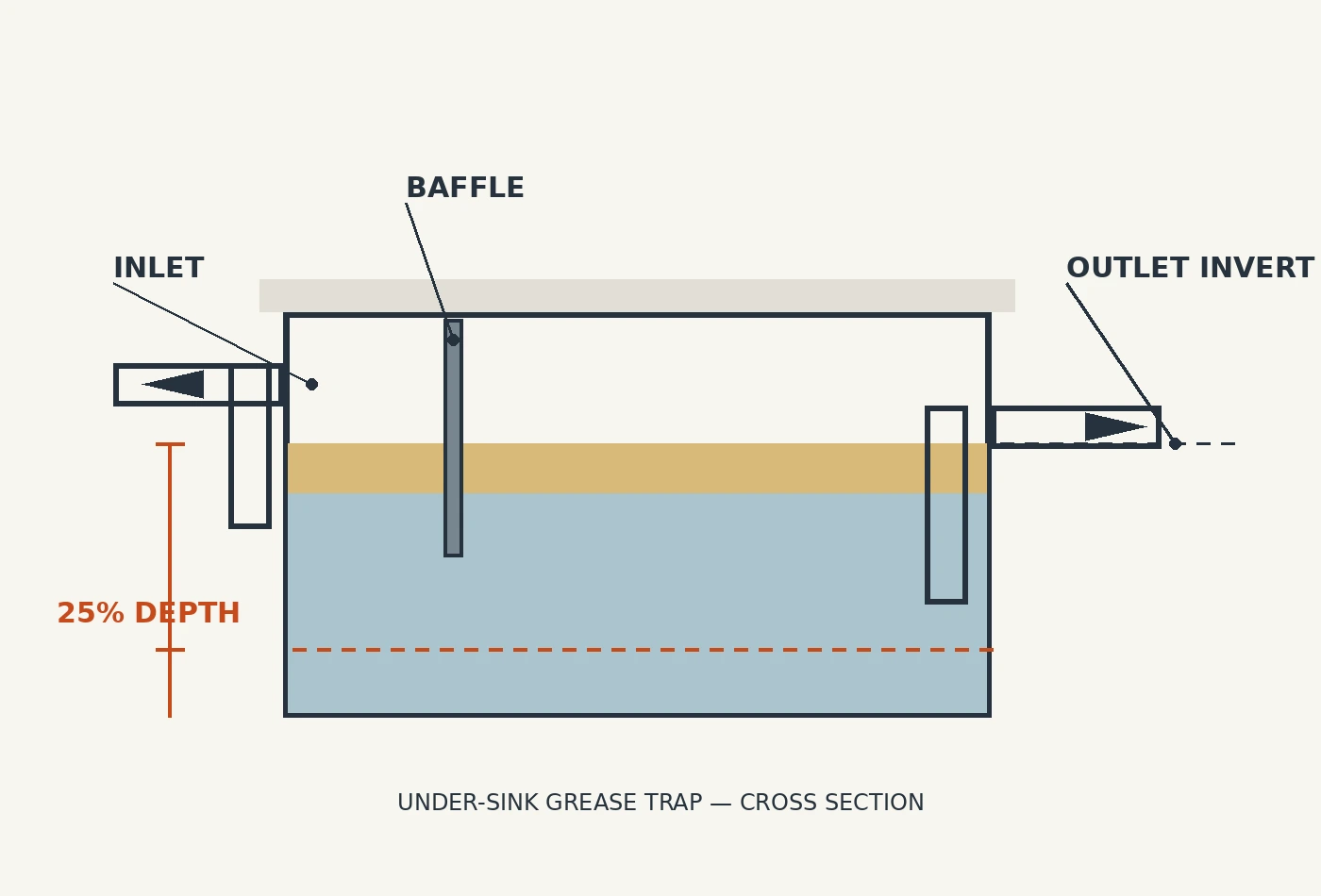
Most local restaurants with small traps are cleaned every one to four weeks. Interceptors, the large exterior tanks, run on a longer cycle, but never longer than the city allows. The Sewerage & Water Board's FOG rules, set out in Plumbing Code Section 16.5, call for a pump-out at least once per 90 days, and within two working days whenever 25 percent or more of the design capacity, measured from the bottom of the device to the outlet invert, holds floating material, sediment, fats, oils or grease.
The 25 percent measure is what actually decides when a trap is due. A 90-day calendar only protects you if the trap stays under a quarter full the whole time, and in a busy kitchen it often does not. So we set the interval short enough that the trap is still under 25 percent when we arrive. If a few visits show the trap running near the line, we shorten the interval. If it is sitting well below, we say so and stretch it.
Trap sizes we service on a program:
- Passive indoor traps, roughly 40 to 200 gallons, usually under the dish sink or beside the prep line
- Larger indoor traps from 201 to 500 gallons
- Exterior interceptors from 1,000 up to 3,000 gallons, in steel, concrete or fibreglass, reached through a manhole or lid at grade
Access matters to the schedule too. A lid under a walk-in shelf or beneath a parked delivery van slows the visit, so we note where the lid is and what has to be moved, and we work that into the route.
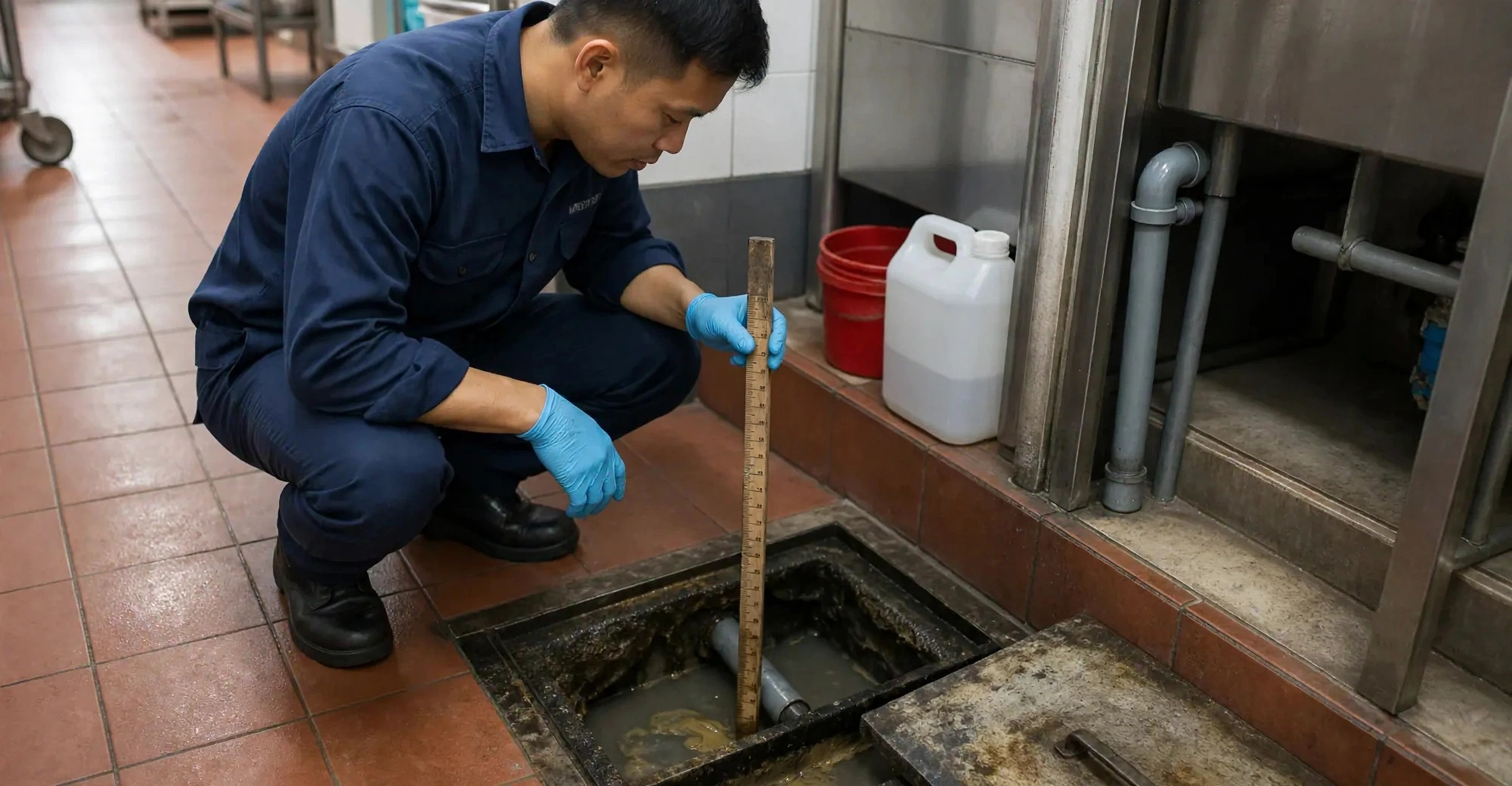
What a program visit looks like
Every visit follows the same order, so the record you keep is the same each time and an inspector reading it sees the same things.
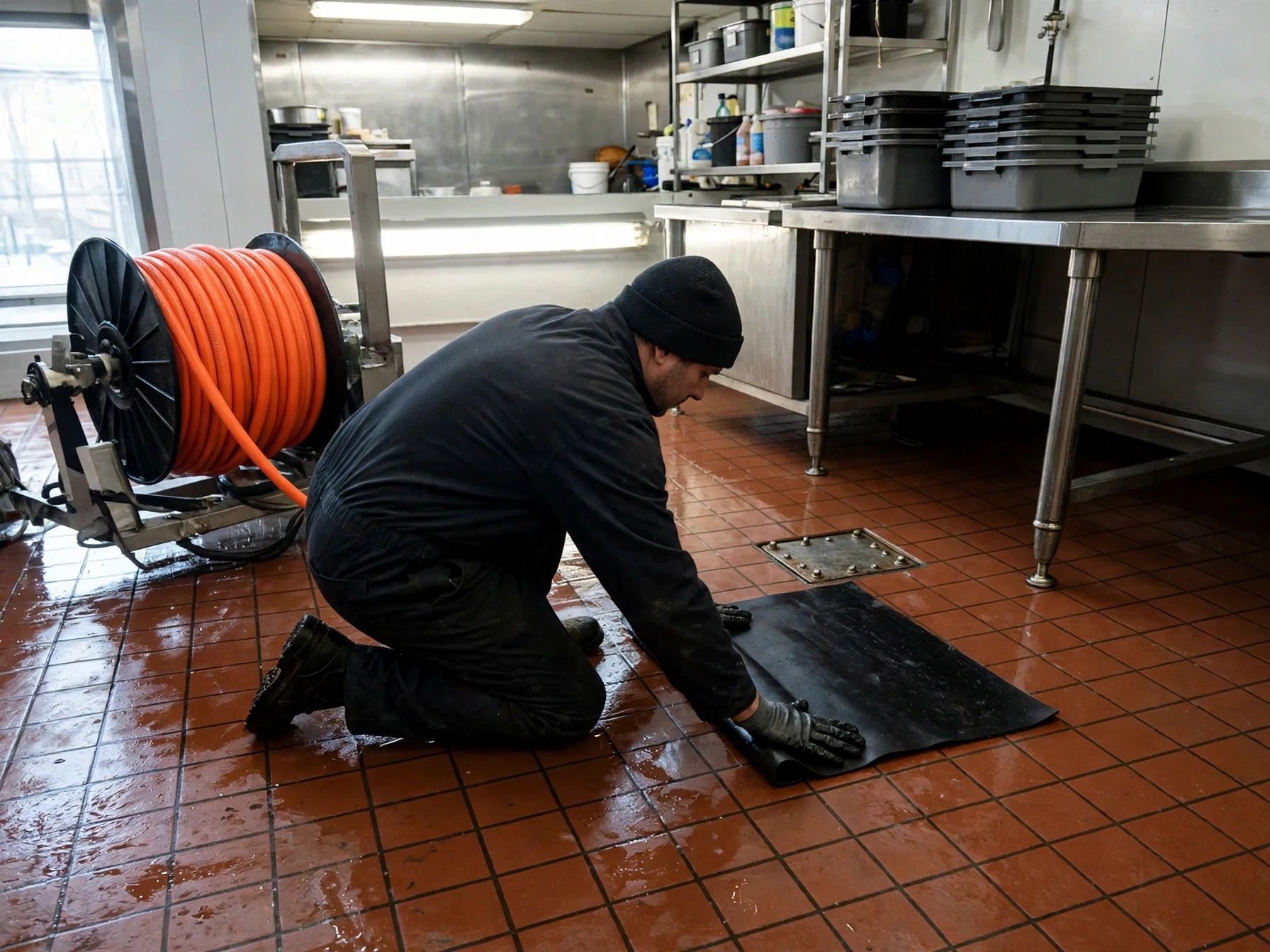
1. We arrive on the route day and clear access
Your crew knows the visit window. We confirm where the lid is, move what is in the way and lay down floor protection before anything is opened.
2. We measure before we pump
We lift the lid and measure the grease and solids depth against the outlet invert. That reading goes on the record. It is the figure that shows whether your interval is right.
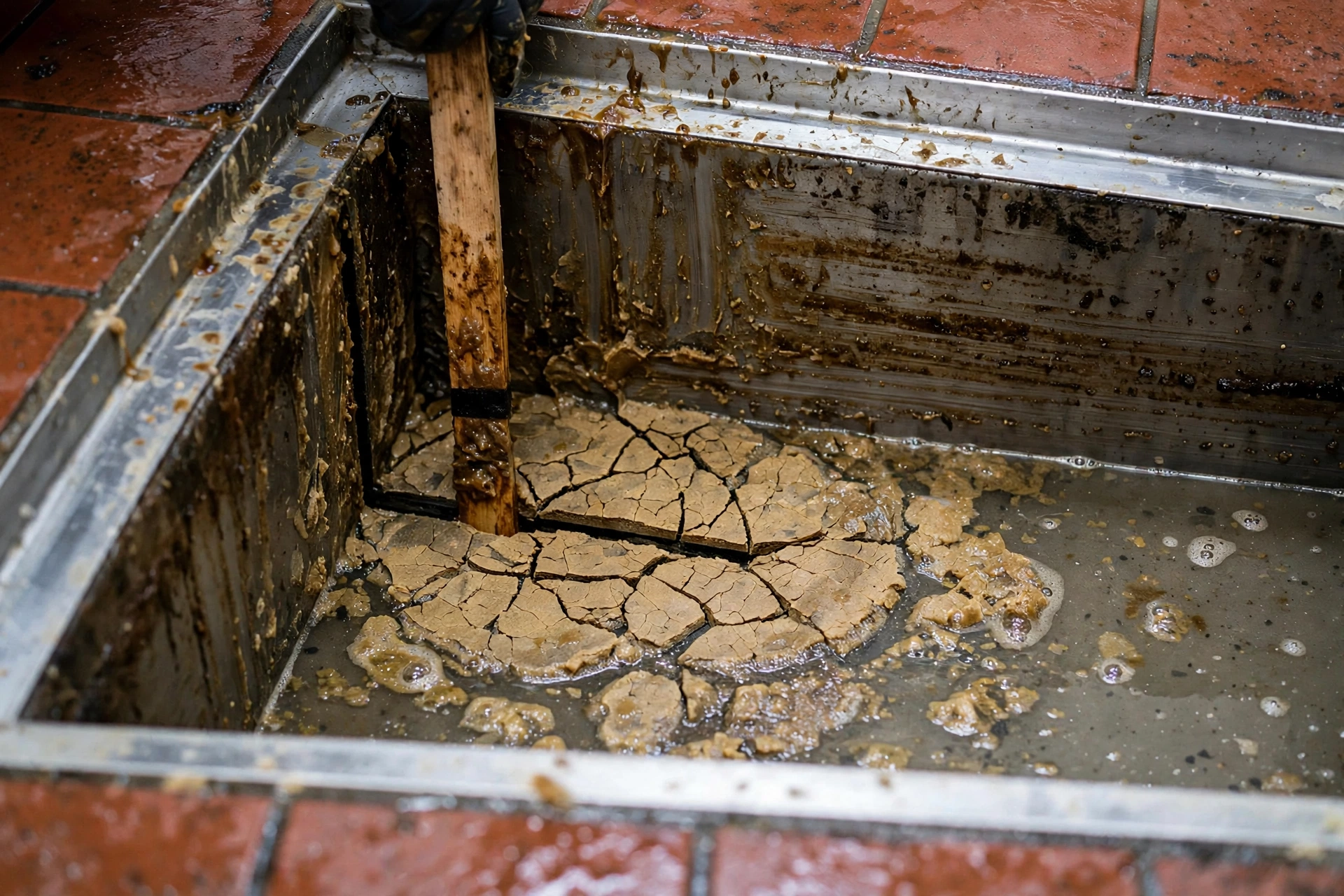
3. We pump out and scrape clean
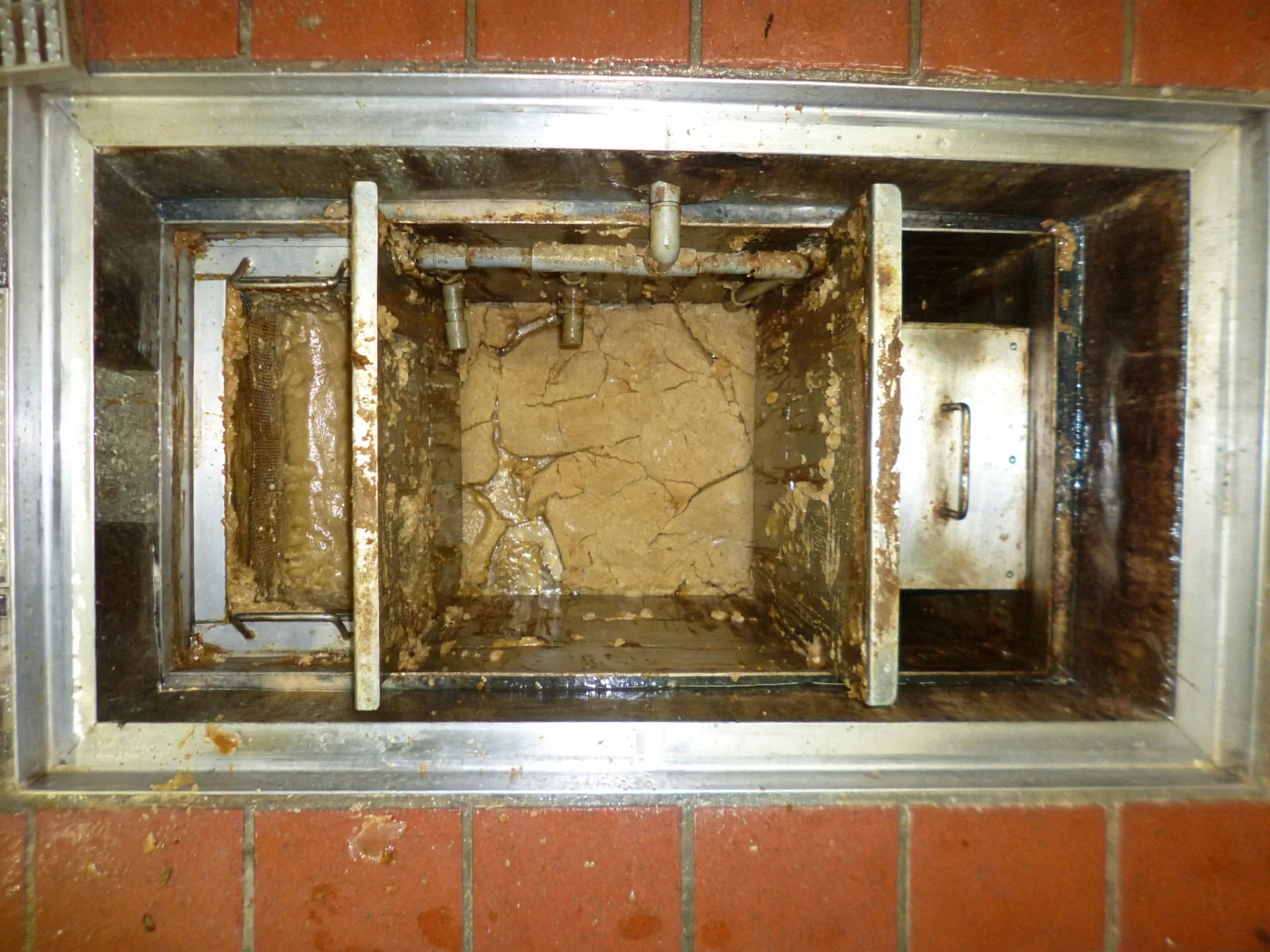
We remove the full contents, not only the floating grease. That means the grease cap, the water and the settled solids. Then we scrape the walls and baffles so nothing hardened is left behind.
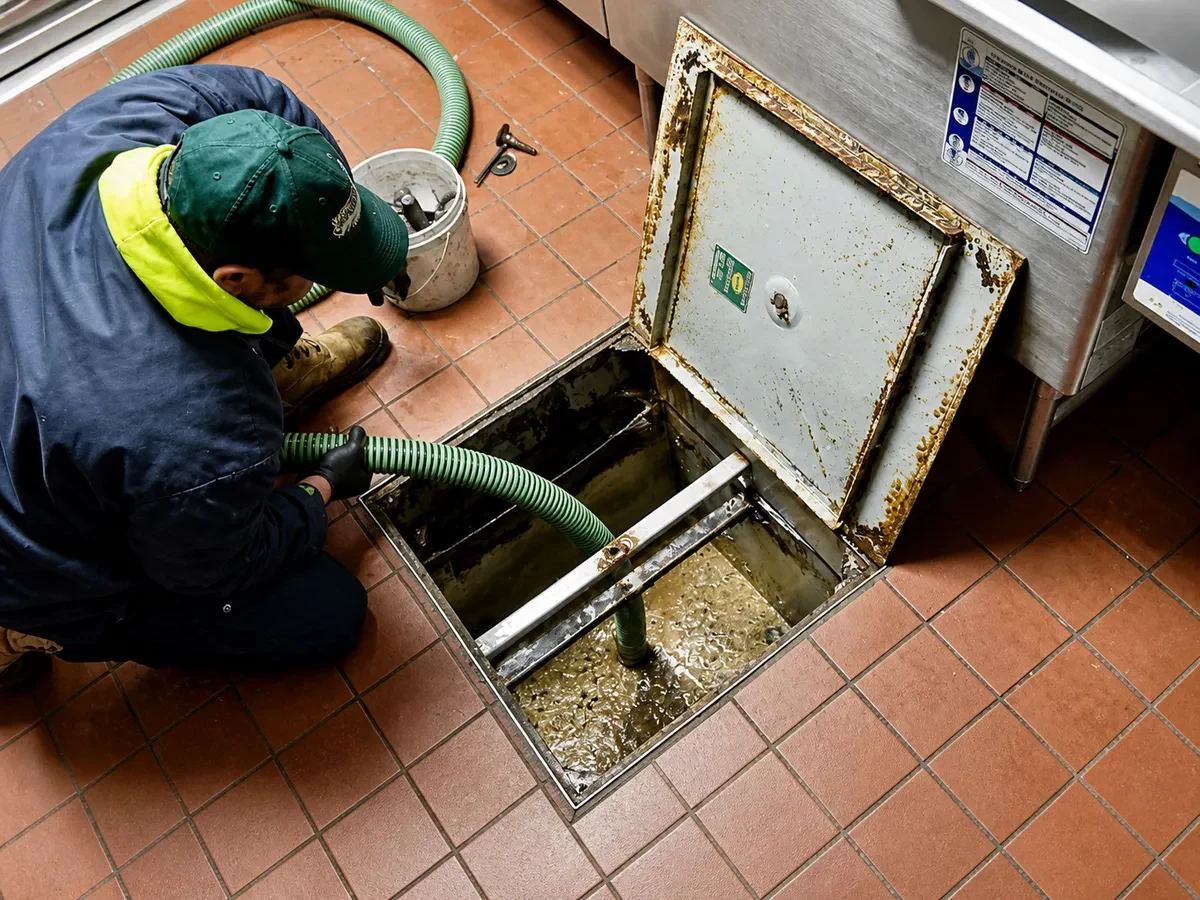
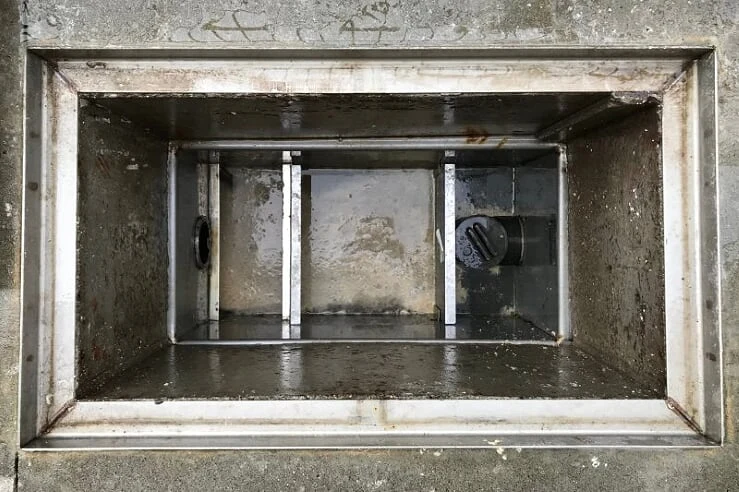
4. We inspect the trap and fittings
With the trap empty we look at the baffles, the inlet and outlet pipes, the lid seal and the gasket. This is the same inspection an inspector does, and the city expects defects found at inspection to be corrected within 90 days. Anything we find goes on your record that day, so you are not surprised later.
5. We jet the lines when the schedule calls for it
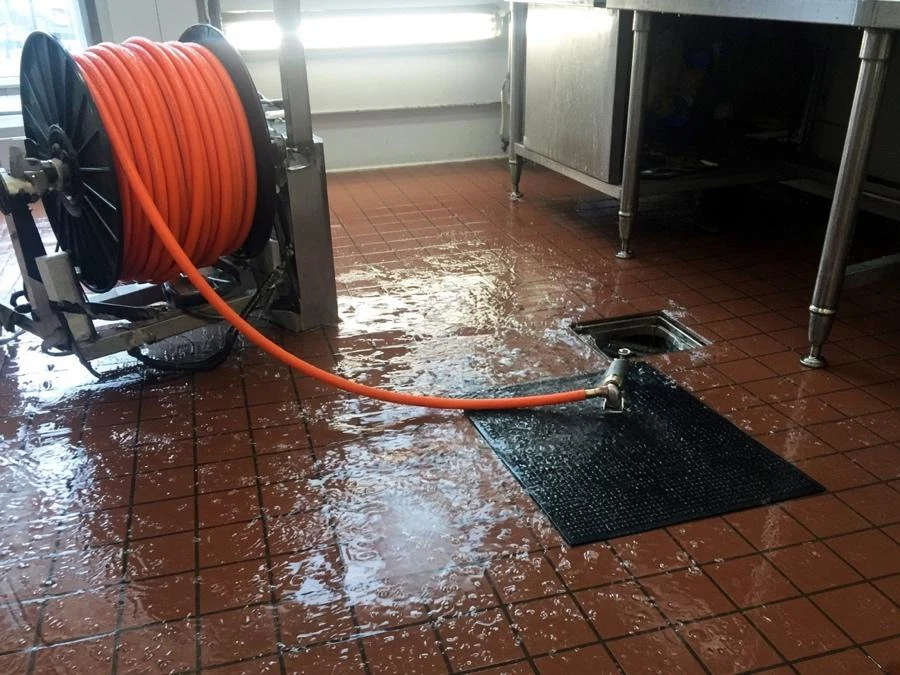
If a line has been slow or the visit is the one set for it, we run the jetter through the trap's drain lines while we are already on site. Line jetting is priced below.
6. We refill, close up and write the record
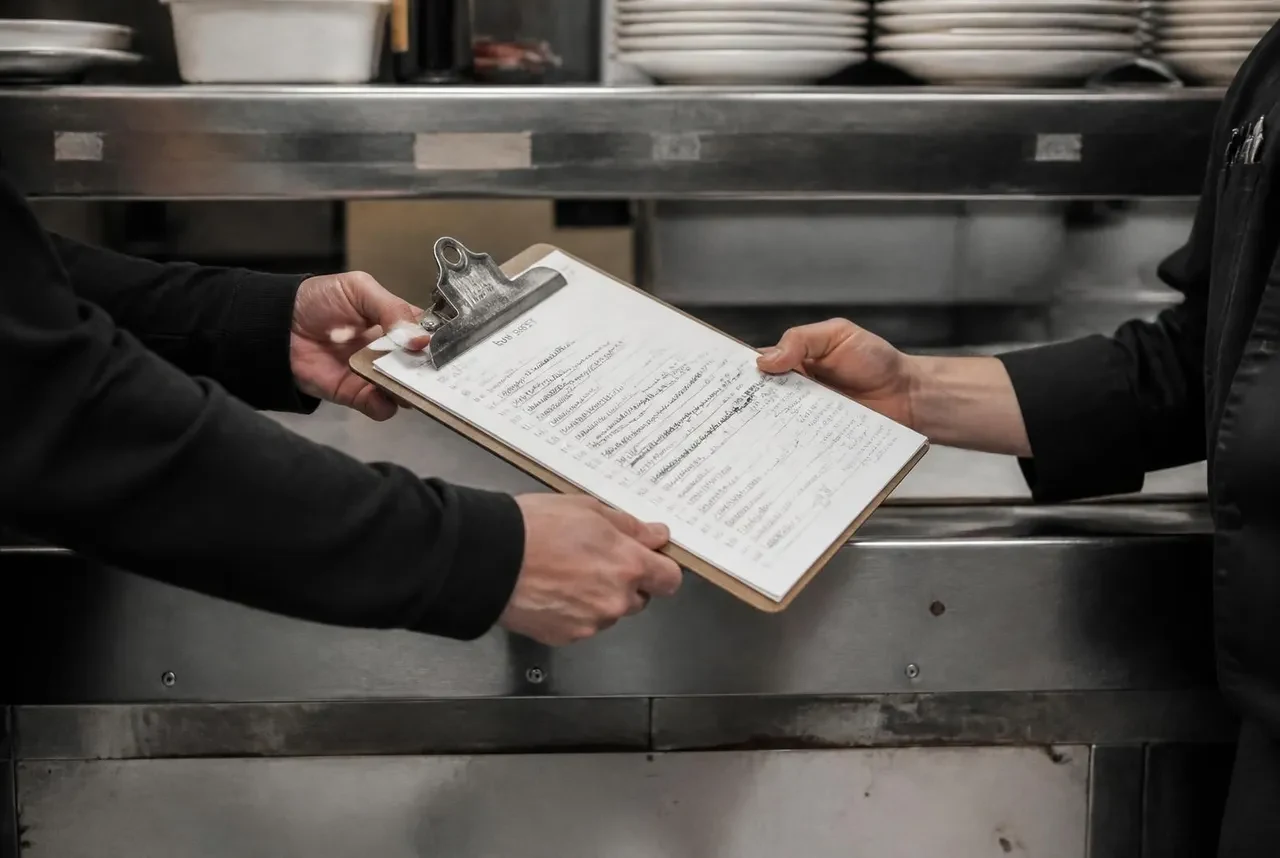
The trap is refilled with clean water, the lid is reseated and the area is wiped down. We then fill in the service record and the manifest, and a copy of each stays with you.
A small-trap visit generally runs from 20 minutes up to an hour, depending on size and how full the trap is. Interceptors take longer and come with a truck.
The record each visit leaves, and why it matters
The record is half the product. Louisiana DEQ requires that grease trap waste travel on a manifest. LDEQ's manifest form carries the hauler's name, address and phone number, the hauler's vehicle licence number, the LDEQ hauler registration number, and the gallons pumped. Your copy shows the date and volume taken from your trap.
The state sets no pumping interval of its own, so enforcement here is local. The SWBNO FOG Program requires manifests to be kept on site for at least three years. That is why every visit under a program ends with copies in your hands. When an inspector asks for the last three years of service, the binder is in your kitchen, in date order, and you do not have to phone anyone.
Every trap and interceptor is also permitted through the SWBNO FOG Program, and the record we leave carries the details that program asks for. What an inspector typically looks at:
- That the trap is under 25 percent full right now
- That service dates fall inside the 90-day limit
- That manifests match the dates and volumes
- That lids, baffles and fittings are intact
- That any defect noted earlier was corrected within the 90 days
Used cooking oil and jetting on the same route
Fryer oil is a separate waste from trap contents, and it should never go down a drain or sit in an open bucket. On a program, we place a container in your yard or back hall and swap it on the same route day. Containers run from 30 to 320 gallons, sized to how much oil your fryers turn over. There is no charge for collecting clean oil.
Jetting works the same way. If a line has a history of slowing, we put jetting on the schedule so it is done with a service visit at $100 instead of as a backup call later. Heavy jetting for lines with a long history of buildup runs $300 to $600.
What a program costs
These are our prices per scheduled visit. Each visit includes a service record, and the manifest copy for any pump-out.
| Trap or interceptor | Our price per scheduled visit |
|---|---|
| Indoor trap, up to 200 gallons | $125 to $180 |
| Indoor trap, 201 to 500 gallons | $175 to $475 |
| Interceptor, 1,000 to 1,500 gallons | $225 to $450 |
| Interceptor, 1,501 to 2,000 gallons | $600 to $1,200 |
| Interceptor, 2,001 to 3,000 gallons | $800 to $2,500 |
Where we land within a band depends on how much is in the trap, how far the hose has to run from the truck and how easy the lid is to reach. Add-ons:
- Line jetting with a service visit: $100
- Heavy jetting: $300 to $600
- Used cooking oil collection: no charge for clean oil, with containers from 30 to 320 gallons
If a trap goes past its due date and needs an emergency call, our emergency price for an indoor trap is $190 to $240, and for an interceptor of 1,000 to 1,500 gallons it is $400 to $900. A program is meant to keep you from ever needing those calls. A visit on schedule costs less than a call after the trap has backed up, and it costs less than the closing hours that come with a backup.
A kitchen on a program
Featured job: a Magazine Street café
A café on Magazine Street serves breakfast and lunch from a small open kitchen. Eggs, griddle work and a lot of dishes meant plenty of grease going into a trap under the back dish sink. The trap was in the 100-gallon range, which falls in our $125 to $180 band. The owner had been calling for a cleaning whenever the sink started to drain slowly. Twice, that meant the trap was well past due when the call came.
Setting the interval
We looked at the trap, the menu and the weekday and weekend volume. We put the café on a visit every two weeks, which sits inside the one-to-four-week range small traps usually run. We took a depth reading at the first visit and at each one after, and the readings stayed under the quarter-full line.
What stays in the binder
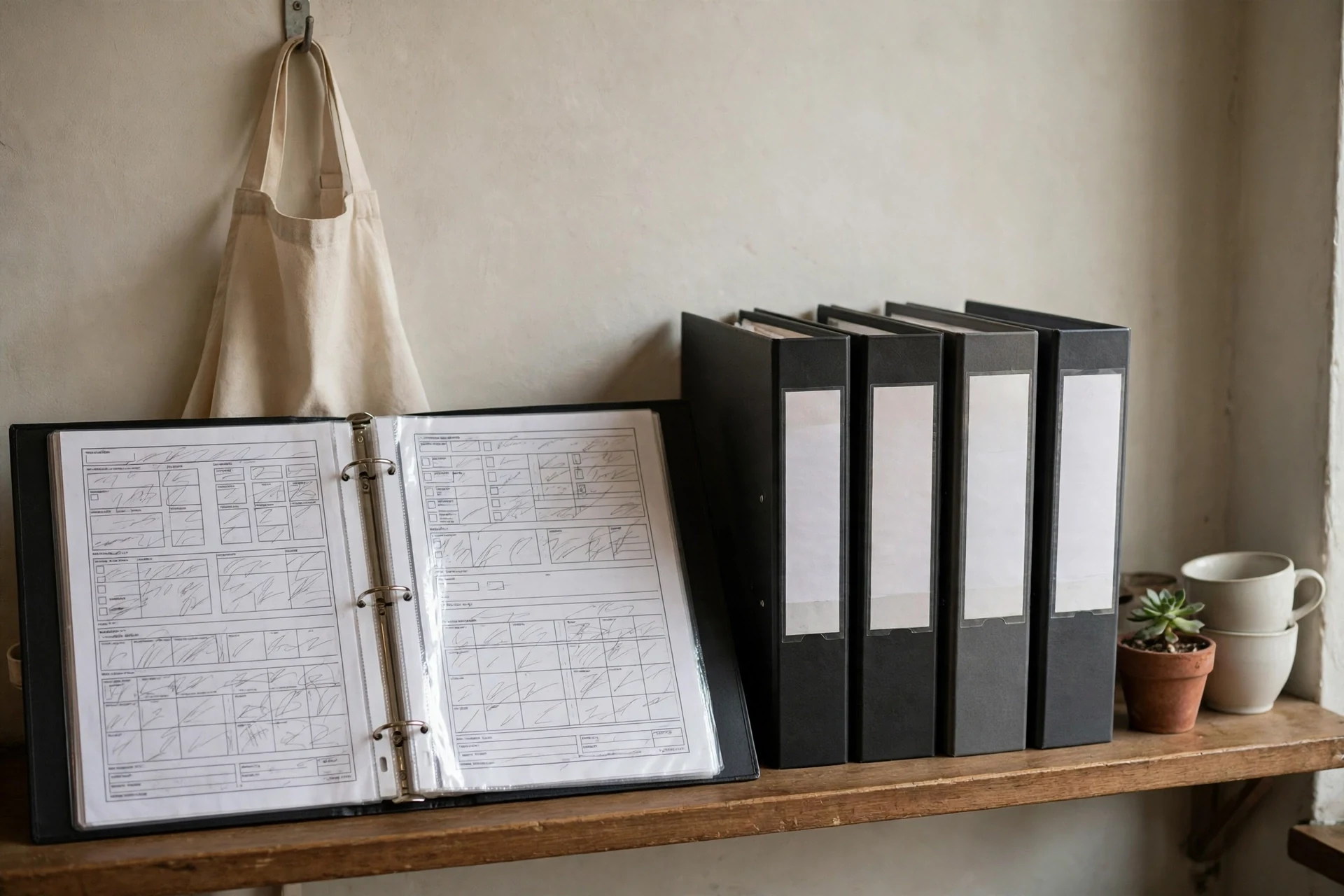
At the end of every visit, the café's manager receives a service record and manifest copy. They go into a binder on the shelf in the office, in date order. When the café has been inspected, the binder has answered the inspector's questions. The café has not missed an inspection since joining the program.
What it costs the café
The café pays our price for a trap in the up-to-200-gallon band on each visit, $125 to $180, and it pays nothing for the used oil that goes out with the same truck. It has not needed an emergency call, which would have been $190 to $240 for an indoor trap.
Call us to set up your schedule
Tell us your trap size, your menu and how busy you are, and we will give you an interval and a per-visit price over the phone. Call (504) 360-9231, Monday to Friday, 9:00 AM to 5:30 PM.
Questions
What is a grease trap maintenance program?
It is scheduled service. We come at a set interval, measure and pump the trap, inspect it, and leave you a service record and manifest copy each time. You do not have to call each time the trap fills.
How often will my trap be serviced?
That depends on trap size and kitchen volume. Most local restaurants with small traps are serviced every one to four weeks. Interceptors are serviced less often but never less than every 90 days. We set the interval after we see your trap and measure how fast it fills.
What does New Orleans require?
Every trap and interceptor is permitted through the SWBNO FOG Program. The trap has to be pumped at least every 90 days, and within two working days whenever it reaches 25 percent of design capacity. Defects found at inspection are corrected within 90 days. Manifests and service records stay on site for three years.
How do you know when a trap is 25 percent full?
We measure. The depth of grease and solids is taken from the bottom to the outlet invert, and we compare it to the full design depth. That reading is logged each visit, so you can see how close you run.
What does a visit cost?
An indoor trap up to 200 gallons is $125 to $180. A trap of 201 to 500 gallons is $175 to $475. An interceptor of 1,000 to 1,500 gallons is $225 to $450, 1,501 to 2,000 gallons is $600 to $1,200, and 2,001 to 3,000 gallons is $800 to $2,500. Each of those is our price for a scheduled visit.
What is the price if the trap backs up and I need an emergency visit?
An emergency visit for an indoor trap is $190 to $240. For an interceptor of 1,000 to 1,500 gallons it is $400 to $900.
What paperwork do I get?
A service record and a manifest copy on every pump-out. The manifest carries our name, address and phone, the vehicle number, the LDEQ hauler registration number, the date and the volume. Keep both on site for three years.
Do you collect used cooking oil too?
Yes. We place a container from 30 to 320 gallons and swap it on the same route. There is no charge for clean oil.
Can you jet my lines as part of the schedule?
Yes. Line jetting done with a service visit is $100. Heavy jetting for lines with a long buildup runs $300 to $600.
What if my trap is hard to get to?
Tell us where it is and what covers it. We plan for the access, and we note anything that has to be moved before a visit. A lid that is blocked at the time of a visit slows the work, so a clear path helps.
Do I have to be there for each visit?
Not always. If we can reach the trap, we can do the work and leave the record with your manager or on the agreed shelf. We would like someone on hand to sign the manifest where that is the arrangement.
Can I change my interval later?
Yes. If the depth readings show the trap sitting well under the line, we can stretch the interval. If it is running near the line, we shorten it. The readings on your records are what we go by.
Start your program
Call (504) 360-9231, Monday to Friday, 9:00 AM to 5:30 PM, or send the form. The more details you give, the better we are able to help you.
[FORM: Name (required) · Phone (required) · Service (optional) · Town (optional) · Message (optional) · Consent checkbox (required)]