When a kitchen drain keeps slowing down after the trap has been pumped, the trouble is usually in the pipe, and that is where line jetting comes in. New Orleans Grease Trap runs a jetting hose through the kitchen line between your trap and the main and washes the grease off the pipe wall. We work for restaurants and commercial kitchens across New Orleans, Louisiana, and we do it at the same visit as a trap cleaning or on its own.
If you have a slow floor drain or a sink that drains in fits, call (504) 360-9231 and tell us what the line is doing. The more you describe, the faster we can tell you whether it needs the jet, the trap, or both.
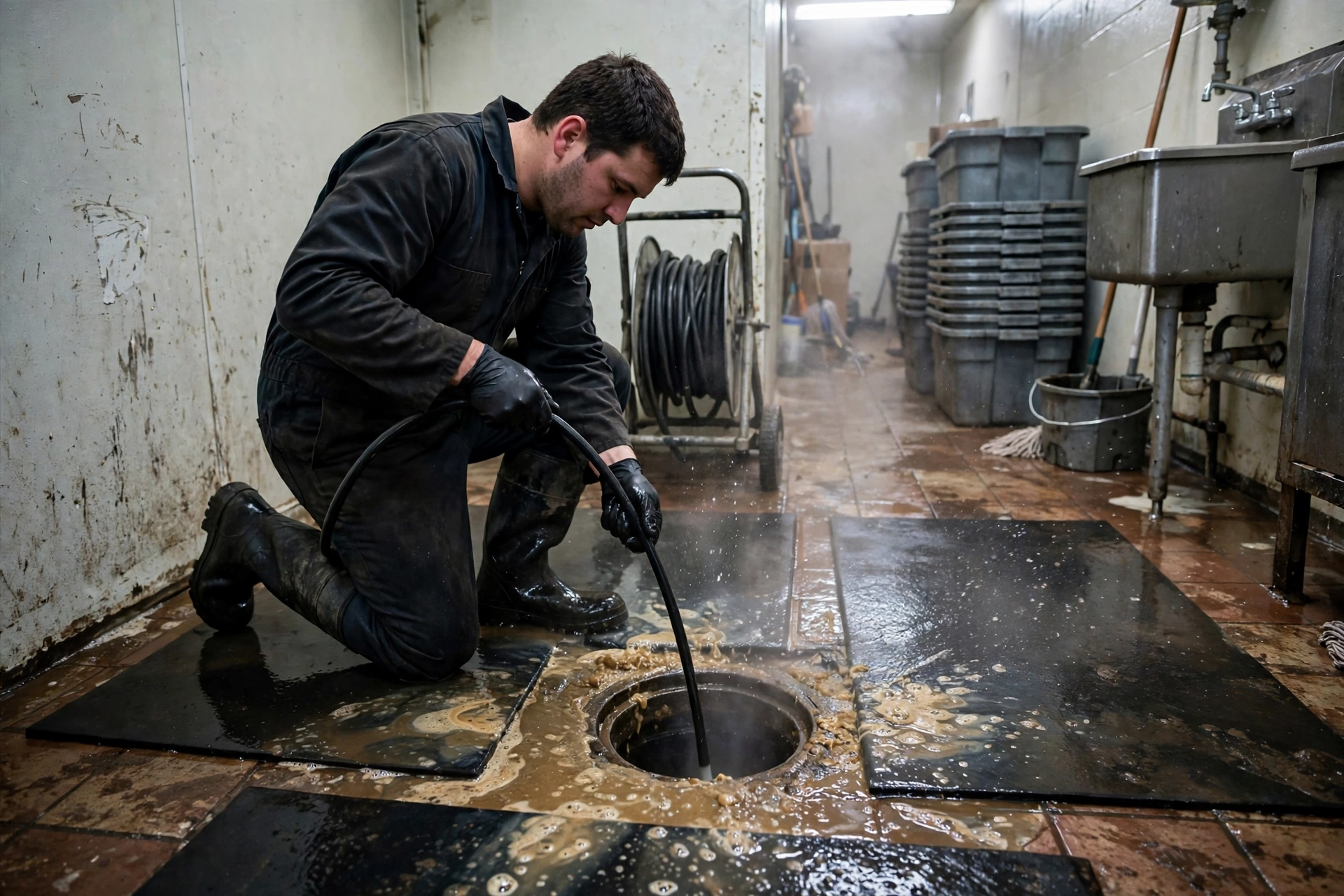
Is this the job you have?
Grease does not stay in the trap. Some of it gets past, cools in the pipe, and coats the wall a little more with every shift. Over months the bore gets smaller. The drain still works, but it works slowly, and one busy Saturday is enough to back it up.
Jetting is for that stretch of pipe: the kitchen line from the trap outlet to the main. It is not a substitute for pumping the trap. If the trap is full, the slowdown is coming from the trap, and jetting the line will not fix it. We check which one you have before we charge you for the wrong job.
Line or trap: how we tell
We start at the trap, because that is the cheaper answer and the one the city measures.
- Trap contents at or above 25 percent of design capacity. Under the City of New Orleans FOG rules, the trap is due and must be pumped within two working days. A slow drain here is a trap problem. We clean the trap first.
- Trap in good shape but the drain still slow. Water leaves the trap sluggishly, or it backs up between the trap and the main. That points to buildup on the pipe wall, and that is a job for the jet.
- Both. Common in kitchens that have gone long between services. We clean the trap, then jet the line behind it, so the loosened grease has nowhere to settle.
A line that was slow for a week usually has a different cause than one that has been slow for a year. Tell us how long it has been going on.
What the jet does to the grease
Grease on a pipe wall is not loose sludge. It is a layer that has set, often thickest at bends and low spots. A jetting hose carries a nozzle that throws water at the wall under pressure. The water cuts into the layer and strips it off, and the flow carries it back along the line. When the job is done properly, the pipe is open to its full bore again, not just poked through in the middle.
That is the difference between jetting and running a cable. A cable can punch a hole through a plug and leave the walls coated. The water jet cleans the wall itself.
How a visit goes
Step 1: We find the line and the access.
We locate the cleanout between the trap and the main and look at the trap contents with the 25 percent measure.
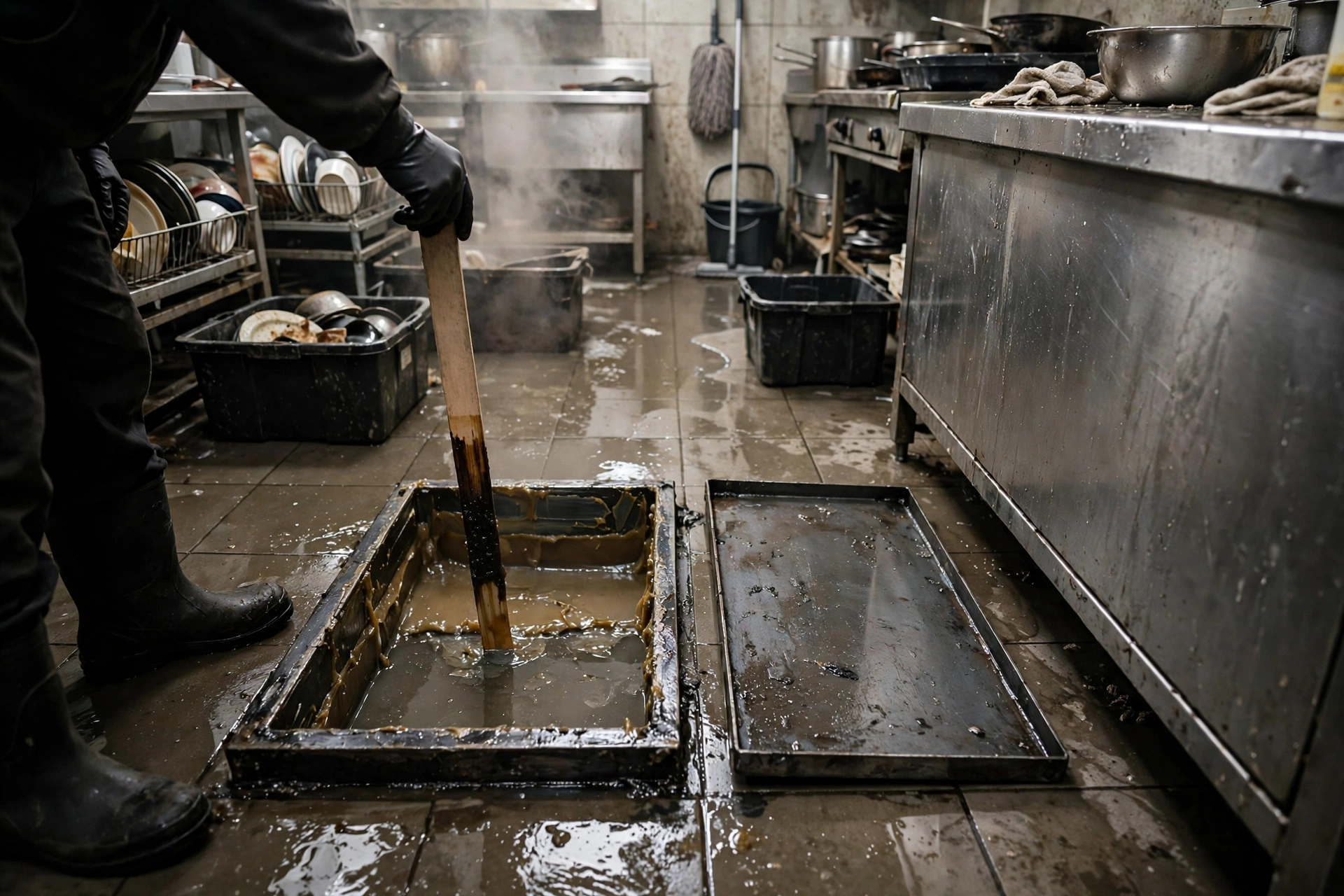
Step 2: We run the jet.
The hose goes through the cleanout and works the line section by section. We take our time at bends and low spots, because that is where grease packs hardest.
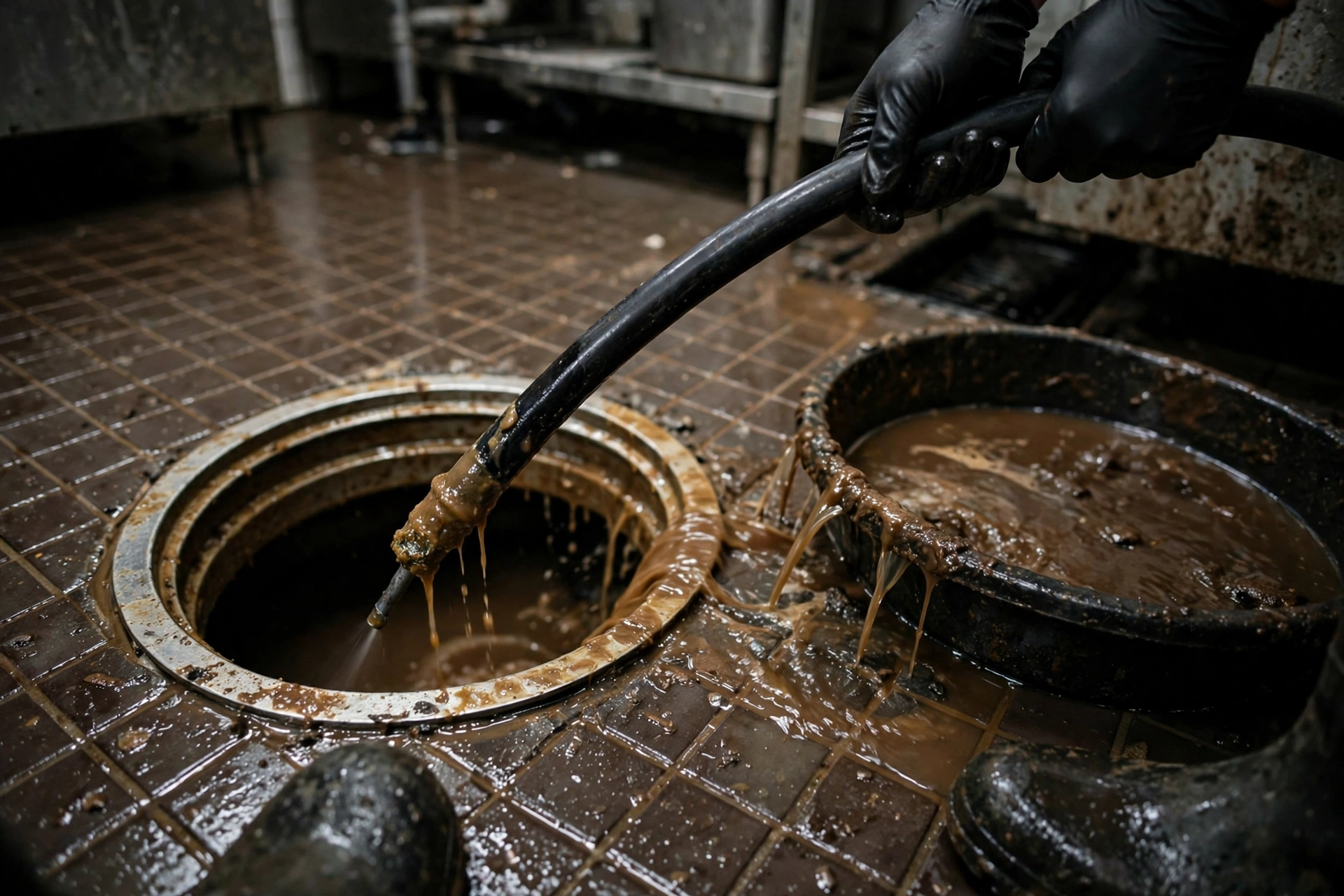
Step 3: We confirm flow and write it up.
We run water through and watch it clear. The jetting goes on the service record next to the trap work, and you keep that record on site. The city requires service records to be kept on site for three years, and inspectors ask to see them.
What it costs
These are our prices.
- Line jetting added to a trap service visit: $100. We are already on site and set up, so the add-on is the lowest rate.
- Heavy jetting, stand-alone: $300 to $600. This is for a line packed with grease over a long run, or a job where we are not also servicing a trap.
For a kitchen with an indoor trap up to 200 gallons, a scheduled cleaning is $125 to $180, so cleaning plus jetting comes to $225 to $280. For trap cleaning and interceptor pumping by size, see our trap and interceptor services. We have no set jetting price for emergency call-outs. Call (504) 360-9231 and we will tell you the price for your situation before we start.
Call us about a slow line
Describe what the drain is doing and we will tell you whether it needs a jet, a trap cleaning or both. Phone (504) 360-9231, Monday to Friday, 9:00 AM to 5:30 PM.
Featured job: the po'boy shop whose back drain kept slowing
A busy po'boy shop on Magazine Street had a small indoor trap under the prep sink and a back-kitchen floor drain that took longer to clear every month. The crew had started mopping up after the lunch rush. The trap was cleaned on schedule every few weeks, so the owner assumed the trap company was missing something.
Chapter 1: Reading the problem
We opened the trap first. The depth was well under 25 percent of design capacity, so the trap was not the cause. Water was sitting in the line after the trap, draining slowly toward the main. That meant buildup in the pipe.
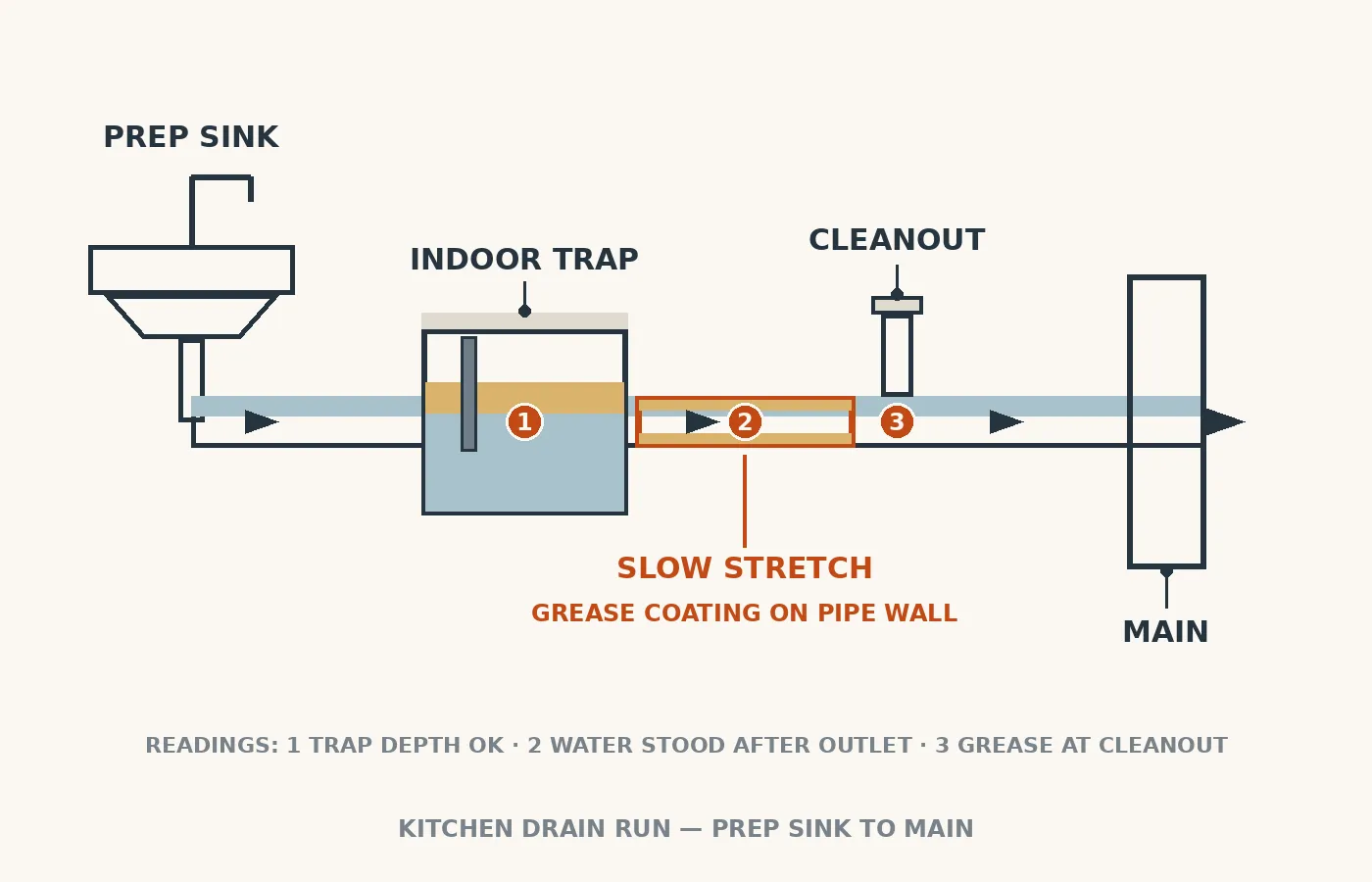
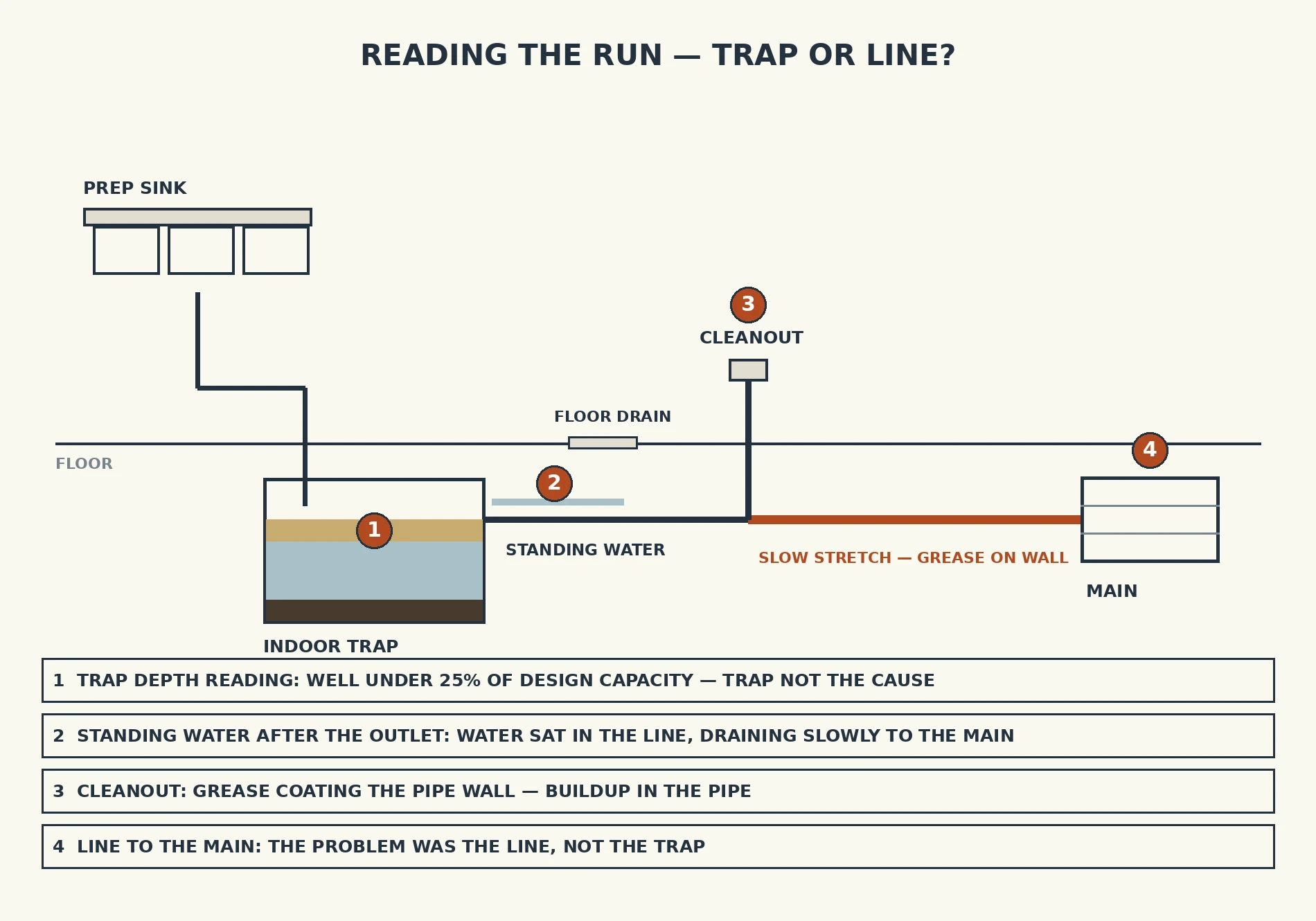
Trap depth reading.
Standing water after the outlet.
Cleanout.
Line to the main.
Chapter 2: The jet and what changed
We cleaned the trap on its regular visit and jetted the line behind it in the same stop. Because the shop was already on a service visit, jetting was the $100 add-on, on top of the trap cleaning. The line returned a heavy load of grease on the hose, then ran clear. The floor drain emptied in the time it should.
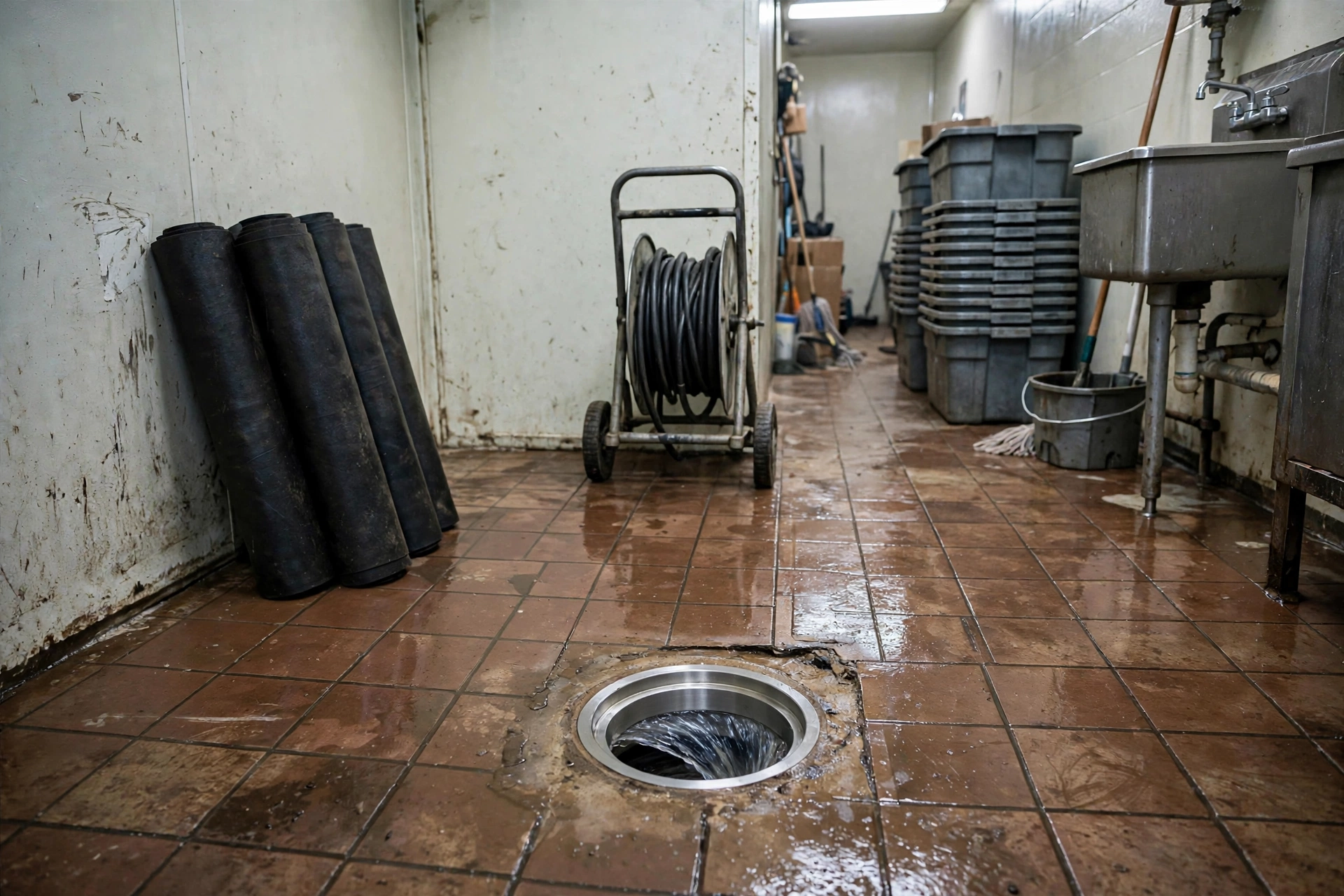
The shop now asks for the jet at each quarter's trap visit and has not had the mop out since. Pumping the trap on the city's 90-day outer limit stayed in place. Jetting does not replace it.
Questions
What is line jetting?
It is a water-jet cleaning of the kitchen drain line between your grease trap and the main. The nozzle strips the grease off the pipe wall so the line returns to full flow.
Is a slow drain a line problem or a trap problem?
We check the trap first. If the contents are at or above 25 percent of design capacity, it is the trap and it has to be pumped within two working days under the city rules. If the trap is in good shape and water still drains slowly after it, the problem is in the line.
Does jetting replace pumping the trap?
No. The city requires every trap and interceptor to be pumped at least every 90 days, and sooner when the contents reach 25 percent. Jetting cleans the pipe after the trap. It does not remove what is in the trap.
How much does line jetting cost?
It is $100 when added to a trap service visit. A stand-alone heavy jetting job is $300 to $600.
What counts as heavy jetting?
A line packed with grease over a long run, or a job where we are not also servicing a trap. Heavy jobs take longer, and that is what the $300 to $600 range covers.
Can I add jetting to my regular trap cleaning?
Yes. Ask when you book, or ask the technician on the day. The $100 rate applies when it is done on the same visit.
How often should a line be jetted?
There is no city interval for it. Kitchens that cook with a lot of grease, or that see slowing between service visits, tend to add it at some of their trap visits. We will tell you what we saw in your line and suggest a rhythm.
Will you tell me what is wrong before you charge me?
Yes. We measure the trap, look at how the line drains, and tell you whether it is the trap, the line or both before you pay for jetting.
Is there an emergency price for jetting?
We have no fixed emergency jetting price. Our emergency indoor trap price is $190 to $240. Call (504) 360-9231 and we will quote your situation before we start.
What paperwork do I get?
A service record for the visit, with the jetting listed alongside the trap work. The city requires service records to be kept on site for three years.
Will it help me pass an inspection?
It helps with a slow, grease-coated line, but inspectors look at the trap contents, the permit through the SWBNO FOG Program and your records. If an inspection finds defects, the city requires them corrected within 90 days.
Which areas do you serve?
We are based in New Orleans, Orleans Parish. Call us with your location.
Book line jetting
Tell us what the drain is doing. Name and phone are required. Service, town and message are optional. The more details you give, the better we are able to help you.
[FORM: Name (required) · Phone (required) · Service · Town · Message · Consent checkbox (required)]
New Orleans Grease Trap, (504) 360-9231, Monday to Friday, 9:00 AM to 5:30 PM.