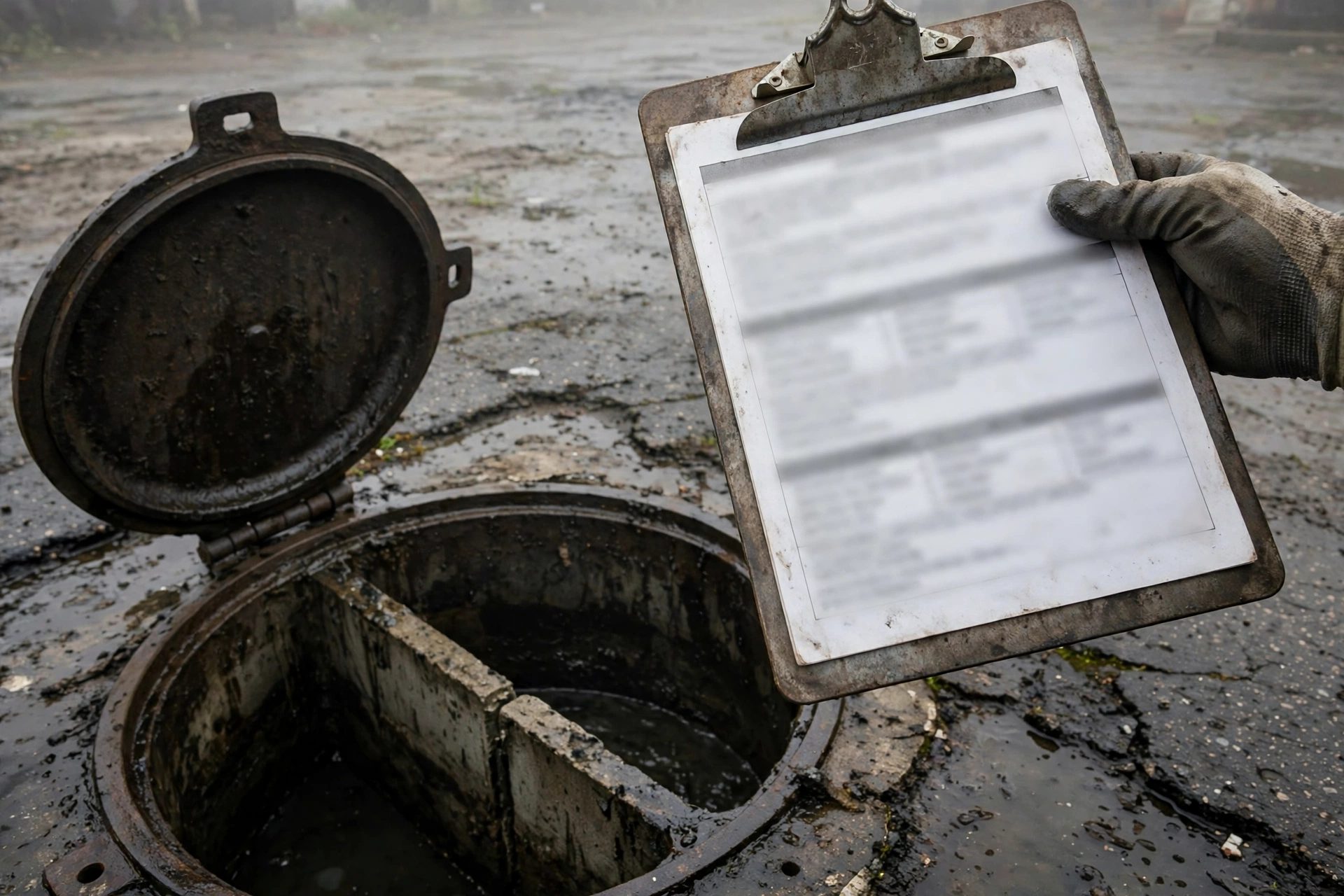
Crusted or stuck lids.
Cast iron lids corrode into their frames, and grease and dirt seal the edges. They take extra time to open and sometimes need repair.
Service · Exterior Interceptors
New Orleans Grease Trap does grease interceptor cleaning on the big in-ground tanks behind New Orleans restaurants, hotels and commercial kitchens, 1,000 gallons and up. Each visit ends with a signed manifest and the FOG compliance documentation your permit file and your inspector expect to see.
In practice, grease interceptor pumping means the whole tank comes out, grease cap, gray water and bottom solids, from both compartments. We then scrape the walls and check the fittings inside before we close the lids. Smaller indoor traps are a different job on a different truck. We do grease trap pumping at that size too, and it is priced separately.
Most of our interceptor customers keep the tank on scheduled grease trap maintenance, so a truck arrives before the tank is due. On the same visit, line jetting can be added. If a tank has run too long or the kitchen is backing up, emergency grease trap service puts a truck on it as soon as we can get there.
If you have a tank in the ground and you are not sure when it was last pumped, call (504) 360-9231, Monday to Friday, 9:00 AM to 5:30 PM. Tell us the size if you know it, and where the lids are. We will tell you what the visit costs and when we can be there.
This work is for exterior grease interceptors. These are concrete or fiberglass tanks set below grade, usually in a back lot, an alley or under a service drive. They sit between the kitchen drains and the sewer line. Large in-ground tanks, usually 500 to 2,000 US gallons, are passive grease interceptors. We pump tanks from 1,000 gallons up to 3,000 gallons.
A typical tank has two compartments. Wastewater enters the first, where grease floats and solids settle. Cooler, cleaner water passes through a baffle wall into the second compartment and out to the sewer. A common design guideline makes the inlet compartment two thirds of the total capacity and the outlet compartment at least one third. Both compartments get pumped on every visit.
Who calls us for this:
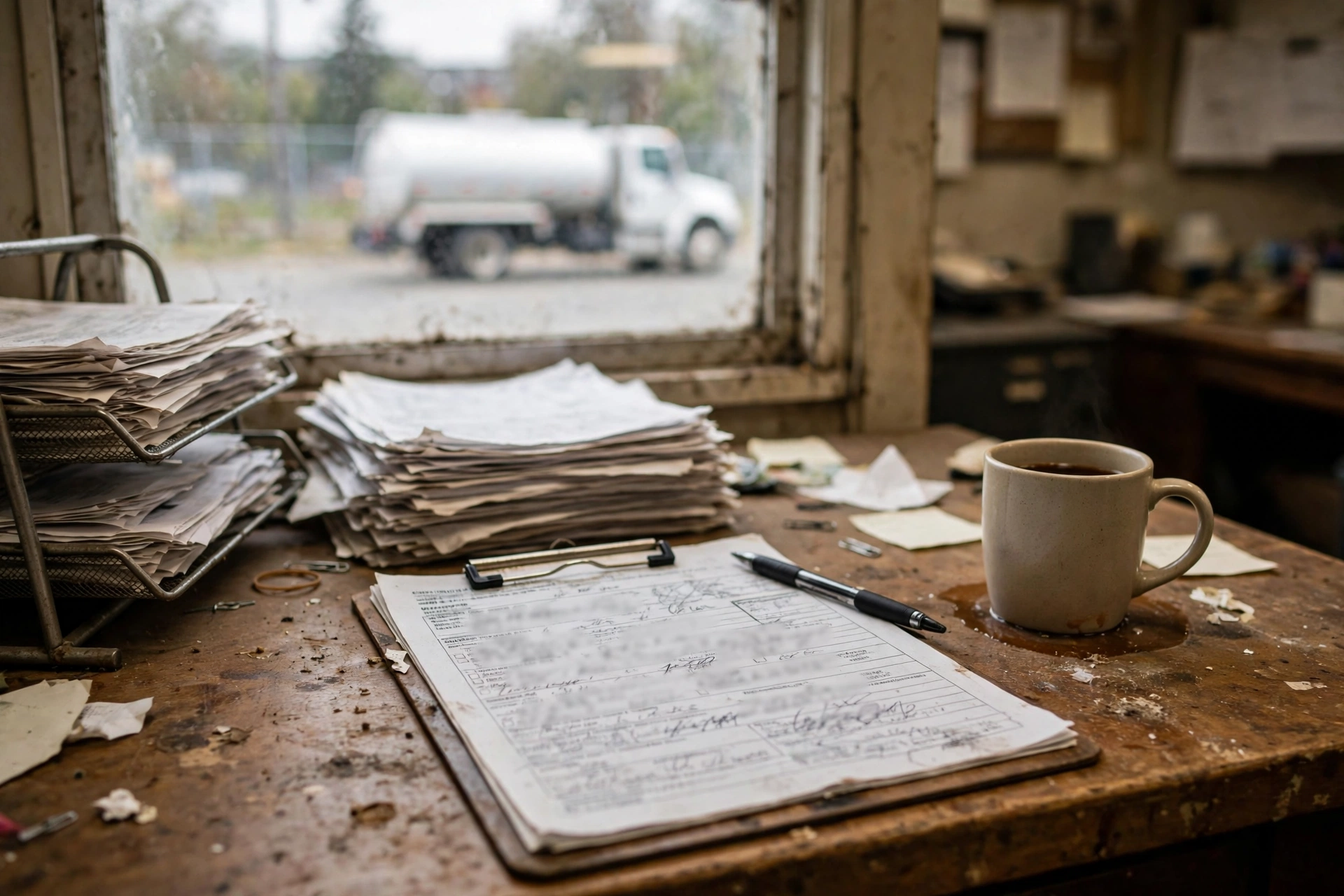
Here is a visit from the truck pulling in to the paperwork on the counter.
We locate every access lid over the inlet, the baffle and the outlet. Crusted, buried or bolted-down lids are the most common delay, so tell us where they are when you book.
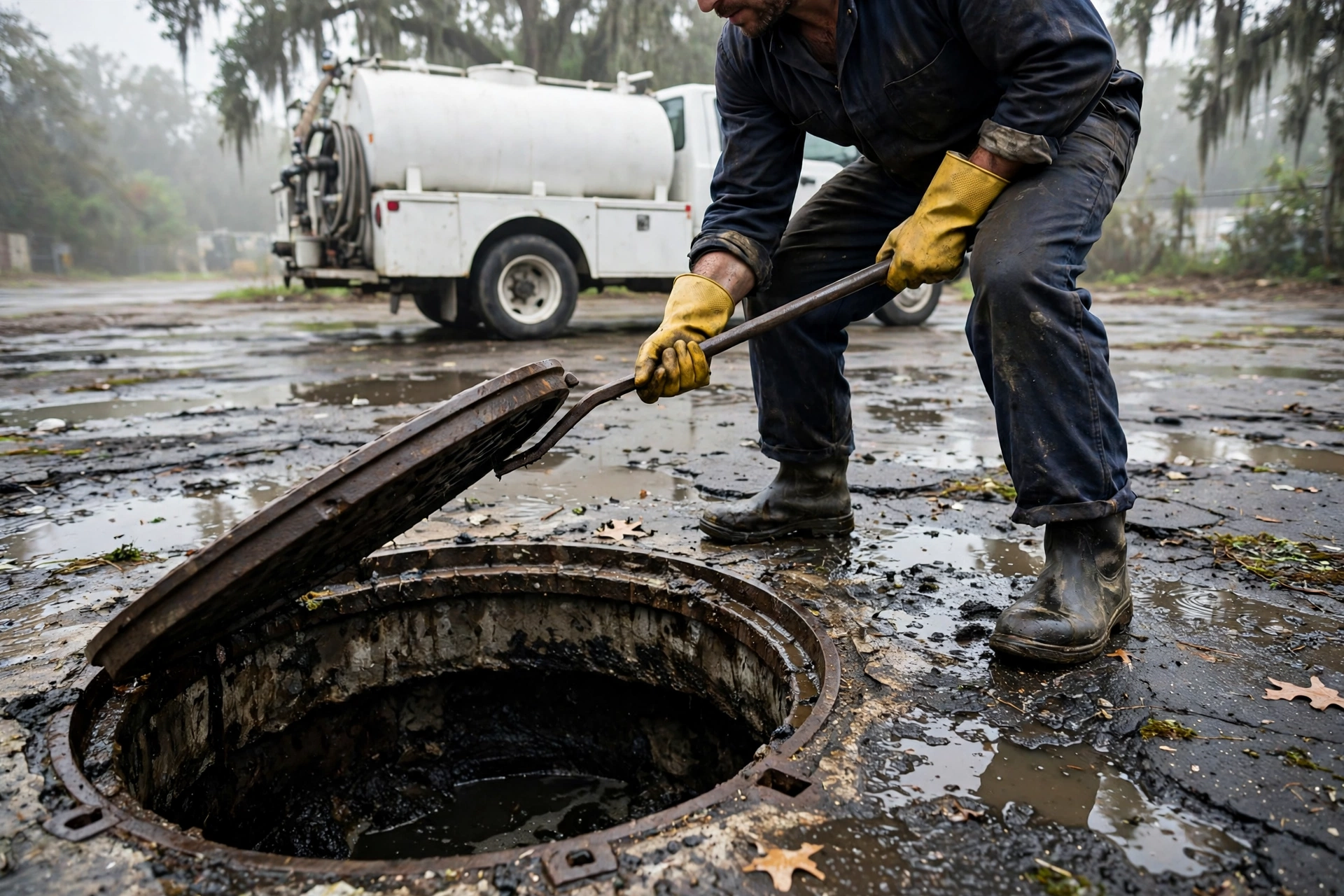
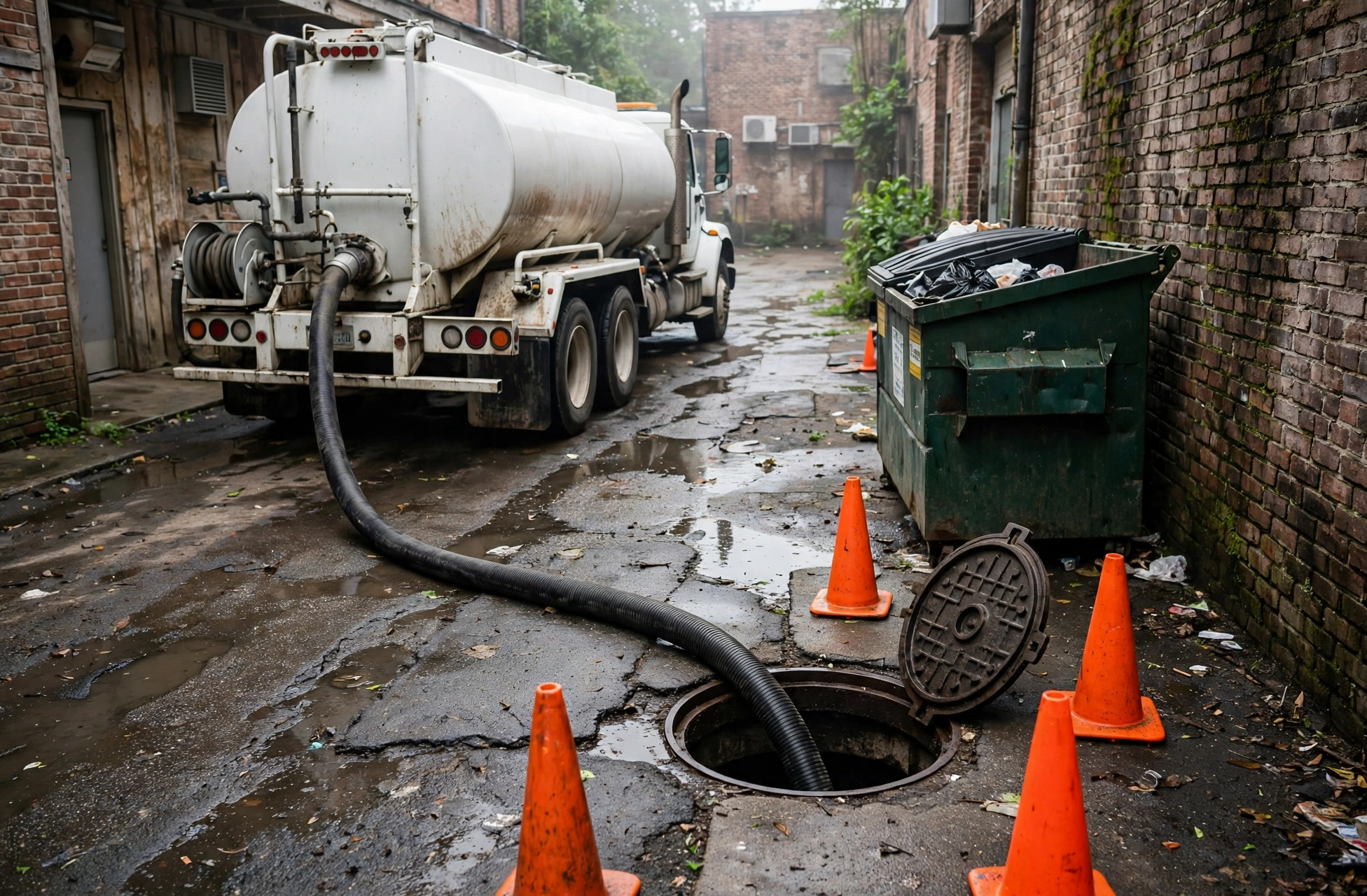
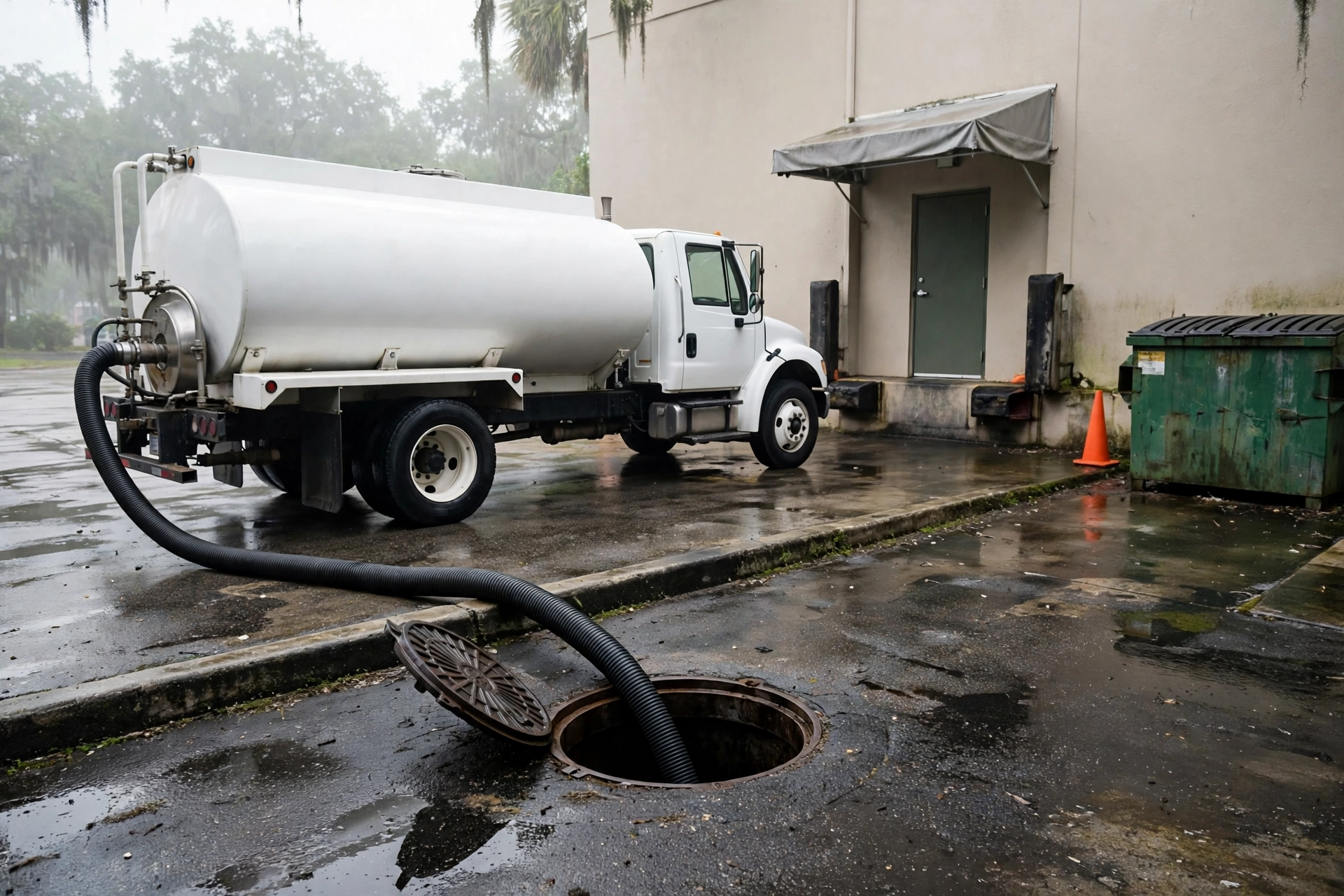
The truck parks as close as access allows and the hose runs to the open lids. We ask the kitchen to hold off on dishwashers and sinks while we pump, so we are not pumping fresh water.
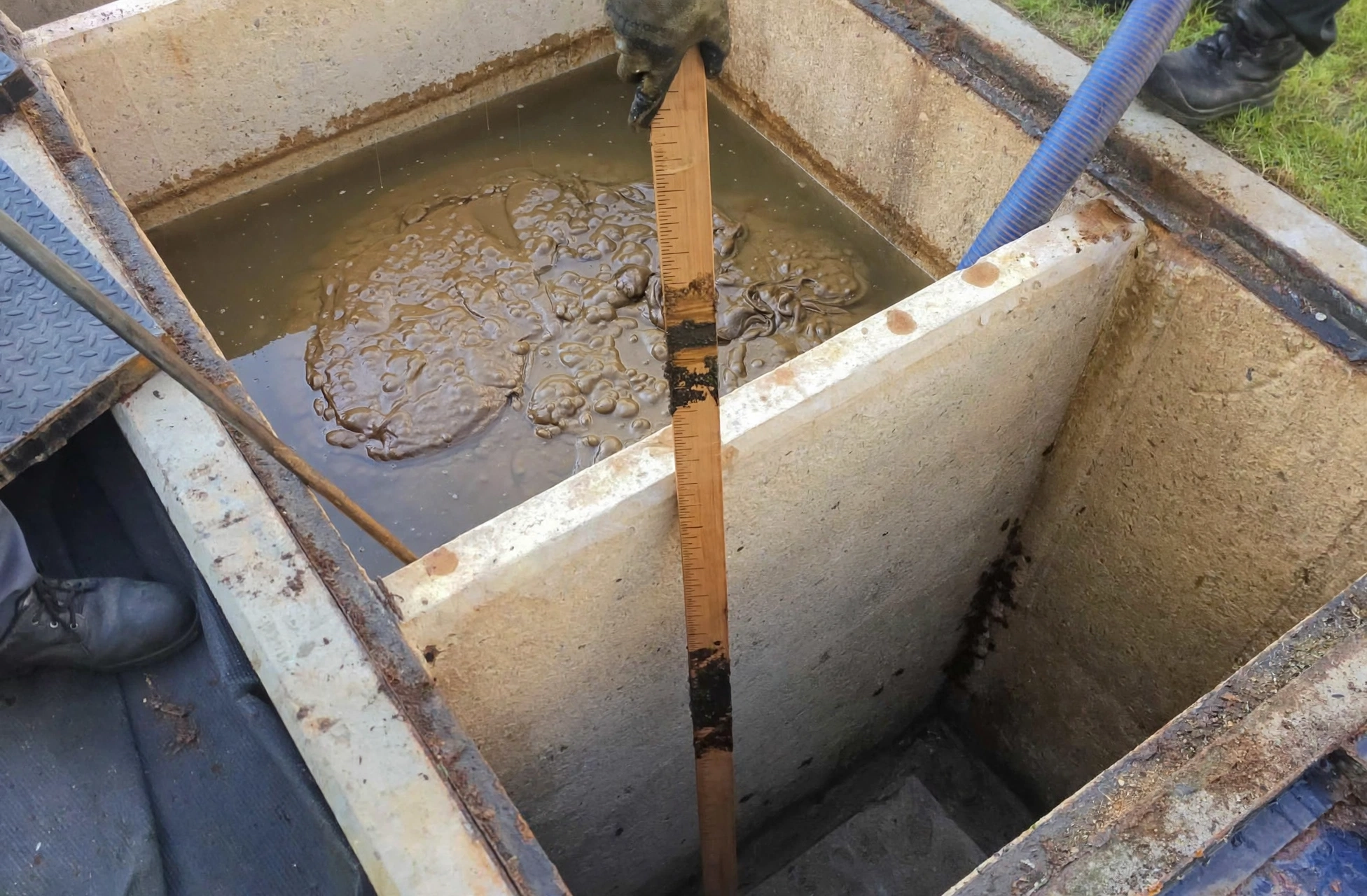
Before anything comes out, we measure the floating grease and the settled solids against the total liquid depth. The Sewerage and Water Board's own training sheet works it through. With 0.5 foot of grease on top, 1.0 foot of solids on the bottom and 4.0 feet of contents, the tank is at 37.5 percent. That tank was well past due. The number tells us whether your current schedule is working.
Everything comes out of the inlet compartment and the outlet compartment: the grease cap, the water and the bottom sludge. Nothing is returned to the tank.
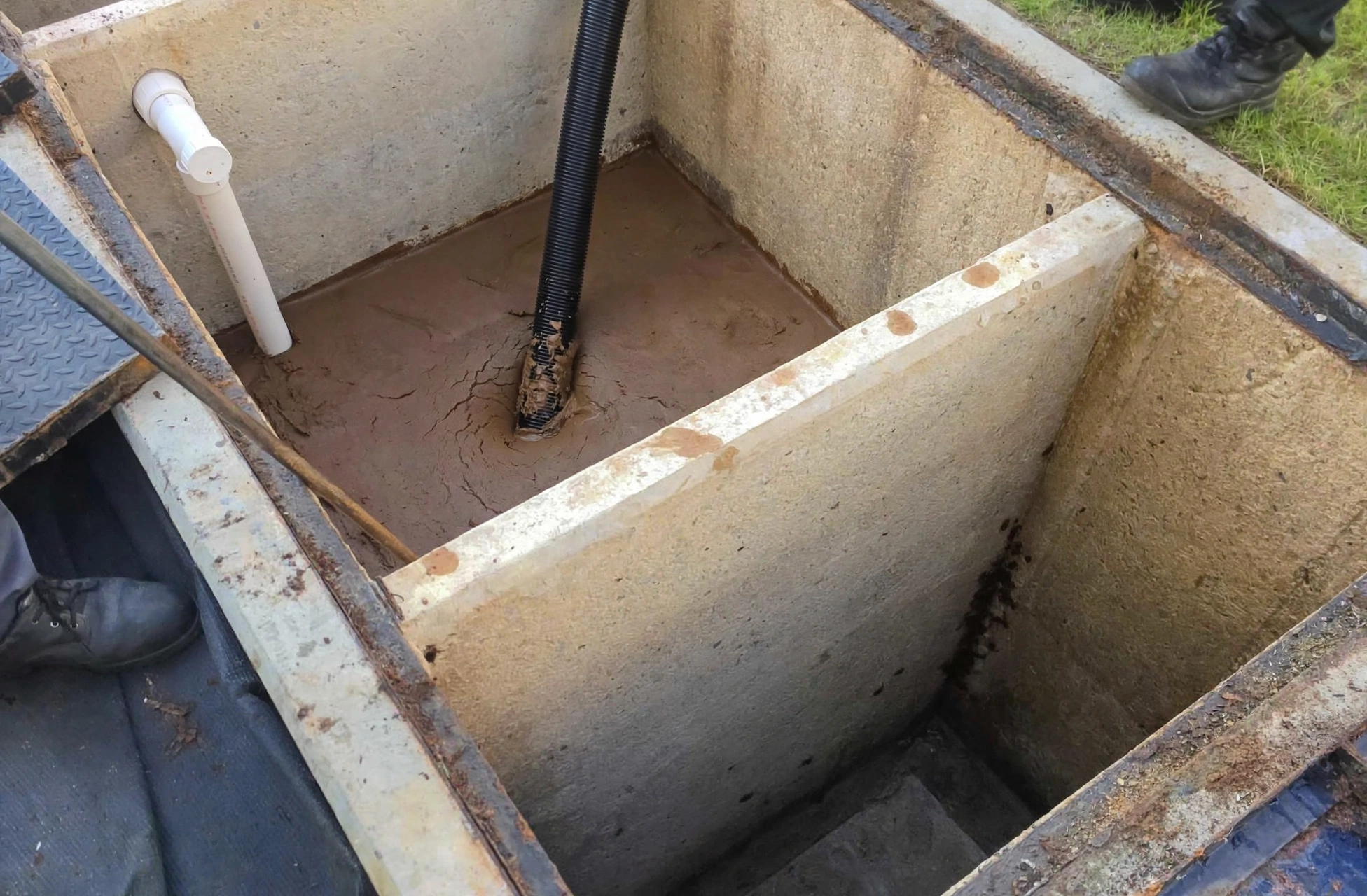
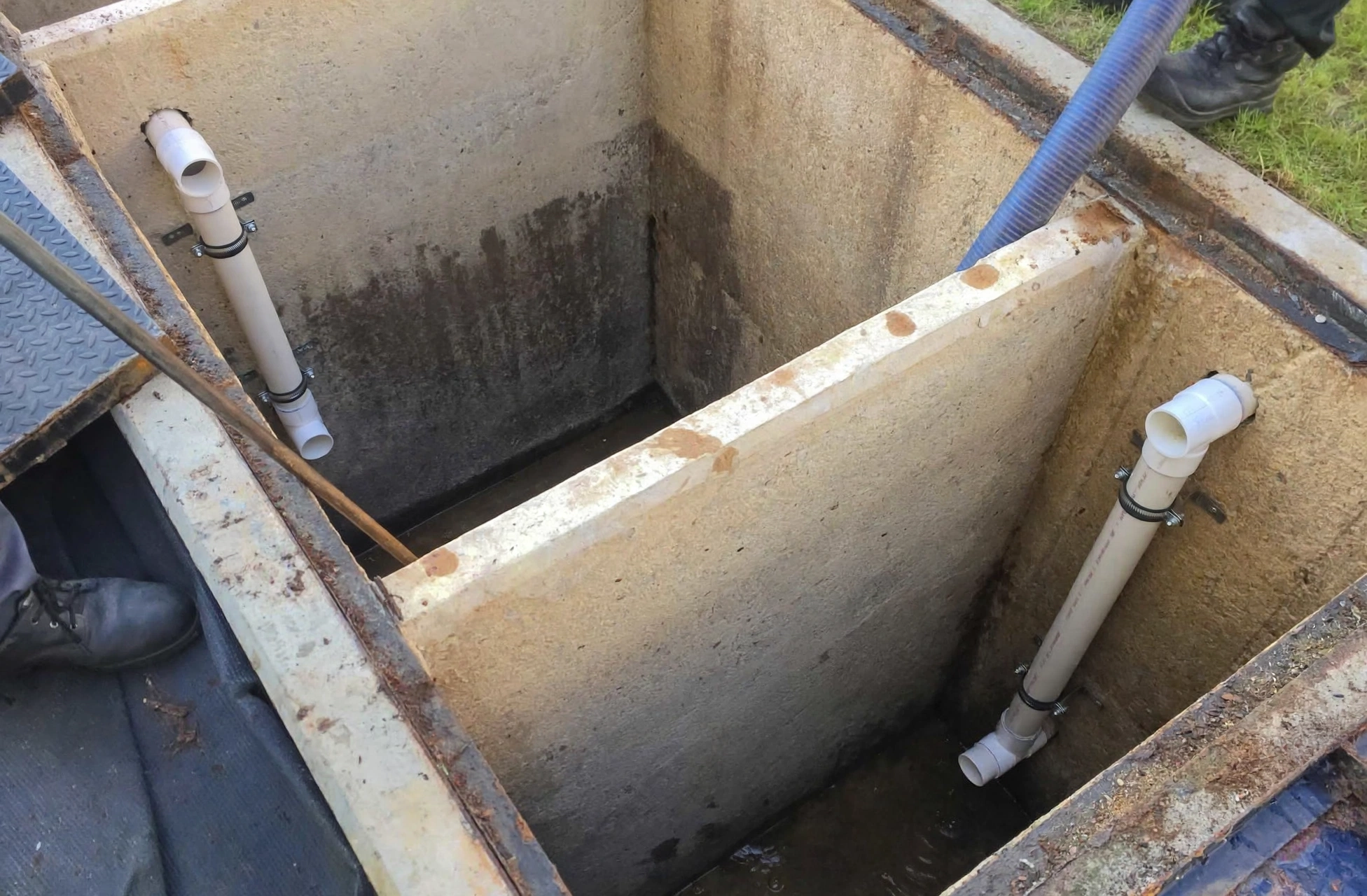
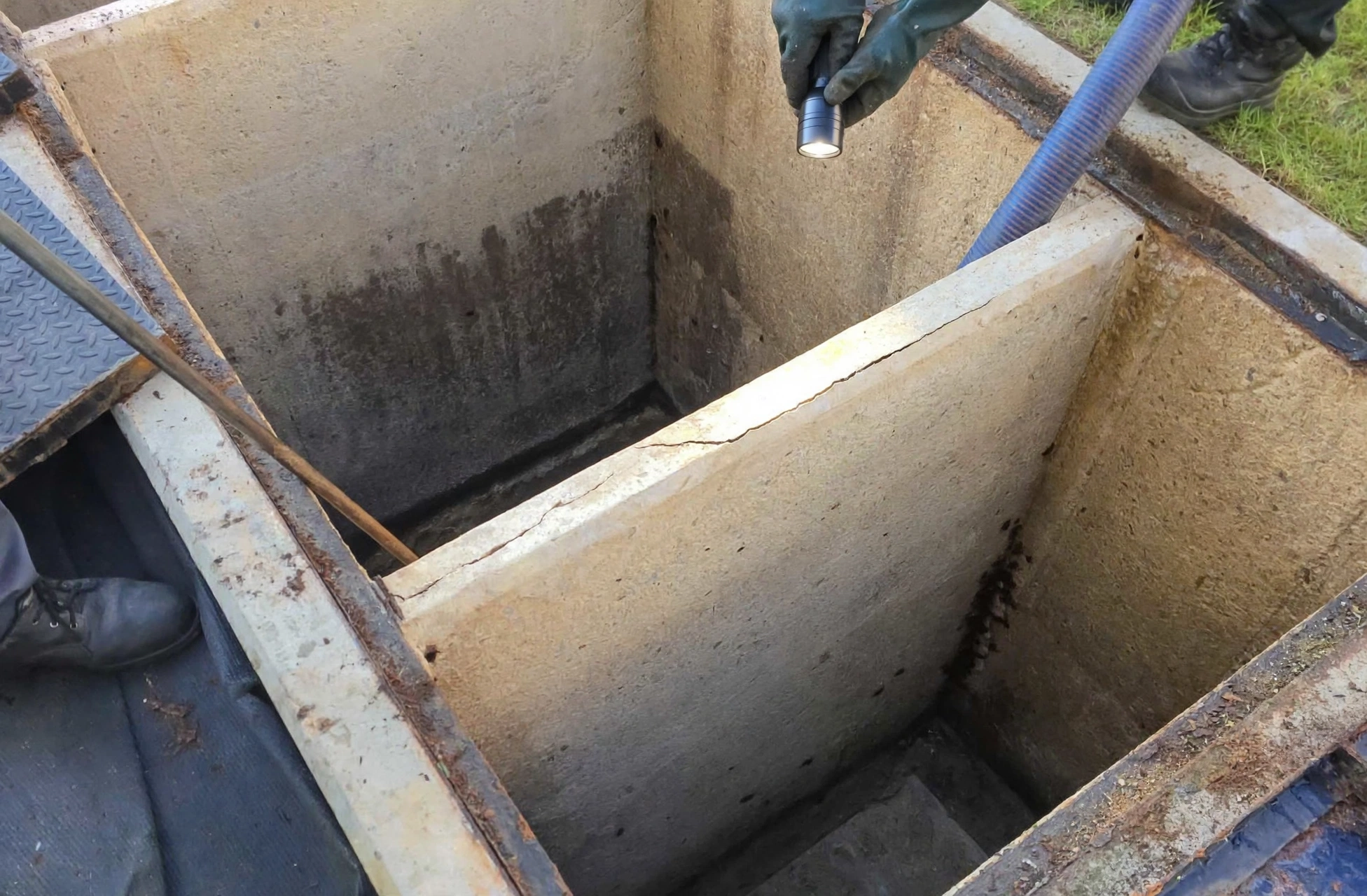
With the tank empty, we scrape grease off the walls, baffle and piping. We then look at the inlet and outlet tees, the baffle wall, the walls and floor, and the lids. A crew checks the tees, baffle wall and lids, and anything broken is written up. Only after a pump-out can anyone see a cracked baffle or a missing tee.
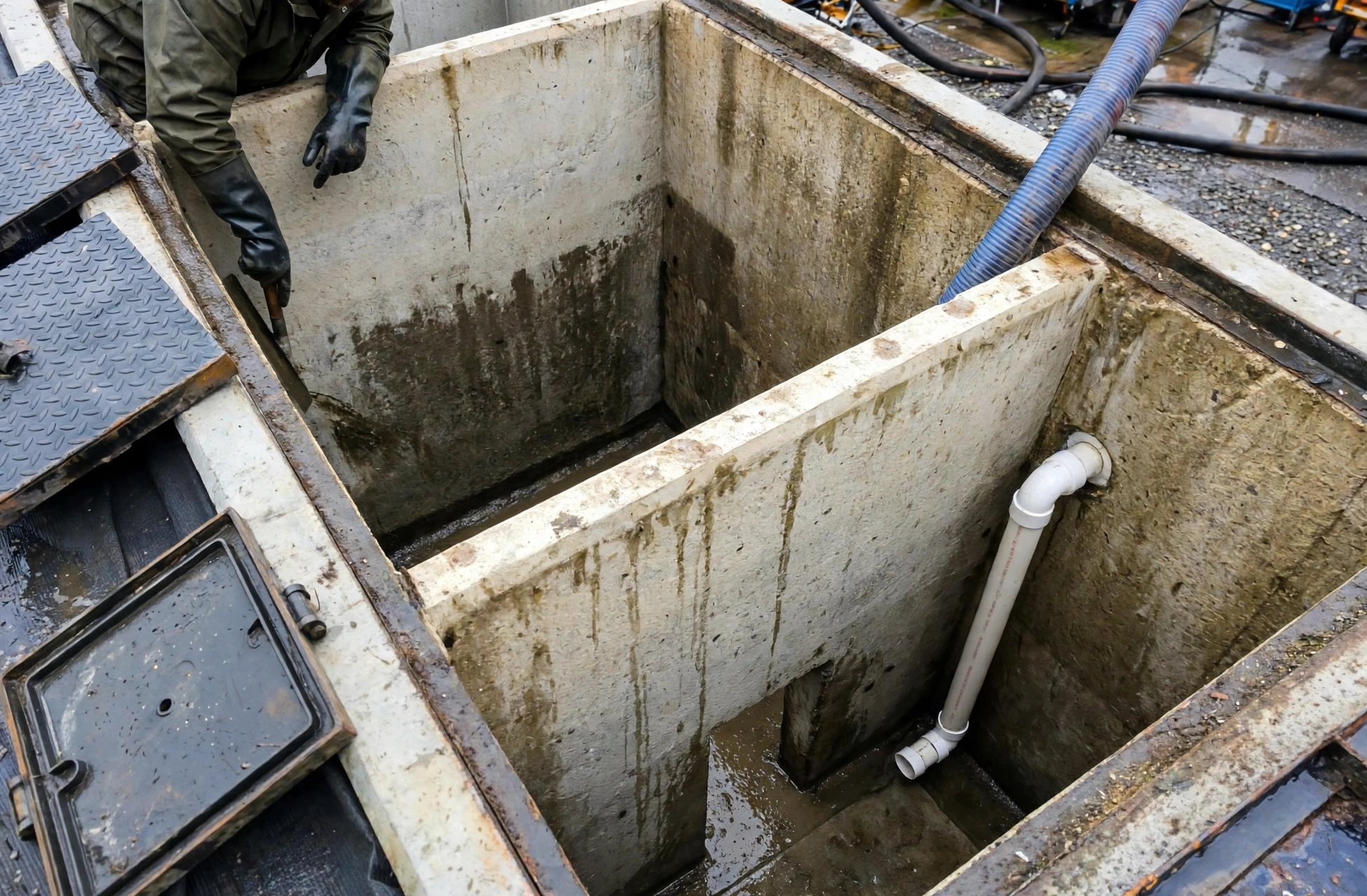
Lids go back and seat properly. The driver completes the manifest and we leave you the service report, including any defects we found. You keep both on site.
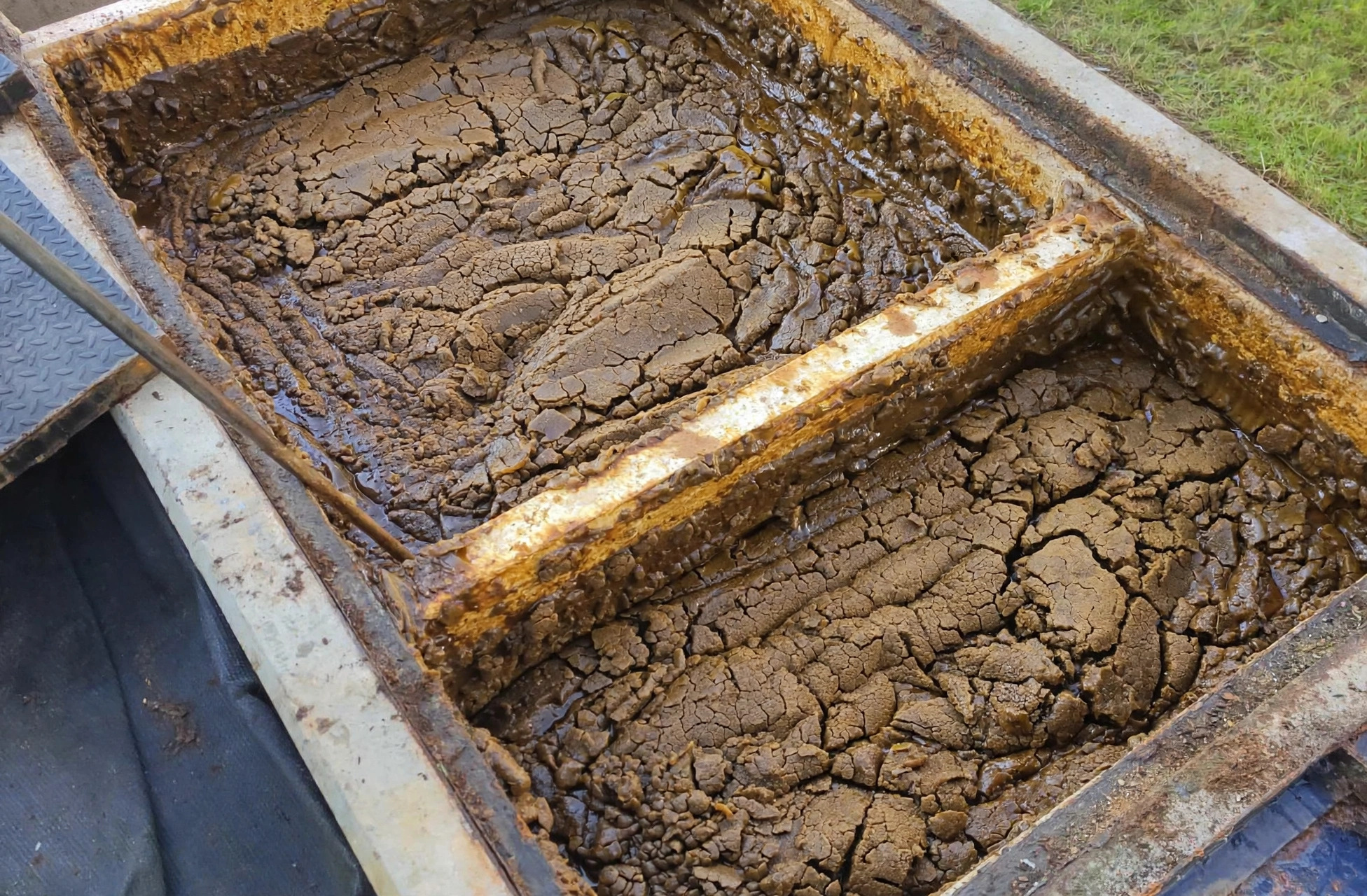
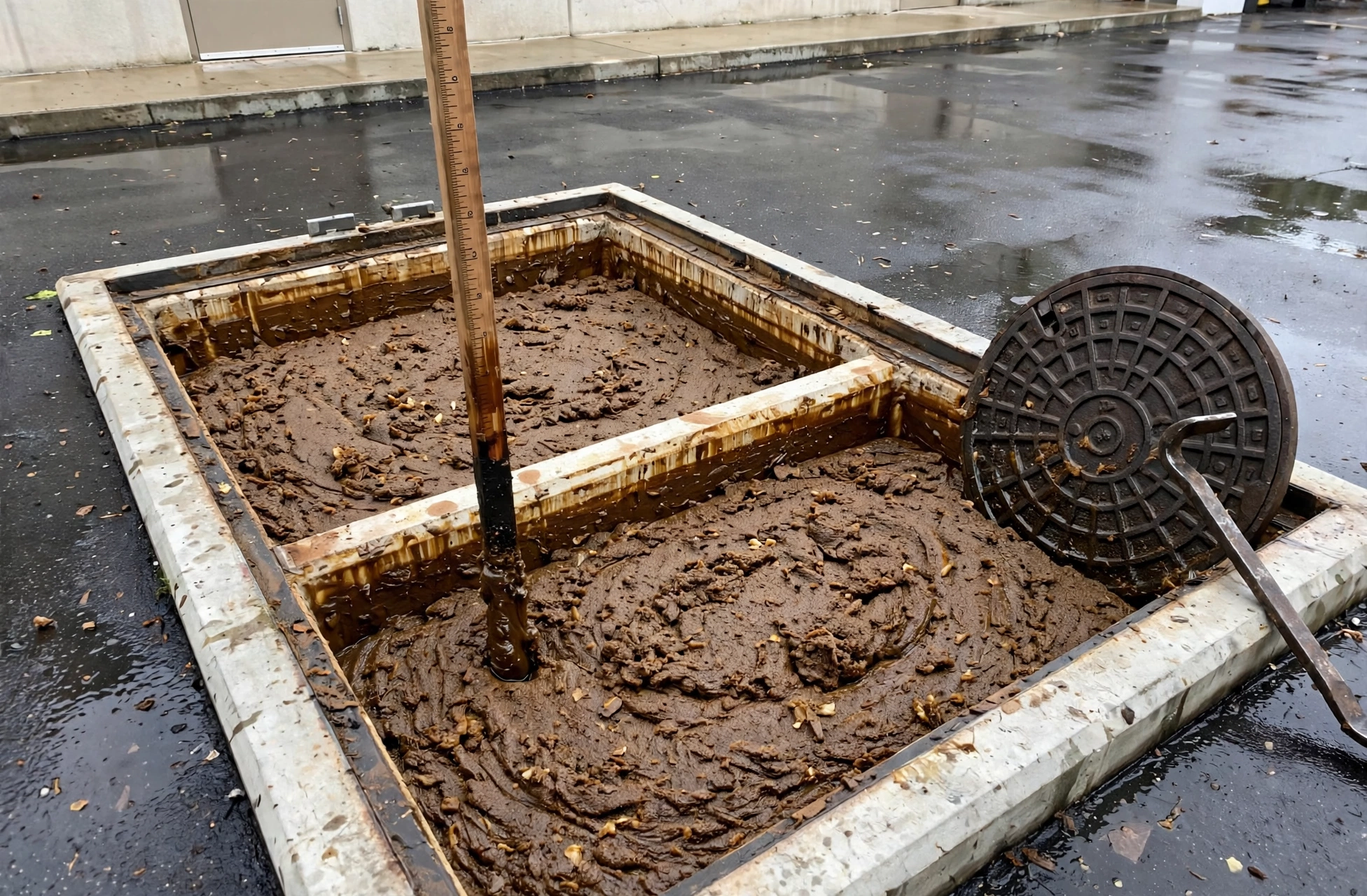
A tank that has gone a year looks very different from one on a 90-day schedule. These two frames show the same kind of tank, before the pump-out and after it.
The city sets the outer limit. Under Section 16.5 of the Plumbing Code as summarized by the French Quarter Business Association, a trap or interceptor is pumped at least once per 90 days, and within two working days whenever 25 percent or more of the design capacity holds grease, solids or floating material, measured to the outlet pipe invert. The Sewerage and Water Board's training material says the same: maintenance by a permitted transporter at 25 percent of design capacity or at least quarterly. Louisiana has no state pumping interval, so the city's rules are the ones that are enforced here.
In practice, capacity and volume set the real interval:
The first visit sets a baseline. If your tank has not been serviced in a long time, we measure it, pump it and set the schedule from what we find.
Most problems show up only when the lid comes off or the tank is empty.
Cast iron lids corrode into their frames, and grease and dirt seal the edges. They take extra time to open and sometimes need repair.
Baffle failure is only visible during interior inspection after pump-out, and a failed baffle means the interceptor is no longer doing its job. We write it up so the repair is not missed.
Grease and solids that have been sitting for months pack hard and take longer to remove. That is usually when the kitchen calls us because a drain is backing up. It is also the reason emergency pricing exists.
A tank under a parked car, a dumpster or a locked gate can add time to a visit. Telling us where the lids are, and who has the key, avoids this.
A cracked baffle or damaged tee found at inspection must be corrected within 90 days. Our report documents what we saw so you can hand it straight to your plumber.
These are our prices for pumping and cleaning exterior grease interceptors on a scheduled visit.
| Interceptor size | Our price per visit |
|---|---|
| 1,000 to 1,500 gallons | $225 to $450 |
| 1,501 to 2,000 gallons | $600 to $1,200 |
| 2,001 to 3,000 gallons | $800 to $2,500 |
Emergency pump-out of a 1,000 to 1,500 gallon interceptor runs $400 to $900. For emergency visits on interceptors over 1,500 gallons, we price the job once we know the tank size and access, and we give you that figure on the phone before the truck rolls.
Line jetting is $100 when it is done with a service visit. Heavy jetting for lines that are badly clogged runs $300 to $600. Where a price sits in a range, the tank's size, how much has built up, the distance from the truck to the lids and the time of the call all move it.
If you know your tank size, we can give you your number now. If you do not, the lid or the permit paperwork usually shows it. Call (504) 360-9231, Monday to Friday, 9:00 AM to 5:30 PM, and we will book the first visit or set up a recurring schedule.
A hotel on St. Charles Avenue runs a full-service restaurant, room service and a banquet kitchen off one 1,500-gallon interceptor. The tank had been pumped on no fixed schedule. Staff pumped it when the drains slowed, and the last record in the file was well over a year old. The facilities manager called after a slow drain in the banquet kitchen prep room and wanted two things: a tank that worked, and a paper trail for the Sewerage and Water Board file.
We opened the lids and measured. The grease cap ran across the full surface and the solids sat deep along the bottom. The tank was well past the 25 percent mark. The lids had not been lifted in a long time. One took a pry bar and some work to free.
The tank was inside the 1,001 to 1,500 gallon band, so a scheduled visit sat inside our $225 to $450 price. We pumped both compartments empty and scraped the walls and baffle. The kitchen paused its dishwashers while we worked, so we were not pumping fresh water in.
Once empty, we could see what was wrong. The outlet tee was intact and the walls were sound. The baffle wall had a hairline crack near the top that had not been seen before. We wrote it up in the service report with the location, so the hotel's plumber could repair it inside the 90-day window the city allows.
The hotel put the tank on a 90-day schedule. We measure at every visit, so the interval can shorten if the banquet season pushes the tank past 25 percent early. The manifest and service report went into the hotel's file with the date, the volume pumped and the baffle repair note.
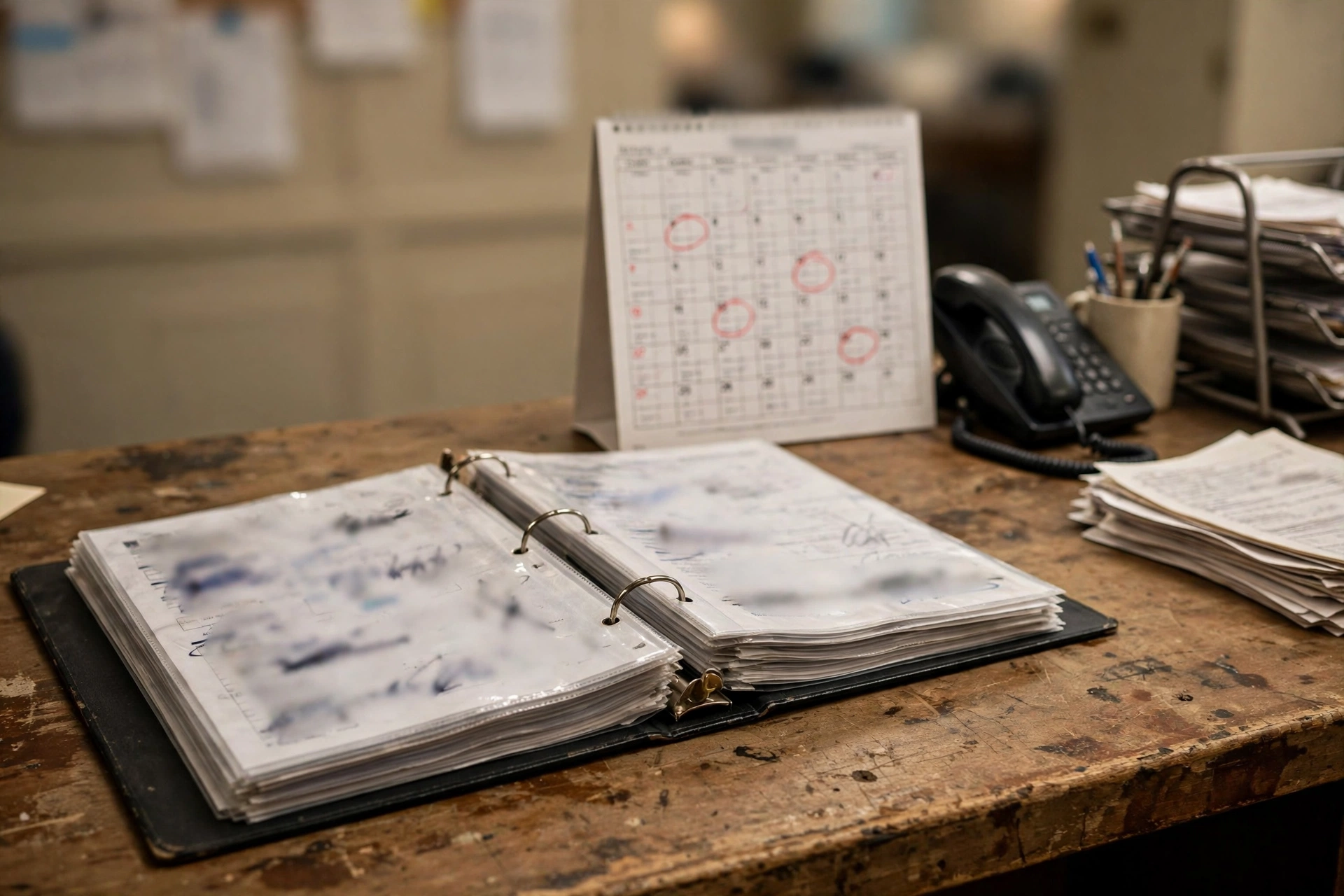
Grease trap waste moves on a manifest. Louisiana DEQ's manifest requirements list the hauler's name, address and phone number, vehicle license number, LDEQ hauler registration number, the date pumped and the volume pumped. The hauler signs a certification that the information is true.
For New Orleans, the SWBNO FOG Program requires manifests to be kept on site for a minimum of three years. All traps and interceptors must also be permitted through the SWBNO FOG Program. For each interceptor over 100 gallons, the code requires a liquid waste hauler permitted by the SWBNO to collect, transport and dispose of the waste at an authorized facility.
The code also calls for a yearly interceptor inspection by a licensed plumber. As summarized by the FQBA, the plumber makes a visual observation of and takes photographs of the inlet and outlet fittings, baffles, walls, floor and internal structures. Our service report records the same points when we see them, so that visit goes quickly.
What you keep after each visit:
We serve New Orleans and the surrounding parishes. Call (504) 360-9231 with the address of the kitchen and the size of the tank, and we will confirm and book a date.
Exterior grease interceptors from 1,000 gallons up to 3,000 gallons. Smaller indoor traps are a separate service, and we do those as well.
Our price is $225 to $450 for a 1,000 to 1,500 gallon tank, $600 to $1,200 for 1,501 to 2,000 gallons, and $800 to $2,500 for 2,001 to 3,000 gallons. Where a price sits in the range depends on how much has built up, how far the truck sits from the lids and how easy the access is.
For a 1,000 to 1,500 gallon interceptor, our emergency price is $400 to $900. For larger tanks, we price the call once we know the size and access, and we tell you before the truck leaves.
At least once every 90 days, and within two working days whenever grease and solids reach 25 percent of design capacity. Busy kitchens with a 1,000-gallon tank can reach 25 percent sooner than 90 days, so we measure on every visit and adjust the schedule.
It is the measure of how full the tank is. We add the depth of floating grease to the depth of settled solids and divide by the total depth of the contents. At 25 percent or more, the tank is due, and the city expects it pumped within two working days.
Yes. Both compartments get pumped to empty on every visit, and nothing is returned to the tank. We then scrape the walls and baffle and check the inlet and outlet tees.
The inlet and outlet tees, the baffle wall, the walls and floor, and the lids. Anything cracked, missing or loose goes in the service report with its location.
We write it up in the report and tell you before we leave. A defect found at inspection must be corrected within 90 days, so the report gives your plumber what they need to schedule the repair.
A signed manifest and a service report. The manifest shows the hauler's name, address, phone and vehicle number, the LDEQ hauler registration number, the date and the volume pumped. Keep both on site for three years.
Yes. Call (504) 360-9231 and tell us it is an emergency. We run emergency grease trap service for interceptors, and we give you the price on the call.
Yes. Line jetting is $100 when it is done with a service visit. Heavy jetting for badly clogged lines runs $300 to $600.
Check your SWBNO permit paperwork, which often lists the tank size. If the lids are buried or covered, tell us when you call. We will plan the access before we send the truck.
Someone with access to the lot and the lids should be reachable. We ask the kitchen to hold off on dishwashers and sinks during pumping, so tell the kitchen lead the day before.
Tell us who you are and how to reach you. If you have a tank size, a town and a message, add them, and they will help us have your number ready when we call. The more details you give, the better we are able to help you.
[FORM: Name (required) · Phone (required) · Service (optional) · Town (optional) · Message (optional) · Consent checkbox (required)]
Or call (504) 360-9231, Monday to Friday, 9:00 AM to 5:30 PM.