New Orleans Grease Trap does grease trap cleaning for the traps that sit inside your kitchen: the box under the three-compartment sink, the one set into the floor by the dish pit, and the larger indoor units that hold up to about 500 gallons. If yours is due, overdue or backing up, call (504) 360-9231 and tell us what you're seeing.
Every visit includes grease trap pumping that empties the whole unit. We don't skim the cap off the top and leave the sludge underneath. The trap is only working when the full volume is available to catch grease again. Most kitchens do best on a set schedule, and our grease trap maintenance program puts that schedule on the calendar and files the paperwork each time.
Some jobs need more than a pump-out. If the line between the sink and the trap is slowing down, we do line jetting while we're already there. If the trap has backed up into your dish pit during service, we run emergency grease trap service. Kitchens that fry also have used cooking oil collection to sort out, and we take clean oil off your hands at no charge.
What a Cleaning Does
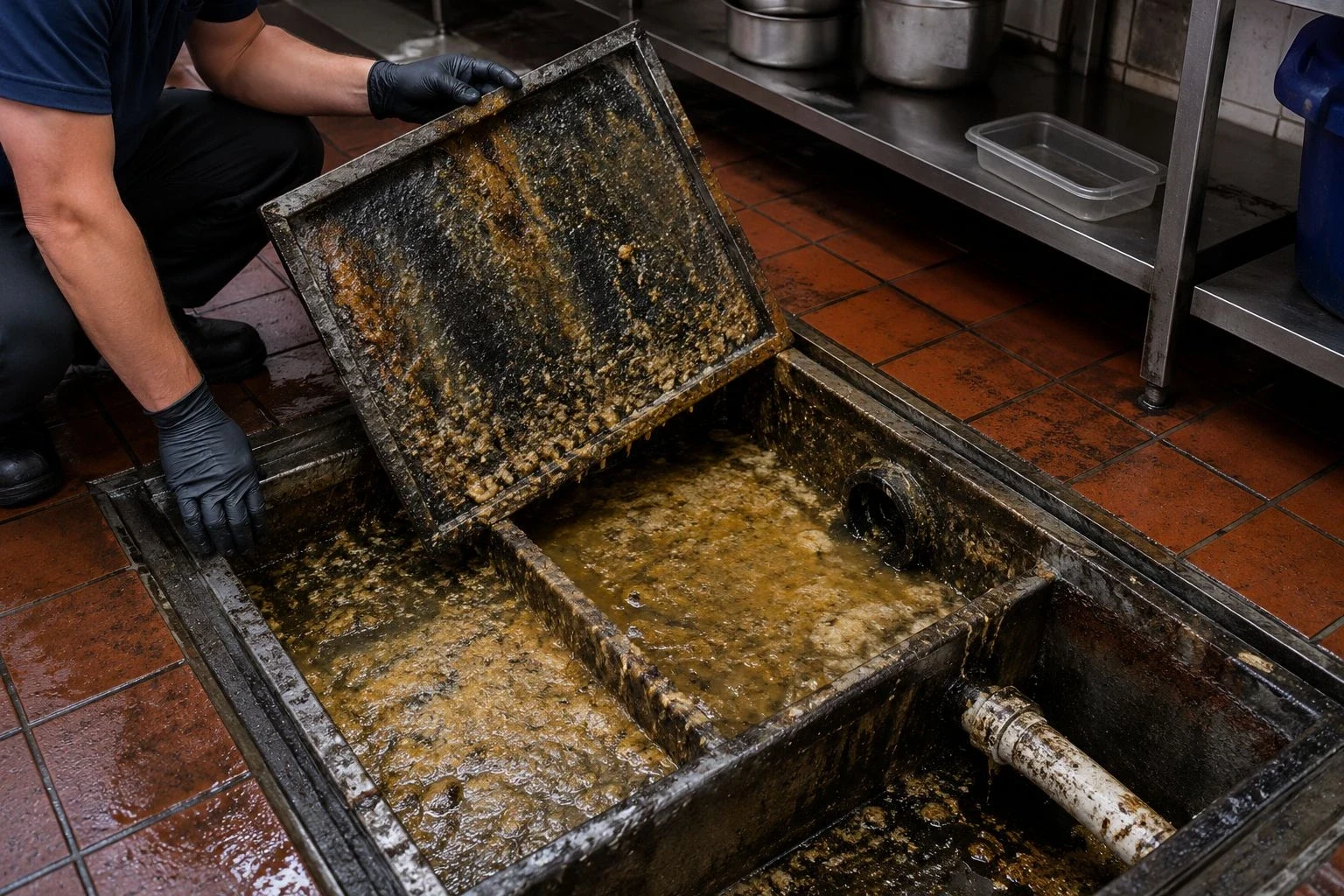
A cleaning resets the trap to empty, with the inside surfaces and moving parts checked. A trap holds grease back because wastewater slows down inside it. Grease floats, solids settle, and the water leaves through an outlet. Once the grease and solids fill a quarter of the trap's operating depth, it can't hold wastewater long enough to separate anything, and fat starts passing into the line. A full trap no longer keeps grease out of the sewer.
Indoor traps come in two broad kinds. Hydromechanical units sit under or beside the sink and are rated in gallons per minute (GPM). The grease capacity in pounds on those units runs at twice the GPM rating, so a 35 GPM unit carries at least 70 lb and a 50 GPM unit at least 100 lb. Under-sink units commonly run from 4 to 20 GPM and 8 to 40 lb, and larger ones reach 50 GPM and 100 lb. Passive traps, which sit under the sink or in a floor recess, typically hold 40 to 200 gallons. Past that, you're looking at an exterior interceptor, which is a separate job.
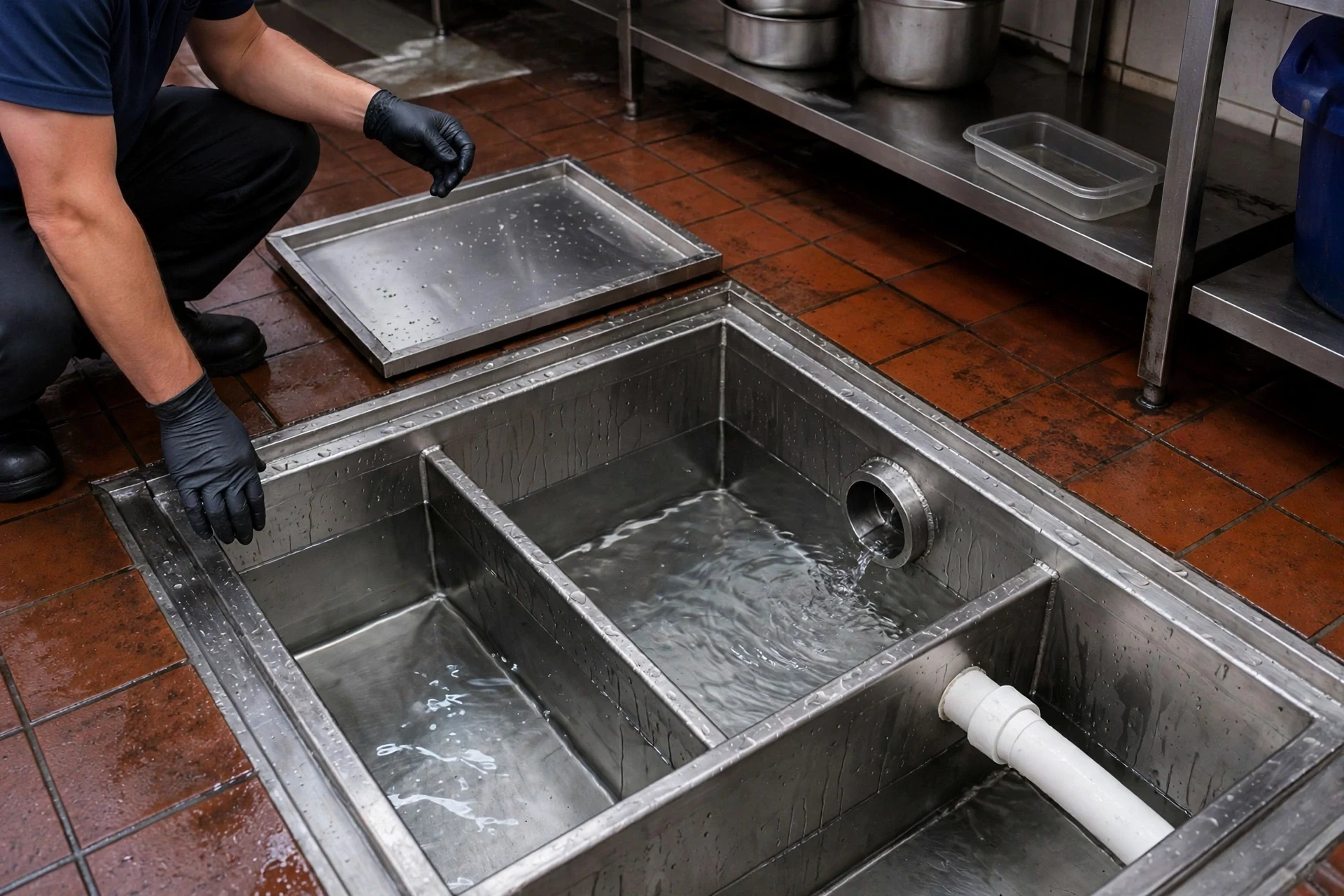
Most of the units we open are steel boxes with removable baffles, an inlet, an outlet tee and a vented lid. The baffles slow and redirect the flow. The outlet tee sets the water level and keeps floating grease from leaving the trap. Access matters as much as the trap itself. A lid buried under a prep table or a stack of cases costs time, so clear the space before we arrive if you can.
How a Visit Goes
Five steps, in this order, on every trap.
Step 1: Open and measure
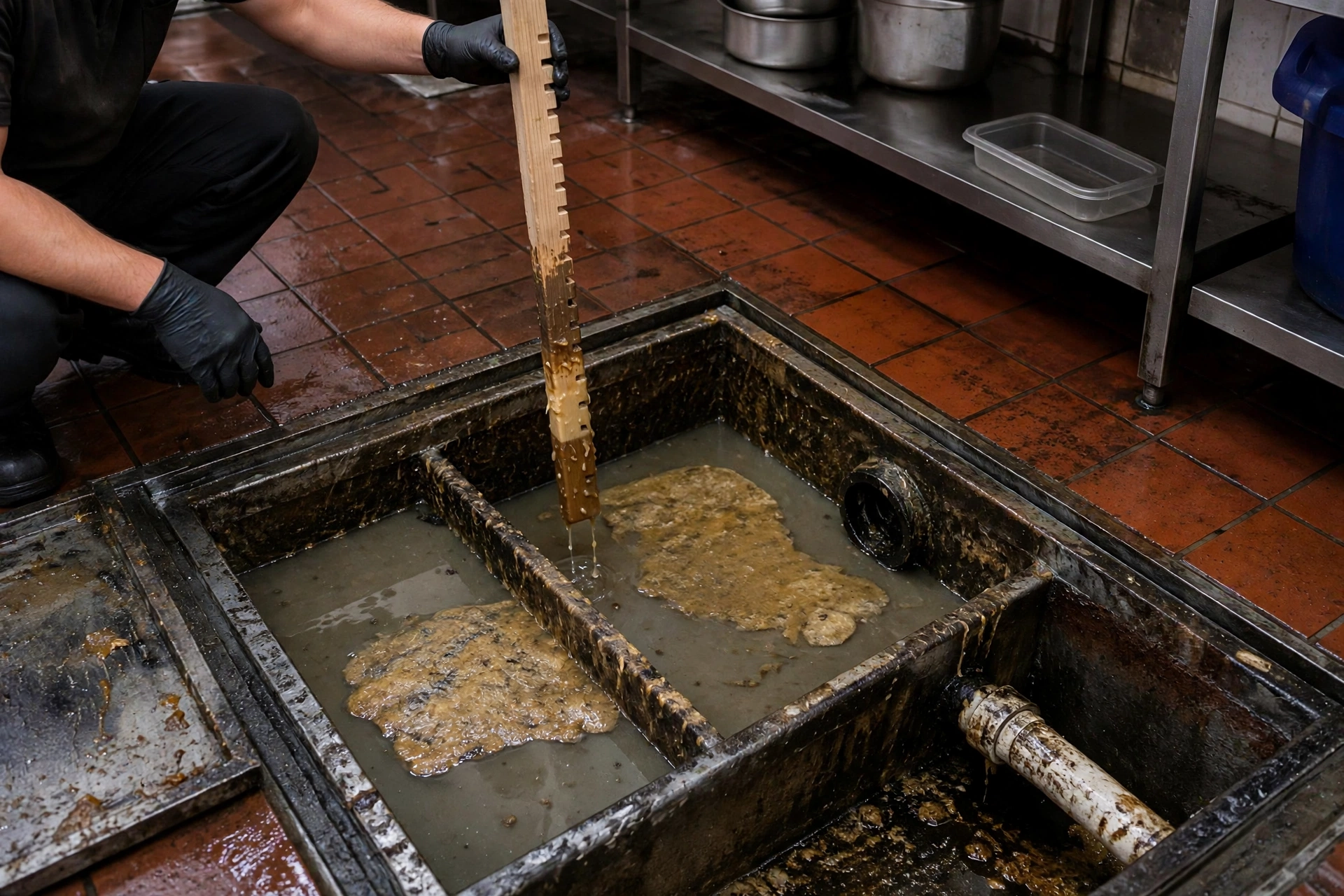
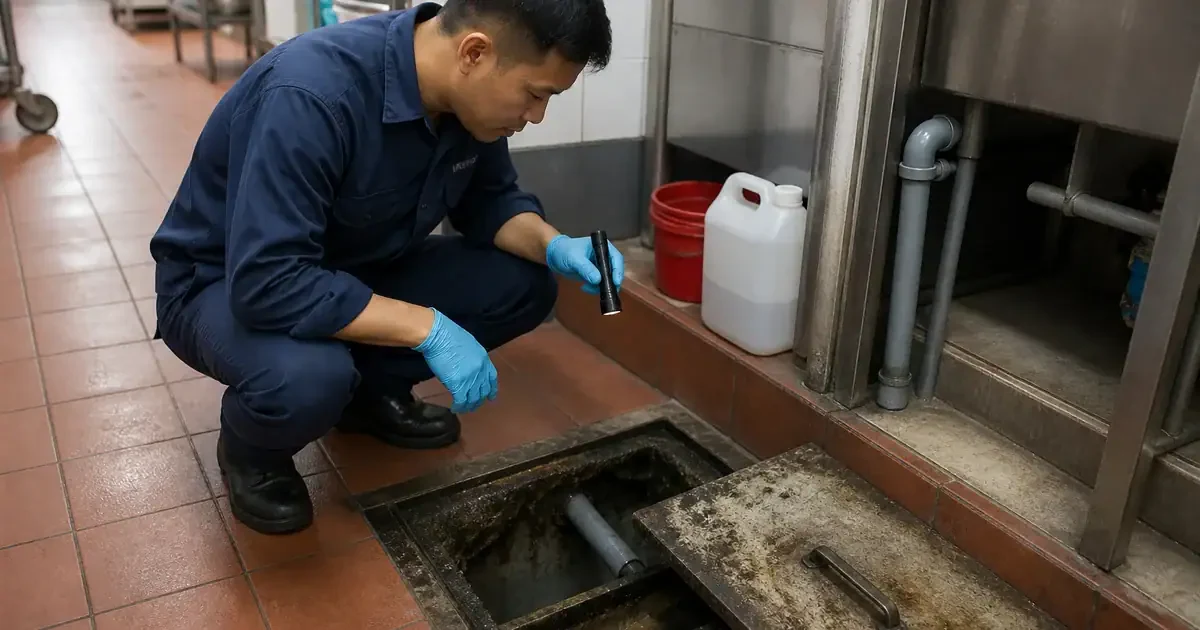
We lift the lid and check the trap's depth. We measure from the outlet water level to the bottom, then measure how much of that depth is grease and settled solids. If the contents are at or above 25 percent, the trap was already due.
Step 2: Pump it out completely
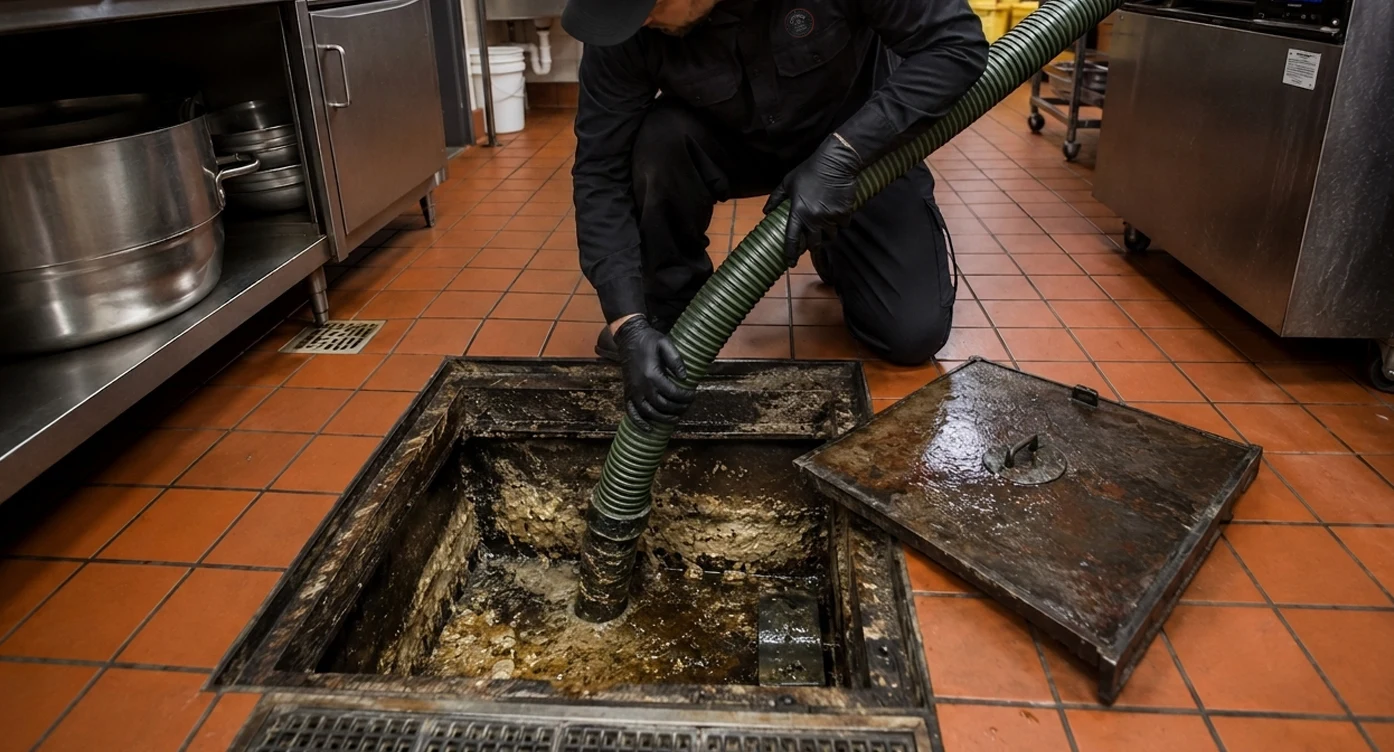
The hose goes in and the trap is emptied down to the floor of the unit, water, grease and solids together. Partial pump-outs leave the sludge that fills the trap fastest next time.
Step 3: Scrape the walls and baffles
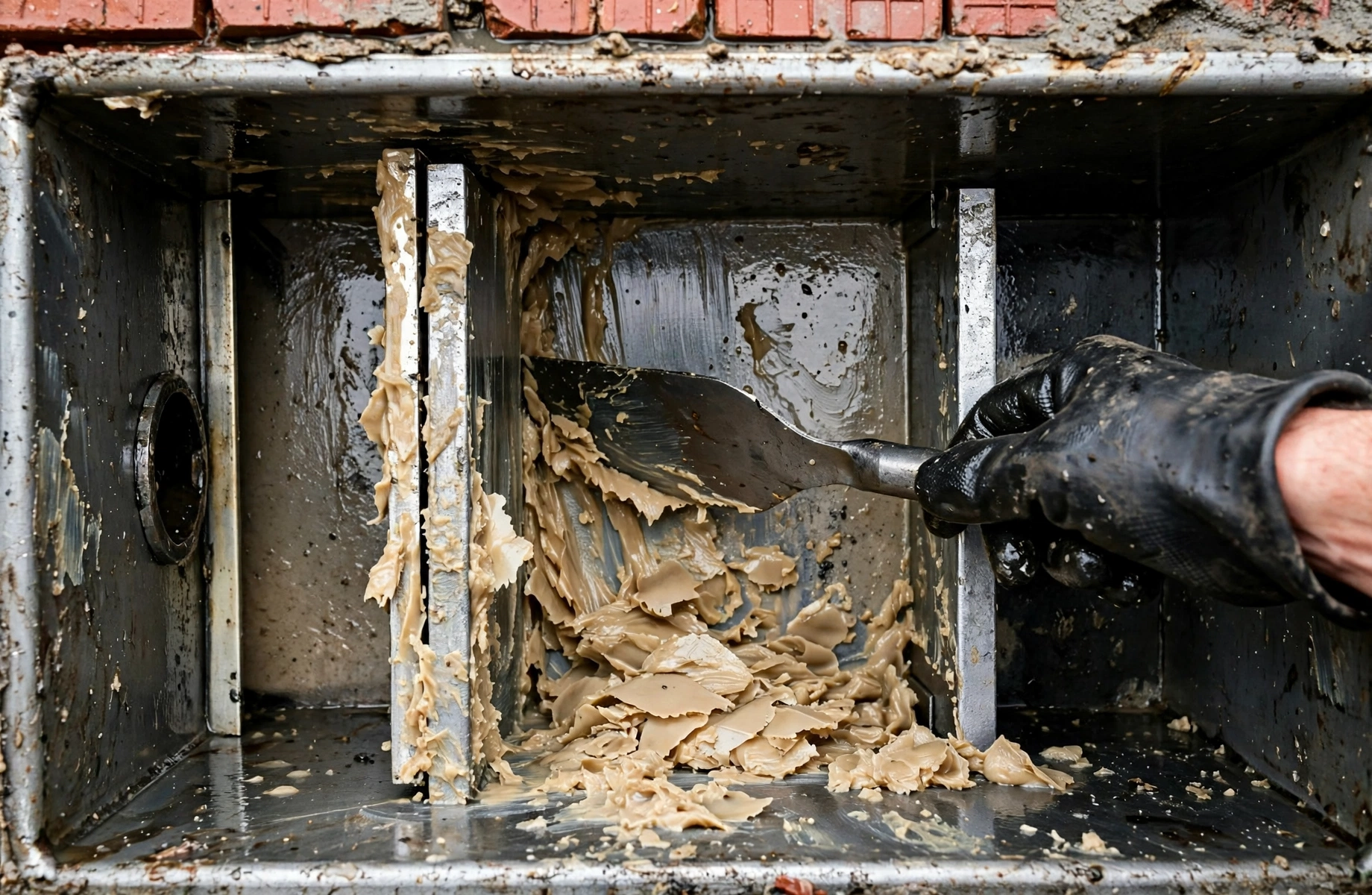
Grease cakes onto the walls and baffles and shrinks the usable space even after the water is gone. We scrape those surfaces down and pull out what's loose.
Step 4: Check the tees and the flow
We look at the inlet and outlet tees for cracks, loose fittings or blockage, and confirm the baffles are seated where they belong. Then we run water in and watch it pass through. Any defect goes in the report so you can fix it. The city allows 90 days to correct defects found at inspection.
Step 5: Reseal and document
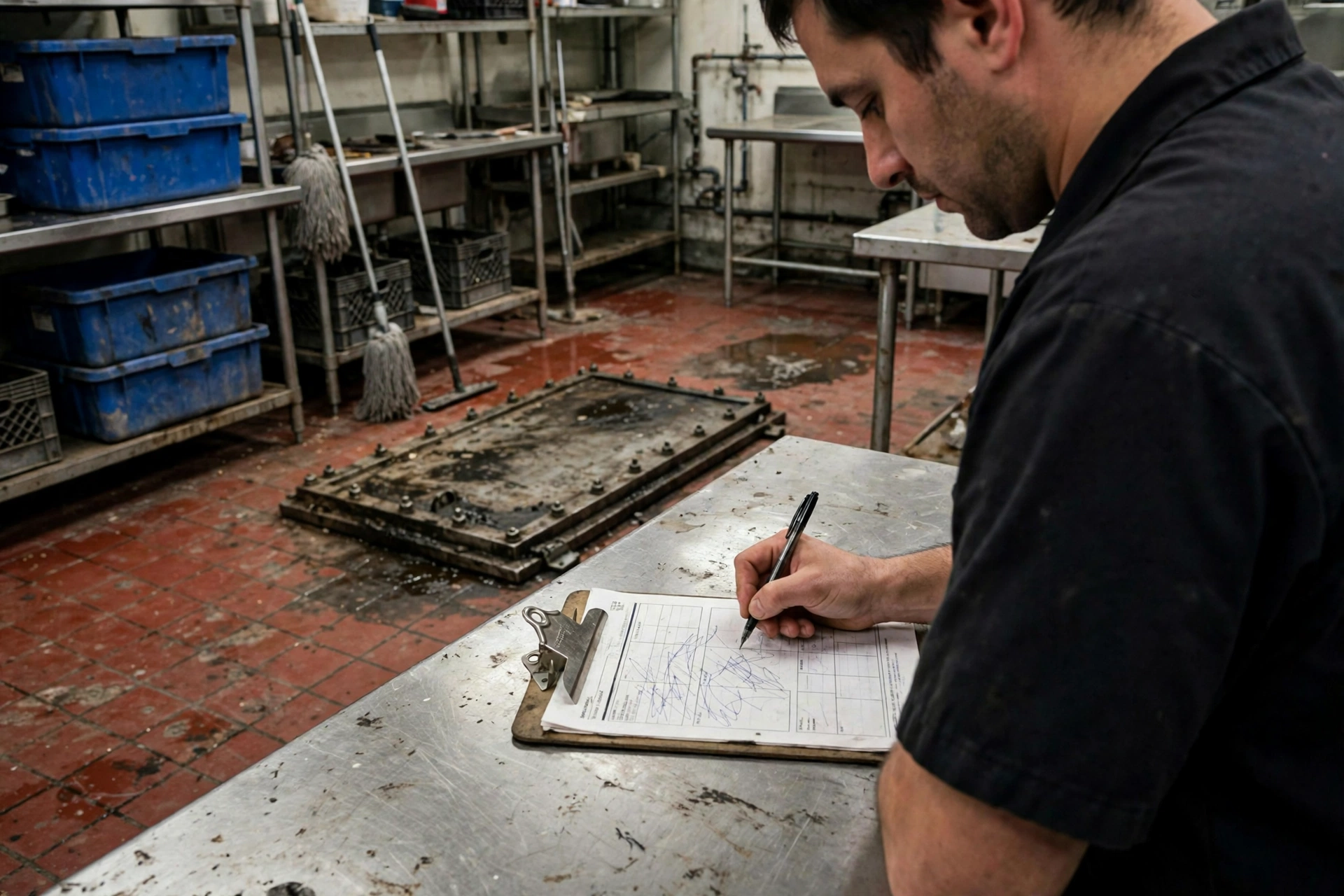
The lid goes back on and sealed. We photograph the trap and give you the manifest and service report for your records. For a first or renewal permit application, the applicant needs a receipt of service with images, a cleaning manifest and a detailed report of service.
How Often, and the City's Rules
Two rules apply in Orleans Parish. The first is time. Every grease trap must be cleaned at least every 90 days, or sooner when grease and solids reach 25% of capacity. The second is measure. When the contents reach 25 percent of design capacity, measured to the outlet invert, the trap has to be pumped within two working days.
Small traps reach 25 percent fast. Most local restaurants clean small traps every one to four weeks, and the 90-day limit is a ceiling that almost no busy kitchen can use. A fry-heavy line, a seafood house or a shop with a big dish operation sits at the weekly end. A lighter kitchen sits toward monthly. We set your interval by what we measure at the first two or three visits, then put it on a schedule.
Every trap and interceptor has to be permitted through the Sewerage and Water Board's FOG Program. Under it, manifests must be kept on site for three years. Keep them where a manager can find them in a minute.
What an Inspector Looks At
Inspectors check the permit, then the trap, then your records. On the trap, they look at the grease and solids depth against the 25 percent line, the condition of baffles and tees, whether the lid and access are clear and sealed, and whether the unit is the one on your permit. On the records, they want manifests in date order with no gaps longer than your interval allows. The state's manifest form carries the hauler's name, address, phone, vehicle number, LDEQ hauler registration number, the date and the volume. Louisiana sets no pumping interval of its own, so the enforcement you'll meet is the city's.
Compliance with the city program is judged on best management practices, keeping devices within the 25% rule, regular maintenance, documentation and employee training. A notice of violation for a trap over 25 percent is typically answered by cleaning the trap or interceptor in question.
What It Costs
These are our prices for indoor traps, per visit.
| Service | Our price |
|---|---|
| Indoor trap, up to 200 gallons, scheduled visit | $125 to $180 |
| Indoor trap, 201 to 500 gallons, scheduled visit | $175 to $475 |
| Emergency visit, indoor trap up to 200 gallons | $190 to $240 |
| Line jetting, done with a service visit | $100 |
| Heavy jetting | $300 to $600 |
| Used cooking oil collection (clean oil, containers 30 to 320 gallons) | No charge |
Traps between 501 and 749 gallons are uncommon indoors, and we price those once we've seen the unit. Interceptors outside the building are priced separately by tank size.
The price within a band depends on trap size, how far the truck has to run hose, how heavy the load is and how clear the access is. A trap kept on a regular schedule sits at the low end of its band, because there is less to remove each time.
Featured Job: The Po'boy Shop That Backed Up on a Friday
The call
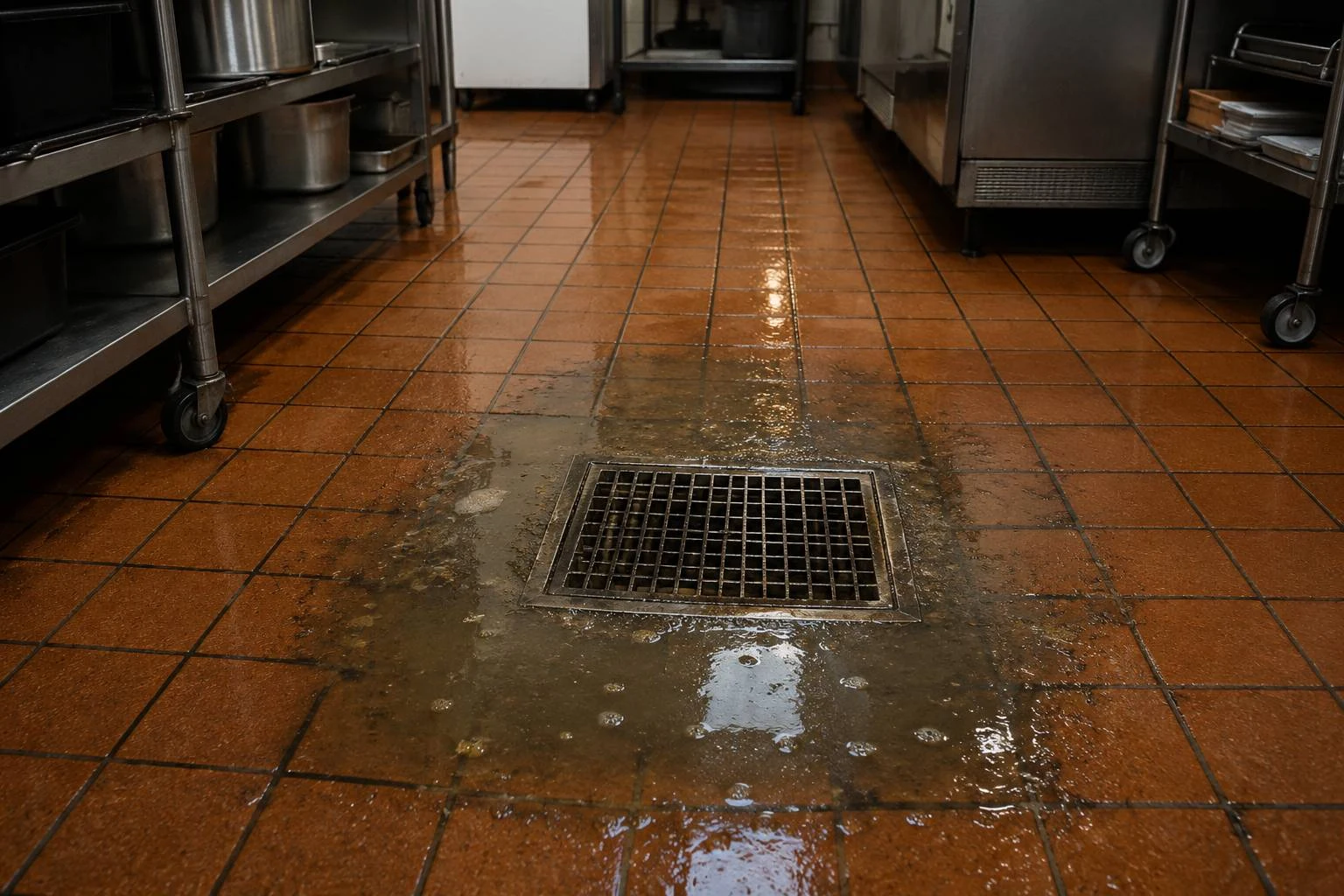
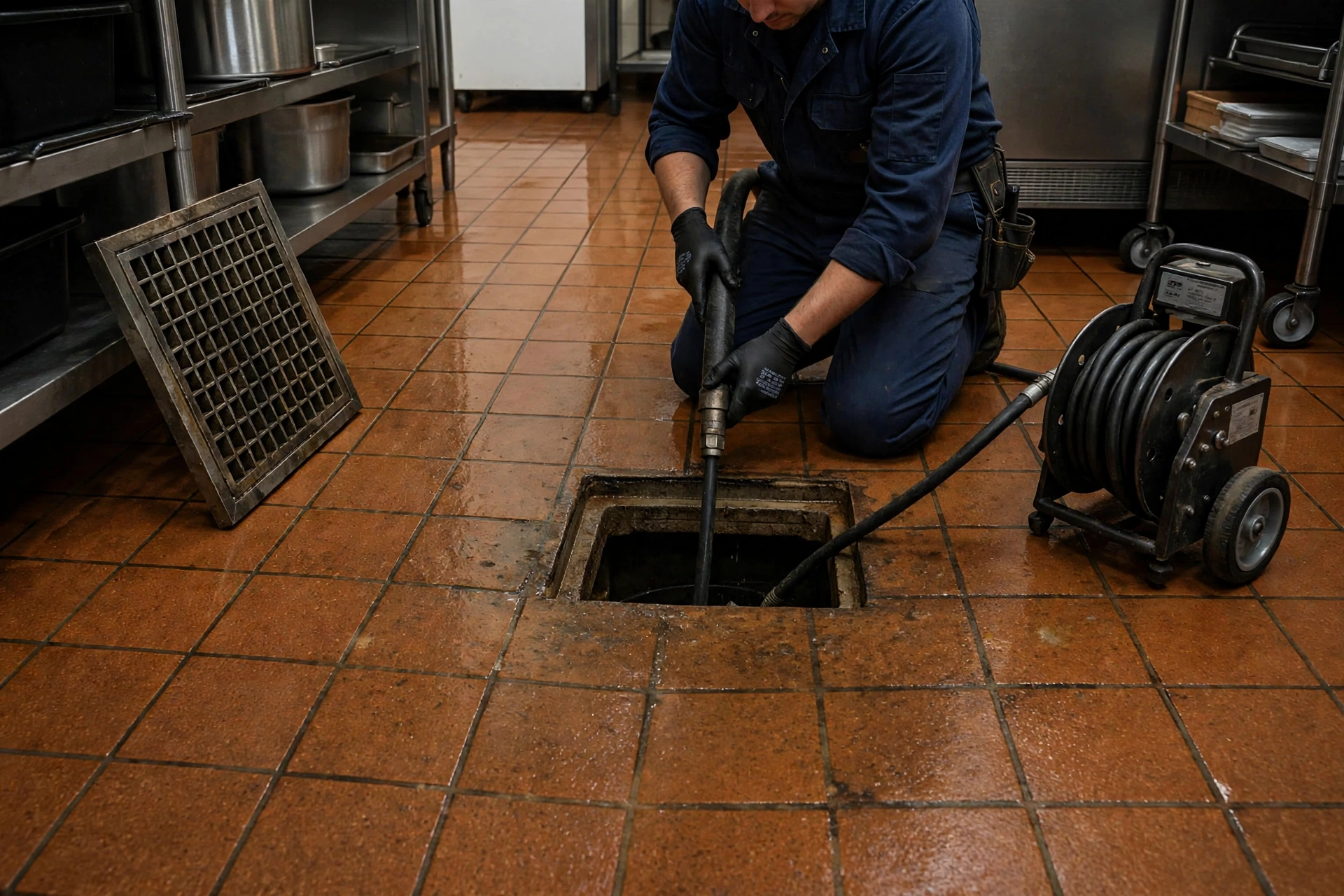
A po'boy shop on Banks Street in Mid-City runs fried shrimp, catfish and oysters from open to close. It has a three-compartment sink, a prep sink and a floor sink, all draining to an in-floor trap of about 100 gallons. The trap was cleaned when someone noticed the smell, which was roughly twice a year. On a Friday lunch rush, the dish pit filled with grey, greasy water and wouldn't drain. The cook who ran the shop called our number.
The work
The trap was over the 25 percent line by a wide margin, with a hard grease cap and a thick sludge bed under it. That made it an emergency visit, which for an indoor trap up to 200 gallons runs $190 to $240. We pumped it out to the floor and scraped the walls and baffles. The pipe between the sink and the trap was also coated with fat. We jetted it, and because we were already on site, jetting cost $100. The outlet tee was intact and the baffles were seated.
The schedule after
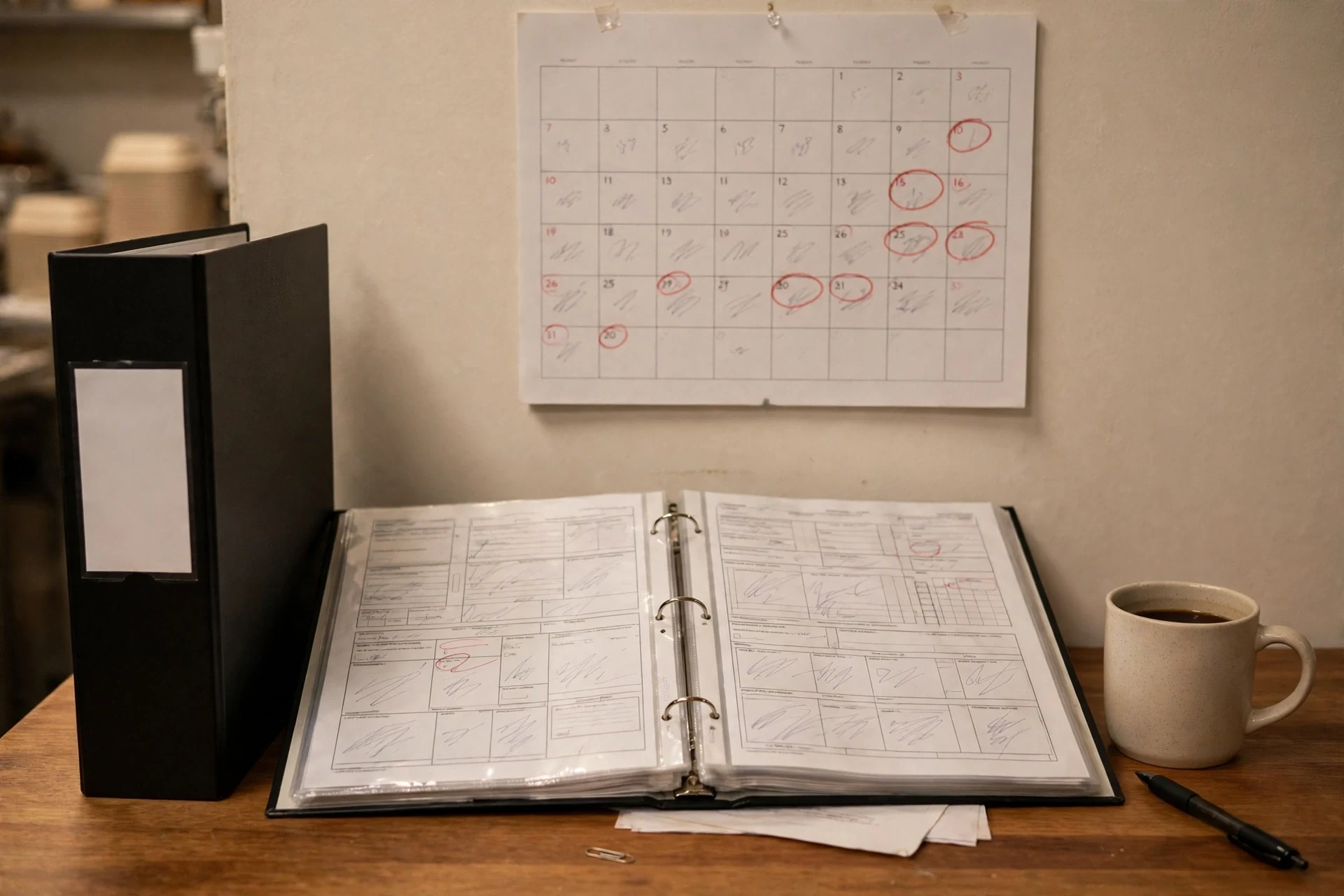
A shop frying all day couldn't stay on a twice-a-year schedule. We measured the trap at the next two visits and settled on every three weeks, which keeps the contents under 25 percent with room to spare. Each visit now sits in the scheduled band of $125 to $180, since the trap is a 100-gallon unit. The manifests and photos go into one folder in the shop's office, ready for the three-year file and the permit renewal.
Call Us About Your Trap
If your trap is overdue, close to backing up or due before an inspection, call (504) 360-9231, Monday to Friday, 9:00 AM to 5:30 PM. Tell us the kitchen type and what the trap is doing. We'll tell you which price band you're in.
Questions
Do you clean under-sink and in-floor traps in restaurants?
Yes. Indoor traps are what this service covers, from small under-sink units to in-floor traps of up to about 500 gallons. If your unit turns out to be larger, we'll tell you when we see it.
What does a trap cleaning cost?
Our price for an indoor trap up to 200 gallons is $125 to $180 on a scheduled visit. A trap of 201 to 500 gallons runs $175 to $475. Where you land in a band depends on load, access and how often the trap is serviced.
What does an emergency visit cost?
Our emergency price for an indoor trap up to 200 gallons is $190 to $240. We don't list a price for emergency visits on traps of 201 to 500 gallons, and we don't guess at one here. Call and describe the trap and we'll tell you where it falls.
How often does my trap need cleaning?
The city requires at least every 90 days, and sooner when the contents reach 25 percent of design capacity. Most local restaurants clean small traps every one to four weeks. We set your interval by measuring the trap, not by guessing.
What is the 25 percent rule?
It's a depth measure. Grease and settled solids together should stay under a quarter of the trap's operating depth, measured down from the outlet water level. When they reach 25 percent of design capacity, the city expects the trap pumped within two working days.
What does an inspector check?
The permit, the depth of grease and solids against the 25 percent line, the baffles and outlet tee, the lid and access, and your manifests. Defects found at inspection have 90 days to be corrected, and records stay on site for three years.
What paperwork do I get?
A manifest and a service report with photos for each visit. State manifests carry the hauler's name, address, phone, vehicle number, LDEQ hauler registration number, the date and the volume.
How do I know what size my trap is?
Look for a plate or a stamp on the lid or body, which usually shows the GPM rating and grease capacity in pounds. A 50 GPM unit holds about 100 lb of grease. If there's no plate, we'll measure it on the first visit and note the size in your file.
Can you skim the grease and leave the rest?
No. Skimming leaves the settled solids, which are what fill a trap fastest, and the trap goes over the 25 percent line again quickly. We pump the trap out completely every time.
What is line jetting and when do I need it?
It's high-pressure water cleaning of the drain line between your sinks and the trap. It's worth doing when sinks drain slowly even though the trap is empty. Jetting costs $100 when done with a service visit, and heavy jetting runs $300 to $600.
Do you take used cooking oil?
Yes. We collect clean fryer oil at no charge, in containers from 30 to 320 gallons. Keep trap contents and wash water out of the oil container, since the oil has to stay clean.
Do you set up a regular schedule?
Yes, on any interval your measurements call for, from weekly to every 90 days. Each visit adds a manifest and report to your file, so a three-year record builds up without anyone chasing it.
Start Your Service
Send us your name and phone number and tell us about your kitchen. We call during business hours, Monday to Friday, 9:00 AM to 5:30 PM, or you can call (504) 360-9231 directly. The more details you give, the better we are able to help you.
Name (required) Phone (required) Service (optional) Town (optional) Message (optional) [ ] I agree to be contacted about my request. (required) [Send my request]