New Orleans Grease Trap handles used cooking oil collection for restaurants and commercial kitchens across New Orleans, Louisiana, and we do it at no charge when the oil is clean. A sealed container sits at your back door, your fryer oil goes into it, and we empty it on the same visit that we service your trap. You don't have to find a second vendor, and you don't have to keep drums of old oil in the kitchen.
Most kitchens we talk to already pay someone to clean the trap and have somebody else, or nobody, dealing with the fryer oil. Putting the two on one truck and one schedule is simpler. One call sets up both, and the paperwork for the trap and the pickup stays in one place.
If you want to get started, call (504) 360-9231 or send the form at the bottom. We are open Monday to Friday, 9:00 AM to 5:30 PM.
What the service covers
We collect clean used cooking oil from fryers. That means the oil you drain from the fry station when it has finished its useful life, not the wastewater and solids that collect in a grease trap or interceptor. Trap and interceptor waste is a separate job with its own rules, and we do that work too.
The container is the heart of it. Containers run from 30 gallons up to 320 gallons, and the size depends on how much oil your kitchen turns over. A po'boy shop with two fryers does not need what a hotel banquet kitchen needs. We look at your fryer count, how often you change oil, and the room you have behind the building, then size the container to match.
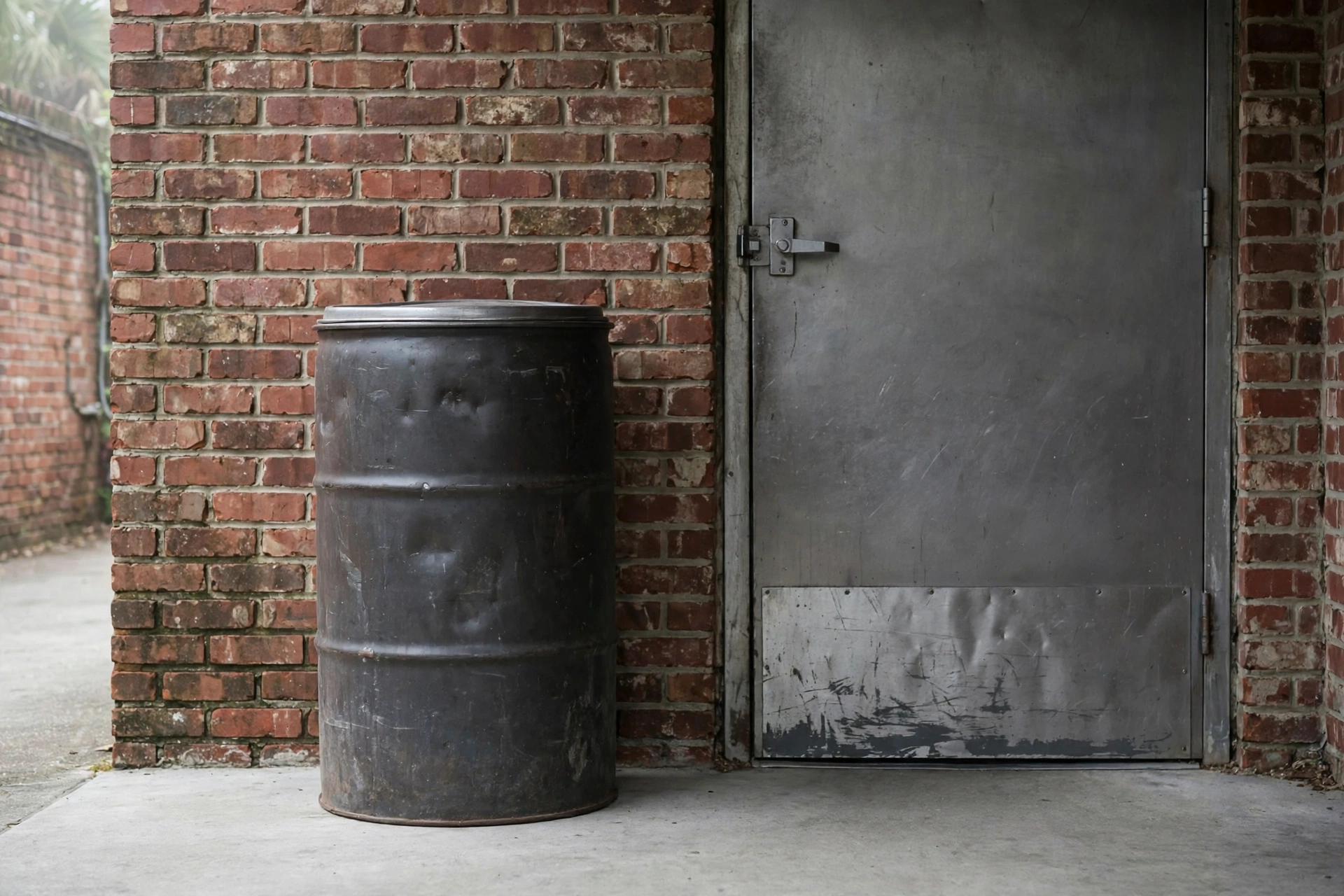
Why oil never goes down a drain or into a dumpster
Hot fryer oil looks like a liquid and acts like one for about a minute. Once it cools in the line it turns to a paste and then a solid, and it coats the pipe wall. What doesn't stick to the pipe travels on to your trap or interceptor and fills it faster than your food scraps and dishwater would on their own.
That matters because of the rules you work under. The City of New Orleans permits every trap and interceptor through the Sewerage & Water Board FOG Program. The trap has to be pumped at least every 90 days. When the contents reach 25 percent of design capacity, measured to the outlet invert, it must be pumped within two working days. Oil poured down the sink pushes you toward that 25 percent mark sooner, and that means more pump-outs, more cost, and a closer call at inspection.
A dumpster is no better. Liquid oil leaks through the bin, runs onto the pavement, draws pests and ends up in the storm drain. A sealed container keeps the oil where you put it until we arrive.
What happens after pickup
We take the oil away from your kitchen in our truck and it does not go to a drain or a landfill. It leaves for recycling. We keep the oil clean and separate from trap waste so that it can be handled as a recyclable product and not as waste.
How the work goes
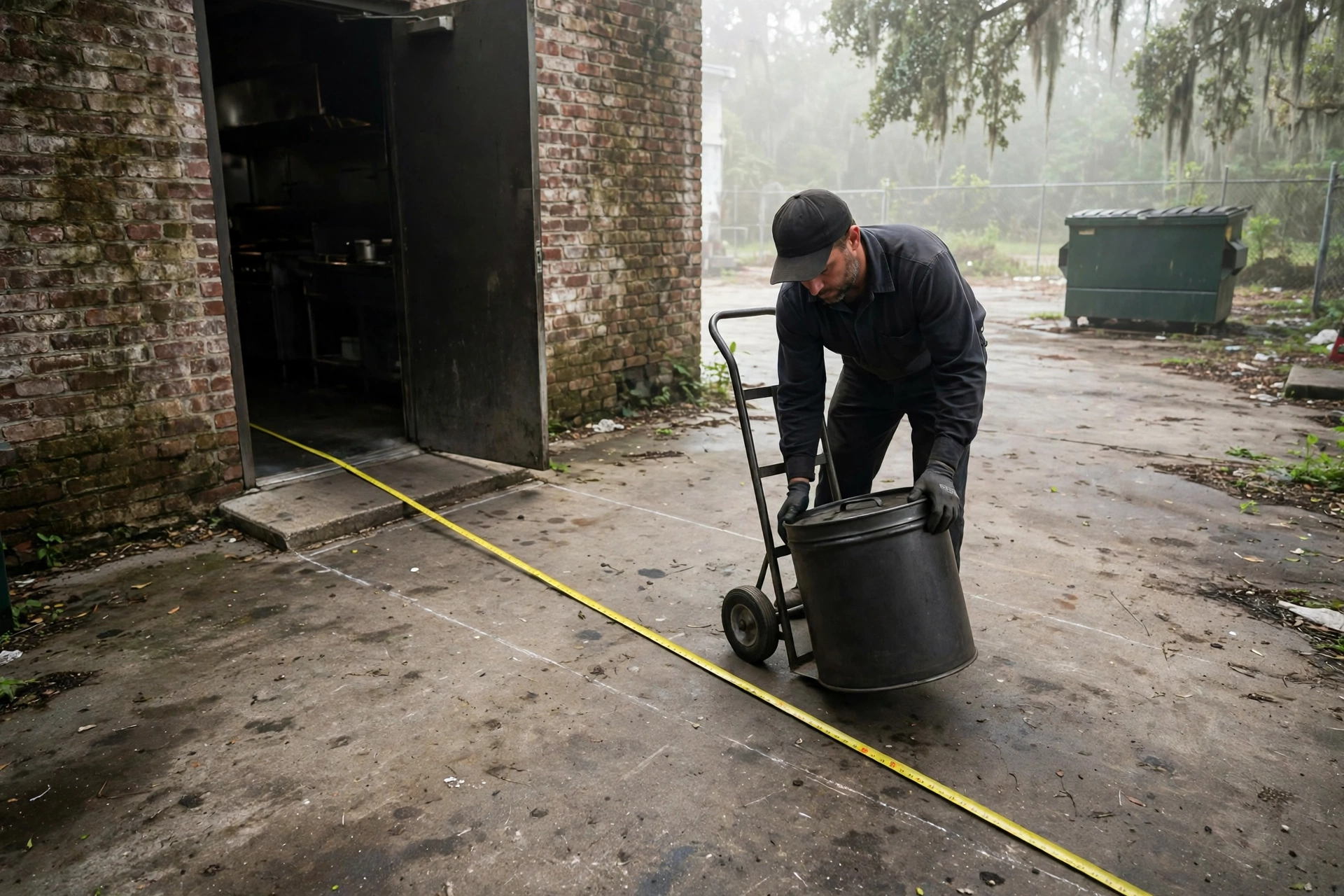
1. We place the container. We walk the back of the building with you, choose the spot and the size, and set the container. You get a lid that seals and a container sized to your fryers.
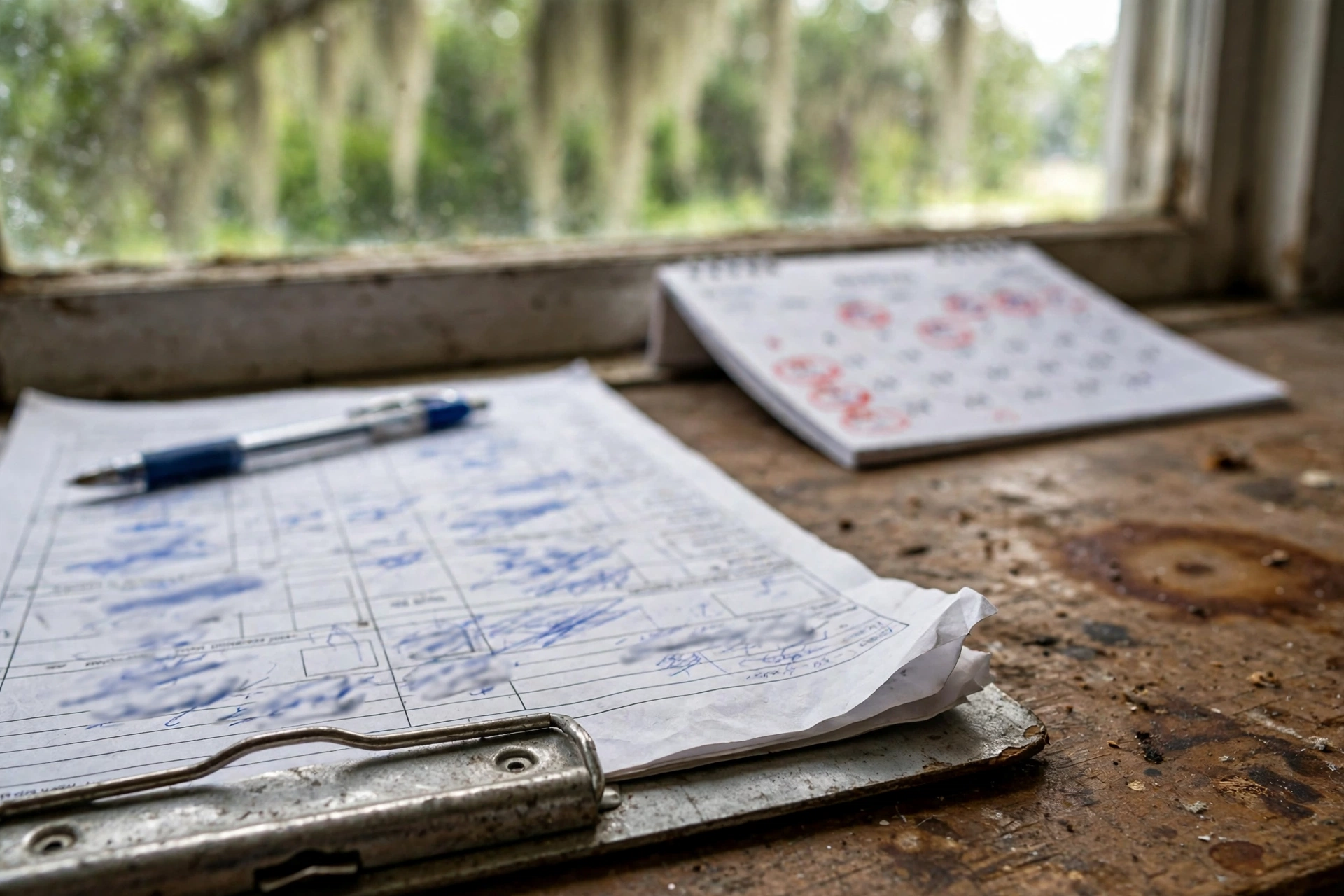
2. We schedule the pickup with your trap round. Many local kitchens clean small traps every one to four weeks, and your oil is collected on those same visits. If you fry less and your trap goes longer between visits, we can set the oil pickup around your actual volume. The trap still has to be pumped at least every 90 days, and we plan around that first.
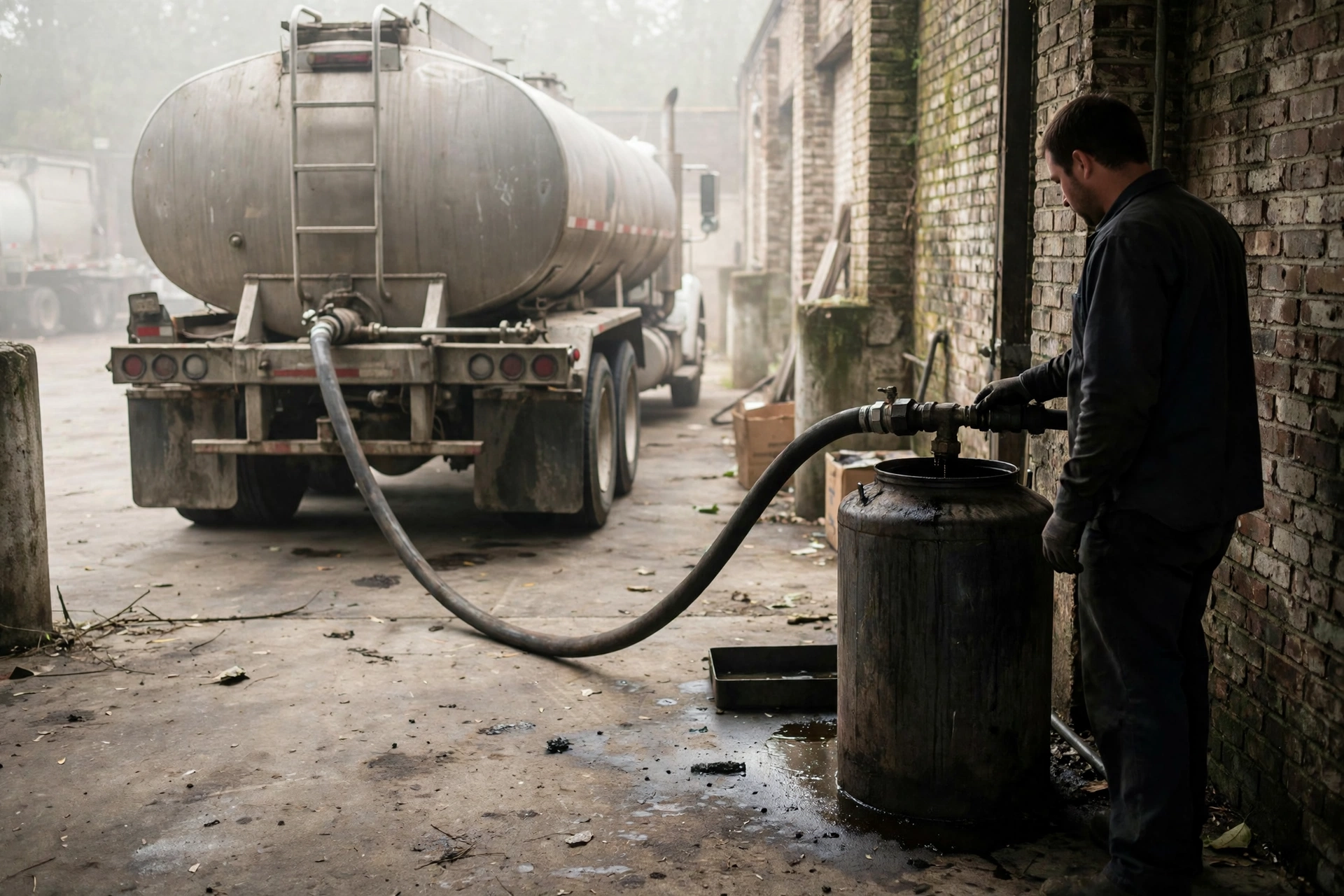
3. We pick up the oil. The technician checks the container, opens it, transfers the oil through a hose, shuts the lid and wipes the area. If the oil is dirty or has water or trap waste in it, we tell you before we load it, because clean oil is what we collect without charge.
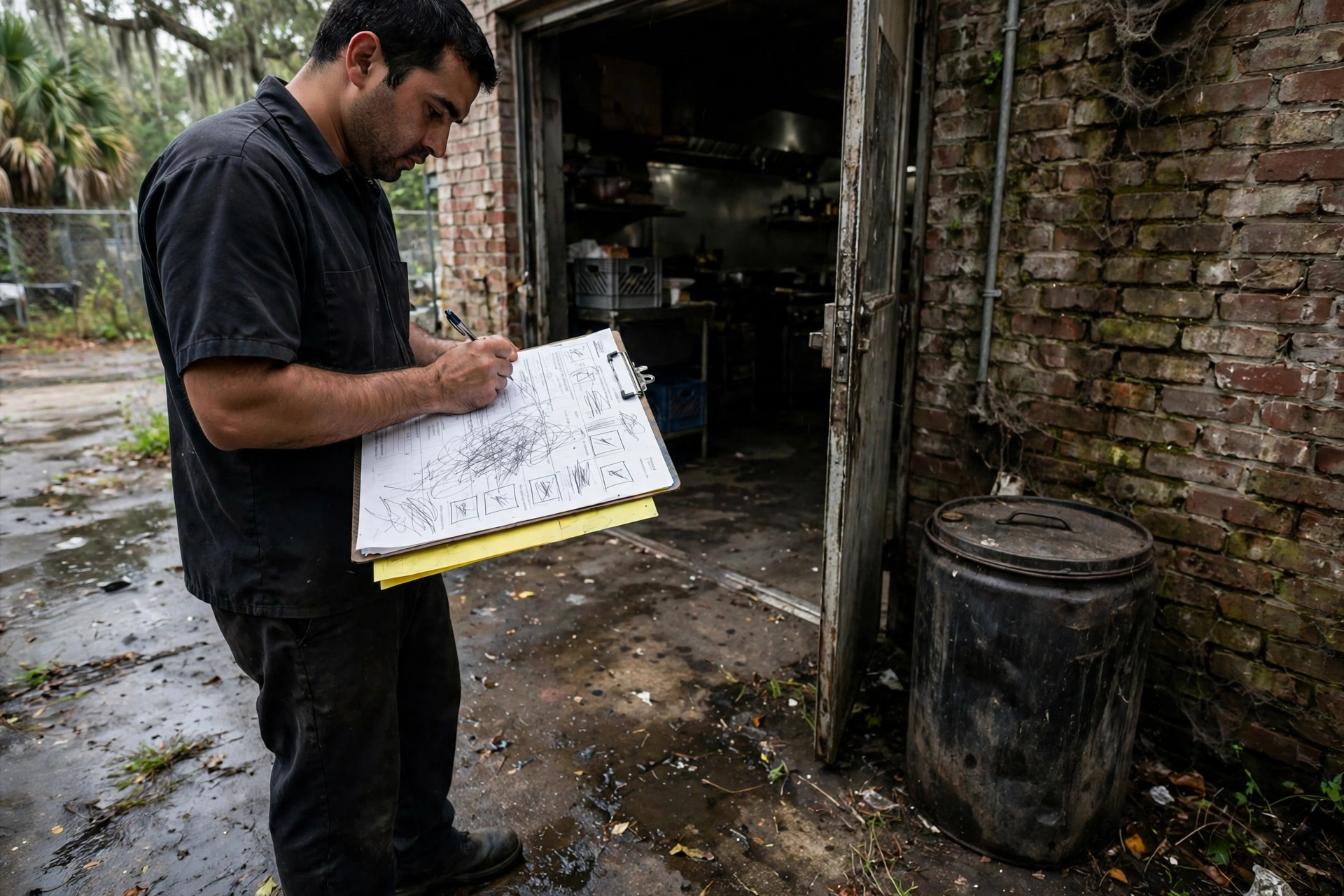
4. You keep the record. Whatever we leave goes in your file with your trap paperwork. When an inspector asks to see your service history, it is all in one folder.
What it costs
The collection itself costs nothing. Clean used cooking oil is collected at no charge, in containers from 30 to 320 gallons, and the pickup rides with your trap service.
The trap service is what you pay for, and our prices are set by size:
| What we service | Our price per scheduled visit |
|---|---|
| Indoor trap up to 200 gallons | $125 to $180 on a scheduled visit. |
| Indoor trap of 201 to 500 gallons | $175 to $475. |
| Interceptor of 1,000 to 1,500 gallons | $225 to $450. |
| Interceptor of 1,501 to 2,000 gallons | $600 to $1,200. |
| Interceptor of 2,001 to 3,000 gallons | $800 to $2,500. |
| Line jetting | $100 when done with a service visit. Heavy jetting runs $300 to $600. |
Where you land in a range depends on how full the trap is, how easy it is to reach and how much solid has built up. We confirm your number before the first visit.
Featured job: a po'boy shop on Magazine Street
A neighborhood po'boy shop with two fryers, a small prep kitchen and a back door that opened onto a narrow alley. The owner called because the alley had become a problem. Staff were pouring spent oil into old cardboard-lined boxes and a few mismatched buckets, some of which tipped over every week. The dumpster lid was greasy, the alley smelled, and the trap inside the kitchen was filling faster than it should.
The back door before
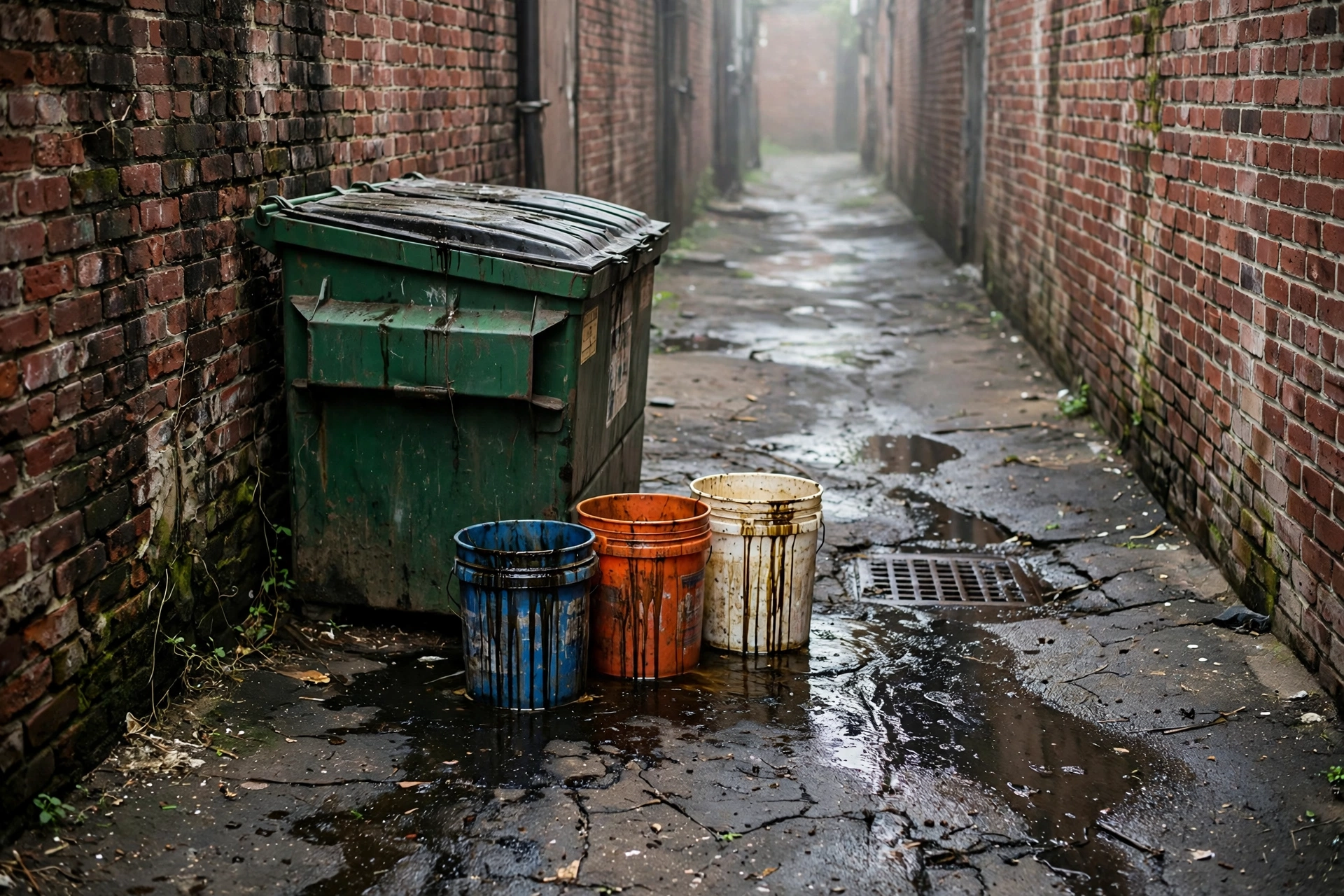
The shop's indoor trap was under 200 gallons. Staff were scraping plates and rinsing fryer baskets in the same sink, and some oil was going into the line. The trap was due for service and the oil needed a home.
Setting it up
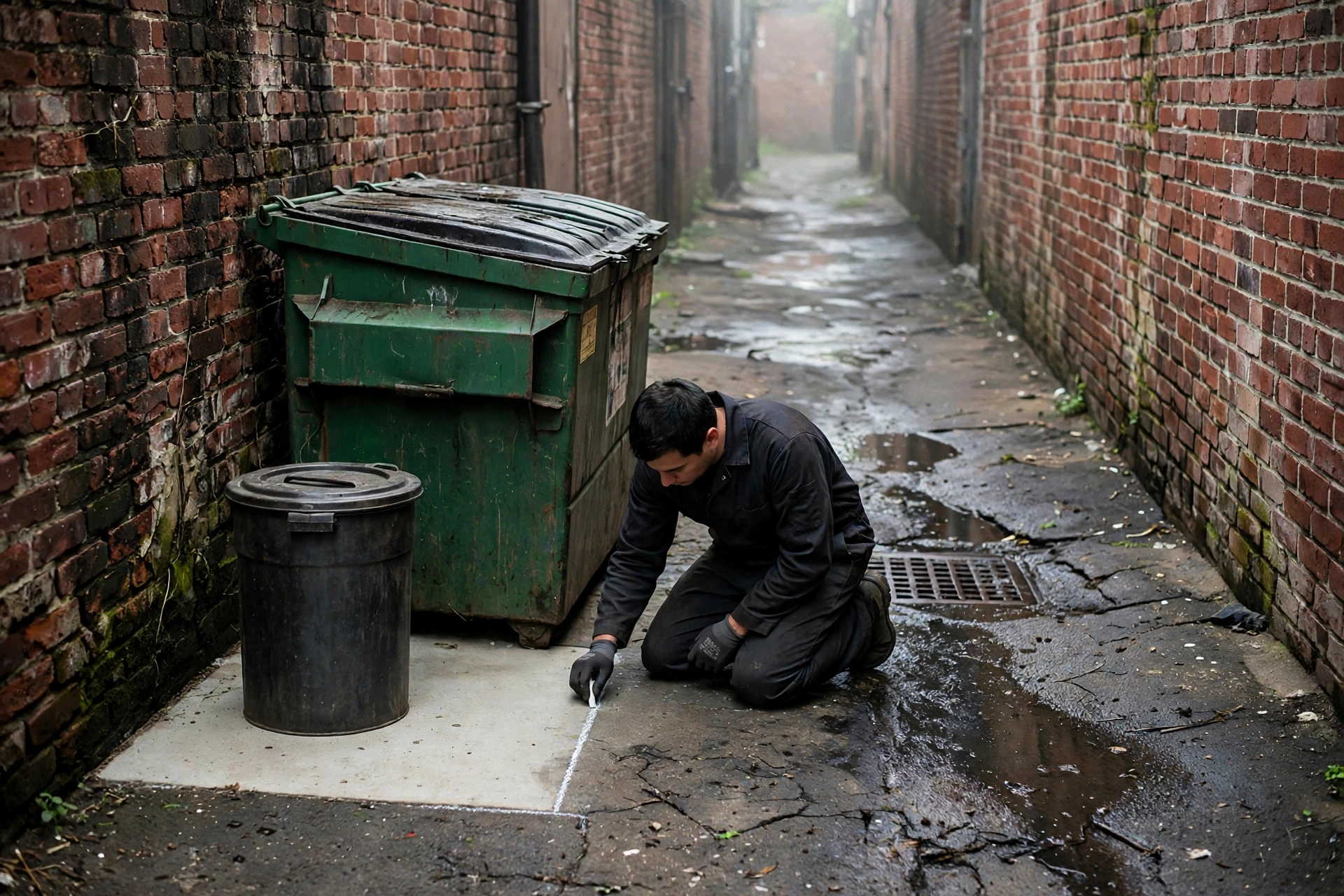
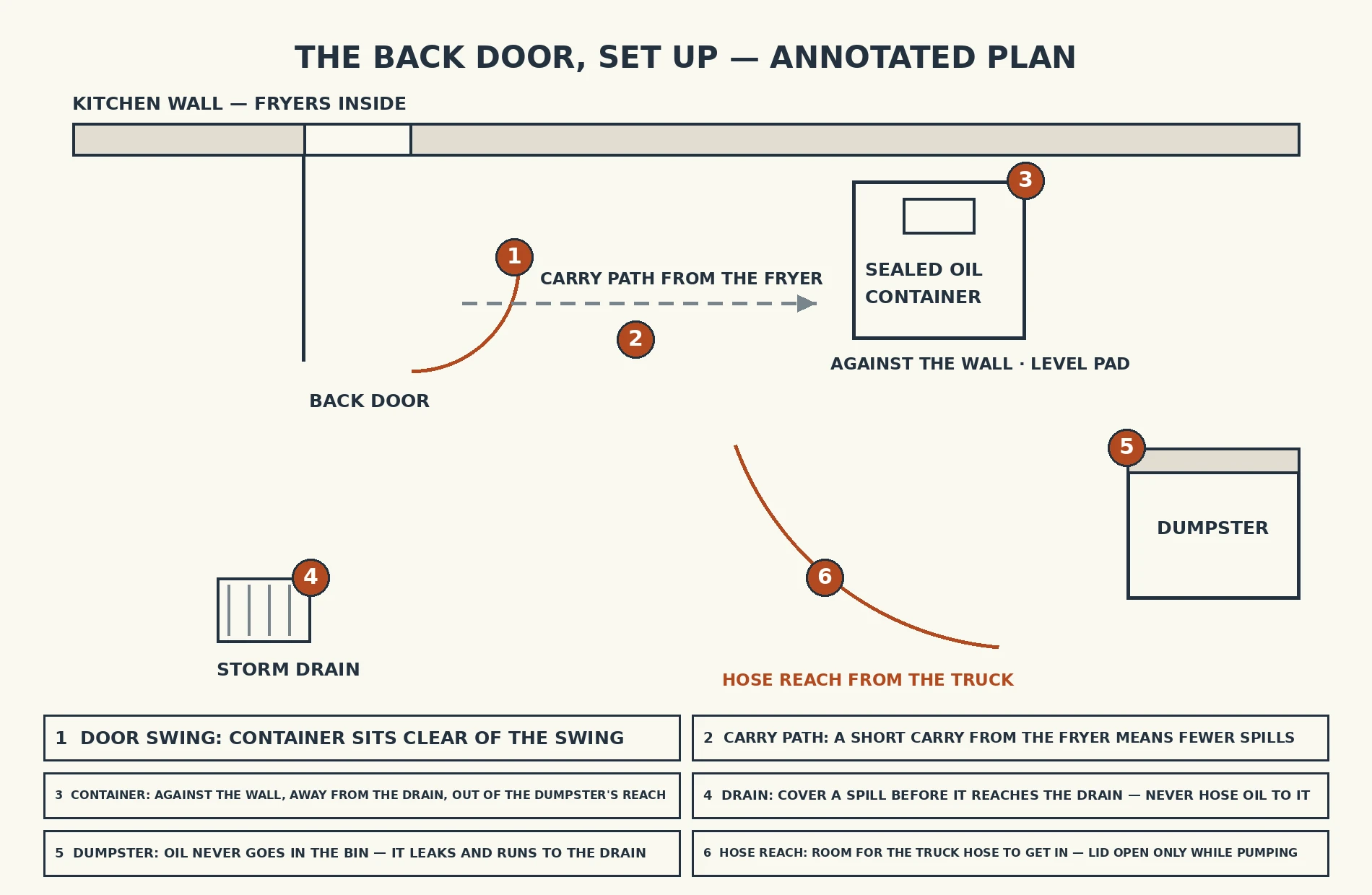
The door swing.
The carry path from the fryer.
The container position.
The drain.
The dumpster.
The hose reach.
We sized the container to two fryers and the shop's oil changes, set it on a level spot and explained to the kitchen staff how to funnel the oil in without carrying a full pan across the alley. A trap service visit was booked, and the oil pickup was added to the same route sheet.
Six weeks on
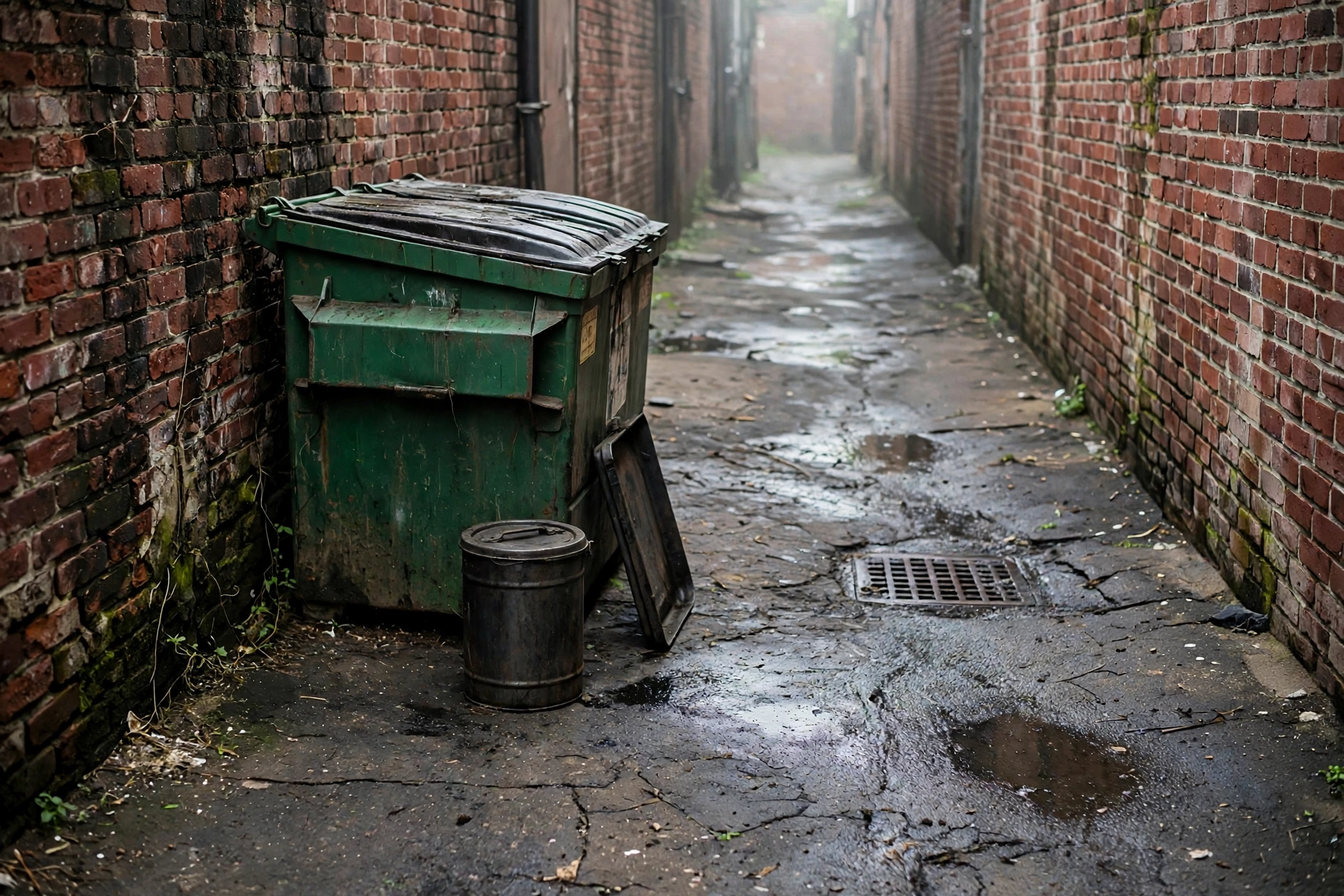
For a trap this size the service on a scheduled visit runs $125 to $180. The oil pickup added nothing to that bill. The shop now sees the same truck for both jobs, the alley stays dry, and the trap paperwork sits in one folder when the city asks.
Need it set up? Call us
If your back door looks anything like that alley, call (504) 360-9231 or send the form below. Tell us your fryer count, your trap size if you know it, and where the container would sit. We will price the trap service, set the container and put the pickup on your round.
Theft and spill, the practical side
Used oil has value, and kitchens in this city do lose it to people who pull up at night and pump out an open drum. A lidded container kept close to the building, in view of a door or a light, is harder to take from than a drum in the alley. If your container is missing or damaged, call us and we will sort out what to do next.
For spills, keep an absorbent and a scoop at the back door. Cover any spill before it reaches a drain, sweep up the absorbent and put it in the trash. Do not hose oil into the street. Do not flush it into the trap. Tell us on the next visit and we will look at the container and the pad.
Questions
Is used cooking oil collection really free?
Yes, when the oil is clean. We collect clean used fryer oil at no charge. What you pay for is the trap or interceptor service the pickup rides with.
What sizes of container do you offer?
Containers run from 30 gallons to 320 gallons. We choose by your fryer count, how often you change oil and the space behind your building.
What counts as clean oil?
Fryer oil that has not been mixed with water, trap waste, dishwater, cleaning chemicals or food solids beyond normal fry sediment. If the container has been contaminated, tell us, and we will check it before loading.
Can I put oil in the grease trap instead?
No. Oil in the trap fills it faster and moves you toward the 25 percent mark, at which the city requires pumping within two working days. The container exists so that oil stays out of the trap and the drain.
Why can't I put it in the dumpster?
Liquid oil leaks through a dumpster, draws pests and can reach the storm drain. A sealed container keeps it contained until pickup.
How often do you pick it up?
With your trap round. Many local kitchens clean small traps every one to four weeks, and we collect the oil on those visits. If your oil volume is different from your trap schedule, we can adjust the pickup.
Do I need a trap service with us to get oil collection?
The collection rides with trap service, and that is how it is scheduled. Call us at (504) 360-9231 and we will talk through your situation.
What does your trap service cost?
An indoor trap up to 200 gallons is $125 to $180 on a scheduled visit. A 201 to 500 gallon trap is $175 to $475. Interceptors of 1,000 to 1,500 gallons run $225 to $450, 1,501 to 2,000 gallons run $600 to $1,200, and 2,001 to 3,000 gallons run $800 to $2,500. Line jetting is $100 with a service visit.
What paperwork do I get?
A service record for each visit, kept with your trap paperwork. Trap and interceptor waste moves on Louisiana DEQ manifests that show the hauler's name, address, phone, vehicle number, registration number, date and volume. The city expects manifests and service records kept on site for three years.
What happens to the oil after you take it?
It leaves your kitchen in our truck and goes for recycling. We keep it separate from trap waste.
What if my container is stolen or damaged?
Call us at (504) 360-9231. A lidded container close to the building is harder to tamper with, and we can look at where it sits.
Do you serve my area?
We are based in New Orleans and serve kitchens across Orleans Parish and nearby towns. Call us and we will confirm your address.
What are your hours?
Monday to Friday, 9:00 AM to 5:30 PM.
Start your pickup
Tell us who you are and where to reach you, and we will call you back about your container and your trap service. Name and phone are required. Service, town and message are optional. The more details you give, the better we are able to help you.
[FORM: Name (required) | Phone (required) | Service | Town | Message | Consent checkbox (required)]
Or call (504) 360-9231, Monday to Friday, 9:00 AM to 5:30 PM.