New Orleans Grease Trap handles grease trap cleaning for Westwego kitchens, from the seafood houses and market-restaurants along Sala Avenue to the smaller counters and dining rooms in between. We are based in New Orleans, about twenty minutes from town, and we come to you on a set schedule or when a trap is full and cannot wait.
Seafood kitchens put more fat and fry oil through a drain than most, and the same truck visit that clears your trap can take your spent cooking oil with it. We pick up clean used oil at no charge, so one stop covers both jobs. If you want a trap cleaned this week, call (504) 360-9231 and tell us what you cook and how big the trap is.
Start with a call
Monday to Friday, 9:00 AM to 5:30 PM, a person answers at (504) 360-9231. Give us the size of the trap if you know it, or describe where it sits and we will work it out. The form at the bottom of this page reaches the same desk.
Westwego kitchens and why the trap comes first
Westwego is a working river town. Its food is seafood-led, with boiled and fried plates, market counters that cook what they sell, and lunch trade from people who work on the water and the docks. That kind of kitchen runs a fryer hard and rinses a lot of batter, butter and shellfish residue down the sinks. The trap is what stands between that and your line, and it fills faster than owners expect.
Most of the kitchens we see in this trade run small indoor traps, the passive type, roughly 40 to 200 gallons, tucked under a prep sink or in a back wall closet. Locally, restaurants with traps this size clean them every one to four weeks. Where you land in that range depends on how much you fry and how much comes off the plates, not on the calendar.
The measure that decides it is the quarter-full rule. When grease and solids reach 25 percent of the trap's design capacity, measured to the outlet invert, it is due. Past that point the trap stops separating well and starts passing fat downstream. That is how a kitchen ends up with a slow drain on a Friday lunch.
How the service runs for a Westwego kitchen
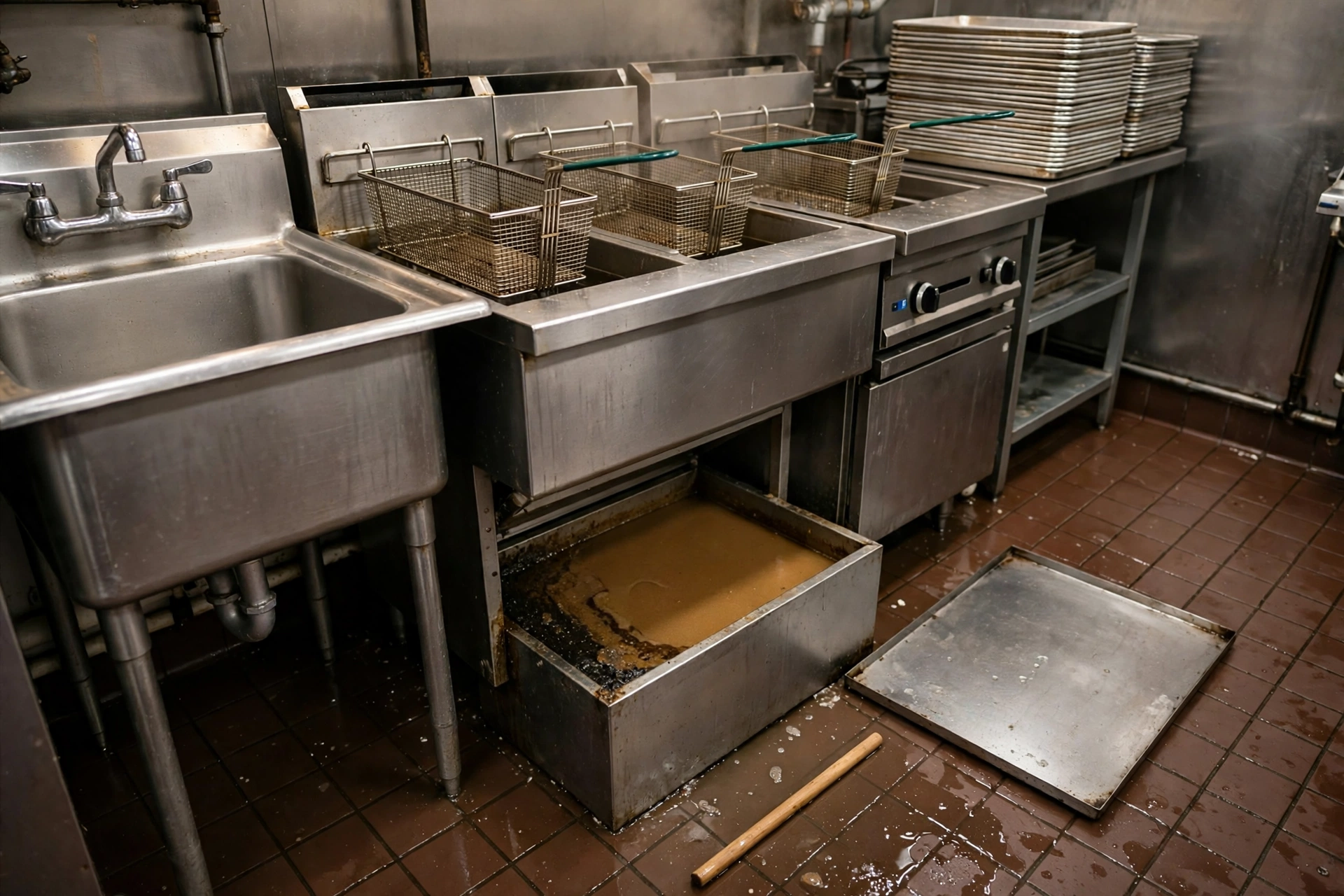
We arrive, check the trap's lid and access, and measure before we touch anything. The depth reading tells us where you stand against the 25 percent line, and we write it down. Then we pump the trap out completely, scrape the walls and baffles, and check the inlet and outlet for blockage or damage. The lid goes back sealed and the floor is left clean.
Every visit produces a service record. For hauled grease trap waste, the Louisiana DEQ manifest carries our name, address, phone, vehicle number, our LDEQ hauler registration number, the date and the volume. You keep your copy. Under the New Orleans FOG rules, records stay on site for three years, and we hand you paperwork built for that.
On those rules: the City of New Orleans and the Sewerage & Water Board require traps and interceptors to be permitted through the SWBNO FOG Program, pumped at least every 90 days, and pumped within two working days once contents reach 25 percent of capacity. Defects an inspector finds are to be corrected within 90 days. Westwego is outside Orleans Parish, so confirm with your own local office which permit your kitchen holds. Our service intervals and record-keeping follow the New Orleans standard in any case, and it gives you a clear measure to work to.
If your trap is an exterior interceptor, the large tank in the ground, we pump and clean that too. Our price for a 1,000 to 1,500 gallon interceptor is $225 to $450.
Used cooking oil collection
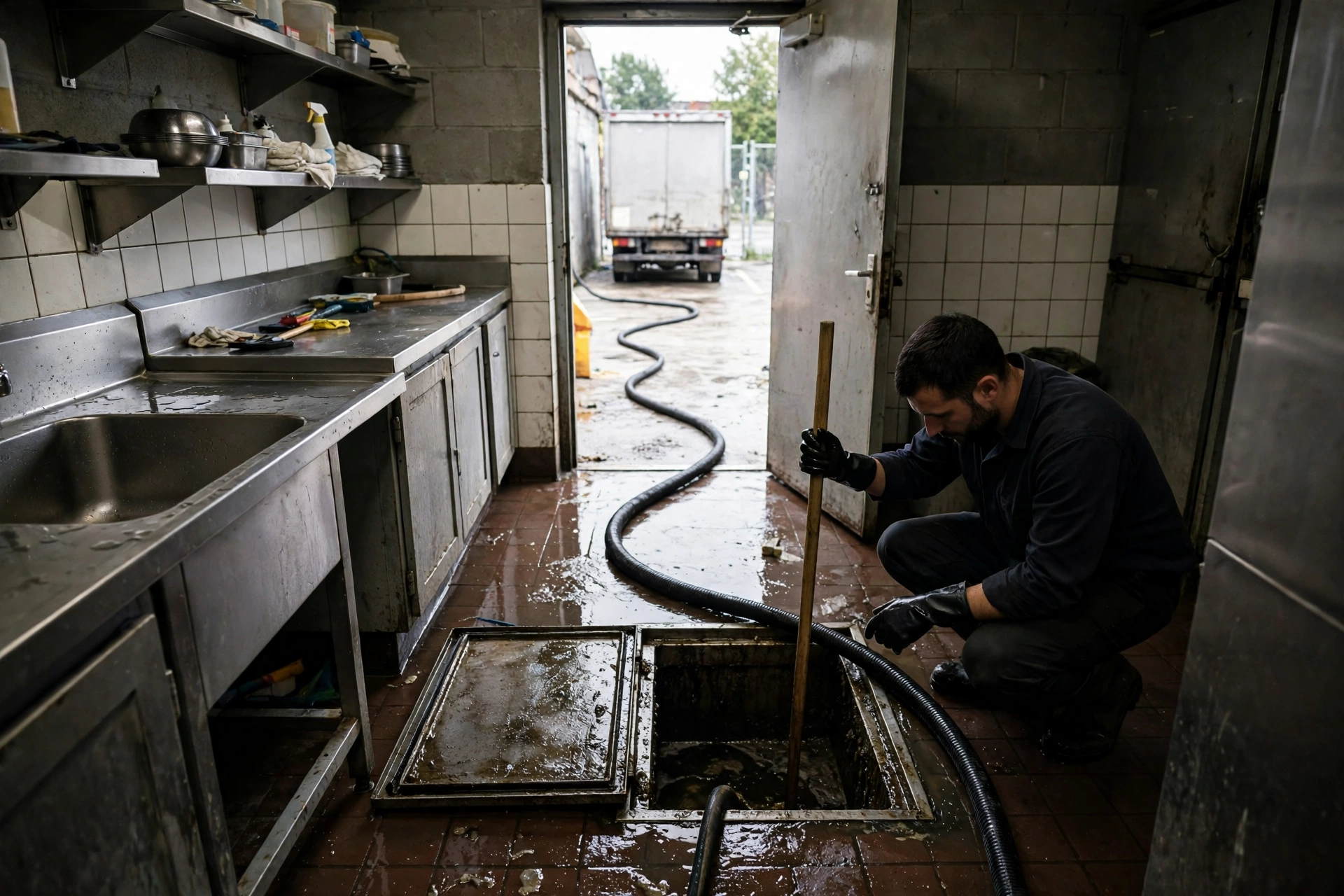
A fryer kitchen has a second grease problem besides the trap, and that is the oil you finish with. We collect clean used cooking oil at no charge. We supply containers from 30 to 320 gallons, so you can pick the size that fits your back area and your fry volume. Oil goes in the container, not down the drain, and the container is swapped on a visit schedule that matches how fast you fill it.
Keep the oil clean and covered. Water, scraps or trap waste mixed in change what it is, and clean oil is the only kind we collect free.
Our prices for Westwego
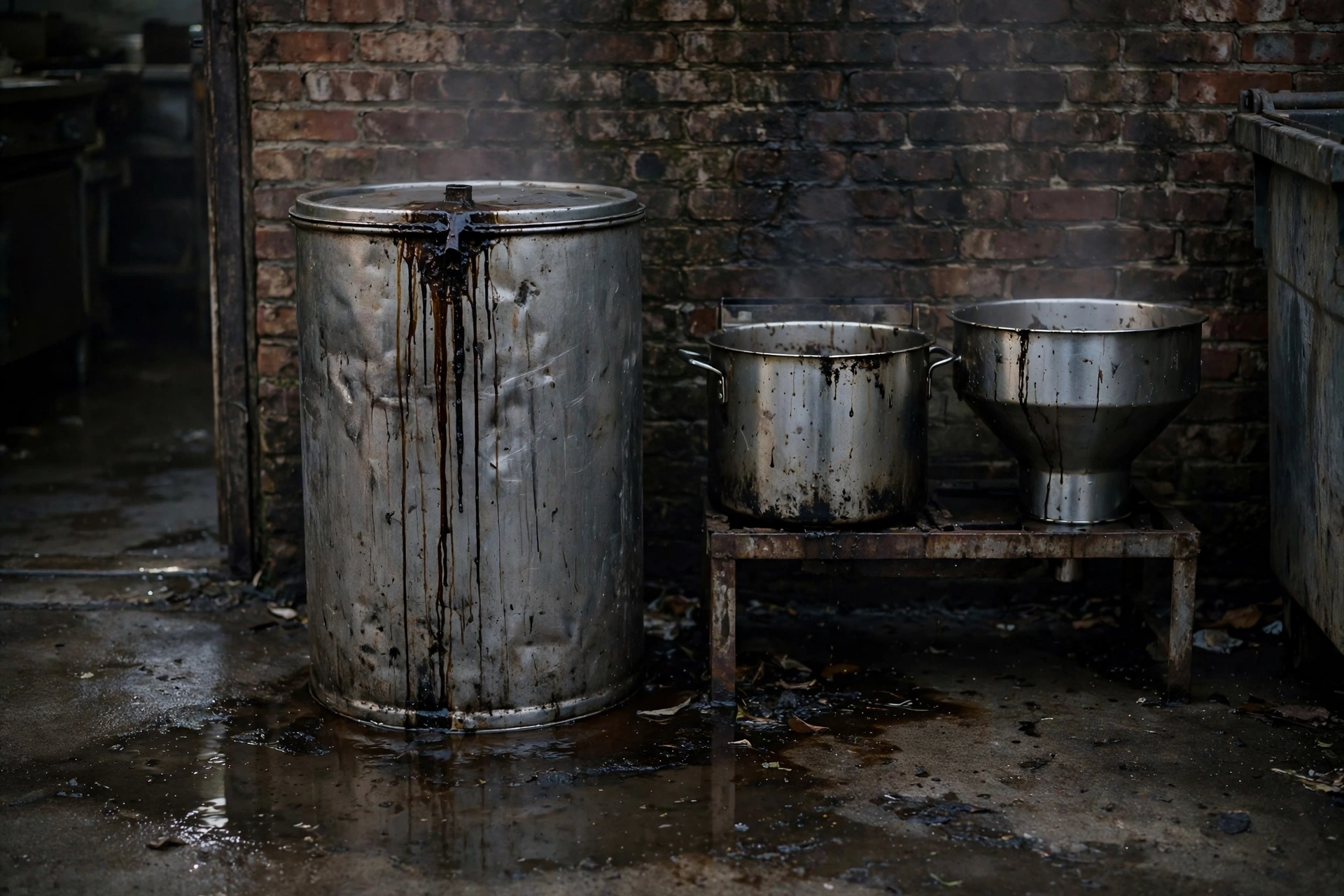
Our price for a scheduled visit on an indoor trap up to 200 gallons is $125 to $180. A trap of 201 to 500 gallons runs $175 to $475. Exterior interceptors run $225 to $450 at 1,000 to 1,500 gallons, $600 to $1,200 at 1,501 to 2,000 gallons, and $800 to $2,500 at 2,001 to 3,000 gallons.
Line jetting is $100 when it is done with a service visit. Heavy jetting for a line that has built up is $300 to $600. Emergency call-out for an indoor trap is $190 to $240. For an emergency on an interceptor of 1,000 to 1,500 gallons, it is $400 to $900. Used cooking oil collection carries no charge for clean oil.
We do not publish a figure for traps in the 501 to 749 gallon range, or for emergency work on interceptors over 1,500 gallons or traps of 201 to 500 gallons. Those depend on the specific tank and access, so tell us what you have and we will answer on the phone.
Mid-job invitation
Know your trap size and what you fry? Call (504) 360-9231 and we will tell you what a scheduled visit costs and how often your kitchen should expect us.
Featured job: a Sala Avenue market-restaurant
This is a job of the kind we do for Westwego kitchens. The kitchen sat behind a seafood counter on Sala Avenue, selling fried platters and boiled seafood by the pound and cooking to the same order board. The owners ran a small indoor passive trap in the up-to-200-gallon band and had cleaned it on a monthly habit. Their fryers ran all day, and their used oil sat in open pails until someone found time to deal with it.
The first sign
The trouble announced itself with a prep sink that took longer and longer to drain, and a smell near the back wall at the end of a heavy Saturday. They called us on a Monday morning. Cleaning on a monthly habit had worked in the slow season, but the habit did not follow the volume.
Measuring on arrival
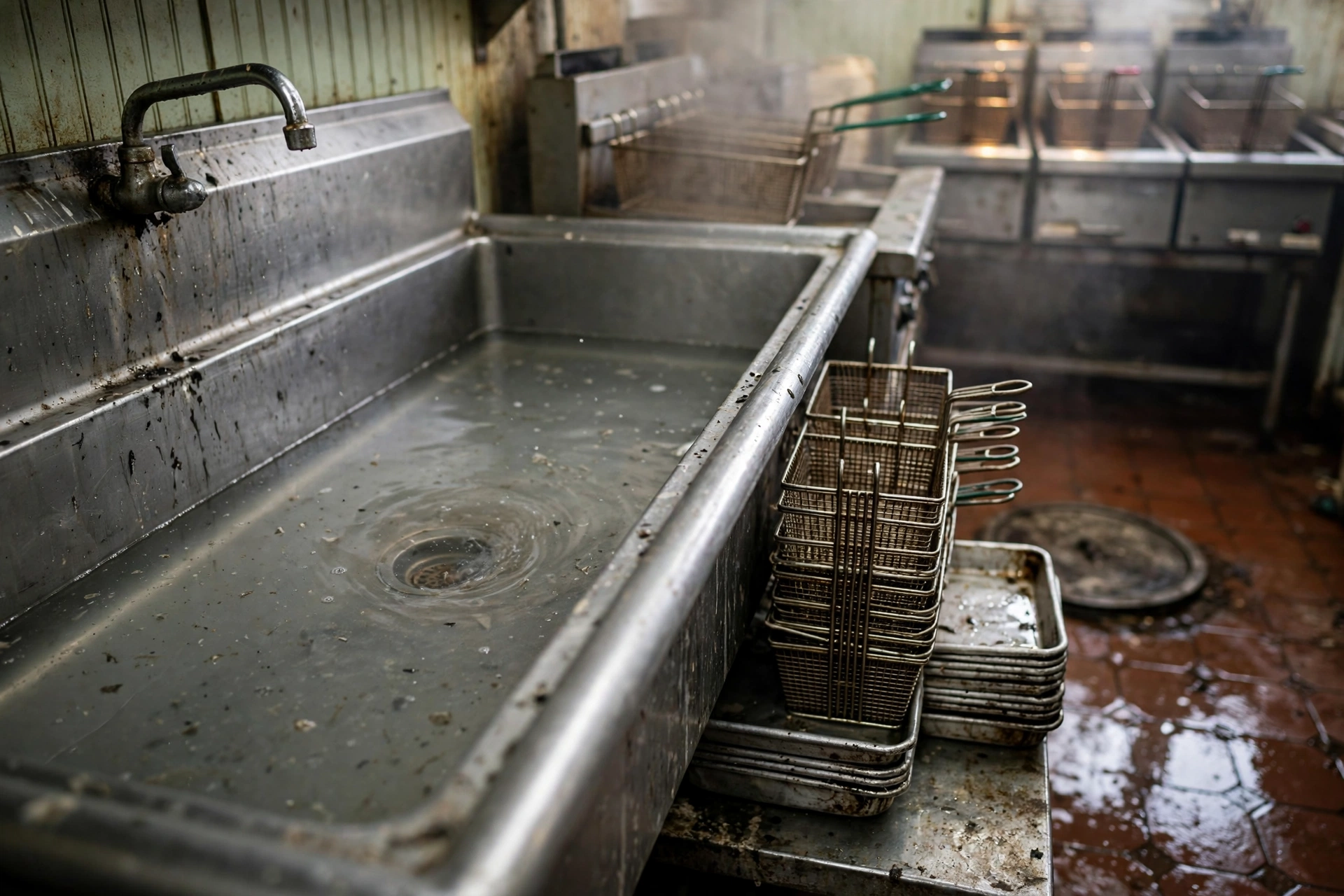
We opened the lid and measured before anything else. The contents stood past the 25 percent line, measured to the outlet invert. That is the point at which a trap is due, and under the New Orleans rule it is pumped within two working days. The reading went on the service record, with the date.
The interactive figure below shows the same trap, with each point you would check.
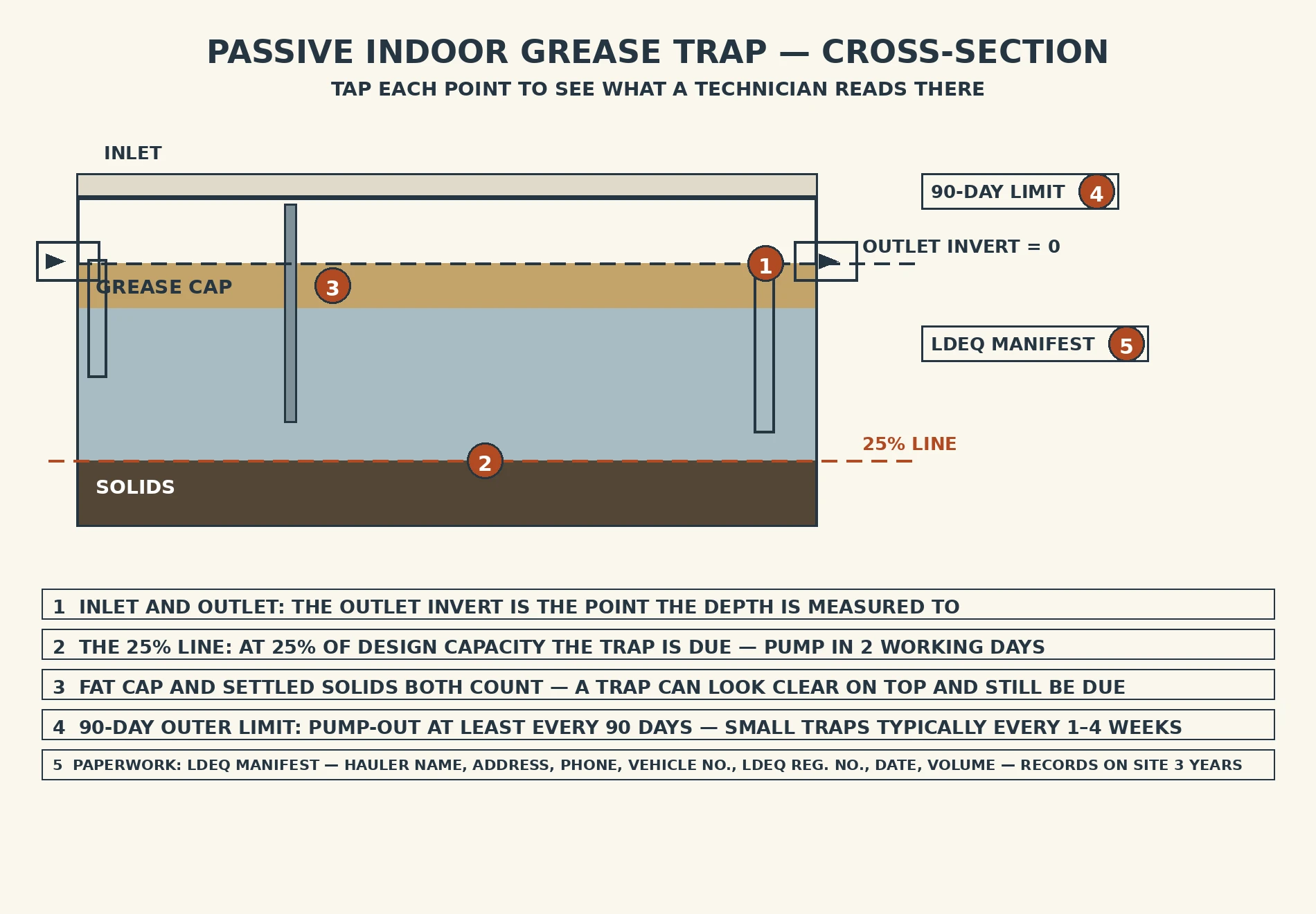
Inlet and outlet: the outlet invert is the point the depth is measured to.
The 25 percent line: when contents reach 25 percent of design capacity, the trap is due, and New Orleans rules require pumping within two working days.
Fat cap and settled solids: both count toward the reading, which is why a trap can look clear on top and still be due.
The 90-day outer limit: the New Orleans rule is pump-out at least every 90 days no matter the reading. Small traps in local kitchens are typically cleaned every one to four weeks.
Paperwork: the LDEQ manifest carries hauler name, address, phone, vehicle number, LDEQ registration number, date and volume. Records stay on site three years. Placed after the first measurement chapter.
The pump-out
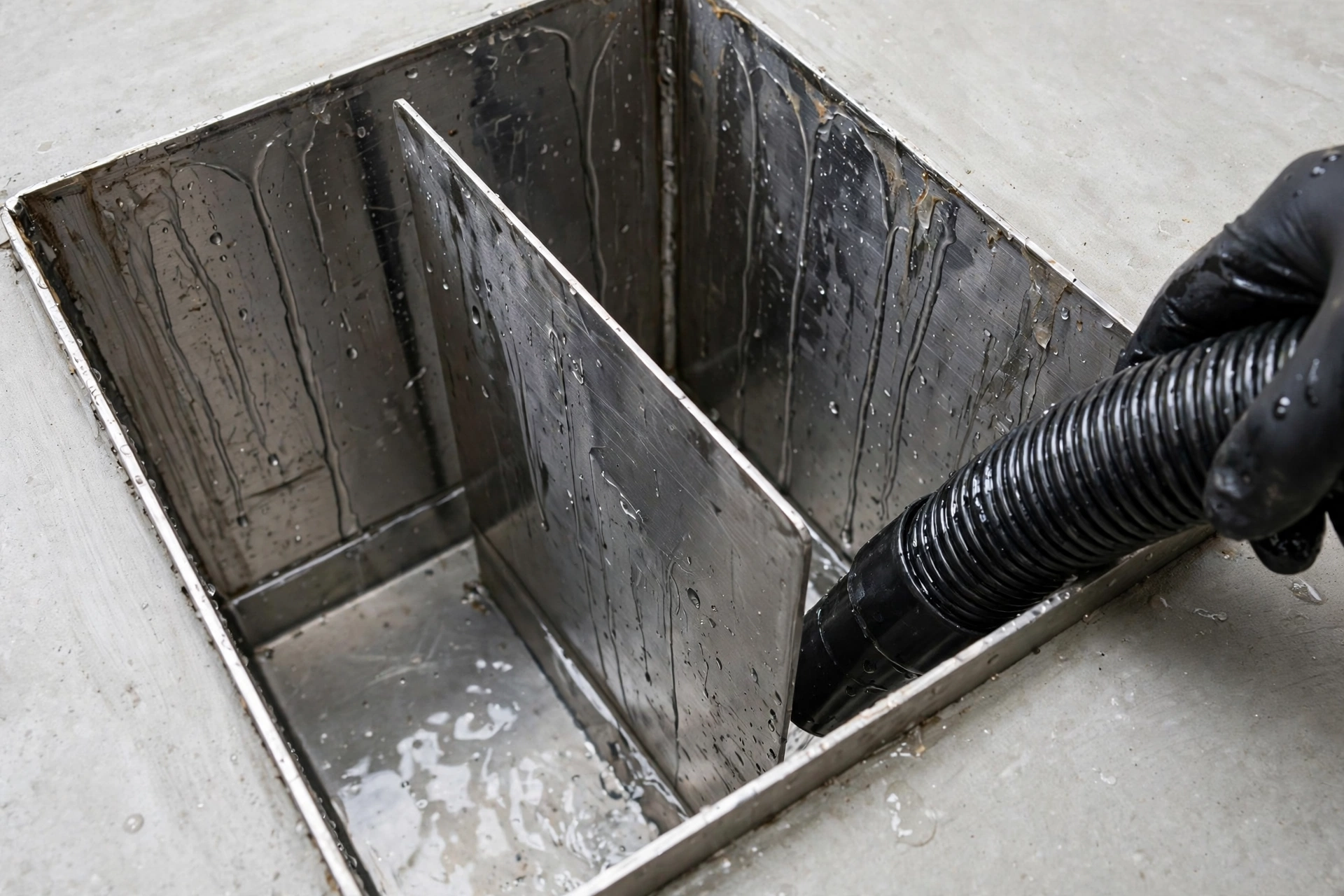
We pumped the trap down completely, scraped the walls and baffles and checked the inlet and outlet. Our price for the visit was inside the $125 to $180 band for a trap up to 200 gallons. Because the sink had been slow, we added line jetting at the same visit for $100. That is the with-a-service-visit price; a stand-alone heavy jetting job runs $300 to $600, and the line ran freely after.
The oil and the schedule
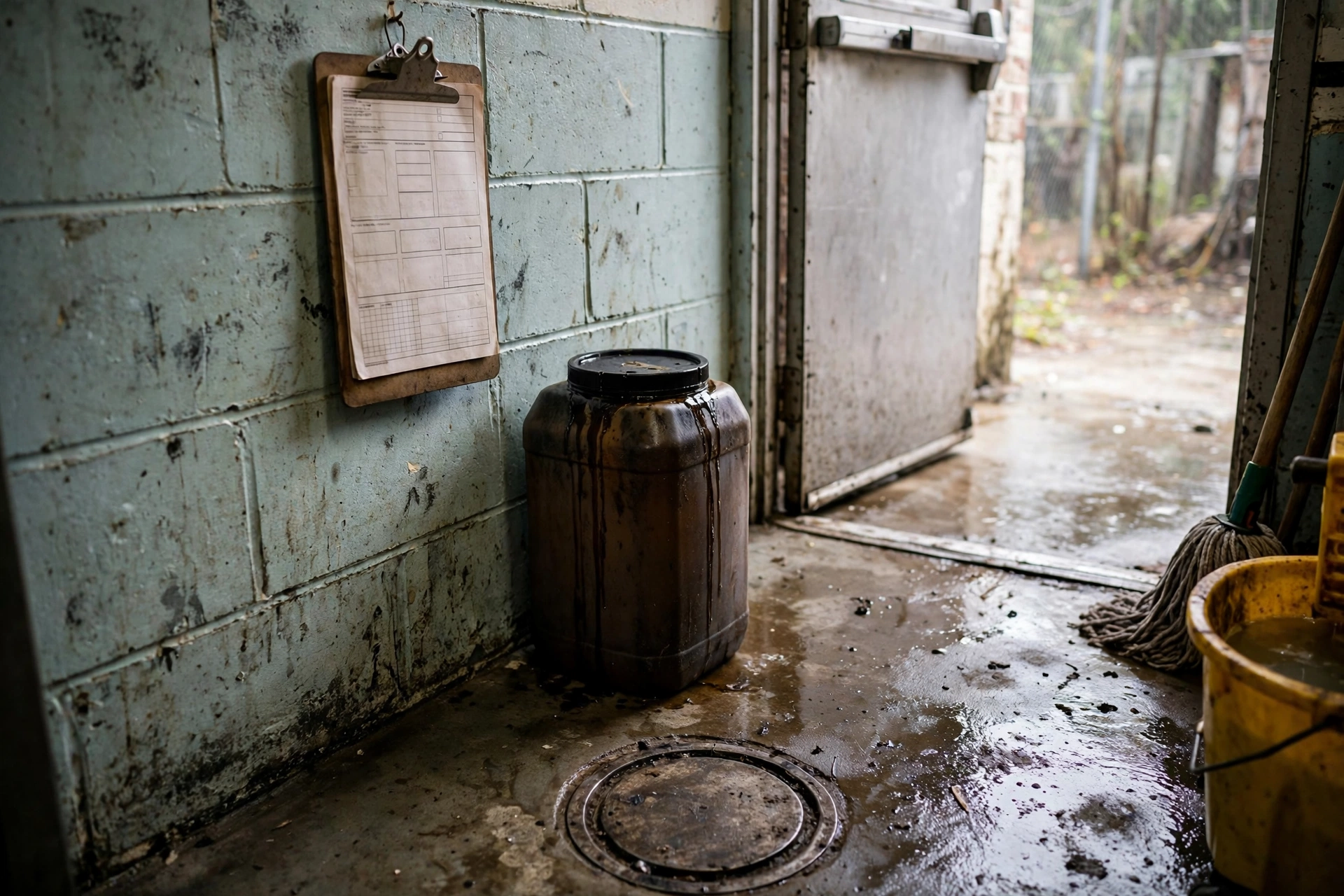
Before leaving, we set up used cooking oil collection. We placed a covered container from our 30 to 320 gallon range by the back door, replacing the open pails, with no charge for the clean oil. We also moved the trap to a shorter interval inside the one-to-four-week range the trade runs on small traps, tied to the depth readings rather than the calendar. Every visit since goes on a record the owners keep on site, with the manifest copy attached.
When to call
Call when the trap is near a quarter full, when a sink or floor drain runs slow, when there is a smell near the trap or the sink, or when an inspection is coming and you do not have your last three years of records in order. If a trap fails on a Friday lunch, that is an emergency call-out, and we answer on the same phone line during business hours.
If you are moving into a Westwego space, call before opening. We will measure the trap, look at the access and the lid, and tell you what the first service costs.
Questions
How much does grease trap cleaning cost in Westwego?
Our price for an indoor trap up to 200 gallons is $125 to $180 on a scheduled visit. A trap of 201 to 500 gallons runs $175 to $475. Interceptors in the ground start at $225 to $450 for 1,000 to 1,500 gallons. We do not publish a figure for traps from 501 to 749 gallons, so tell us the size and we answer by phone.
How often does a Westwego restaurant need its trap cleaned?
Most local restaurants with small traps clean every one to four weeks. The real measure is depth: when grease and solids reach 25 percent of the trap's design capacity, it is due. A seafood kitchen with heavy frying sits toward the shorter end.
What is the 25 percent rule?
When contents reach 25 percent of the trap's design capacity, measured to the outlet invert, the trap should be pumped. Under New Orleans rules that means within two working days. Past that line the trap separates poorly and lets fat through.
Do the New Orleans rules apply in Westwego?
Westwego is outside Orleans Parish, so confirm with your local office which permit and interval your kitchen is held to. The New Orleans rules are pump-out at least every 90 days, pump within two working days at 25 percent, and records kept on site three years. We service and document to that standard, so you will have clean paperwork whichever office asks.
Is used cooking oil pickup really free?
Yes, for clean oil. There is no charge for clean used cooking oil, and we supply containers from 30 to 320 gallons. Oil mixed with water, scraps or trap waste is not clean oil, so keep it covered and separate.
What does the paperwork look like?
Grease trap waste moves on a Louisiana DEQ manifest. It carries our name, address, phone, vehicle number, LDEQ hauler registration number, the date and the volume. You get your copy at each visit, and you keep it on site for three years.
Can you clean a trap and an interceptor in one visit?
Yes. If your kitchen has both an indoor trap and an exterior interceptor, we can service both on one visit. Each is priced by its own size: $125 to $180 for a trap up to 200 gallons, and $225 to $450 for an interceptor of 1,000 to 1,500 gallons.
What does line jetting cost?
Line jetting is $100 when it is done with a service visit. Heavy jetting for a line with serious buildup is $300 to $600. If your drain runs slow after the trap is cleaned, ask for jetting on the same visit.
What does an emergency call-out cost?
Emergency service on an indoor trap is $190 to $240. For an interceptor of 1,000 to 1,500 gallons it is $400 to $900. We do not publish emergency prices for interceptors over 1,500 gallons or for traps of 201 to 500 gallons; call and we will tell you what your tank involves.
What will an inspector look at?
They check that your trap or interceptor is permitted, that the last pump-out falls inside 90 days, that contents are under the 25 percent line, and that your manifests and service records are on site for three years. Any defects found are to be corrected within 90 days. Our records are made for that check.
How far out do you travel, and when do you answer?
We are based in New Orleans and Westwego is about twenty minutes away. Our phone line is open Monday to Friday, 9:00 AM to 5:30 PM at (504) 360-9231.
What should I tell you when I call?
The size of your trap if you know it, whether it is indoors or an exterior tank, what you cook, and when it was last cleaned. If you do not know the size, describe where it sits and we will work it out.
Book your Westwego service
Call (504) 360-9231, Monday to Friday, 9:00 AM to 5:30 PM, or send the form. Name and phone are required. Service, town and message are optional, and a consent checkbox is required. The more details you give, the better we are able to help you.
[FORM: Name (required) · Phone (required) · Service (optional) · Town (optional) · Message (optional) · Consent checkbox (required)]