New Orleans Grease Trap runs grease interceptor pumping for Slidell restaurants and commercial kitchens, the large exterior tanks that sit under the parking lots along Gause Boulevard and Fremaux Avenue. We come across the lake side of the metro from our base in New Orleans, about 35 minutes out, and we treat Slidell as a regular route, not a favor.
Most Slidell kitchens need two jobs done together. The tank outside gets pumped and scraped, and the smaller trap inside gets grease trap cleaning on its own shorter schedule. We do both on one visit when the calendar allows, hand you one set of paperwork, and give you the price before we load the truck.
If you have a full tank, a slow drain, or an inspection coming, call (504) 360-9231 between 9:00 AM and 5:30 PM, Monday to Friday. Tell us what the kitchen is and what you see, and we will tell you what it takes.
What Slidell kitchens are like
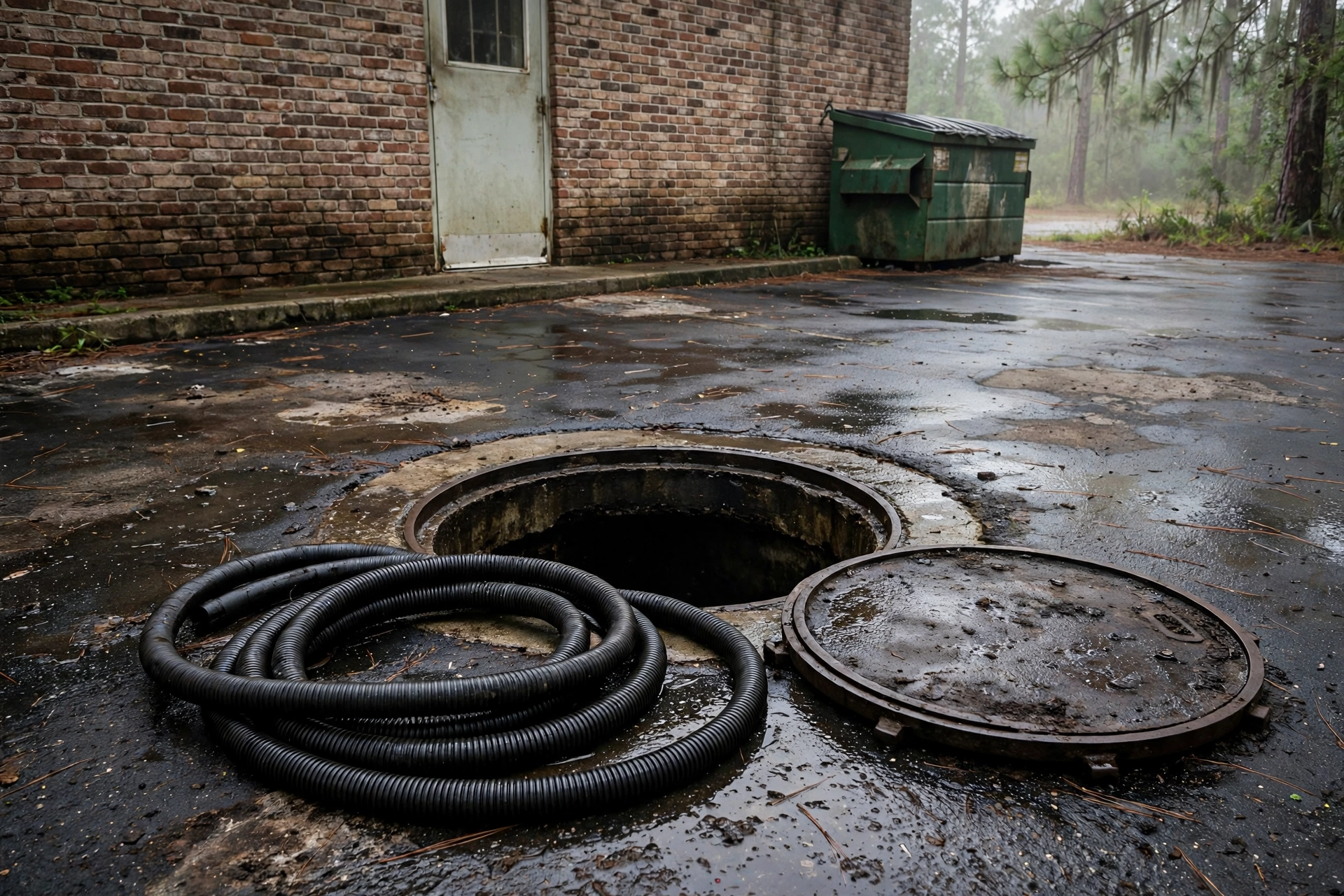
Slidell is a full small city on the north shore of the lake, and its dining sits on busy arterials. Gause Boulevard and Fremaux Avenue carry a mix of national chains and independent restaurants, many in strip centers or freestanding buildings with their own lots. Freestanding buildings and lots usually mean an exterior interceptor in the ground, not just a small trap under a sink.
That is why interceptor pumping is the core of the work here, with trap cleaning beside it. An interceptor is the large tank outside, holding far more than a passive indoor trap, which runs roughly 40 to 200 gallons. The tank fills slowly, so it is easy to forget until a drain backs up on a Saturday night. The indoor trap fills fast. Most local restaurants clean small traps every one to four weeks, and a busy fryer line pushes toward the short end of that.
You will see both on a typical Slidell job: a trap on the dish and prep lines inside, an interceptor outside taking the whole kitchen's drain, and a binder of paper that nobody has opened lately.
How the service runs for a Slidell kitchen
We start with a short phone conversation. We ask what the kitchen cooks, how many hours a day it runs, whether there is a trap inside, an interceptor outside, or both, and about how big each is. Size decides the price, so we work from that.
On the day, the crew locates the lids, opens them, and measures the contents. The measure that matters is depth against the outlet invert. When grease and solids reach 25 percent of the design capacity, the trap is due, and the city rule we work to says pump within two working days of reaching it. We pump the tank out, scrape the walls and baffles, and check the inlet and outlet fittings. We note cracks, missing baffles, corroded lids, and anything else an inspector would write up. Then the waste goes on a Louisiana DEQ manifest that carries our name, address, phone, vehicle number, our LDEQ hauler registration number, the date and the volume. You get your copy.
A word on rules. The 90-day pump-out limit, the 25 percent trigger, the 90 days to correct defects and the three-year record keeping are the New Orleans rules we run our service to. Louisiana has no state pumping interval, so enforcement is local. Slidell's own sewer requirements come from the utility that serves your building, and we have not researched them. Ask that utility what it wants on file, and tell us, so your records are set up to match it.
Prices for Slidell kitchens
These are our prices for scheduled visits.
- Indoor trap up to 200 gallons: $125 to $180.
- Indoor trap 201 to 500 gallons: $175 to $475.
- Interceptor 1,000 to 1,500 gallons: $225 to $450.
- Interceptor 1,501 to 2,000 gallons: $600 to $1,200.
- Interceptor 2,001 to 3,000 gallons: $800 to $2,500.
- Line jetting done with a service visit: $100. Heavy jetting: $300 to $600.
- Emergency call-out, indoor trap: $190 to $240. Emergency call-out, interceptor of 1,000 to 1,500 gallons: $400 to $900.
- Used cooking oil: collected at no charge when it is clean, in containers from 30 to 320 gallons.
Where in a band your job lands depends on tank size, how much has built up, and access. A tank with a clear lid near the truck sits lower than one we have to dig out from under a dumpster pad. We do not have a set price for traps from 501 to 749 gallons, and we do not post emergency prices for interceptors over 1,500 gallons or for traps of 201 to 500 gallons. For those we confirm the figure by phone once we know the tank.
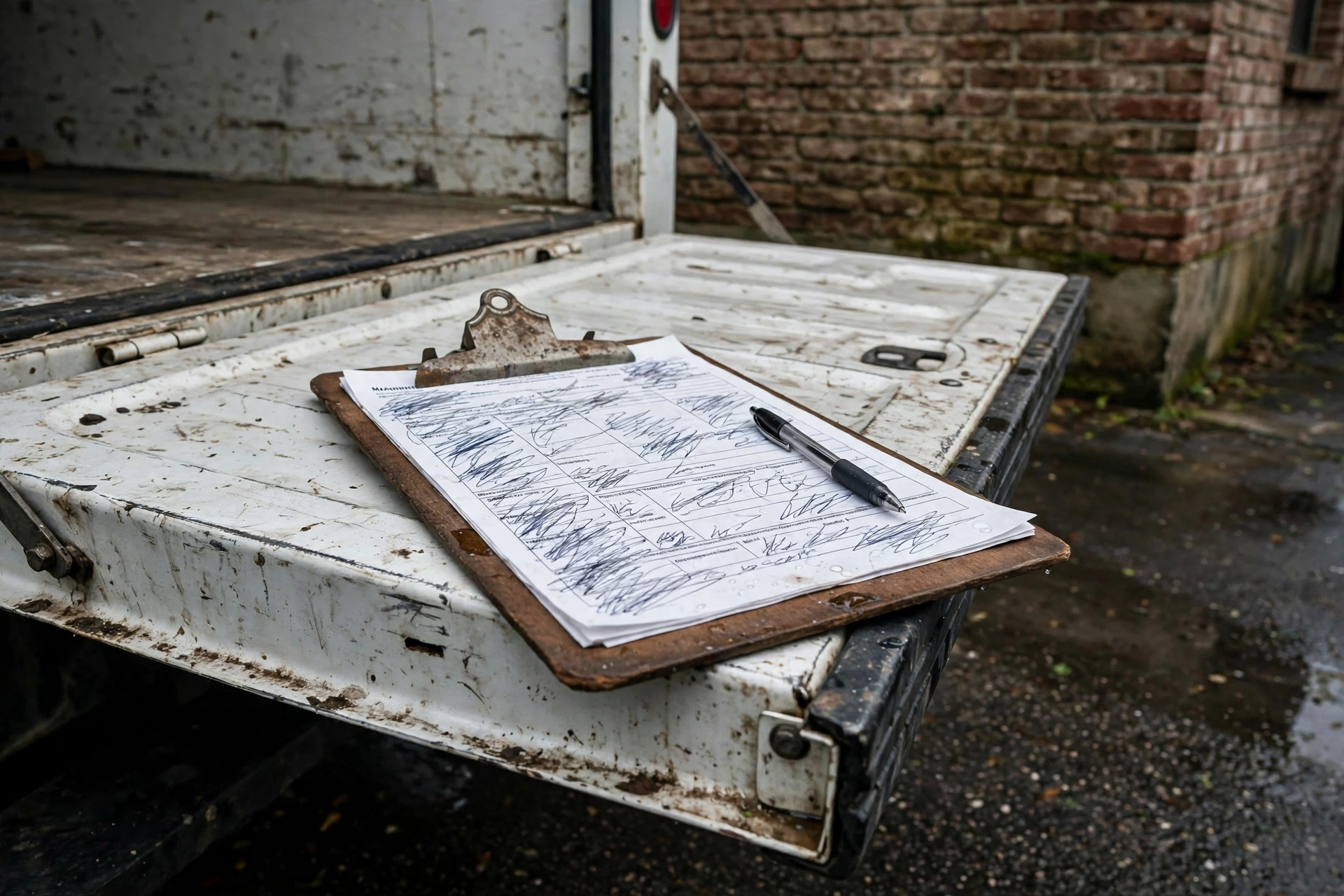
Featured job: a Gause Boulevard family restaurant
This is a Slidell job told start to finish, so you can see what the work looks like on a kitchen like yours.
The call
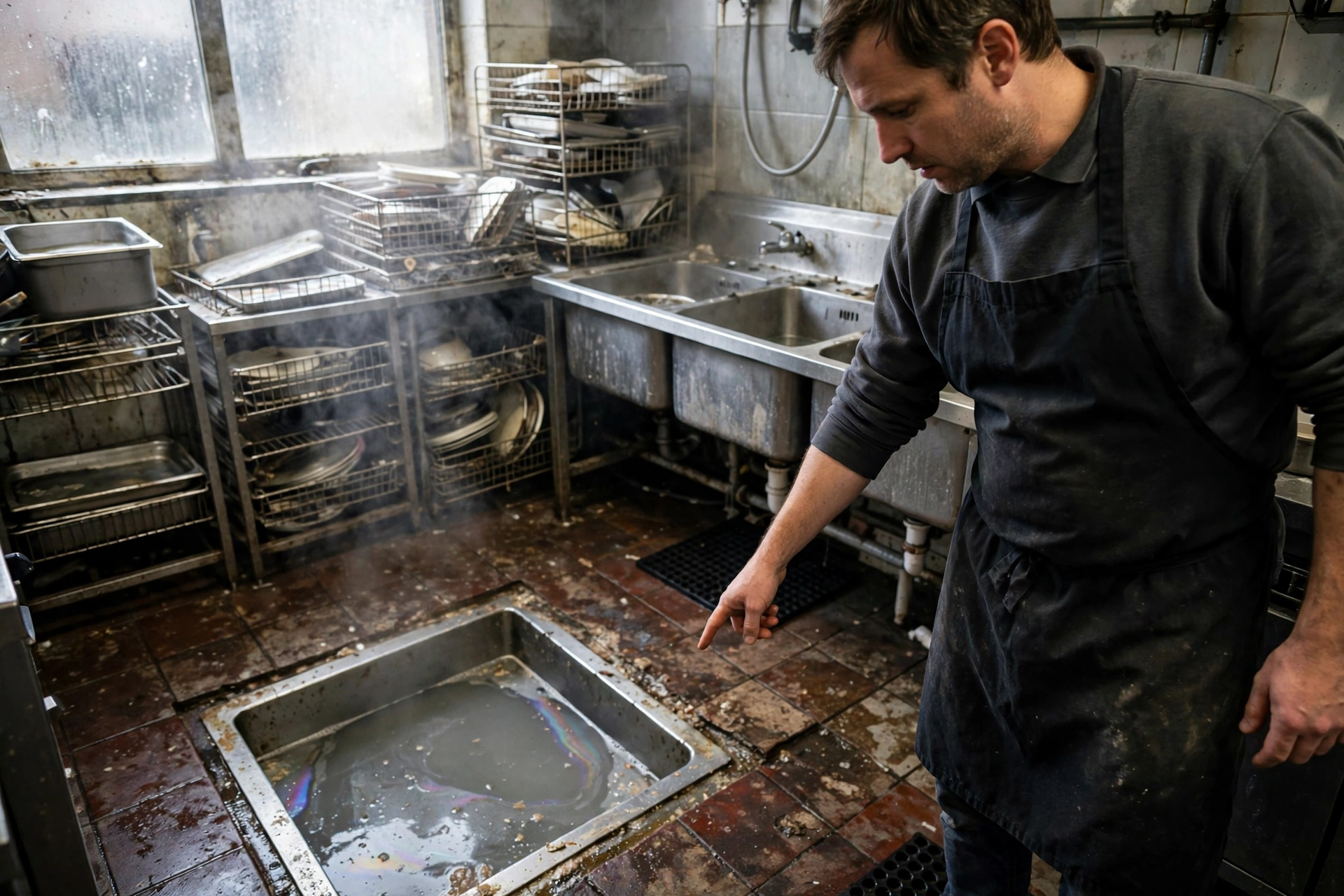
A freestanding family restaurant on Gause Boulevard, open for lunch and dinner and busy on weekends, called on a Monday. The dish area drain was running slow and the manager had noticed a sour smell near the back lot. The kitchen fried, griddled and washed pans all day. Nobody could say when the outside tank was last opened. The kitchen also had a small trap inside, on the prep sink line, that the staff skimmed when they remembered.
We asked the questions that set the price: the interceptor was in the 1,000 to 1,500 gallon band and the indoor trap was under 200 gallons. We gave the range for each over the phone, $225 to $450 for the interceptor and $125 to $180 for the trap, and booked a visit.
The measure
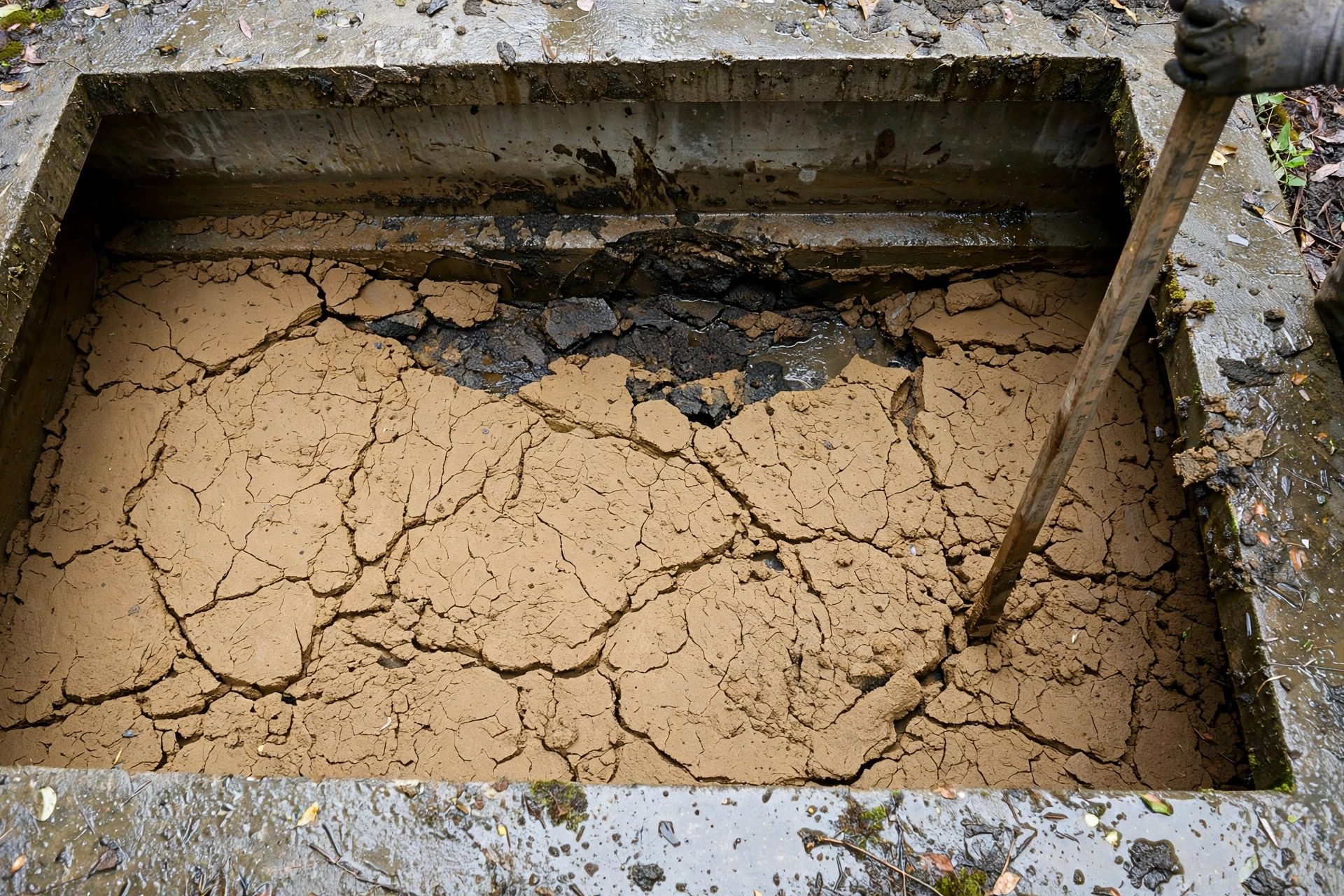
The crew found the interceptor lid under a stack of empty pallets. They cleared it and opened the tank. The contents stood well past the quarter mark, measured against the outlet invert, so the tank was overdue under the 25 percent rule. The indoor trap was in the same state.
Here is the measure as the crew reads it. Use the control to move the level and see what each reading means for a kitchen.
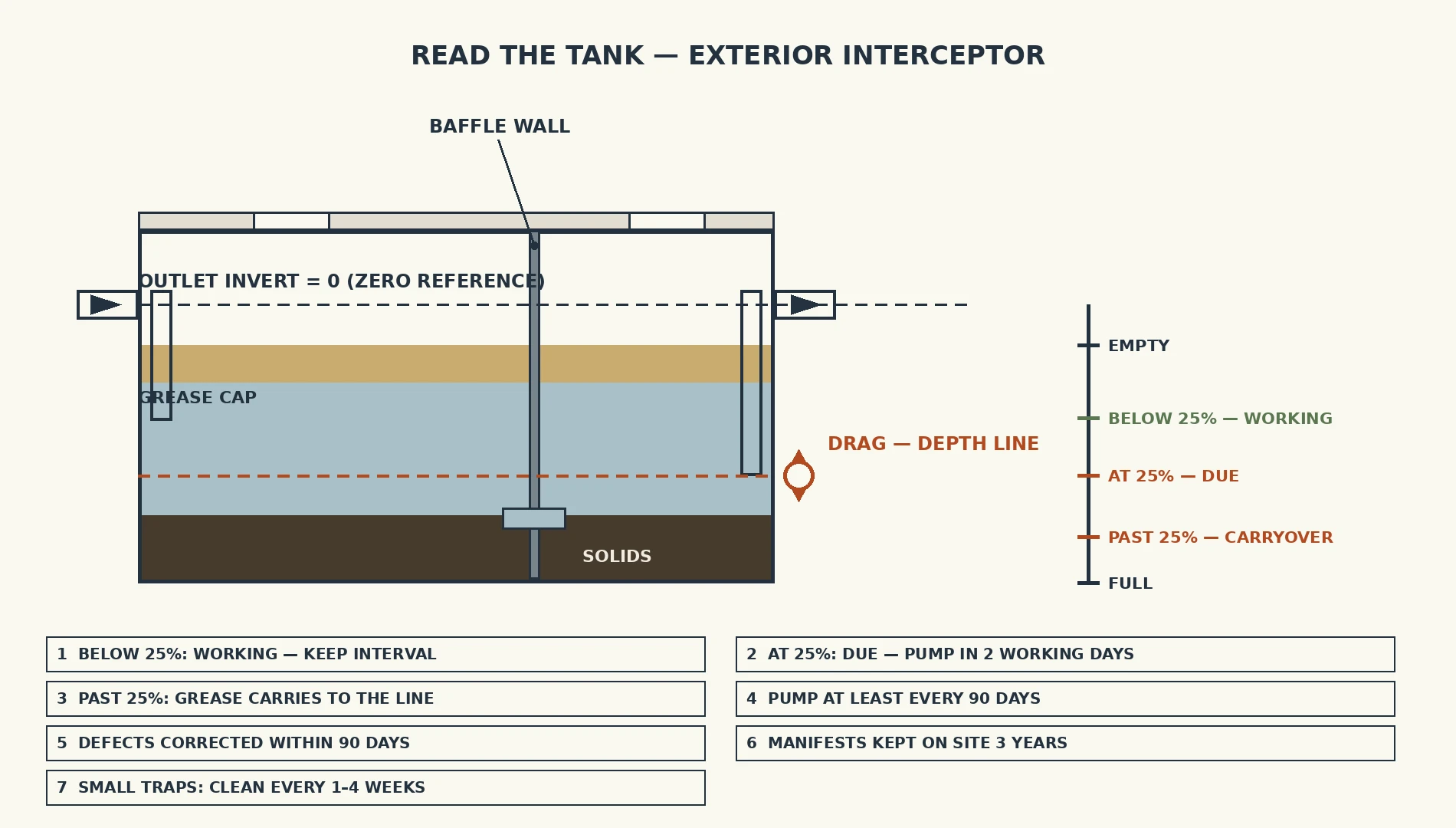
Below 25 percent of design capacity: the trap is working and not yet due; keep the cleaning interval.
At 25 percent measured to the outlet invert: the trap is due, and the rule we work to says pump within two working days.
Beyond 25 percent: grease and solids start to carry past the outlet into the line, and the drain slows or backs up.
Whatever the reading: pump-out at least every 90 days.
Any defect an inspector records, such as a cracked baffle or a bad lid, is corrected within 90 days.
The manifest for every pump-out is kept on site for three years.
Small indoor traps hold far less and are usually cleaned every one to four weeks. Caption and alt below.
The pump-out
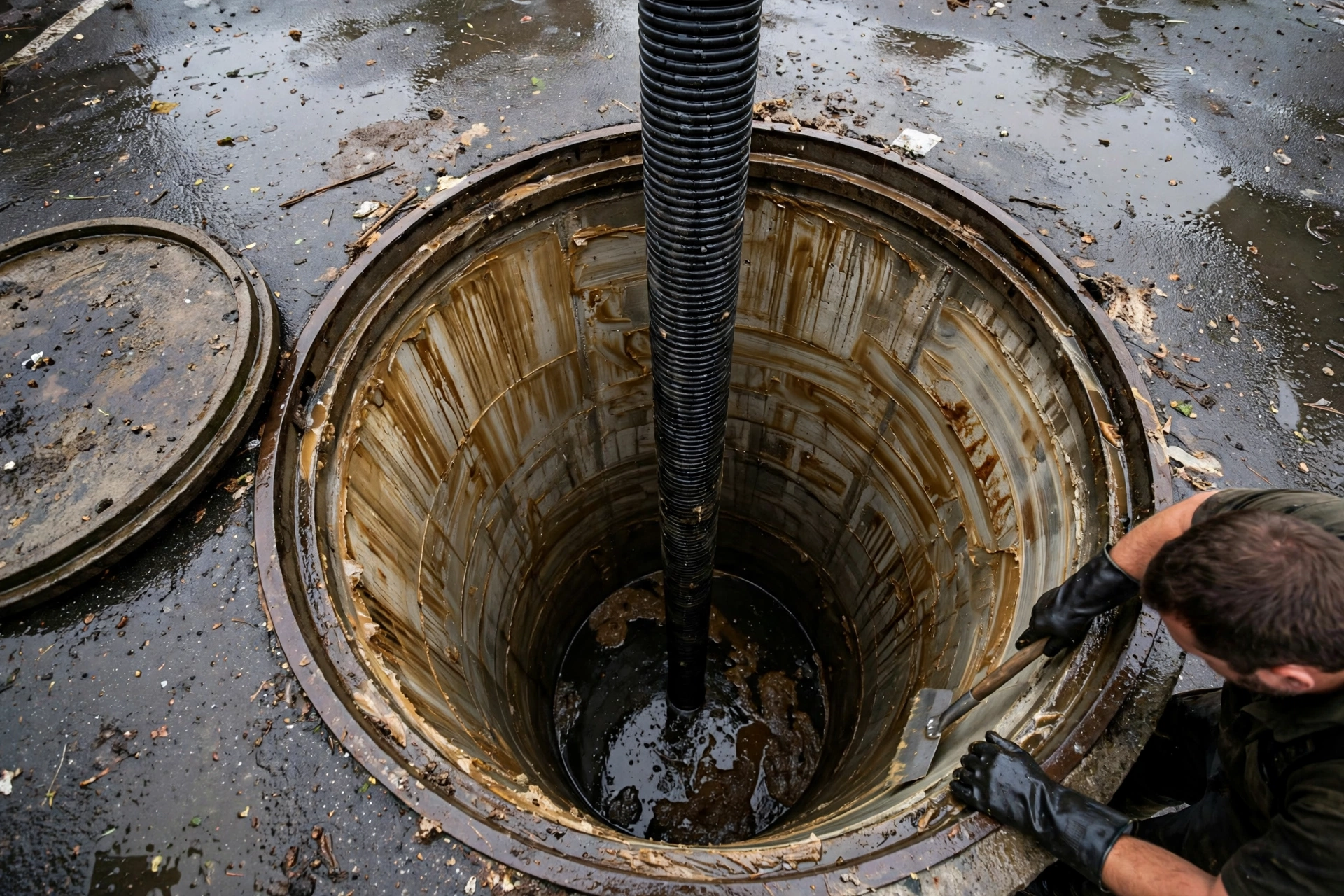
We set the hose and pumped the interceptor down to bare floor, then scraped the walls, baffles and the inlet and outlet tees until the tank was clean, not just drained. The baffle was in place and sound. The lid had a worn seat, which we wrote down as a defect to correct within 90 days. Inside, the crew cleaned the trap on the prep line, scraped the lid gasket and refit it. With the truck on site we also ran a line jet on the dish drain, which is $100 when done with a service visit.
The paperwork and the plan
We left the manager with the manifest, a service record listing the tank, the date, the condition, and the lid defect, and a repeat schedule. The interceptor goes on the 90-day pump-out at the longest, with a check earlier if the kitchen's volume jumps. The small trap goes on a shorter cycle. The restaurant uses a covered container behind the building for used oil, which we collect at no charge when it is clean.

Book a Slidell visit
If your interceptor has not been opened in a while, or you cannot say when it was, call (504) 360-9231. We will give you the price range for your tank size on the call and get a date on the calendar.
When to call
Call when any of these show up:
A floor drain is slow, gurgles or backs up.
A sour or rancid smell comes from the back lot or the dish room.
A measure shows the tank at or near 25 percent.
It has been close to 90 days since the last pump-out.
An inspection is coming and you cannot put your hands on the manifests.
A new owner or manager takes over and no one knows the tank's history.
Menu changes, such as more fried food, have raised the volume.
If the kitchen is backing up now, say so on the phone. Emergency call-out for an indoor trap runs $190 to $240, and for an interceptor of 1,000 to 1,500 gallons $400 to $900.
Start your Slidell service request
Fill in the form and we will call you back during business hours, Monday to Friday, 9:00 AM to 5:30 PM, or call (504) 360-9231.
The more details you give, the better we are able to help you.
Questions
Do you really service Slidell, or only the New Orleans side?
We serve Slidell. It is about a 35-minute drive from our base in New Orleans, and we run it on a schedule. For one-off and emergency calls, tell us what you see when you phone (504) 360-9231.
What does grease interceptor pumping cost for a Slidell restaurant?
An interceptor of 1,000 to 1,500 gallons runs $225 to $450 on a scheduled visit. From 1,501 to 2,000 gallons it is $600 to $1,200, and from 2,001 to 3,000 gallons it is $800 to $2,500. Where you land depends on the size, the buildup and how easy the lid is to reach.
What does indoor grease trap cleaning cost?
A trap up to 200 gallons is $125 to $180. A trap of 201 to 500 gallons is $175 to $475. We have no set price for traps of 501 to 749 gallons, so we confirm that by phone once we know the unit.
How often should my kitchen be pumped?
At least every 90 days, and sooner when the contents reach 25 percent of design capacity. Small indoor traps usually need cleaning every one to four weeks, depending on how much frying and dishwashing the kitchen does.
What is the 25 percent rule?
It is a trade measure. When grease and solids reach a quarter of the trap's design capacity, measured to the outlet invert, the trap is due. The rule we work to says to pump within two working days of reaching it.
Do New Orleans rules apply in Slidell?
The 90-day limit, 25 percent trigger, 90-day defect correction and three-year records are the New Orleans rules we run our service to. Louisiana has no state pumping interval, and enforcement is local, so Slidell's requirements come from the utility that serves your building. We have not researched them. Ask that utility what it wants, and we will keep your records to match.
What paperwork do I get?
A Louisiana DEQ manifest with our name, address, phone, vehicle number, LDEQ hauler registration number, the date and the volume, plus a service record that notes the condition of the tank and any defects. Keep both on site for three years.
What does an inspector look at?
The tank's condition and contents, whether it was pumped within the interval, any defects such as a cracked baffle or a bad lid, and the manifests and service records. Defects found are corrected within 90 days.
Can you do the indoor trap and the outside interceptor in one visit?
Yes, when the schedule allows. It saves a second trip, and the paperwork comes together. Say on the phone which units you have.
Is line jetting available?
Yes. Line jetting is $100 when done with a service visit. Heavy jetting for a hard blockage is $300 to $600.
What happens if my kitchen backs up outside of a regular visit?
Call and say it is an emergency. An indoor trap call-out is $190 to $240. An interceptor of 1,000 to 1,500 gallons is $400 to $900. We do not post emergency prices for larger interceptors or for traps of 201 to 500 gallons, so we confirm those by phone.
What do I do with used cooking oil?
We collect clean used cooking oil at no charge, in containers from 30 to 320 gallons.
What are your hours?
Monday to Friday, 9:00 AM to 5:30 PM. Call (504) 360-9231.