New Orleans Grease Trap cleans the indoor traps under Gretna's kitchen sinks, dish machines and prep lines, and we have a regular route across the river for it. If you run a kitchen on Huey P. Long Avenue or anywhere else in Gretna, grease trap cleaning is the job we do most for kitchens like yours, and the prices are listed below.
We pump out the trap, scrape the walls and baffles, check the lid, gasket and fittings, and leave you the paperwork an inspector asks to see. Most calls are a short visit during or just after service hours, and the kitchen is back to normal when we leave.
Call (504) 360-9231 and tell us what kind of trap you have and how it has been behaving. We answer Monday to Friday, 9:00 AM to 5:30 PM, and we will book you in. The form at the bottom of this page works too.
What Gretna kitchens are like
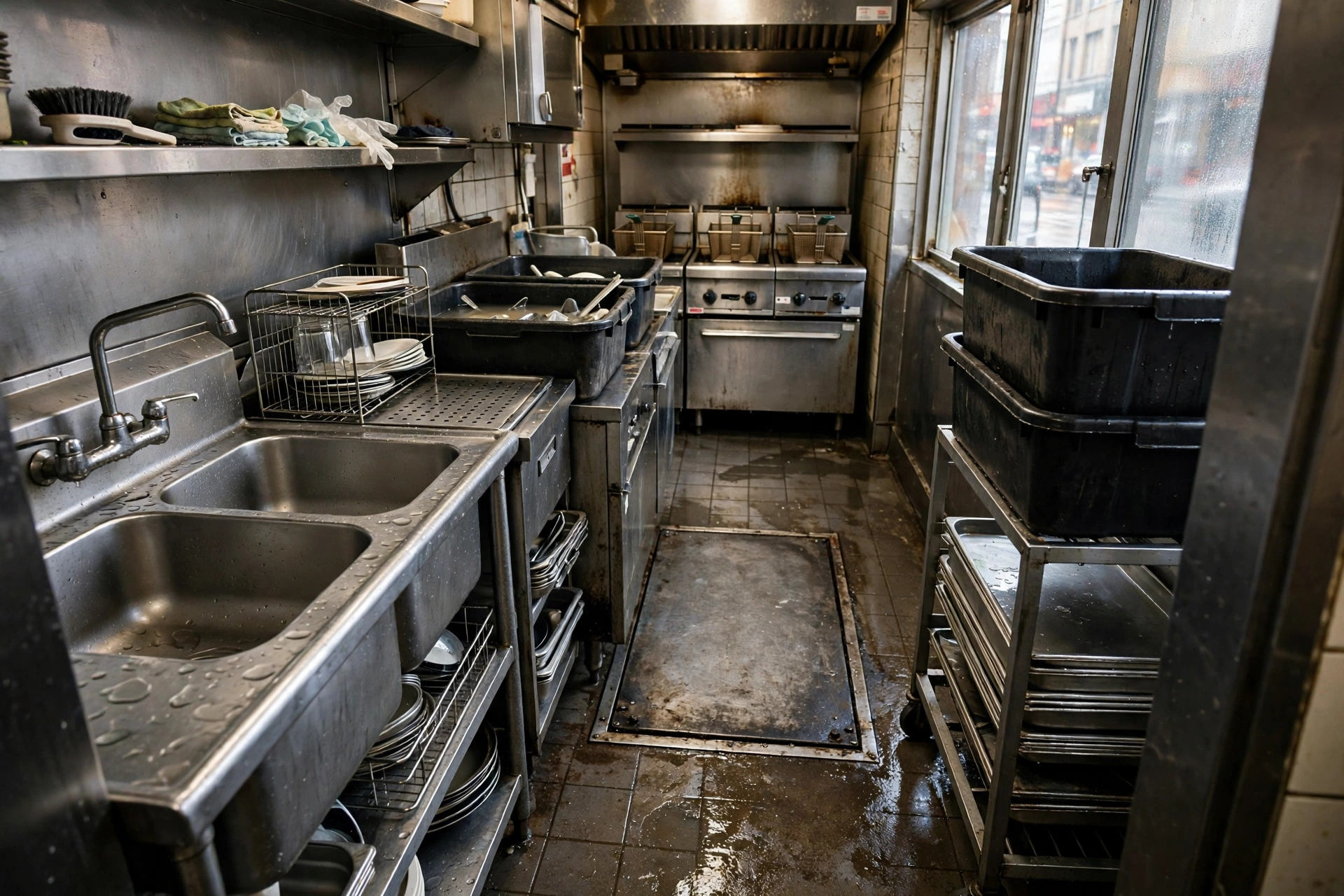
Old Gretna's Huey P. Long Avenue is a concentrated row of independent restaurants. These are mostly small, owner-run kitchens with a few fryers, a flat-top, a three-compartment sink and a mop sink that ends up in the same line. They are not hotels or big-box chains with large exterior tanks. The grease control is an indoor trap, tucked into whatever space the old building allowed.
Passive indoor traps run roughly 40 to 200 gallons. Small ones fill fast. Most local restaurants clean every one to four weeks on small traps, and the kitchen's menu decides where in that range you land. A fryer-heavy lunch counter fills a trap quicker than a salad-and-sandwich spot with the same footprint. That is why indoor trap cleaning is the work in Gretna, and why the useful question is how full your trap is rather than how long it has been.
How the work runs for a Gretna kitchen
When you call, we ask for the trap's approximate size, where it sits, how it is covered, and when it was last cleaned. We book a window that suits your service hours, before open or in the afternoon lull. A tech arrives, lifts the lid and measures the grease and solids depth against the trap's design capacity, down to the outlet invert. That measurement is the 25 percent rule, and it is the trade's measure of when a trap is due.
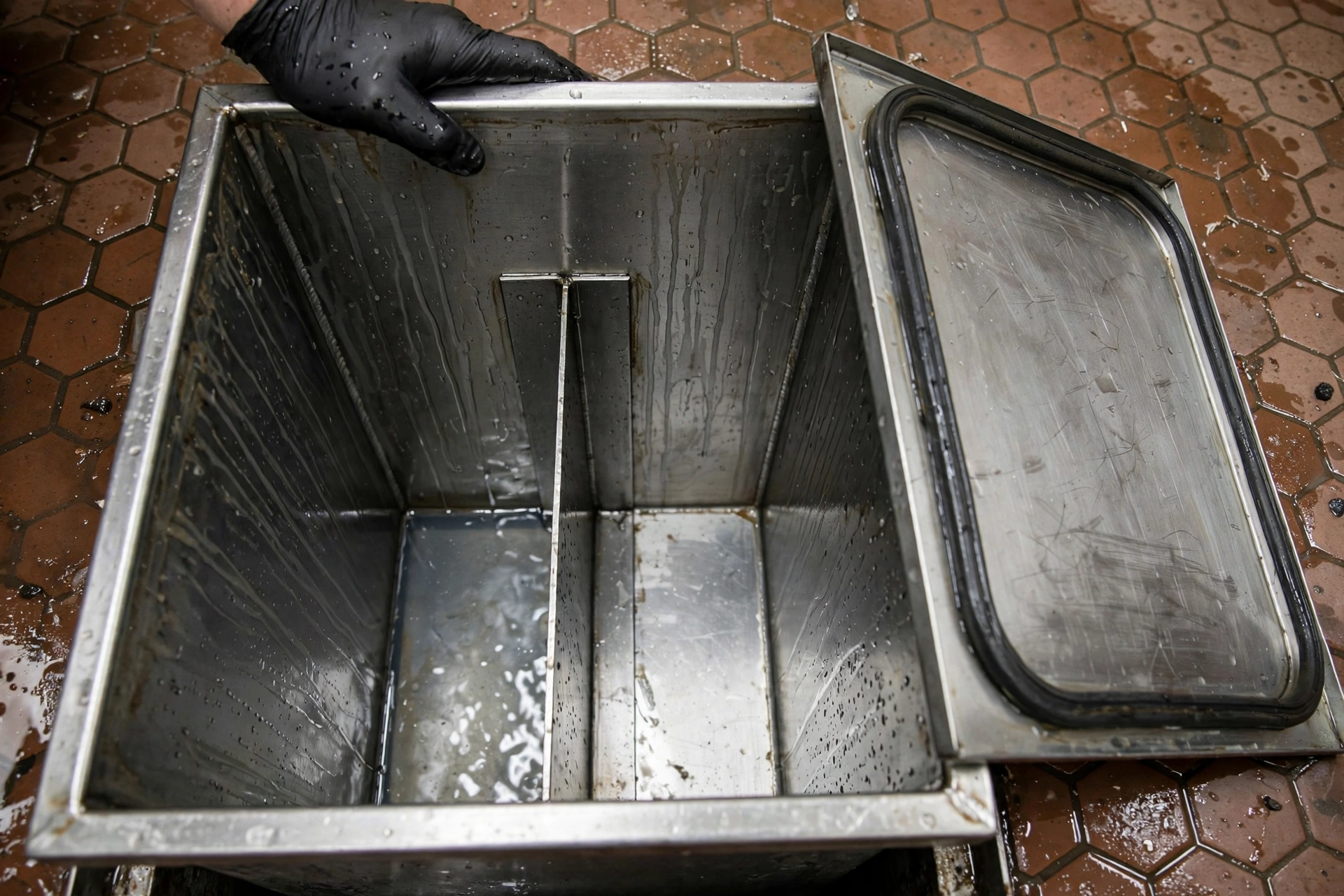
Then we pump the contents out, scrape the walls, baffles and inlet and outlet tees, and look at the gasket and lid. We refill the trap with clean water where it needs it, so the unit works as soon as you restart the line. If a baffle is cracked or a lid does not seal, we tell you what we saw and point to the defect.
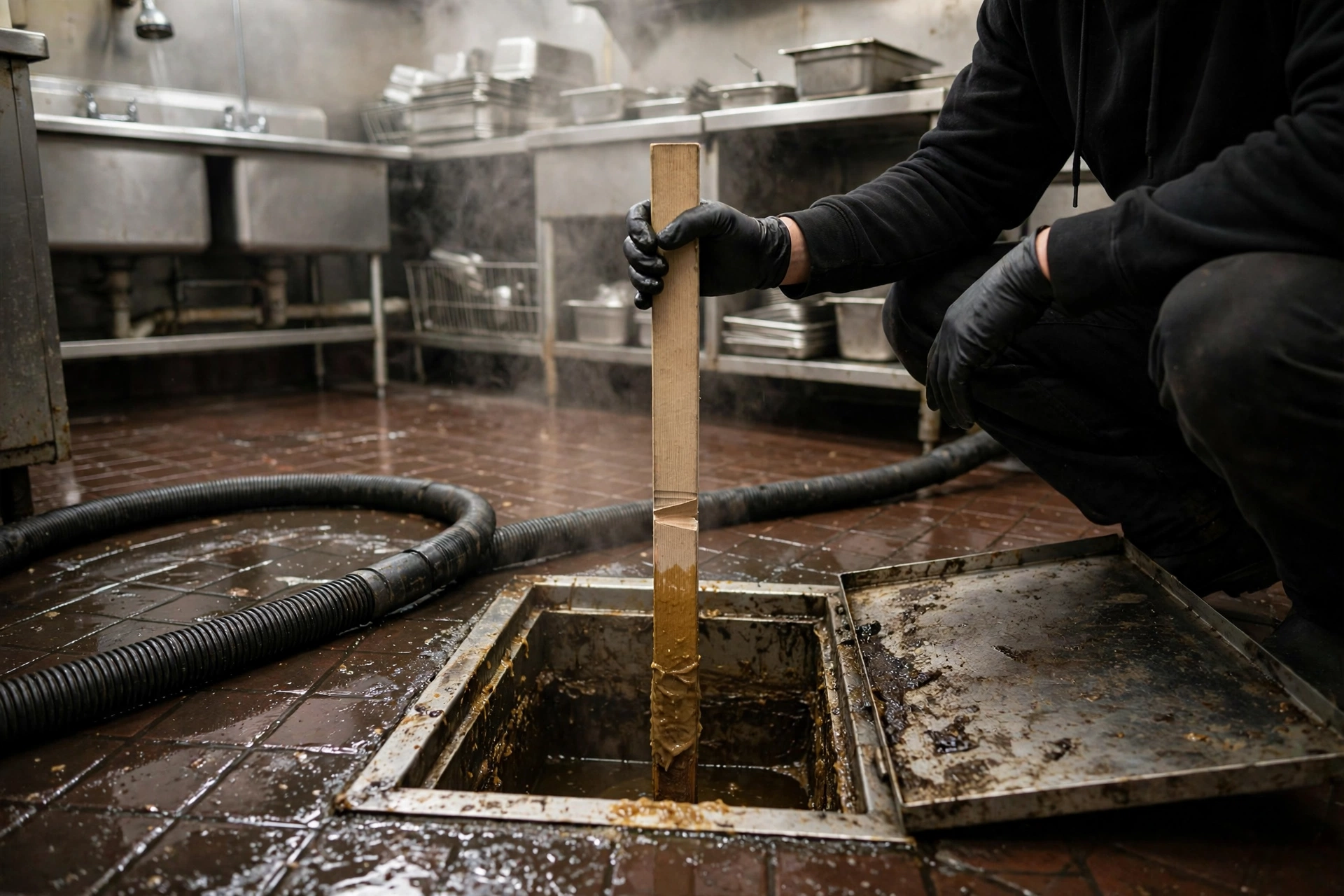
Waste leaves your kitchen on an LDEQ manifest. It carries our name, address, phone, vehicle number and LDEQ hauler registration number, plus the date and volume. You get a copy at the end of the visit. Keep manifests and service records on site for three years. That is the record period in the New Orleans FOG rules we work to, and it is a good habit anywhere. Louisiana sets no pumping interval at state level, so enforcement is local. The New Orleans FOG program calls for a pump-out at least every 90 days, and within two working days once contents reach 25 percent of design capacity. It also gives you 90 days to correct defects an inspector finds. Gretna is across the river, so ask your city which local program covers your kitchen. Our records are kept to the stricter of the two standards either way.
Featured job: a Huey P. Long Avenue kitchen that stopped waiting for the smell
The kitchen and the problem
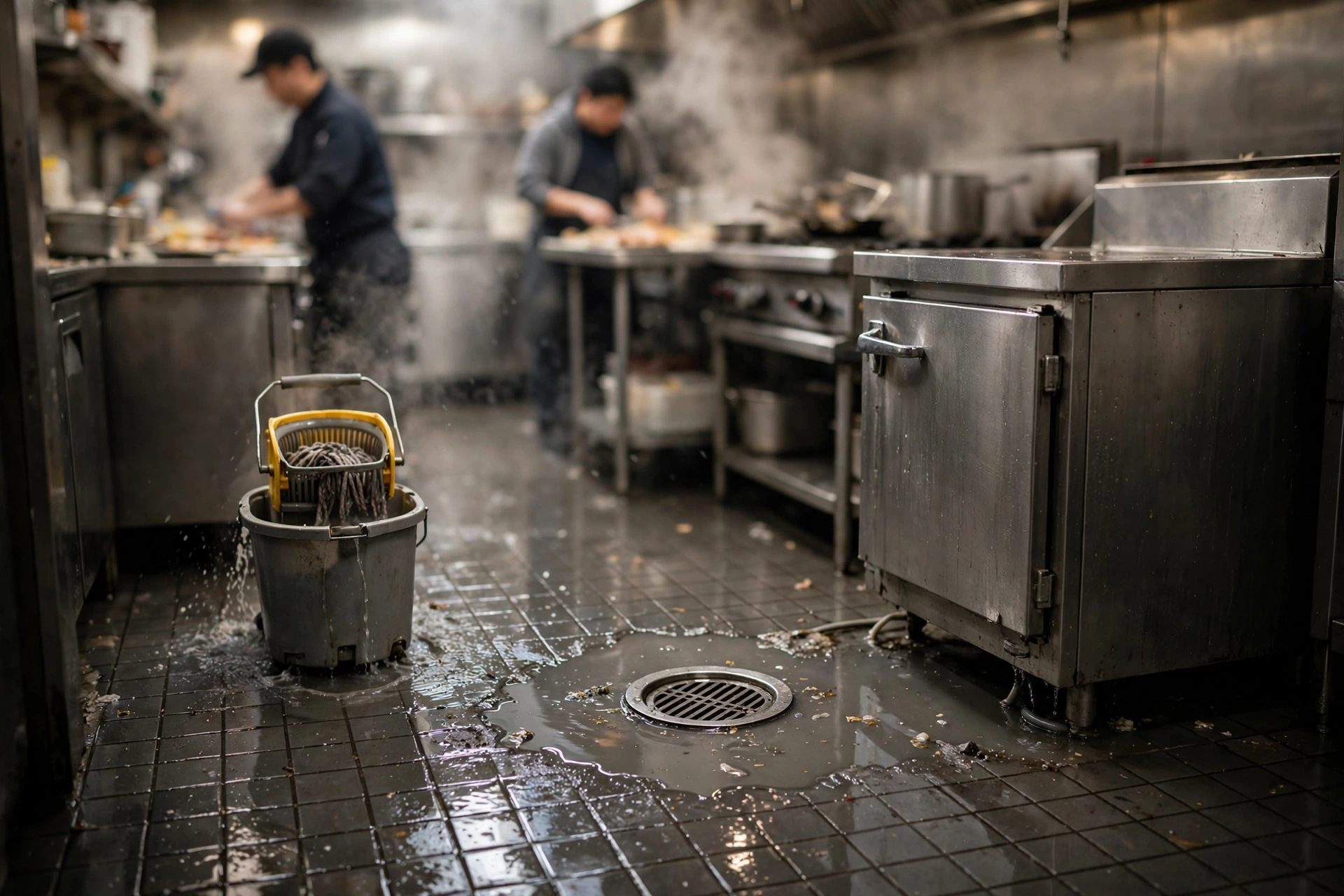
A family-run lunch and dinner place on Huey P. Long Avenue had added a fried menu: catfish, fried shrimp and a basket of sides. The owners had always cleaned the indoor trap when the room started to smell, which in a small kitchen with a small trap meant every few weeks, sometimes after a slow drain had already backed up the dish sink. One Friday lunch rush, it backed up. They called us on a Thursday afternoon, before the next service, because they were worried about the weekend.
The visit
Our tech measured the trap on arrival. Grease and solids stood well past the quarter line, with a thick cap and a heavy layer of settled food at the bottom. We pumped it out, scraped the baffles and inlet tee, checked the lid seal, and ran a section of line jetting as part of the same visit. That is $100 with a service visit, not the heavy jetting rate. The trap, in the up to 200 gallon band, was priced at $125 to $180. The kitchen was back in service before dinner.
What changed
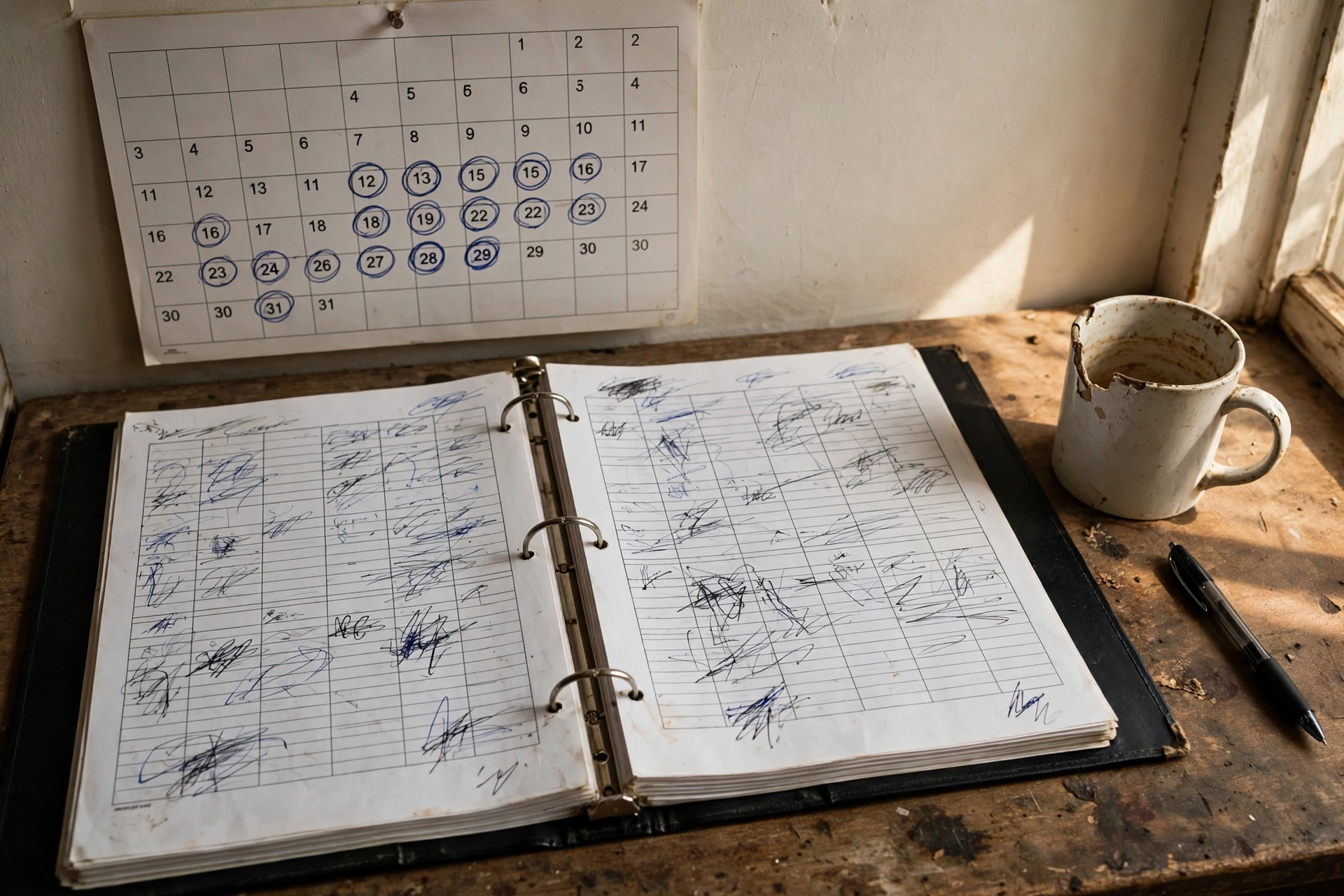
We measured the depth as we went and showed the owners where the quarter line sits. They moved to a standing schedule with us, set toward the short end of the one to four week range, because of the fryers. They keep each manifest in a binder at the back, the three-year record the city rule asks for. They call us when the gauge shows the quarter line, not when the drain tells them first.
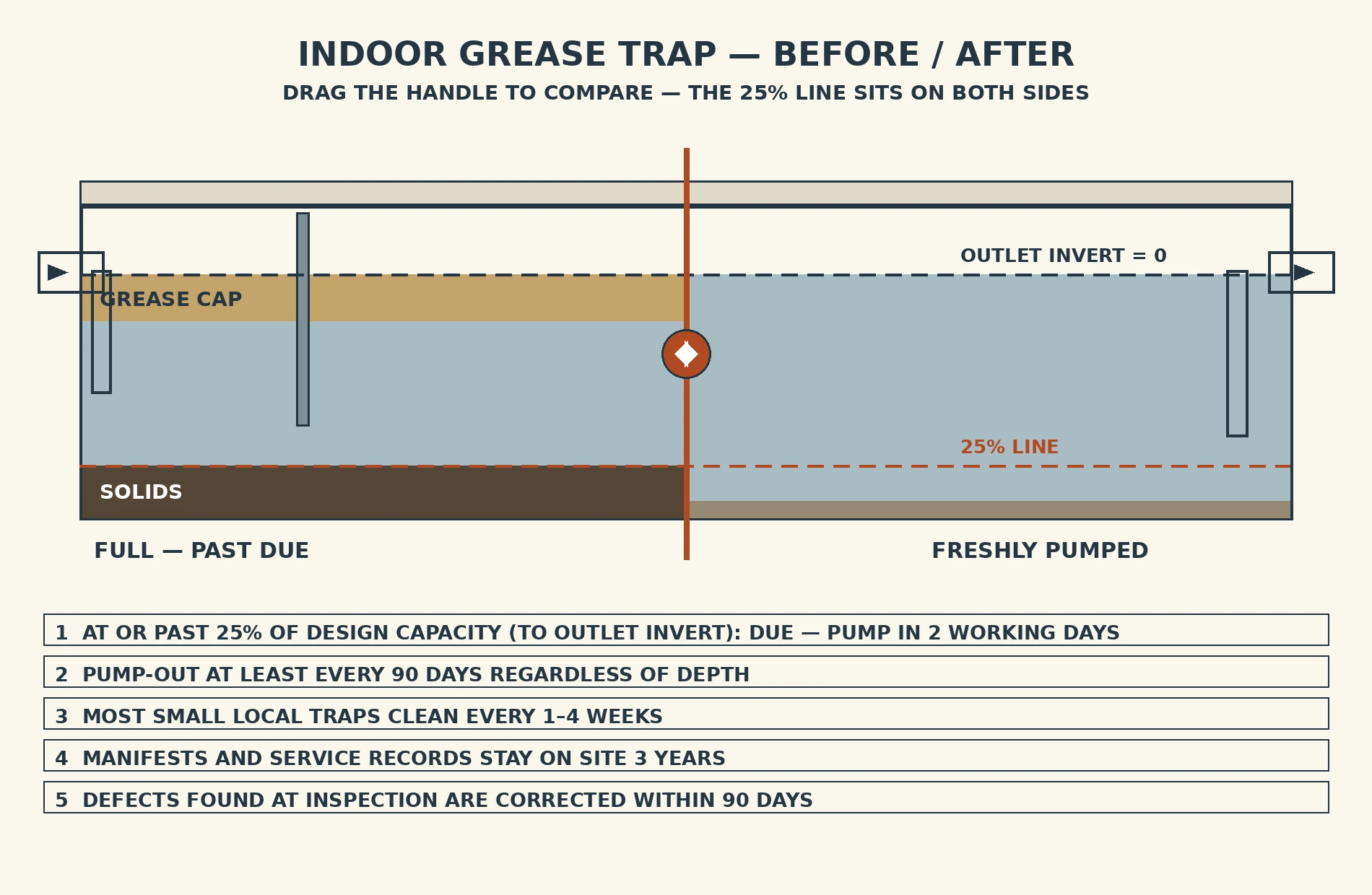
Trap contents at or past 25 percent of design capacity, measured to the outlet invert, are due: pump within two working days.
Pump-out at least every 90 days regardless of depth.
Most small local traps clean every one to four weeks.
Manifests and service records stay on site three years.
Defects found at inspection are corrected within 90 days.
What it costs in Gretna
These are our prices for interior trap cleaning on a scheduled visit.
An indoor trap up to 200 gallons runs $125 to $180.
A trap from 201 to 500 gallons runs $175 to $475.
Line jetting is $100 when done with a service visit. Heavy jetting runs $300 to $600.
An emergency call-out for an indoor trap runs $190 to $240.
Used cooking oil collection costs nothing for clean oil, in containers from 30 to 320 gallons.
If your kitchen also has an exterior interceptor, that is pumping rather than trap cleaning: 1,000 to 1,500 gallons runs $225 to $450, 1,501 to 2,000 gallons runs $600 to $1,200, and 2,001 to 3,000 gallons runs $800 to $2,500. Where a price falls in its range depends on the trap's size, how full it is, and how easy it is to reach.
Call us when
Call when your trap reads at or near the quarter line, when a sink drains slowly, when the kitchen smells of old grease near the trap, or when an inspection is coming and you cannot find your last manifest. If a drain has already backed up, ask for the emergency call-out. If you have a new fryer or a bigger menu, call before the trap tells you.
Book a visit in Gretna
Call (504) 360-9231, Monday to Friday, 9:00 AM to 5:30 PM, or send the form below. Tell us your trap size if you know it, and we will give you the price for it and a visit window.
Questions
Do you clean grease traps in Gretna?
Yes. Indoor trap cleaning is the main work we do for Gretna's kitchens, and Huey P. Long Avenue is a regular stop.
How often does a Gretna restaurant need its trap cleaned?
Most local restaurants clean every one to four weeks on small traps. A fryer-heavy menu sits at the short end. The New Orleans FOG program sets 90 days as the longest gap between pump-outs, and the depth of grease and solids tells you when you are due before that.
What is the 25 percent rule?
When grease and solids reach 25 percent of the trap's design capacity, measured to the outlet invert, the trap is due. Under the New Orleans rules we work to, you pump within two working days of reaching that level.
How much does trap cleaning cost?
An indoor trap up to 200 gallons runs $125 to $180. A trap from 201 to 500 gallons runs $175 to $475. Where you land in a range depends on the trap's size, how full it is and how easy it is to reach.
What does an emergency call-out cost?
An emergency visit for an indoor trap runs $190 to $240. We ask the same questions we ask for a scheduled visit and send a tech as soon as the schedule allows.
Do you do line jetting?
Yes. Line jetting is $100 when done with a service visit. Heavy jetting runs $300 to $600.
What paperwork do I get?
An LDEQ manifest for each pump-out, carrying our name, address, phone, vehicle number and LDEQ hauler registration number, with the date and volume. Keep manifests and service records on site for three years.
What does an inspector check?
The trap and interceptor are permitted through the SWBNO FOG Program in New Orleans. The inspector checks the trap's condition, how full it is against the 25 percent line, the lid and fittings, and your records on site. Defects found at inspection are to be corrected within 90 days. Gretna kitchens should ask the city which local program applies, and we can keep your records in the same form either way.
Can you take my used cooking oil?
Yes. We collect clean used cooking oil at no charge, in containers from 30 to 320 gallons.
My kitchen has an exterior interceptor as well as an indoor trap. Can you handle both?
Yes. We pump interceptors and clean indoor traps on the same account. Interceptor pumping runs $225 to $450 for 1,000 to 1,500 gallons, $600 to $1,200 for 1,501 to 2,000 gallons, and $800 to $2,500 for 2,001 to 3,000 gallons.
When can you come?
We take calls Monday to Friday, 9:00 AM to 5:30 PM. We book around your service hours, usually before open or in the afternoon lull.
Send us the details
Name and phone are required. Service, town and message are optional. The more details you give, the better we are able to help you.
[FORM: Name (required) · Phone (required) · Service (optional) · Town (optional) · Message (optional) · Consent checkbox (required)]
Or call (504) 360-9231.