New Orleans Grease Trap does grease interceptor pumping for Chalmette restaurants, seafood houses and commercial kitchens, and we pair it with indoor trap work so both ends of your grease line get serviced on the same schedule. It is about a 15 to 20 minute drive from our base in New Orleans, and Chalmette is ground we plan routes around.
Most kitchens along Judge Perez Drive and the main commercial strip have two pieces of equipment to look after. One is a small trap under or beside the sinks, which needs grease trap cleaning every one to four weeks in most local kitchens. The other is a large exterior interceptor in the ground, which is pumped on a longer interval and is where most trouble starts when it gets ignored.
If you already know which one you need, call (504) 360-9231, Monday to Friday, 9:00 AM to 5:30 PM, and tell us what you have. If you are not sure what is under your parking lot or behind your kitchen, that is a normal call too, and we will help you work it out.
What Chalmette kitchens are like
Chalmette is the parish seat of St. Bernard, and its restaurants cluster on the main commercial strip and along Judge Perez Drive, where a lot of the seafood houses sit. Boiled seafood, fried platters, gumbo and étouffée put a steady load of fat into the drain. Kitchens that fry seafood by the basket produce more grease than a sandwich counter does, and a busy Friday or a crawfish season shows up in the trap fast.
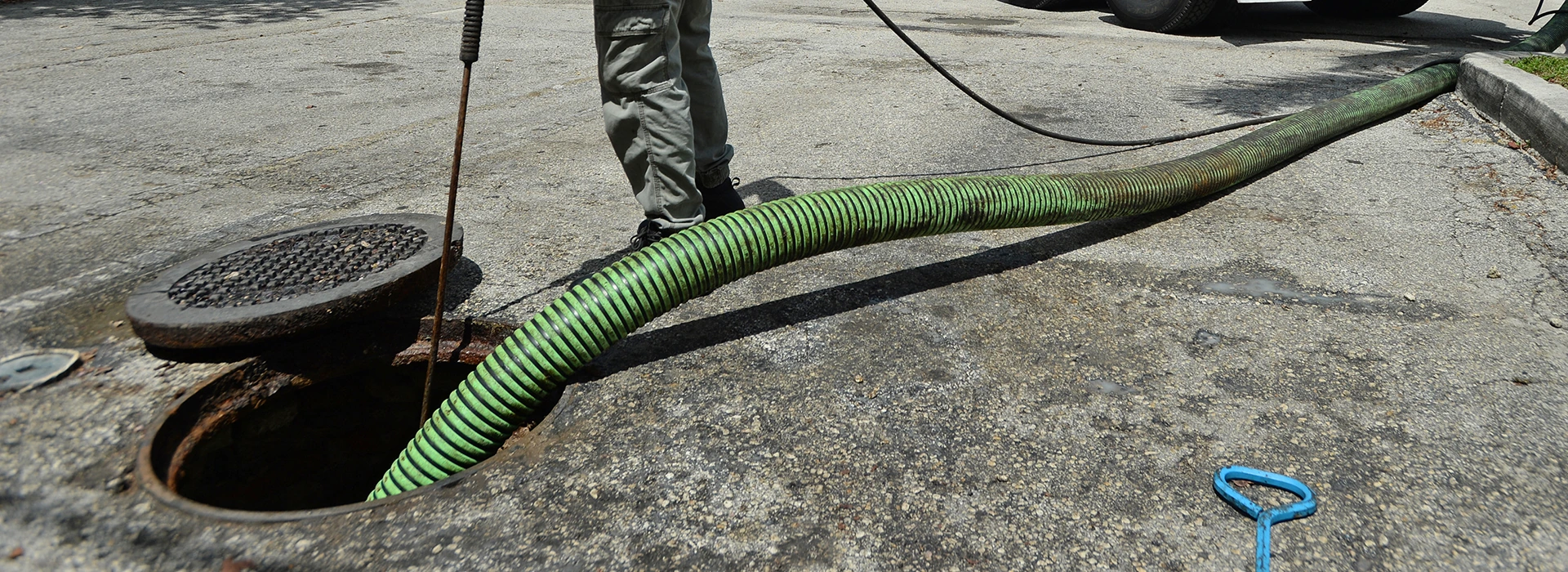
That is why the larger tank matters here. A seafood house with a dining room and a full fry line usually has an exterior interceptor, often in the 1,000 to 1,500 gallon band or larger. When it fills past a quarter of its design capacity, grease and solids start moving toward the outlet, and the line backs up when the dining room is full. The work in Chalmette is keeping that tank pumped before it gets there, and keeping the indoor trap cleaned so less reaches the tank in the first place.
How the service runs for a Chalmette kitchen
We start by finding out what you have: the indoor trap size, whether there is an exterior interceptor, its capacity, and where the lids are. On a first visit we measure the contents against the design capacity to the outlet invert, because that measure, not the calendar alone, tells you whether the tank is due.
The rules we work to are the City of New Orleans and Sewerage & Water Board FOG rules, which are the standard we know in detail. Every trap and interceptor is pumped at least every 90 days. When the contents reach 25 percent of design capacity, it is pumped within two working days. Defects found at inspection are corrected within 90 days. Manifests and service records stay on site for three years. Chalmette is in St. Bernard Parish, so ask the parish what it requires of your kitchen; we will service to the standard above either way and give you records that hold up.
Grease trap waste moves on Louisiana DEQ manifest forms. Each one carries the hauler's name, address, phone, vehicle number and LDEQ hauler registration number, plus the date and the volume. You get the copy for your file after every pump-out. The state sets no pumping interval of its own, so the schedule you keep is the one that protects you.
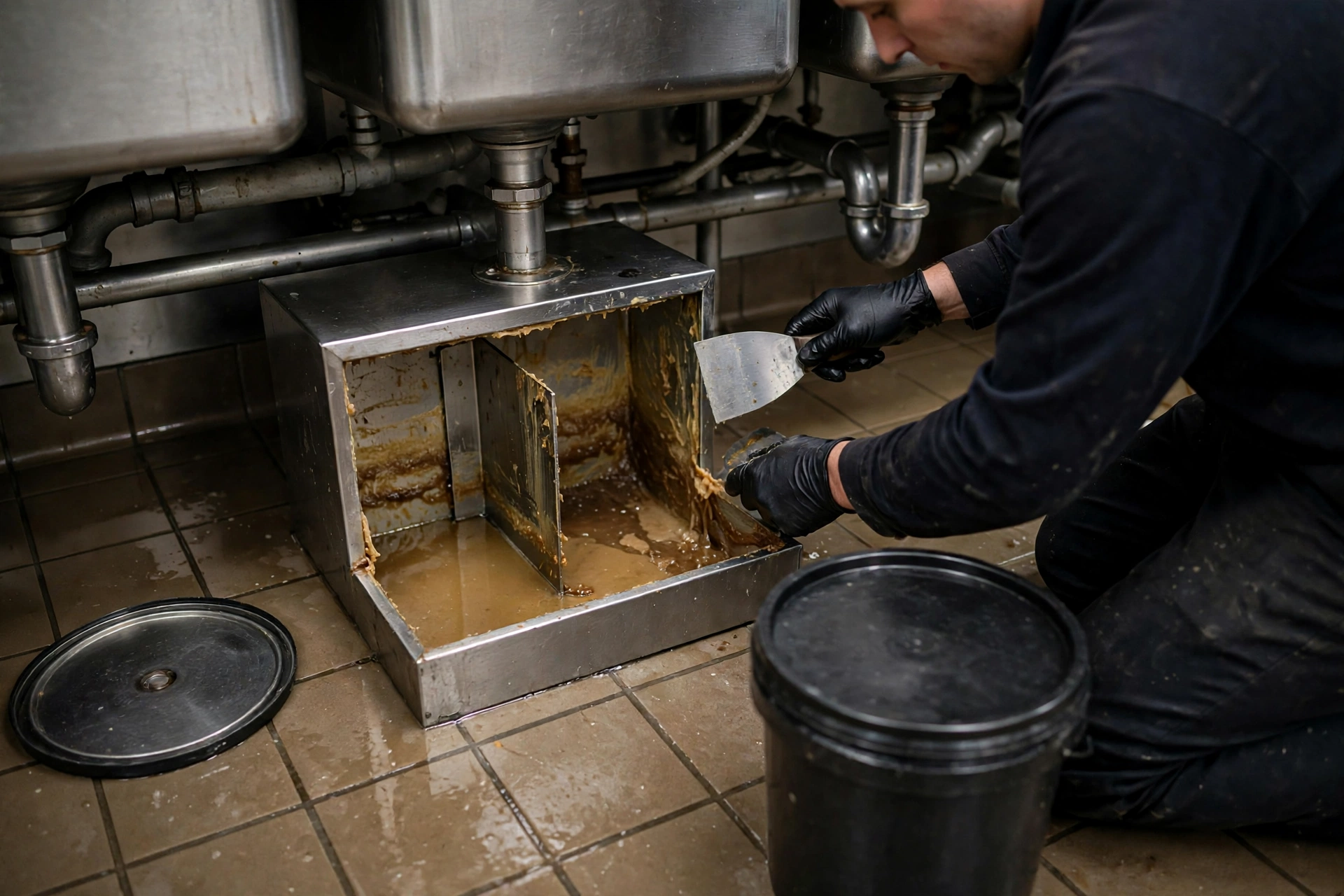
For indoor traps we empty the trap, scrape the baffles and walls, check the lid gasket and the inlet and outlet, and put it back in service. For interceptors we pump the tank, clean the walls, inspect the baffles and the inlet and outlet tees, and report anything that needs repair. If you want a scheduled program, we set the intervals by trap size and kitchen volume and keep the records for you.
Our prices for Chalmette
These are our prices, and they apply in Chalmette as they do everywhere we work. Where you land in a range depends on the volume to remove and how easy the tank is to reach.
| What we service | Our price per scheduled visit |
|---|---|
| Indoor trap up to 200 gallons | $125 to $180 |
| Indoor trap, 201 to 500 gallons | $175 to $475 |
| Interceptor, 1,000 to 1,500 gallons | $225 to $450 |
| Interceptor, 1,501 to 2,000 gallons | $600 to $1,200 |
| Interceptor, 2,001 to 3,000 gallons | $800 to $2,500 |
| Emergency call-out, indoor trap | $190 to $240 |
| Emergency call-out, interceptor of 1,000 to 1,500 gallons | $400 to $900 |
| Line jetting done with a service visit | $100 |
| Heavy jetting | $300 to $600 |
| Used cooking oil collection | no charge for clean oil, in containers from 30 to 320 gallons |
We do not state a price here for traps of 501 to 749 gallons, or for emergency work on interceptors over 1,500 gallons or traps of 201 to 500 gallons. Call and we will price those from the equipment you describe.
Seafood houses that fry often have used oil to move as well. We collect clean oil at no charge, and it can go on the same visit schedule as your trap work.
Mid-page invitation: tell us what you have
Send us the trap size, whether you have an exterior interceptor, and when it was last pumped. Call (504) 360-9231 or use the form below, and we will tell you the visit price and the next date you are due.
Featured job: a Judge Perez Drive seafood house
The kitchen and the problem
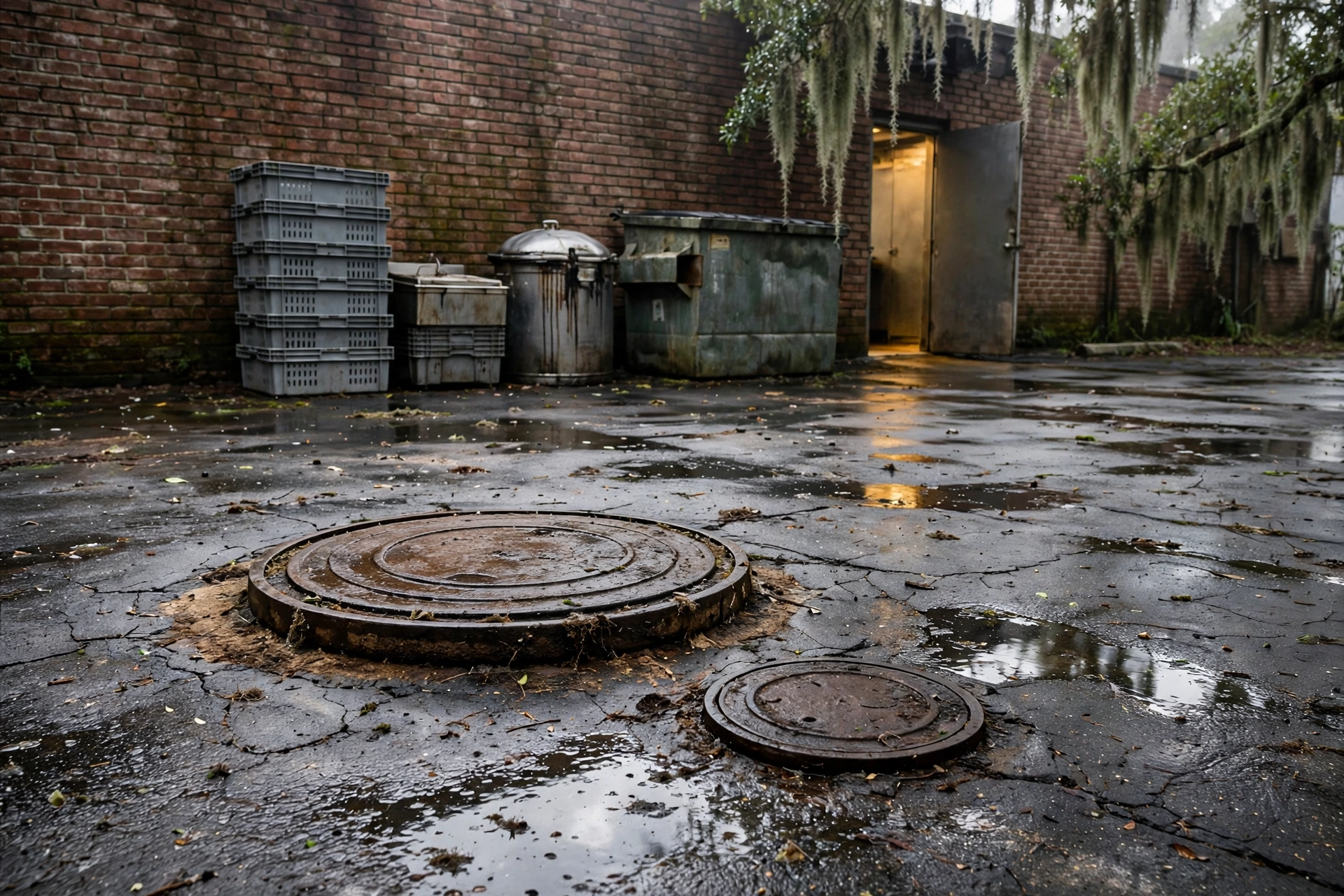
A family seafood house on Judge Perez Drive ran a fry line, a boil station and a full dining room. It had a small indoor trap at the prep sinks and an exterior interceptor in the back lot, in the 1,000 to 1,500 gallon band. The trap was cleaned when someone noticed a smell. The interceptor had not been pumped on any schedule the owners could point to, and they had no manifests on site.
What we found
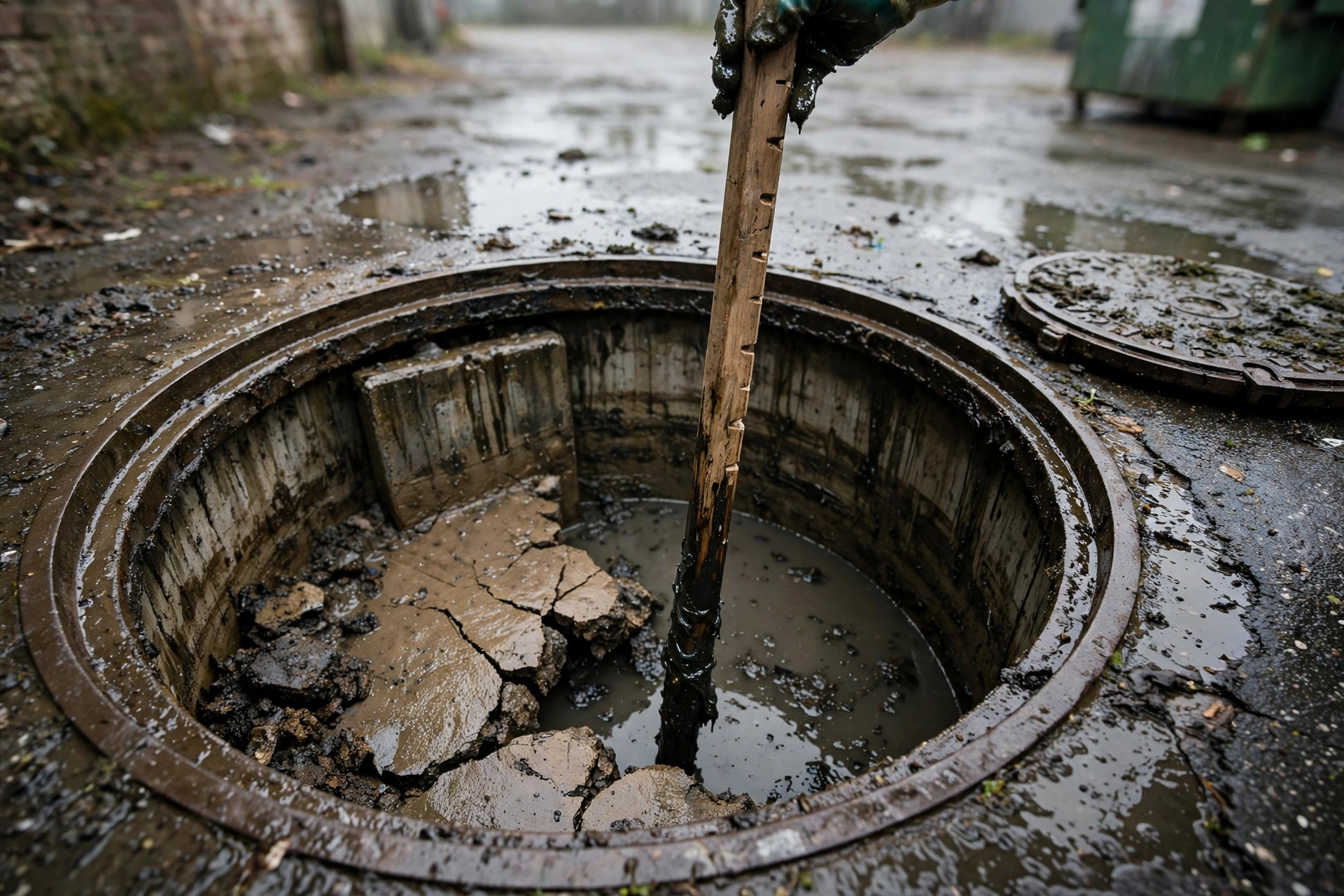
We opened the interceptor and measured to the outlet invert. The contents were past the 25 percent mark, which meant the tank was due for pumping within two working days. The baffle was intact, but the outlet tee had grease packed around it. The indoor trap was heavily loaded with the same material coming off the fry line.
The work
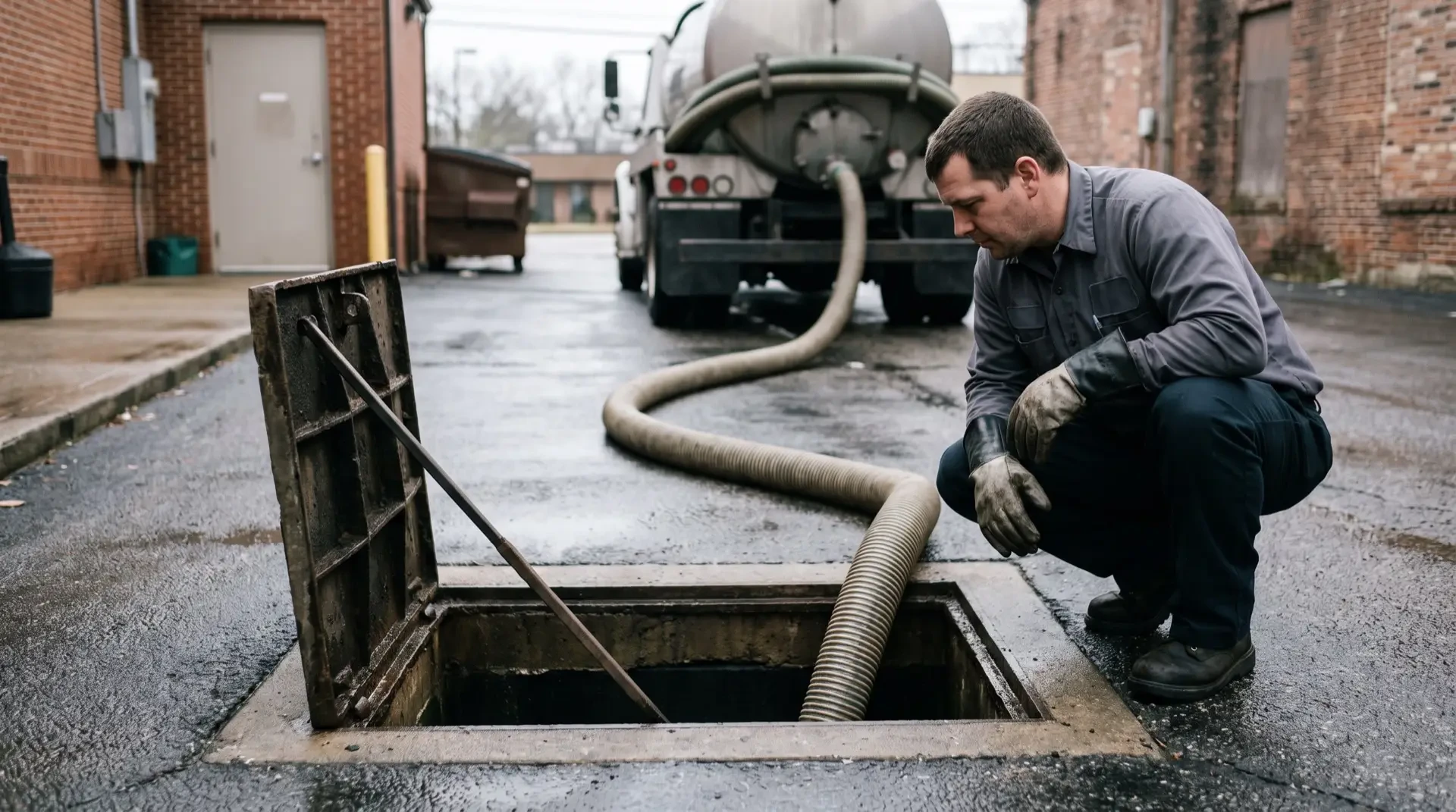
We scheduled the pump-out inside the two working day window. The truck pumped the interceptor, we cleaned the walls and the outlet tee, and we cleaned the indoor trap on the same visit. The interceptor visit fell in the $225 to $450 range for its band, and the trap came in at the $125 to $180 range for a trap up to 200 gallons. The kitchen added line jetting at $100 because the sink drain had been slow. The seafood house also asked about its fryer oil, and we set up clean oil collection at no charge.
The paperwork and the schedule
The owners got the manifest with the hauler's details, vehicle number, date and volume, and a service record to keep on site for three years. We set a recurring visit so the interceptor is pumped at least every 90 days, and the indoor trap on a short interval suited to the fry line. The next time an inspector asked, the records were in the office and the dates were in order.
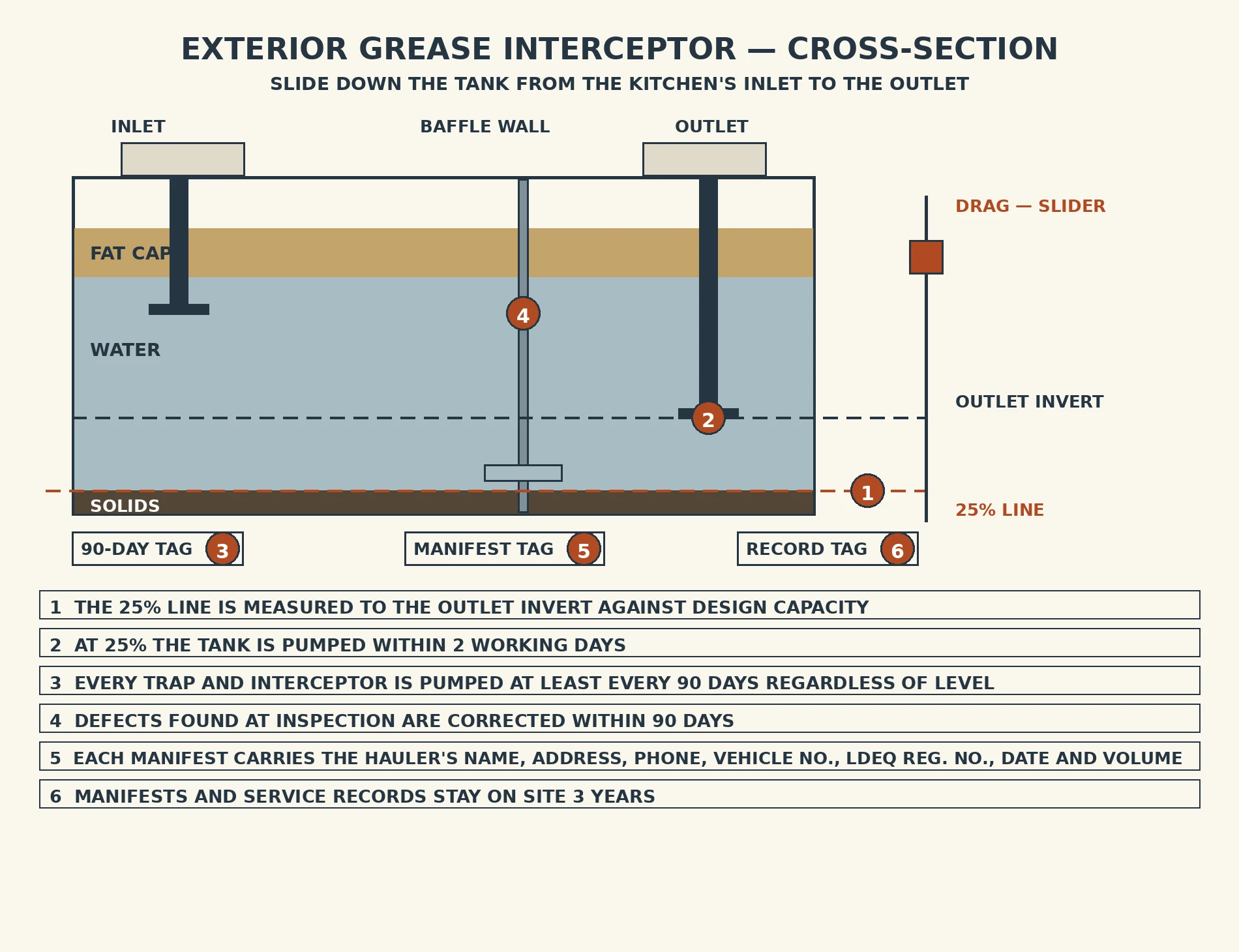
the 25 percent line is measured to the outlet invert against design capacity
at 25 percent the tank is pumped within two working days
every trap and interceptor is pumped at least every 90 days regardless of level
defects found at inspection are corrected within 90 days
each manifest carries the hauler's name, address, phone, vehicle number, LDEQ registration number, date and volume
manifests and service records stay on site three years.
When to call
Call when the indoor trap smells, when sinks drain slowly, or when you cannot say when the interceptor was last pumped. Call when you are 90 days out from the last pump-out, or when a measurement shows the contents at a quarter of capacity. Call before an inspection if you do not have manifests and service records on site.
If the line is already backing up, call for emergency service. An emergency visit on an indoor trap runs $190 to $240, and on an interceptor of 1,000 to 1,500 gallons it runs $400 to $900. We are reachable Monday to Friday, 9:00 AM to 5:30 PM.
Request service in Chalmette
Tell us who you are and how to reach you, and we will call you back. Name and phone are required. Service, town and message are optional. A consent checkbox is required. The more details you give, the better we are able to help you.
Or call (504) 360-9231.
Questions
Do you actually come out to Chalmette?
Yes. Chalmette is about a 15 to 20 minute drive from our base in New Orleans, and we serve restaurants and commercial kitchens along Judge Perez Drive and the main commercial strip.
How often does my exterior interceptor need pumping?
At least every 90 days, and sooner if the contents reach 25 percent of design capacity. At that point it is pumped within two working days.
How is the 25 percent measured?
We measure the contents to the outlet invert and compare that depth with the tank's design capacity. When the contents reach a quarter of capacity, the tank is due.
How often should I clean my indoor trap?
Most local restaurants clean small traps every one to four weeks. A fry-heavy kitchen sits toward the short end of that range. The 25 percent depth measure tells you when yours is due.
What does it cost?
An indoor trap up to 200 gallons runs $125 to $180. A trap of 201 to 500 gallons runs $175 to $475. An interceptor of 1,000 to 1,500 gallons runs $225 to $450, 1,501 to 2,000 gallons runs $600 to $1,200, and 2,001 to 3,000 gallons runs $800 to $2,500. For traps of 501 to 749 gallons, call us with the details and we will price it.
What does emergency service cost?
An emergency indoor trap visit runs $190 to $240. An emergency visit on an interceptor of 1,000 to 1,500 gallons runs $400 to $900. For emergency work on larger interceptors or on traps of 201 to 500 gallons, call us and we will price it from the equipment.
Do you handle the paperwork?
Yes. Grease trap waste moves on an LDEQ manifest form that carries our name, address, phone, vehicle number and LDEQ hauler registration number, along with the date and volume. You get a copy and we keep a service record. Keep both on site for three years.
Which rules apply to a Chalmette kitchen?
We work to the City of New Orleans and Sewerage & Water Board FOG standard: pump-out at least every 90 days, pumping within two working days of reaching 25 percent, defects corrected within 90 days, and records kept three years. Chalmette is in St. Bernard Parish, so ask the parish what it requires of your kitchen. Louisiana sets no state pumping interval, and enforcement is local.
Can you jet my drain line while you are there?
Yes. Line jetting done with a service visit is $100. Heavy jetting for a harder blockage runs $300 to $600.
Do you take used cooking oil?
Yes. Clean oil is collected at no charge, in containers from 30 to 320 gallons, and it can go on the same schedule as your trap service.
What does an inspector look at?
The inspector looks at the contents depth against capacity, the condition of the baffles and the inlet and outlet, and whether your manifests and service records are on site for the last three years. Defects found are corrected within 90 days.
Can you set up a regular schedule so I do not have to think about it?
Yes. We set the interval by trap size and kitchen volume, send a truck on the due date, and keep your records in order.
What are your hours?
Monday to Friday, 9:00 AM to 5:30 PM. Call (504) 360-9231.