New Orleans Grease Trap handles grease trap cleaning for River Ridge restaurants, seafood kitchens and neighborhood Italian spots along Jefferson Highway. We are based in New Orleans, about 20 minutes from most River Ridge kitchens, and our trucks run this stretch regularly.
Most kitchens out here have an indoor trap under or beside the dish and prep sinks. It is small, it fills faster than people expect, and it is the first thing a drain complaint or an inspector points to. We open it, pump it, scrape it, check the baffles and outlet, and leave you the paperwork the city expects you to hold.
If your trap is due, slow, or smelling, call (504) 360-9231 and tell us what you are running. We will tell you what the visit costs before the truck rolls.
What River Ridge kitchens are like
River Ridge dining runs on neighborhood trade. Jefferson Highway carries a strip of seafood houses and Italian kitchens that feed the same families week after week, plus lunch crowds from the offices and shops nearby. These are mostly independent operations with compact back lines, and the dish area is often where the trap sits.
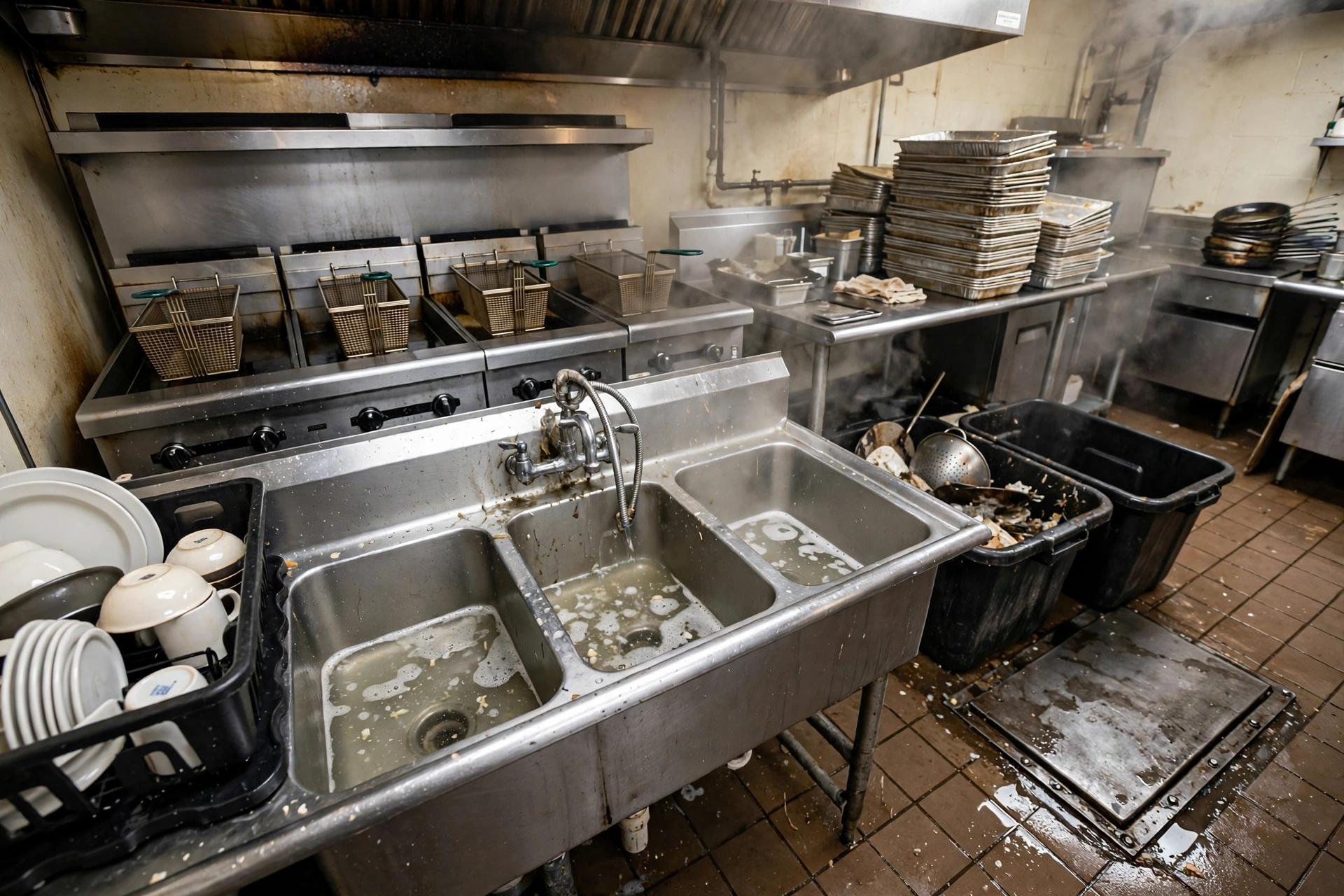
Fried seafood, red gravy, roux, sautéed butter and oil all end up in that trap. Passive indoor traps in this trade run roughly 40 to 200 gallons, and most local restaurants clean small traps every one to four weeks. The right interval for your kitchen depends on volume and menu, and the trap itself tells us when it is due.
That is why interior trap work is the job in River Ridge. These kitchens do not typically have the large exterior interceptors that get pumped on a long cycle. They have a small trap that needs steady attention, a permit through the Sewerage & Water Board FOG Program, and records on hand when someone asks.
How the work runs
We arrive, find the trap, and open the lid. Before pumping, we measure how much of the trap's design capacity is taken up by grease and solids, measured to the outlet invert. That reading is what decides whether the trap is due. When contents reach 25 percent of design capacity, the city rule is to pump within two working days. A trap sitting at that line is not an emergency, but it is a clock.
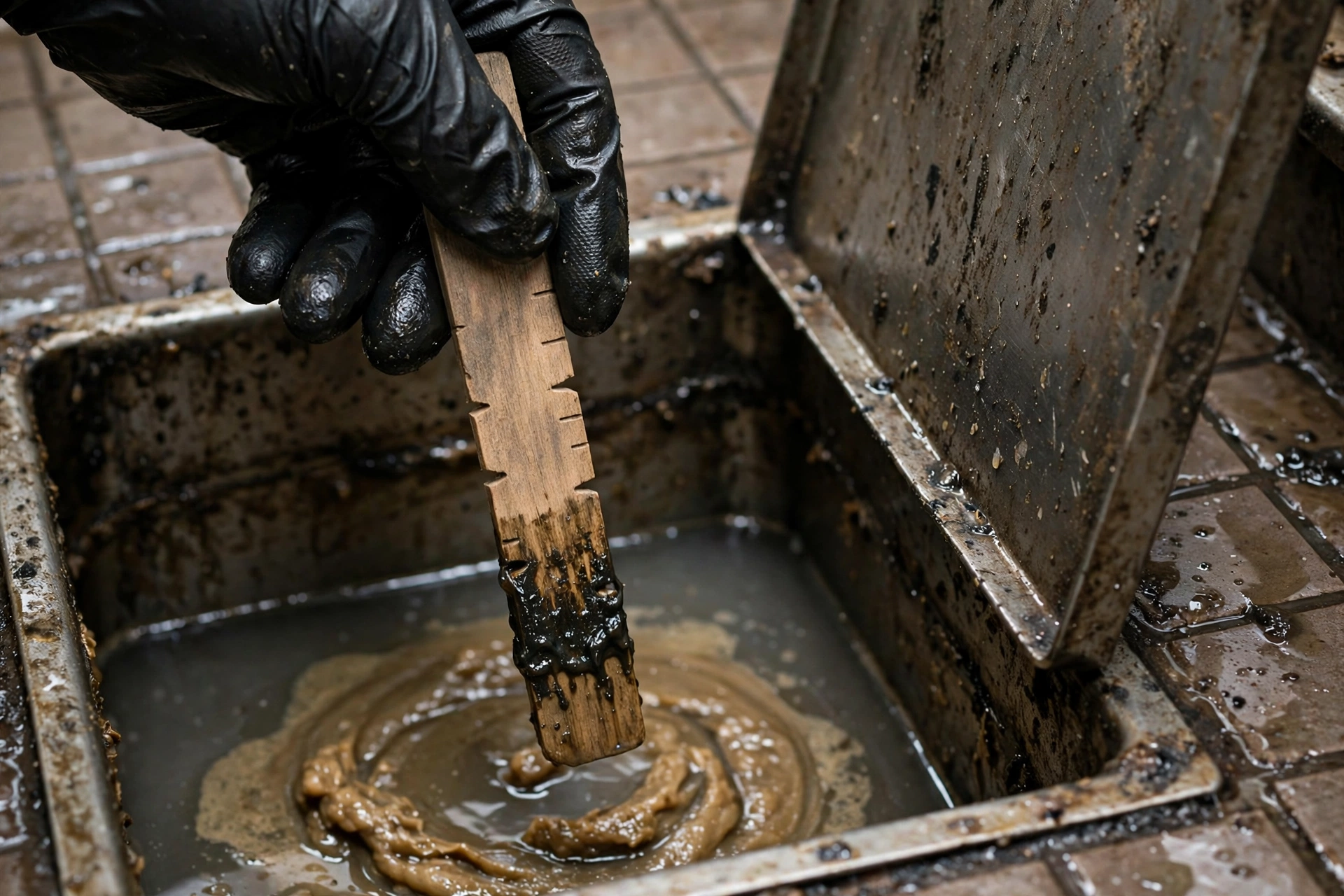
Then we pump the trap out, scrape the walls and baffles, check the inlet and outlet for damage or blockage, and close it back up. If the line leading to the trap is slow, we can jet it in the same visit. The city's own cycle is a pump-out at least every 90 days, and defects found at inspection are to be corrected within 90 days. We flag anything we see that would cause one.
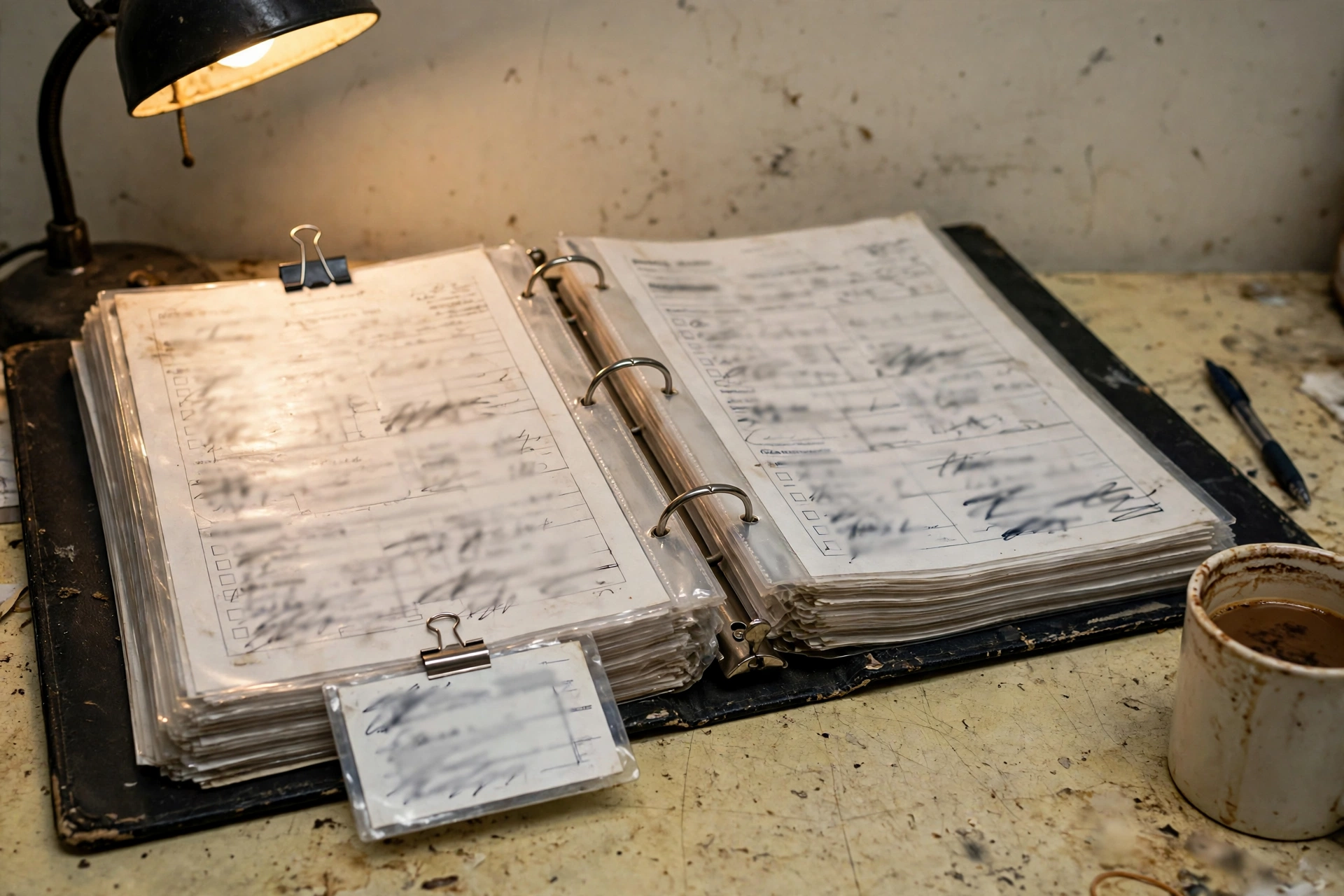
The waste leaves with us on a Louisiana DEQ manifest carrying our name, address, phone, vehicle number, LDEQ hauler registration number, the date and the volume. You get a copy. The city expects manifests and service records kept on site for three years, so we hand you something you can put in a binder and find again.
What it costs
These are our prices for River Ridge.
- Indoor trap up to 200 gallons: $125 to $180 on a scheduled visit.
- Indoor trap 201 to 500 gallons: $175 to $475.
- Line jetting: $100 when done with a service visit.
- Heavy jetting: $300 to $600.
- Emergency indoor trap service: $190 to $240.
- Used cooking oil collection: no charge for clean oil, with containers from 30 to 320 gallons.
Where in a range your trap lands depends on its size, how full it is, and how easy it is to reach.
Mid-job invitation
If you are not sure whether your trap is due, we can tell you in a short visit. Call (504) 360-9231, Monday to Friday, 9:00 AM to 5:30 PM, and we will find a slot.
Featured job: a Jefferson Highway seafood kitchen
The trap that kept filling early
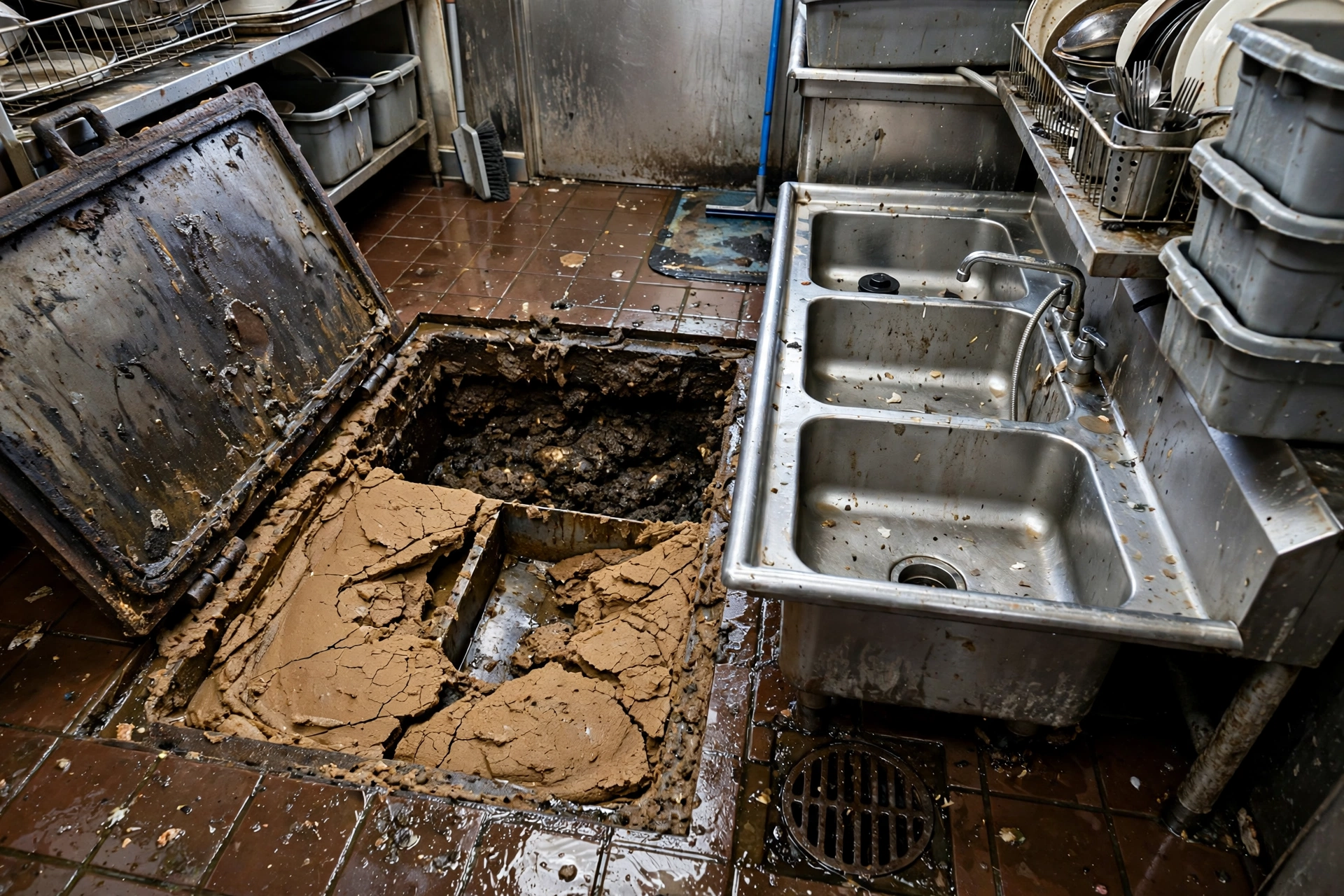
A family seafood kitchen on Jefferson Highway had been on a monthly trap service for as long as the owner could remember. Weekends were the problem. Friday and Saturday fried platters meant the dish sink took a heavy load of oil and breading, and by Sunday the sink was draining slowly and a sour smell was coming from the floor near the dish station.
What the measure showed
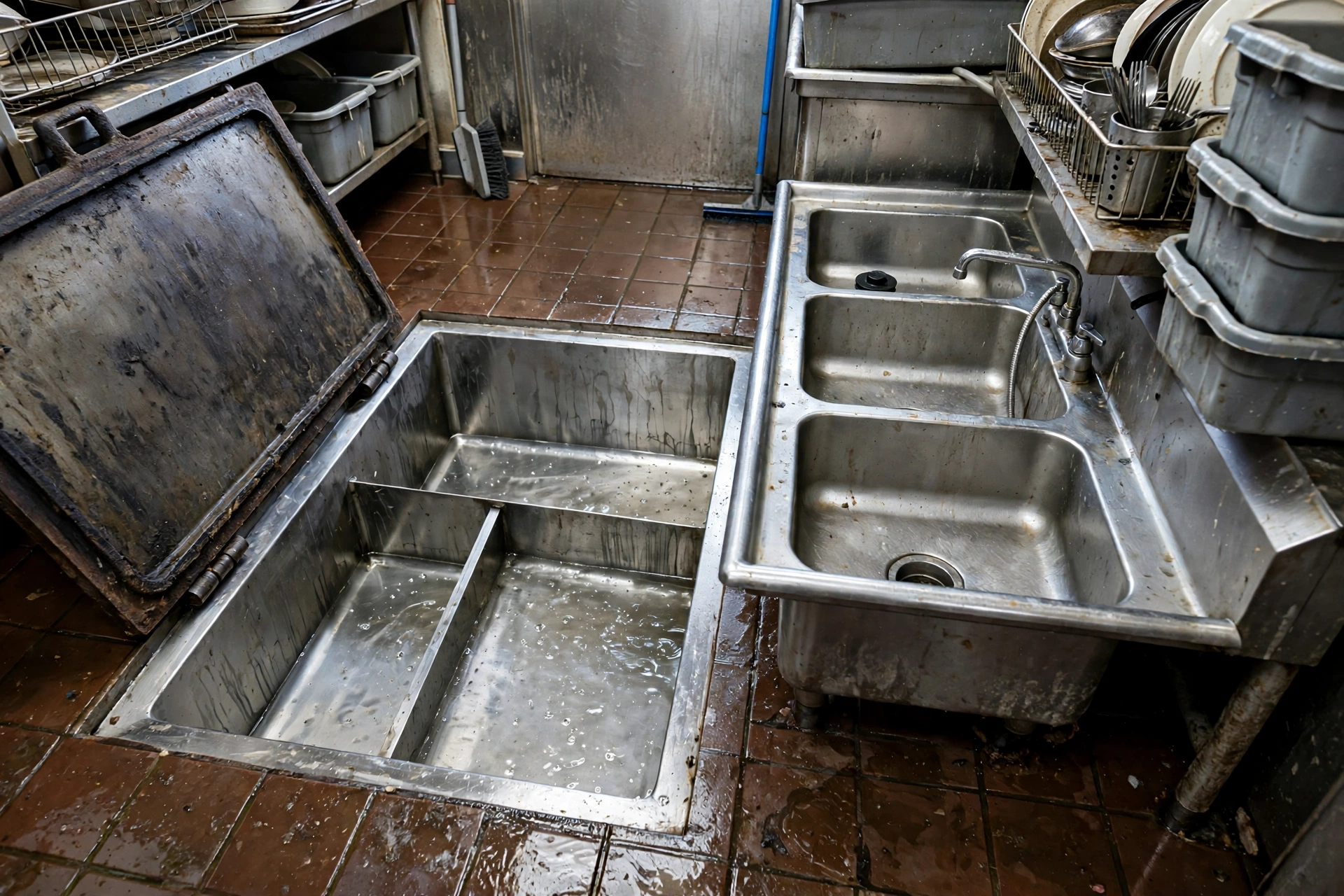
When we arrived, we measured to the outlet invert. The trap was well past the 25 percent line, which is the point where the city's rule calls for a pump-out within two working days. The monthly schedule was simply too long for a kitchen that fried seafood three nights running.
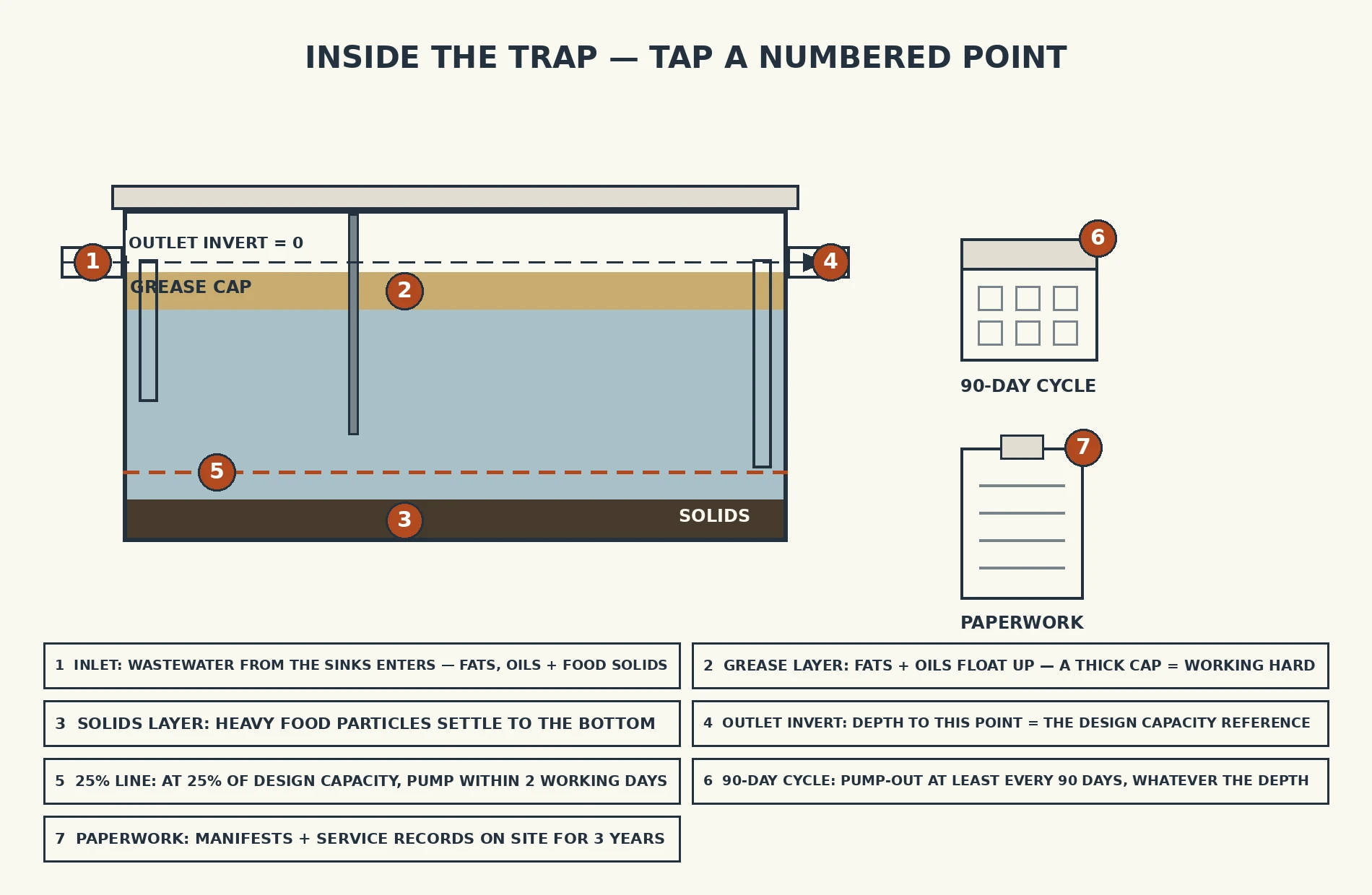
Inlet: wastewater from the sinks enters here, carrying fats, oils and food solids.
Grease layer: fats and oils float to the top, which is why a thick cap means the trap is working hard.
Solids layer: heavy food particles settle to the bottom.
Outlet invert: the depth measured to this point is the reference for design capacity.
The 25 percent line: when contents reach 25 percent of design capacity, the city rule is to pump within two working days.
The 90 day cycle: the city's rule is a pump-out at least every 90 days, whatever the depth reads.
Paperwork: manifests and service records stay on site for three years.
Clean, jet, reset
We pumped the trap, scraped it down, and checked the baffles and outlet. The trap was in the up-to-200-gallon band, so the cleaning was priced at $125 to $180. The slow sink drain was a clogged line leading to the trap, so we jetted it during the same visit for $100.
A schedule that fits the kitchen
We left a manifest copy with the owner and moved the service to a shorter interval within the one to four weeks most small traps run. It was set around the weekend load, so the trap gets cleaned before it reaches the quarter line instead of after. The slow sink and the smell stopped, and the kitchen now has records for the last pump-outs on hand if the Sewerage & Water Board asks.
Paperwork and what an inspector looks for
Every trap and interceptor is permitted through the Sewerage & Water Board's FOG Program. An inspector checks that the permit is in place, that pump-outs are happening at least every 90 days, that the trap is not over the 25 percent line, and that manifests and service records are on site for the past three years. Defects they find are to be corrected within 90 days.
When to call
Call when the trap measures near the 25 percent line, when a sink drains slowly, when you smell grease near the dish area, when you are heading toward the 90 day mark, or when an inspection is coming. Call before a busy weekend if your menu has changed. If the trap is already backing up, say so, and we will treat it as an emergency visit.
Final invitation
Tell us what you cook, how big your trap is if you know, and when you last had it pumped. We will set a price and a date. Call (504) 360-9231, Monday to Friday, 9:00 AM to 5:30 PM, or send the form below.
The more details you give, the better we are able to help you.
Questions
Do you serve River Ridge?
Yes. River Ridge is about 20 minutes from our base in New Orleans, and we service kitchens along Jefferson Highway and the surrounding neighborhood.
How often does a River Ridge kitchen need its trap cleaned?
Most local restaurants clean small traps every one to four weeks. The right interval depends on your menu and volume. A fry-heavy seafood kitchen sits toward the short end. The city's outer limit is a pump-out at least every 90 days.
What is the 25 percent rule?
When grease and solids reach 25 percent of the trap's design capacity, measured to the outlet invert, the city's rule is to pump within two working days. We take that reading on each visit.
How much does it cost to clean an indoor trap?
A trap up to 200 gallons is $125 to $180 on a scheduled visit. A trap of 201 to 500 gallons is $175 to $475. Where you land in the range depends on size, how full the trap is, and access.
Do you jet the lines too?
Yes. Line jetting is $100 when done with a service visit. Heavy jetting is $300 to $600.
What if my trap is backing up right now?
Call (504) 360-9231 and say so. Emergency service on an indoor trap is $190 to $240.
What paperwork do I get?
A Louisiana DEQ manifest for each pump-out, showing our name, address, phone, vehicle number, LDEQ hauler registration number, the date and the volume. The city expects manifests and service records kept on site for three years.
Does my trap need a permit?
Every trap and interceptor is permitted through the Sewerage & Water Board's FOG Program. If you are not sure yours is, ask us when we are on site and we will point you to what to check.
What does an inspector check?
That your permit is in place, that pump-outs are happening at least every 90 days, that the trap is not over the 25 percent line, and that manifests and service records are on site. Defects found are to be corrected within 90 days.
Does the state set a pumping schedule?
No. Louisiana DEQ governs how grease trap waste moves, on manifests, but it sets no pumping interval. Enforcement of the schedule is local.
Can you take our used cooking oil?
Yes. There is no charge for clean oil, and containers run from 30 to 320 gallons.
When can you come?
Monday to Friday, 9:00 AM to 5:30 PM is when we take calls and schedule. Call (504) 360-9231 to set a day.