New Orleans Grease Trap handles grease trap maintenance for Norco kitchens on a fixed schedule, so the trap gets serviced before it fills instead of after it backs up. We run up from New Orleans, about 30 to 35 minutes each way, and we plan the route so a Norco stop is never a one-off favor. It is a standing visit on the calendar.
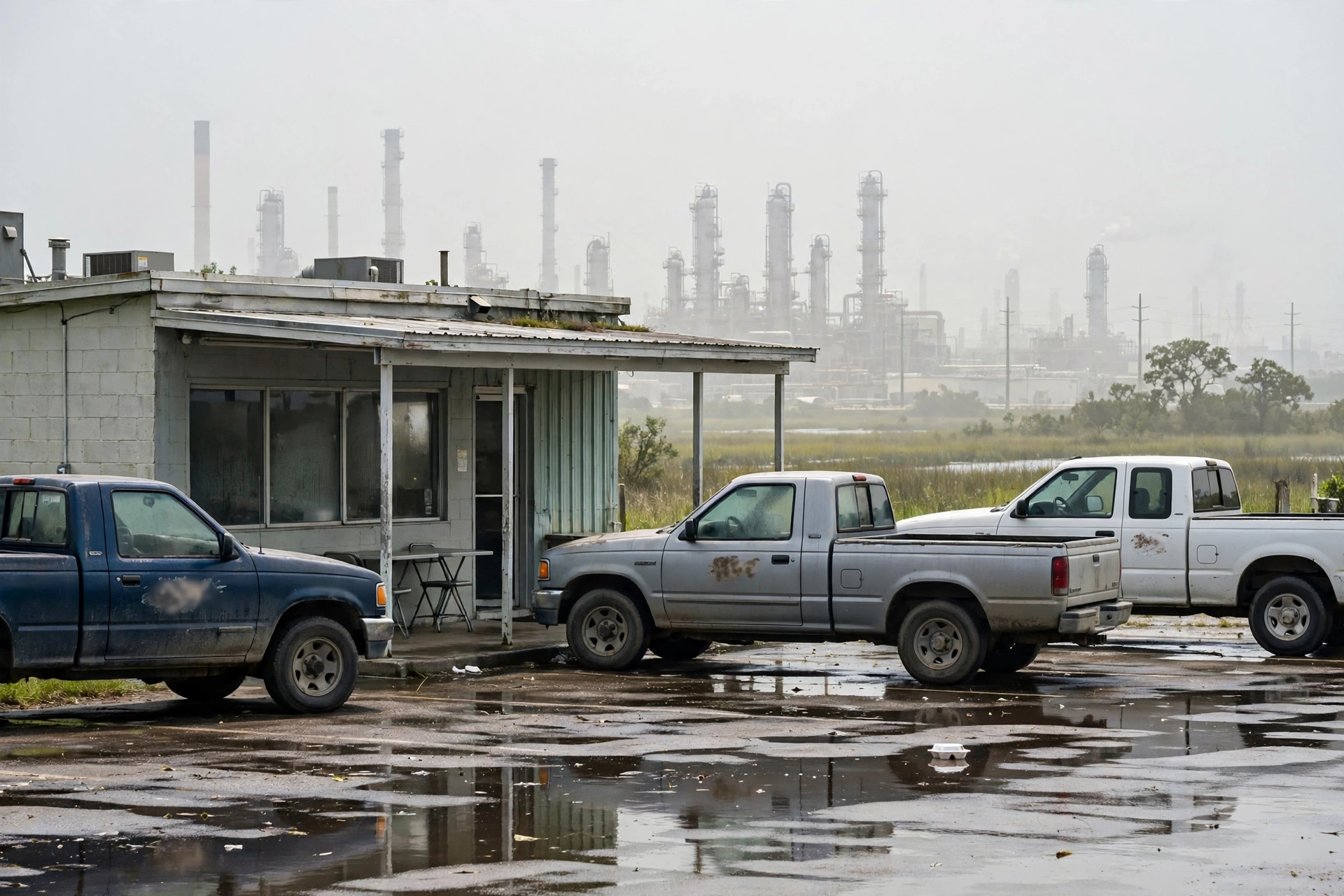
Norco is a refinery town, and its food service is small and lunch-led. There are not many kitchens here. The ones that exist cook hard for a few hours around shift change and the courthouse-and-plant lunch crowd, then wind down. That pattern puts a steady load of fryer and flat-top grease into a small trap, and it makes a regular visit more useful here than a call when something goes wrong.
If you run one of those kitchens, call (504) 360-9231, Monday to Friday, 9:00 AM to 5:30 PM, and tell us the trap size if you know it. If you don't, we will find out on the first visit.
What Norco kitchens are like, and why scheduled service fits
Food service in Norco is thin, and we say so plainly. A diner, a few counters, a sandwich shop, a handful of kitchens feeding the plant workforce and people doing business at the parish courthouse a few miles up the river. Most of these kitchens run an indoor trap under or beside the prep sink or dish station, with no large exterior interceptor. Passive traps of this kind run roughly 40 to 200 gallons.
A small trap fills fast. Most local restaurants clean small traps every one to four weeks, and a kitchen that fries for a lunch rush every weekday sits toward the short end of that range. Waiting for a smell, a slow drain or a backed-up dish sink means the trap is already past due. A scheduled visit, set by how fast your particular trap fills, keeps it ahead of that point.
Scheduled service also suits the way these kitchens are staffed. Owners and cooks in a lunch-led shop are on the line when it counts and gone, or busy with deliveries, when it doesn't. A visit that lands in the quiet hour after the lunch rush, within our weekday hours, keeps the line working and the trap serviced.
How scheduled service runs for a Norco kitchen
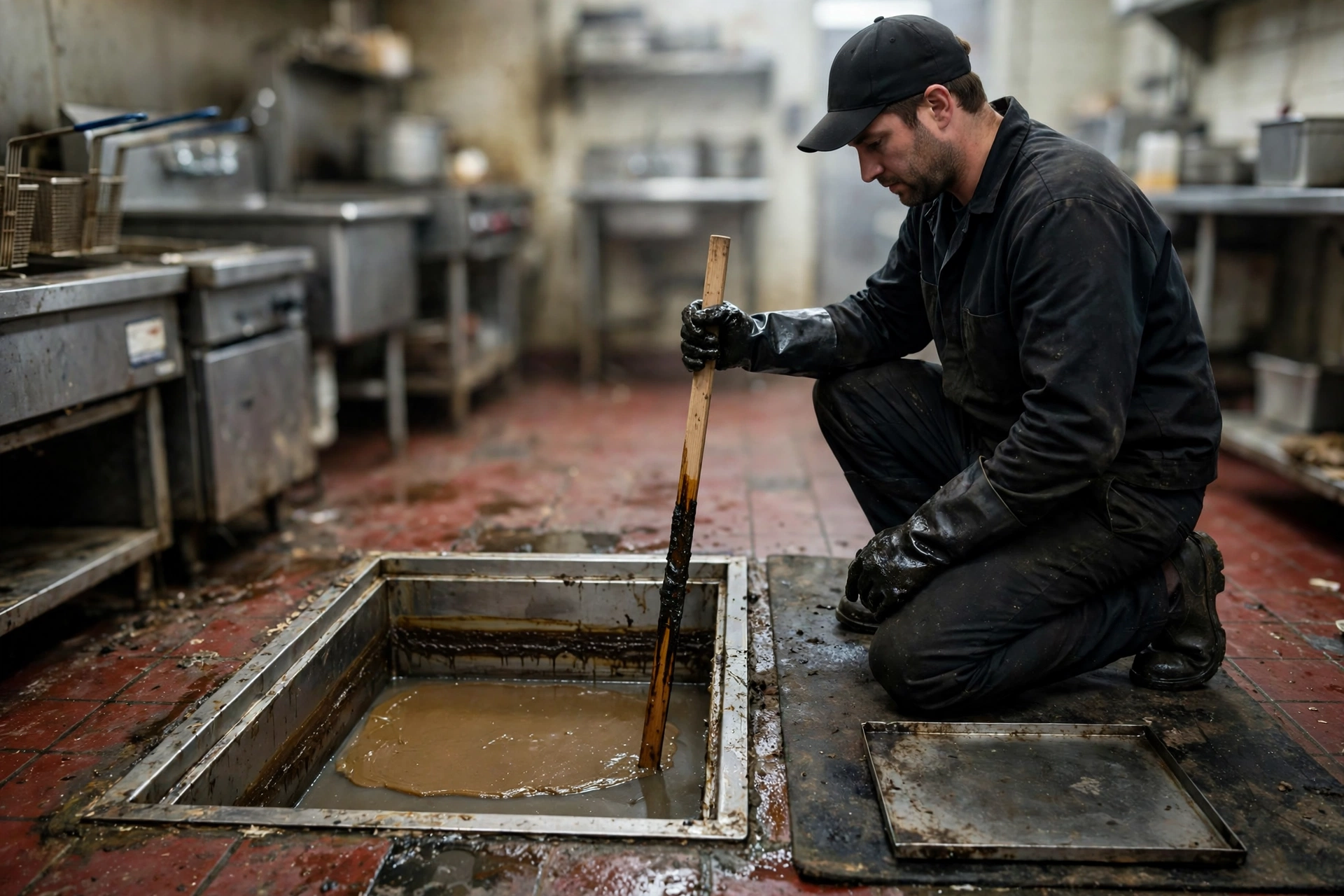
We start with a look at the trap: its size, type, where the lid sits, how much room we have to work, and how it is plumbed to the fixtures it serves. We measure the depth of grease and solids against the 25 percent rule, which is the trade's working test for when a trap is due. When the contents reach 25 percent of the design capacity, measured to the outlet invert, the trap gets pumped. The City of New Orleans standard we work to says within two working days of reaching that mark. It also requires a pump-out at least every 90 days no matter what the measurement says.
On each visit we pump the trap out, scrape the baffles and walls, check the inlet and outlet fittings and the lid seal, and note any cracked baffle, missing gasket or corroded fitting. Waste is hauled under a Louisiana DEQ manifest that carries our name, address, phone, vehicle number and LDEQ hauler registration number, with the date and volume. You get a copy. Keep your manifests and service records on site for three years. That is the record an inspector asks for first.
After a few visits we know how fast your trap fills, and we set the interval to match: weekly, every two weeks, every four weeks, whatever the measurements say, never past the 90-day ceiling.
Our prices for Norco kitchens
These are our prices on a scheduled visit.
| What we service | Our price per scheduled visit |
|---|---|
| Indoor trap up to 200 gallons | $125 to $180 |
| Indoor trap, 201 to 500 gallons | $175 to $475 |
| Line jetting done with a service visit | $100 |
| Heavy jetting | $300 to $600 |
| Used cooking oil collection | no charge for clean oil, in containers from 30 to 320 gallons |
| Emergency call-out, indoor trap up to 200 gallons | $190 to $240 |
If your kitchen also has an exterior interceptor, pumping runs $225 to $450 for 1,000 to 1,500 gallons, $600 to $1,200 for 1,501 to 2,000 gallons, and $800 to $2,500 for 2,001 to 3,000 gallons. Where you fall inside a band depends on the trap's size inside that range, how hard it is to reach, and how much has built up since the last visit. A kitchen on a steady schedule lands lower in the band than one we are seeing for the first time after months without service.
Featured job: a plate-lunch counter on the Norco shift clock
This job was built around a kind of kitchen Norco has: a plate-lunch counter that lives on the plant's shift change. The owner had been pumping the trap on a rough calendar, once every couple of months, and the sink beside the fryer had started draining slowly by the end of each week.
The call
The cook phoned on a Thursday after the lunch rush. The dish sink was draining slowly, and there was a sour smell by the trap lid. The counter serves the same crowd every weekday, and heavy gravy, fried fish and rice dishes go through the line. We asked for the trap size, and the answer was an indoor trap in the up-to-200-gallon band. That put a scheduled visit at $125 to $180, and we booked the next quiet hour.
The first visit
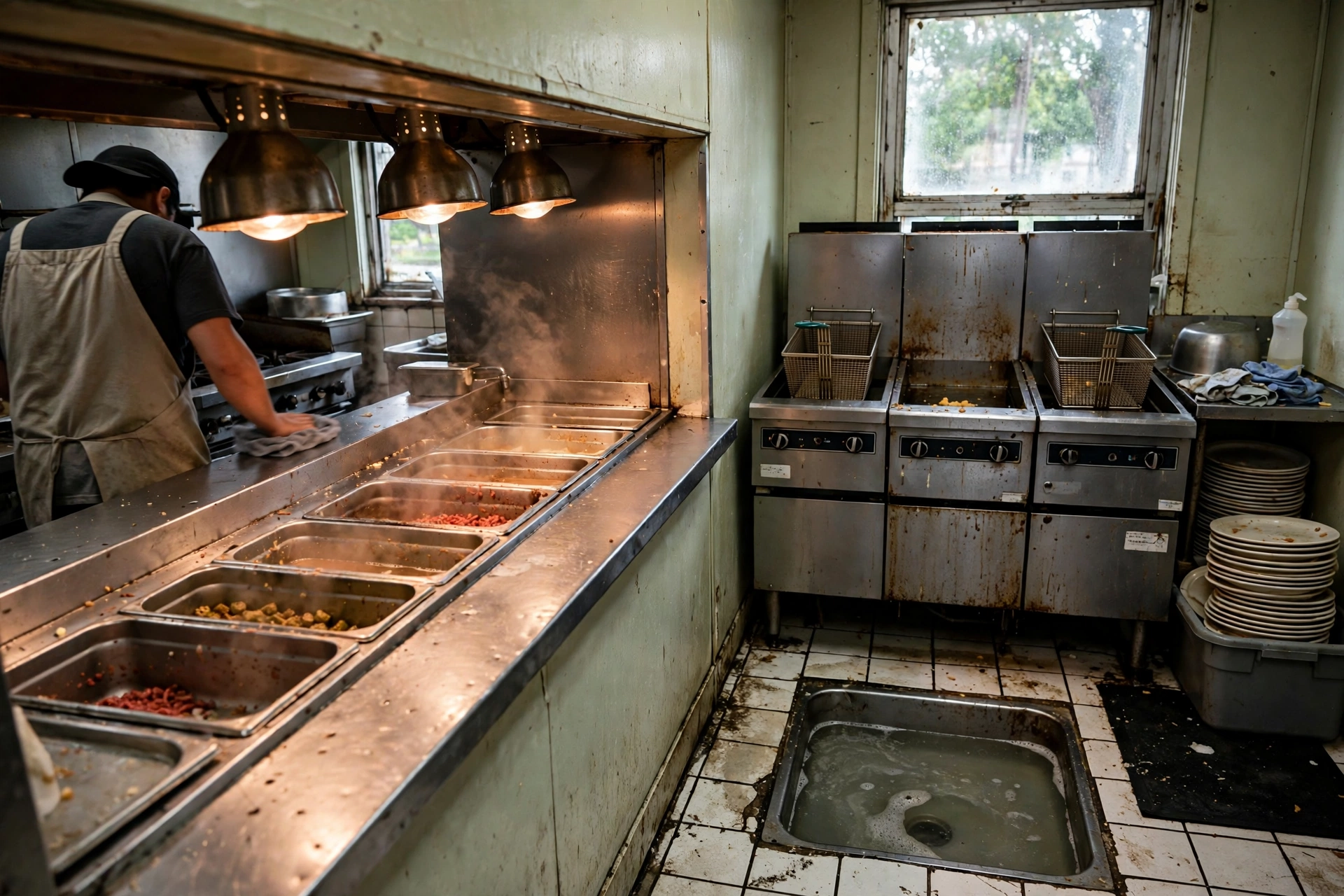
We opened the trap and measured. The contents stood past the 25 percent line, and the outlet baffle had a layer of hardened grease on it. We pumped it, scraped the walls and baffles, and checked the fittings. The lid gasket was worn, which let odor back into the kitchen, so we flagged it for replacement. Under the City of New Orleans standard a defect found at inspection is corrected within 90 days, and we held the same expectation here. The visit ran at our price for the band, with the manifest left behind.
Setting the schedule
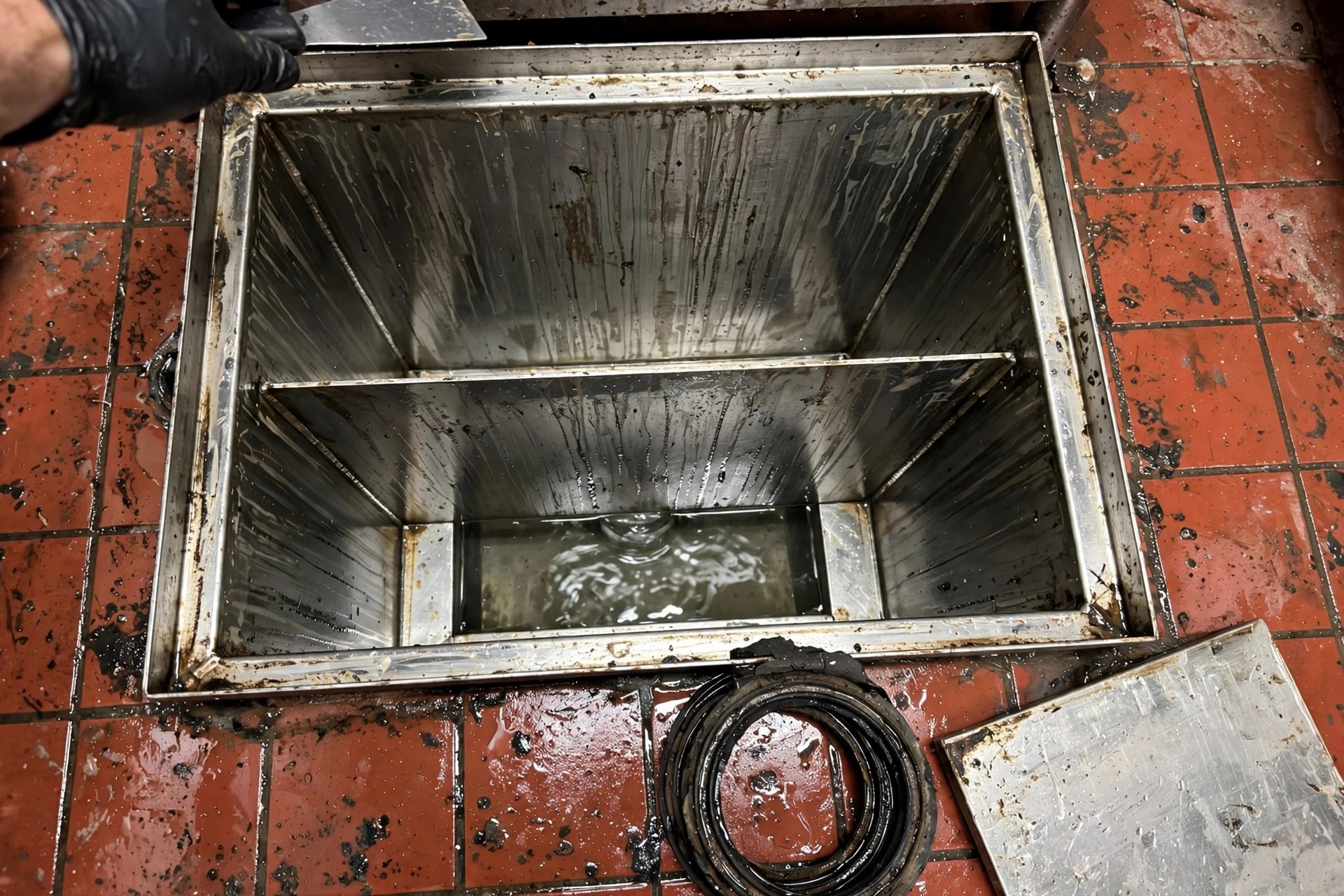
The counter fries every weekday and the trap is small, so we set the interval at the short end of the one-to-four-week range and shifted the visit to the hour after lunch. We told the owner what we would check each time: depth against the 25 percent line, baffles, fittings and gasket. We also offered line jetting at $100 with a service visit, and used cooking oil collection from the fryer at no charge for clean oil. The owner took the oil pickup and left the jetting for later.
Use the gauge below to see how the measurement works on a trap of this kind.
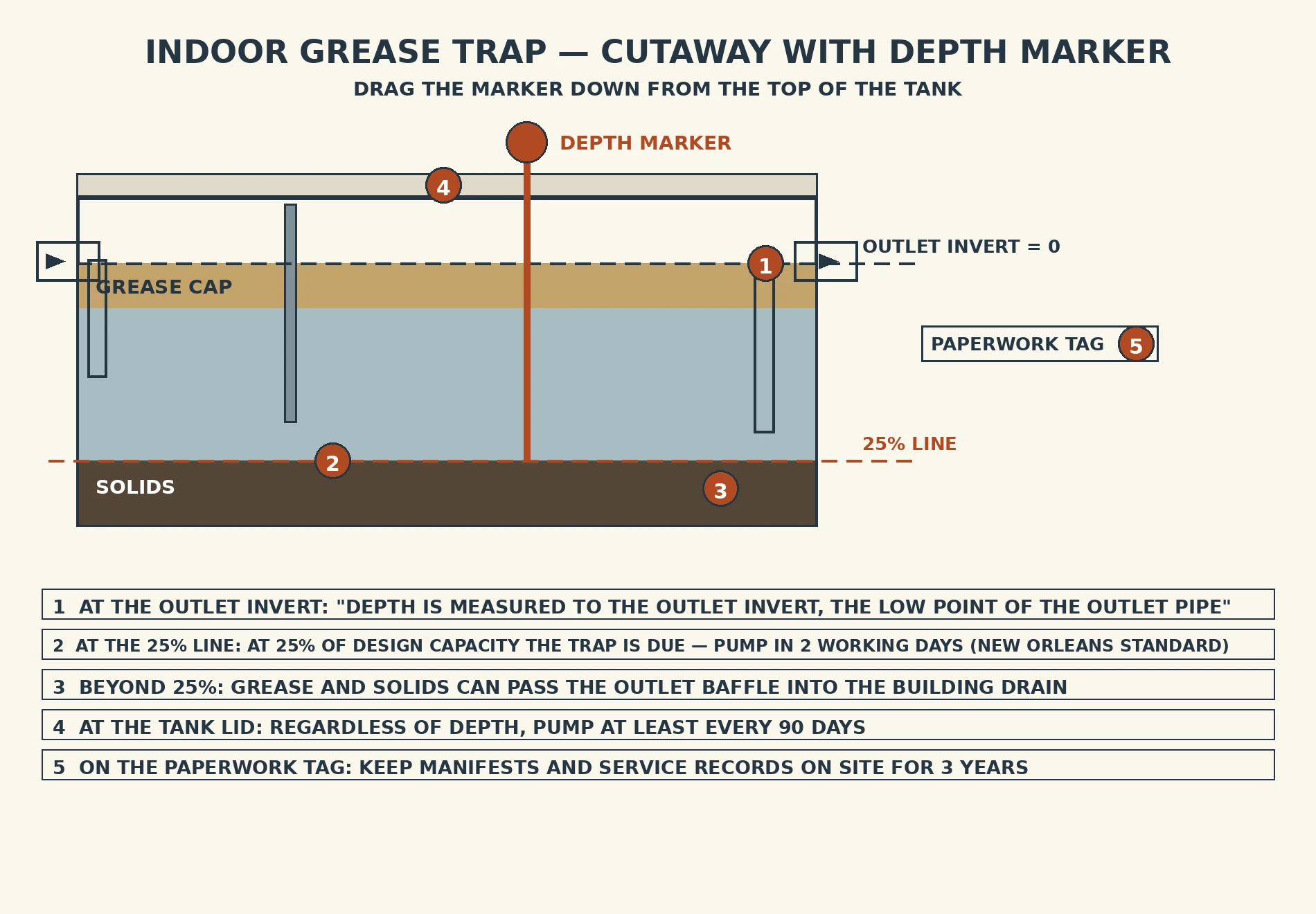
at the outlet invert, "Depth is measured to the outlet invert, the low point of the outlet pipe"
at the 25 percent line, "At 25 percent of design capacity the trap is due: pump within two working days under the City of New Orleans standard"
beyond 25 percent, "Past this line, grease and solids can pass the outlet baffle into the building drain"
at the tank lid, "Regardless of depth, pump at least every 90 days"
on the paperwork tag, "Keep manifests and service records on site for three years."
The records
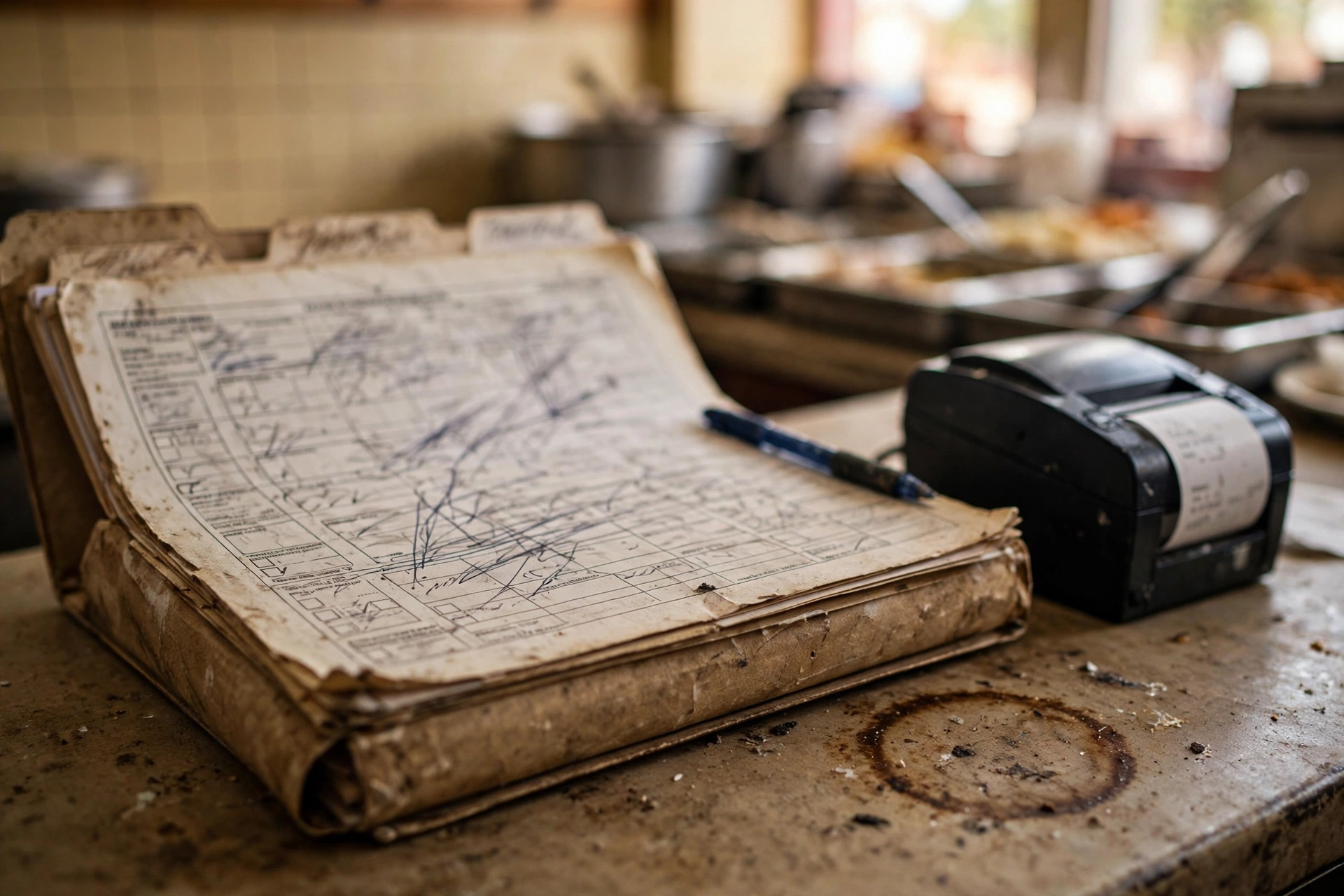
Each visit ended with a manifest copy and a short service note: date, trap size, depth found, work done, defects flagged. The owner put them in a folder behind the register. When the kitchen is inspected, that folder answers the first questions: when the trap was last serviced, who hauled the waste, and whether anything open was corrected on time.
When to call
Call when a floor sink or dish sink drains slowly after service, when a sour smell sits near the trap, when the trap has gone more than a month since the last pump-out in a kitchen that fries daily, or when you don't know when it was last pumped. Also call when an inspector has left a defect to correct, since the 90-day correction window starts running when it is found.
If the trap has backed up, call the same day. Emergency call-out on an indoor trap up to 200 gallons is $190 to $240. For a larger trap in an emergency, we give you the price on the phone once we know the trap.
Start with a call or the form
Call (504) 360-9231, Monday to Friday, 9:00 AM to 5:30 PM, or use the form below. Tell us the kind of kitchen you run, the trap size if you know it, and what you are seeing.
The more details you give, the better we are able to help you.
Questions
Do you serve Norco?
Yes. We drive up from New Orleans, about 30 to 35 minutes, and we work Norco stops into a set weekday route.
How often should a Norco kitchen have its trap serviced?
Most local restaurants clean small traps every one to four weeks. A kitchen that fries every weekday for a lunch rush sits toward the short end. The measurement decides it: when the contents reach 25 percent of the trap's design capacity, it is due.
What is the 25 percent rule?
It is the trade's working test for when a trap needs pumping. Depth is measured to the outlet invert, and when grease and solids take up a quarter of the design capacity, the trap should be pumped. The City of New Orleans standard we work to says within two working days of reaching that point.
What does a visit cost?
An indoor trap up to 200 gallons is $125 to $180 on a scheduled visit. A trap of 201 to 500 gallons is $175 to $475. Where you land in the band depends on the trap's size, access and how much has built up.
What about the 90-day rule?
The City of New Orleans standard calls for a pump-out at least every 90 days, whatever the depth. Most small kitchens in a lunch-led trade reach the 25 percent mark long before that.
Does the New Orleans rule apply in Norco?
Norco is in St. Charles Parish, and the 90-day and 25 percent figures come from the City of New Orleans and its Sewerage & Water Board program. We work to that standard on every job. For what your own parish requires of your kitchen, check with the parish, and we will keep your records to the stricter measure either way.
What paperwork do I get?
A copy of the Louisiana DEQ manifest for each pump-out. It carries our name, address, phone, vehicle number and LDEQ hauler registration number, with the date and volume. Keep manifests and service records on site for three years.
What does an inspector check?
The records first: when the trap was last serviced, who hauled the waste and whether the schedule is being kept. Then the trap itself: the lid and its seal, the baffles and the fittings. Defects found are to be corrected within 90 days under the City of New Orleans standard.
Can you pick up used cooking oil?
Yes. We collect clean used cooking oil at no charge, in containers from 30 to 320 gallons.
Do you do line jetting?
Yes. Jetting done with a service visit is $100. Heavy jetting for a line that has built up is $300 to $600.
What if my trap backs up?
Call right away at (504) 360-9231. Emergency call-out on an indoor trap up to 200 gallons is $190 to $240. For larger traps in an emergency, we price on the phone once we know the trap.
Do you service exterior interceptors too?
Yes. Pumping is $225 to $450 for 1,000 to 1,500 gallons, $600 to $1,200 for 1,501 to 2,000 gallons, and $800 to $2,500 for 2,001 to 3,000 gallons.
When can you come?
Weekdays between 9:00 AM and 5:30 PM. For lunch-led kitchens we aim for the quiet hour after the rush.
Ready to put your trap on a schedule
Call (504) 360-9231 or send the form above with your name, your phone number and a line about the kitchen. We will call back during our weekday hours.