New Orleans Grease Trap handles grease trap cleaning for restaurants and commercial kitchens in Mandeville, from the dining rooms of Old Mandeville to the kitchens along the lakefront. We come across the lake to you on a set day, clean the trap, and leave you with a service record you can put in front of an inspector. If your trap is full or your sink is draining slowly right now, call (504) 360-9231 and tell us what you have.
Mandeville is at the far edge of our area, about 40 to 45 minutes from our base in New Orleans. We take it on because the dining scene there is real, and small kitchens with small traps are exactly the work we do well. Distance means we plan a Mandeville visit as a scheduled run, not a drop-in, so you will get a day and a window instead of "sometime this week."
A trap in a busy Girod Street kitchen fills faster than most owners expect. It sits under a prep sink or a dish line, it takes fat off every pan, and it quietly reaches the point where it stops catching grease and starts passing it on. Our job is to get to it before that point.
What Mandeville's kitchens are like
Old Mandeville is a walkable dining district. Girod Street and the lakefront hold independent restaurants, cafes, bars with kitchens and a few places that turn out serious plates from small back-of-house spaces. Most of these kitchens are old buildings fitted with compact indoor traps, not large exterior tanks. That is why indoor trap cleaning is the work here.
Small traps behave differently from big interceptors. Passive indoor traps run roughly 40 to 200 gallons, and they have little room to spare. Most restaurants we serve clean small traps every one to four weeks, depending on how much frying, searing and dishwashing the kitchen does. A lakefront place that doubles its covers on a summer weekend can fill a trap in half the time it takes on a quiet Tuesday.
Featured job: a Girod Street kitchen before the busy season
The kitchen and the problem
A small Girod Street restaurant with an open pass, a fry station and a single three-compartment sink called us a few weeks before its busiest stretch. The owner had been clearing the trap every month or so and thought that was enough. The dish pit was draining slowly by Saturday night, and a sour smell came up from the floor drain near the trap once the dishwasher ran.
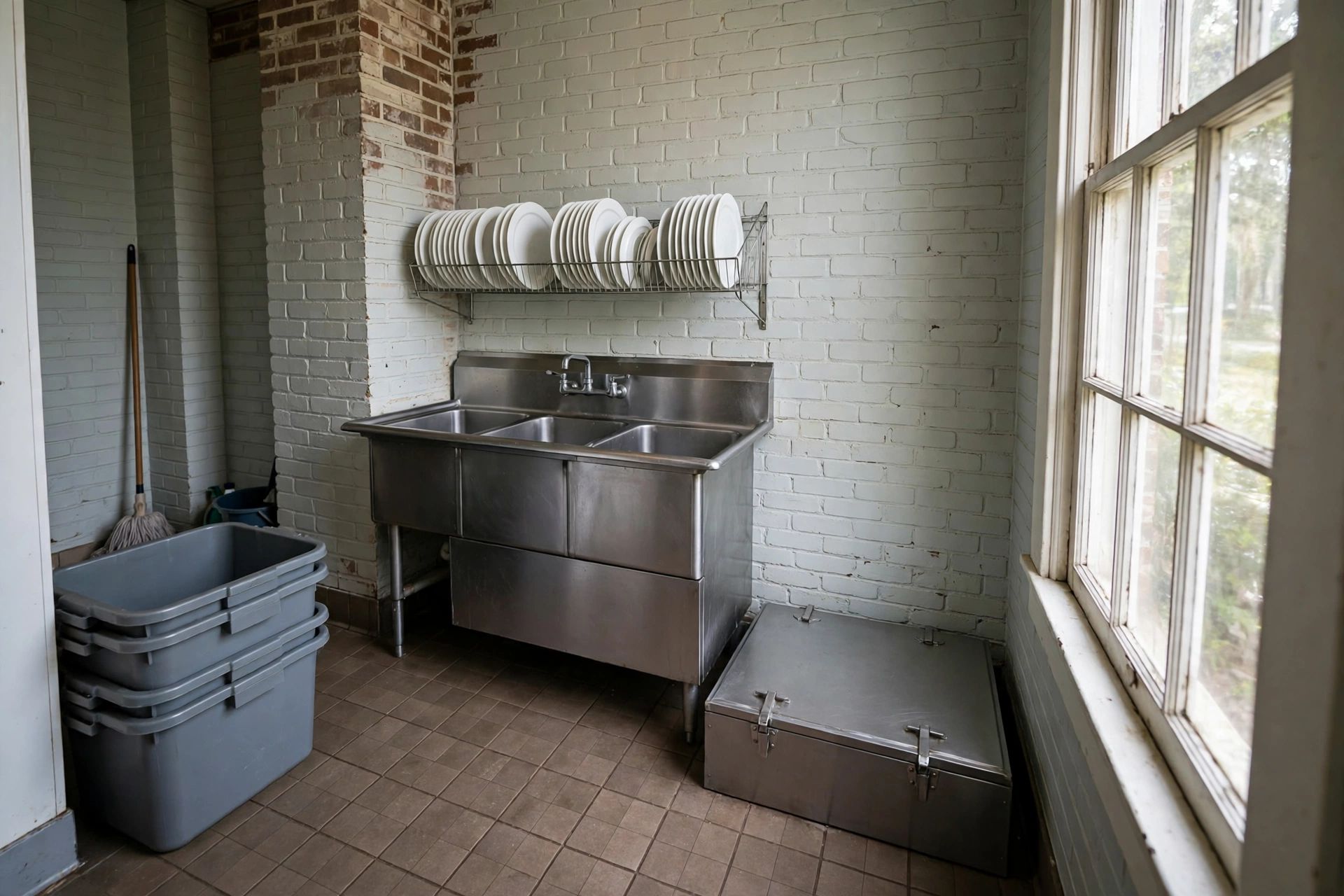
Measuring before cleaning
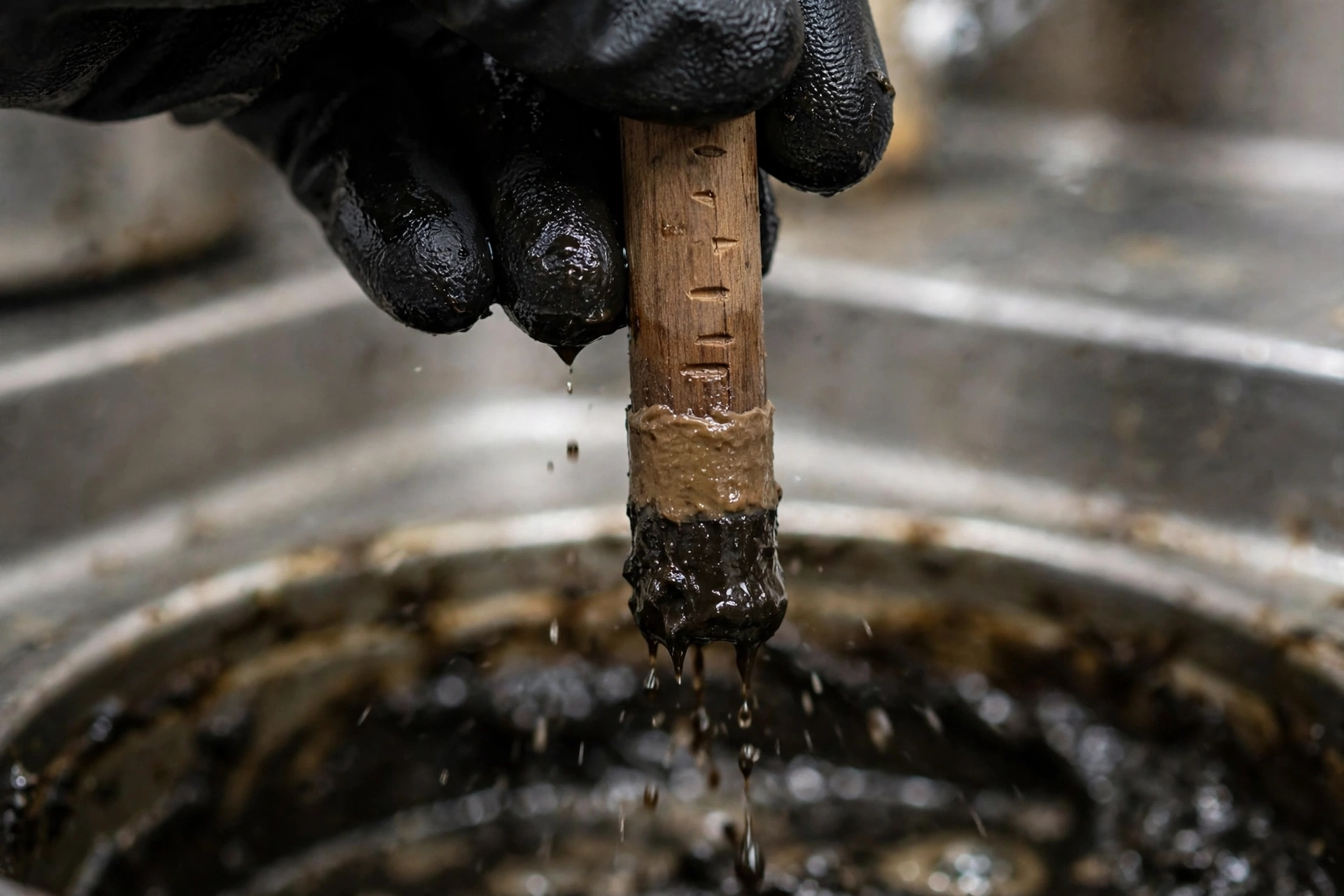
We opened the lid and measured before anything came out. The trade measures from the top of the contents down to the outlet invert, and the rule is simple: when the contents reach 25 percent of the trap's design capacity, it is due. This one was well past that line, with a hard fat cap on top and settled solids below.
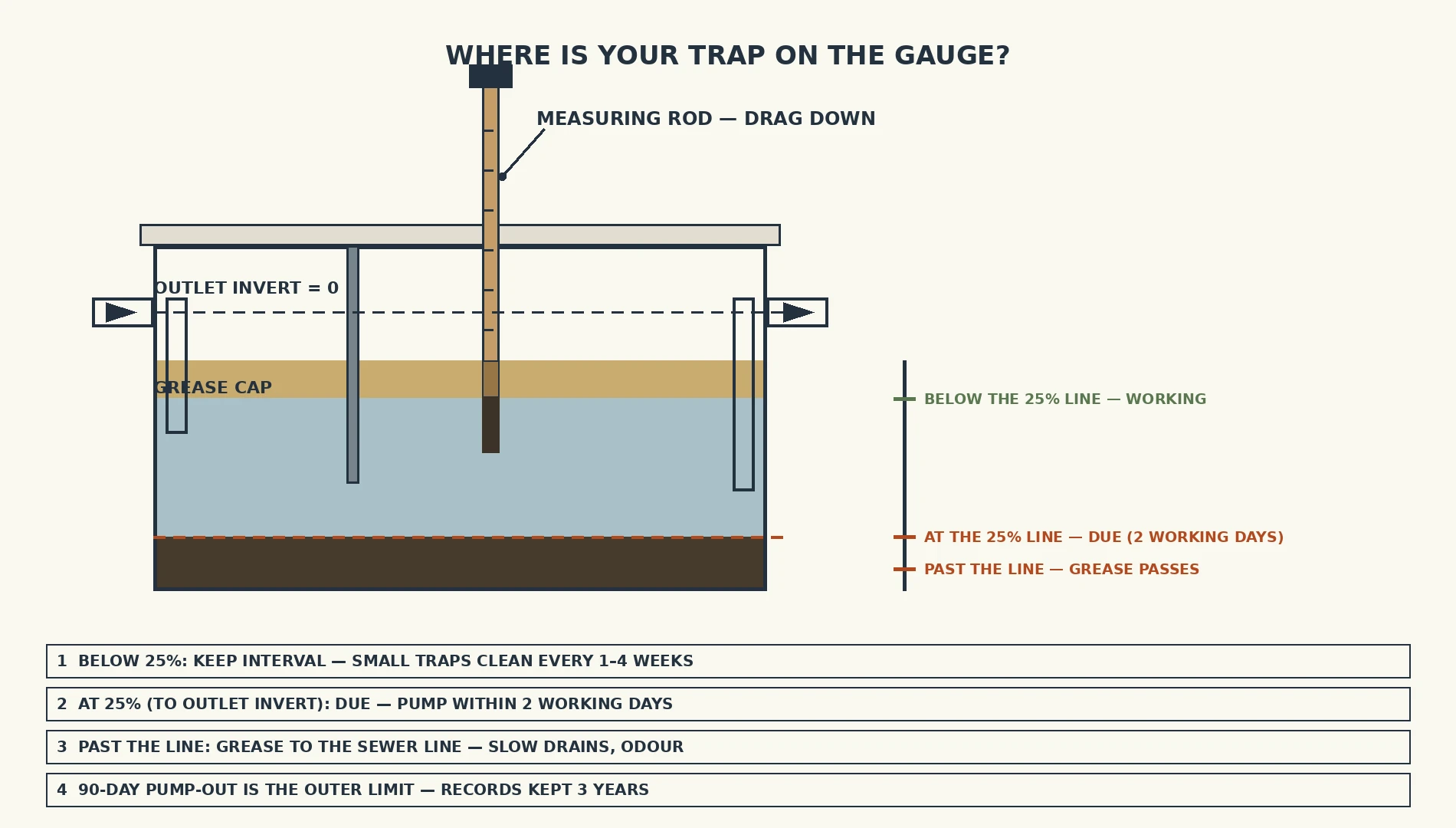
Below the 25 percent line: the trap is working; keep your current interval, and small traps are commonly cleaned every one to four weeks.
At the 25 percent line, measured to the outlet invert: the trap is due, and the rule is to pump within two working days.
Past the line, with a fat cap and solids: grease passes to the sewer line, which is where slow drains and odour begin.
Whatever the reading, the 90-day pump-out is the outer limit, and service records stay on site for three years.
The clean and the new schedule
We pumped the trap out, scraped the walls and baffles, checked the lid seal and the inlet and outlet, and refilled it with clean water. The visit was priced in our indoor trap range for traps up to 200 gallons, $125 to $180. The owner also had us jet the drain line from the dish pit at $100, the price when jetting is done during a service visit. We wrote up the manifest, left a copy and set the kitchen on a two-week schedule, tighter than its old monthly habit and well inside the one-to-four-week range for a trap this size.
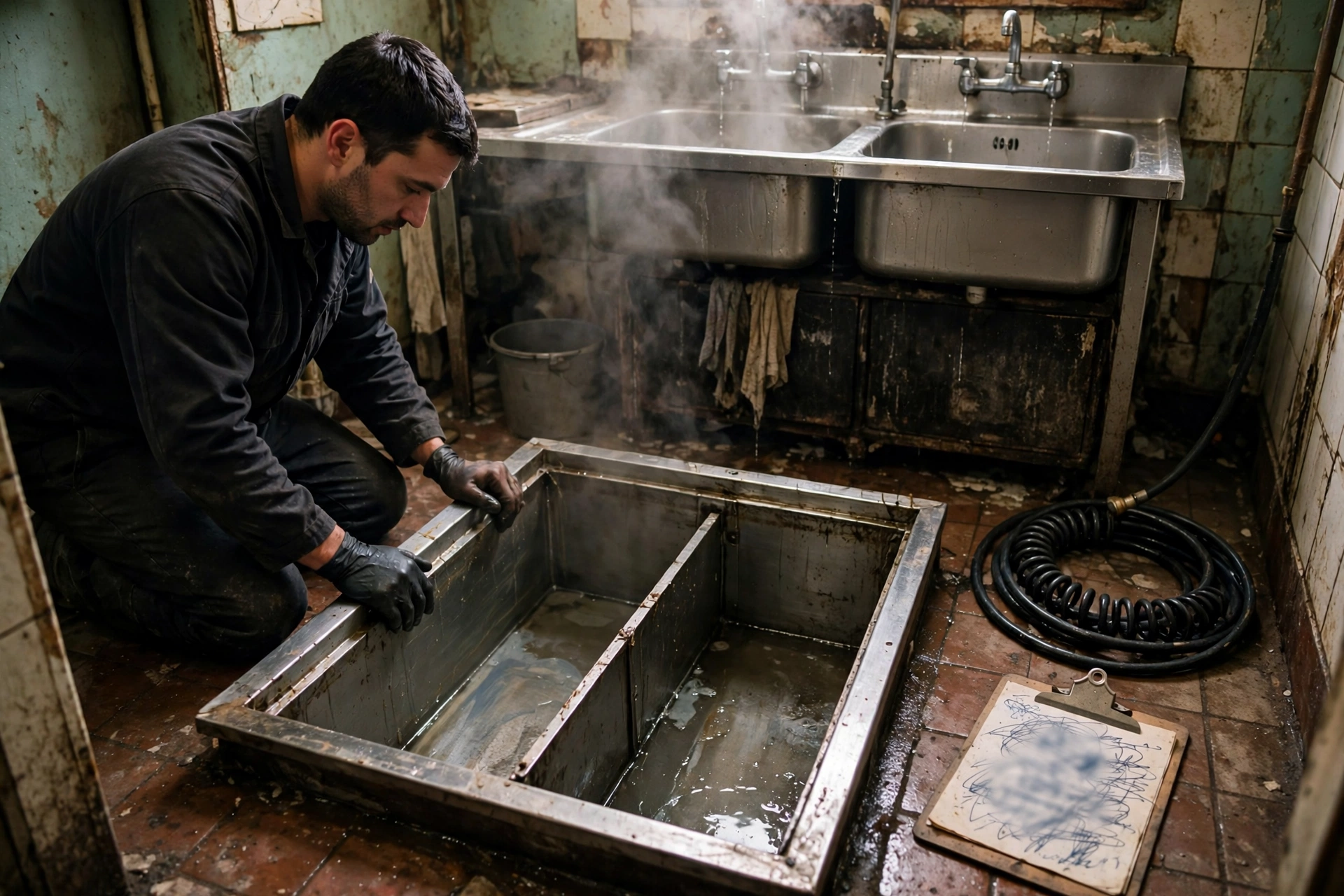
The slow drain cleared that day. The kitchen came through its busy weeks without a callback.
How the service runs for a Mandeville kitchen
Step 1: You call, and we sort the job. Tell us the kitchen type, the trap's size if you know it, and whether the trap is in trouble now. If you don't know the size, we will work it out from the type and what you describe.

Step 2: We schedule a run to Mandeville. Because of the drive, we set a day and a window. Emergencies move faster, and the emergency price for an indoor trap is $190 to $240.
Step 3: We measure, pump and clean. The depth is read against the 25 percent line, then the trap is pumped, scraped and checked. Grease trap waste moves on an LDEQ manifest carrying our name, address, phone, vehicle number and LDEQ hauler registration number, with the date and volume.
Step 4: You get the paperwork and a schedule. The service record stays with you. Keep manifests and service records on site for three years. We set your next visit by what the measurement showed, not by guesswork.
What it costs
These are our prices.
| What we service | Our price per scheduled visit |
|---|---|
| Indoor trap up to 200 gallons | $125 to $180 on a scheduled visit. |
| Indoor trap, 201 to 500 gallons | $175 to $475. |
| Emergency indoor trap | $190 to $240. |
| Line jetting | $100 when done with a service visit. Heavy jetting: $300 to $600. |
| Used cooking oil collection | no charge for clean oil, in containers from 30 to 320 gallons. |
| Exterior interceptors, 1,000 to 1,500 gallons | $225 to $450. 1,501 to 2,000 gallons: $600 to $1,200. 2,001 to 3,000 gallons: $800 to $2,500. |
Most Old Mandeville kitchens fall in the first line. Tell us the trap and we will tell you where in the range your job lands.
When to call
Call when the trap contents reach a quarter of its capacity, when a sink drains slowly or a drain smells, when you are approaching 90 days since the last pump-out, or when an inspection is coming and your records are thin. Call before a busy season, not after it. If you are standing in water, call and say so.
Start the job
Call (504) 360-9231, Monday to Friday, 9:00 AM to 5:30 PM, or send the form below. Tell us your kitchen, your trap and your town.
Send us the details
The more details you give, the better we are able to help you.
Questions
Do you really come out to Mandeville?
Yes. Mandeville is about 40 to 45 minutes from our base in New Orleans, so we plan it as a scheduled run with a set day and window. Call (504) 360-9231 and we will fit you in.
What does grease trap service cost in Mandeville?
An indoor trap up to 200 gallons runs $125 to $180 on a scheduled visit. A trap of 201 to 500 gallons runs $175 to $475. Tell us the size and the kitchen and we will say where in the range you fall.
How often does my trap need cleaning?
Most local restaurants clean small traps every one to four weeks. What decides it is how full the trap is. When the contents reach 25 percent of design capacity, measured to the outlet invert, the trap is due.
What is the 25 percent rule?
It is the trade's measure of when a trap needs pumping. When the contents of the trap, measured to the outlet invert, reach a quarter of its design capacity, it should be pumped within two working days.
Is there a rule on how often I must pump?
The rule we work to is at least every 90 days, with pumping within two working days of reaching 25 percent. This comes from the New Orleans FOG program. Louisiana sets no state pumping interval, and enforcement is local. Check with Mandeville's own permitting office for what applies to your kitchen.
What paperwork do I get?
Grease trap waste moves on an LDEQ manifest with our name, address, phone, vehicle number and LDEQ hauler registration number, plus the date and volume. You get a copy and a service record. Keep them on site for three years.
What does an inspector check?
Records first: manifests and service records for the last three years. Then the trap itself: its condition, how full it is against the 25 percent line, and whether any defects need fixing. Where the New Orleans program applies, defects found are corrected within 90 days.
My sink is backing up now. Can you come fast?
Call us. An emergency visit for an indoor trap is $190 to $240. We will tell you how soon we can get to Mandeville when you call.
Can you jet my drain line too?
Yes. Line jetting is $100 when done with a service visit. Heavy jetting for a badly blocked line is $300 to $600.
What do I do with my used cooking oil?
We collect clean used cooking oil at no charge, in containers from 30 to 320 gallons. Keep it clean and out of the trap and the drain.
Do I have a trap or an interceptor?
A trap is the smaller indoor unit, passive traps running roughly 40 to 200 gallons, usually under or near the sinks. An interceptor is a large exterior tank. Most Old Mandeville restaurants have traps. If you are unsure, describe what you see and we will tell you.
Do you do one-time cleanings or only schedules?
Both. A single visit is priced as above. Once we see how fast your trap fills, we will usually suggest a regular interval so you are not waiting on a backup.