New Orleans Grease Trap handles grease trap cleaning for Luling restaurants, plate-lunch counters and highway-strip kitchens, and we come out from New Orleans on a set schedule so your trap is never the reason the line stops. If your kitchen sits on US-90 and feeds a crowd that eats fast and leaves on a clock, this is the work we do for you.
A trap that gets cleaned when it should be is a trap you stop thinking about. We pull the lid, measure the depth, empty it, scrape the walls and baffles, check the inlet and outlet, and leave you the paperwork. Most small kitchens land on a visit every one to four weeks, and we set yours by what the trap tells us, not by guesswork.
If you already know you need a visit, call us at (504) 360-9231, Monday to Friday, 9:00 AM to 5:30 PM, or use the form at the bottom of this page.
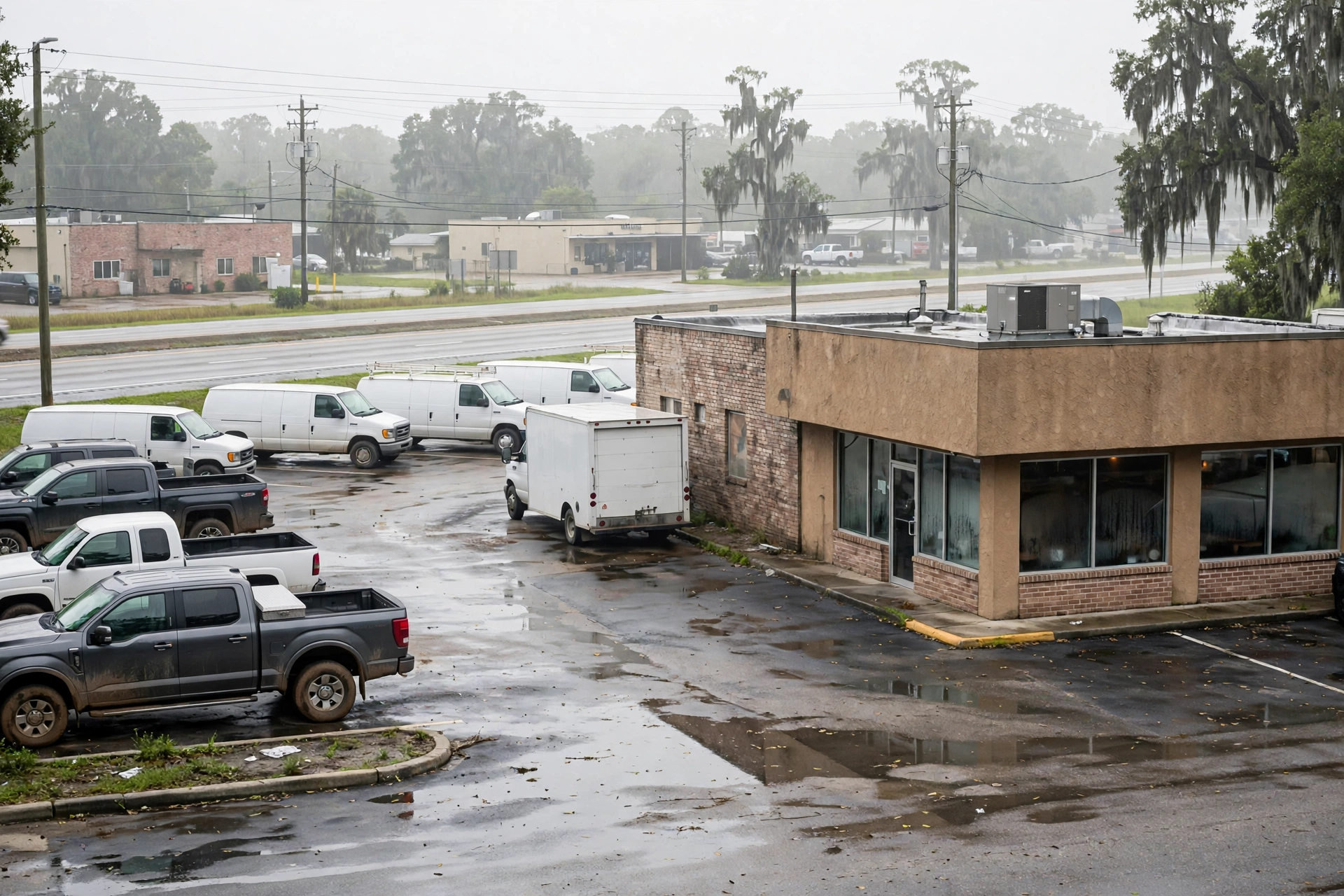
Why Luling kitchens need this service
Luling's food service runs along the US-90 strip, and a good share of the customers there are plant and industrial workers on a short lunch break as well as local families. That makes for a hard, concentrated midday: a lot of plates in a short window, fried food, gravies, boiled seafood, heavy dish loads. All of that goes down the drain into an indoor trap, and in small kitchens the trap is small.
A passive trap in the range of roughly 40 to 200 gallons does not have much room to spare. It fills from the top with grease and from the bottom with solids, and when it is past full it stops catching anything. Grease then goes on to the line, the line slows, and you find out on your busiest day. Regular cleaning on a fixed interval is cheaper and calmer than a backup call.
That is why grease trap work is the fit for this town. Most Luling kitchens do not need a large exterior tank pumped. They need the trap under the prep sink or by the dish station emptied at the right time, every time, by someone who knows the kitchen and shows up when they said.
How the service runs for a Luling kitchen
Luling is about 30 to 40 minutes from our base in New Orleans, so we do not treat it as a drop-in stop. We book your visits on a fixed day and window that suits your kitchen, usually before the lunch push or after close, and we hold to it.
The visit, step by step
1. We open and measure.
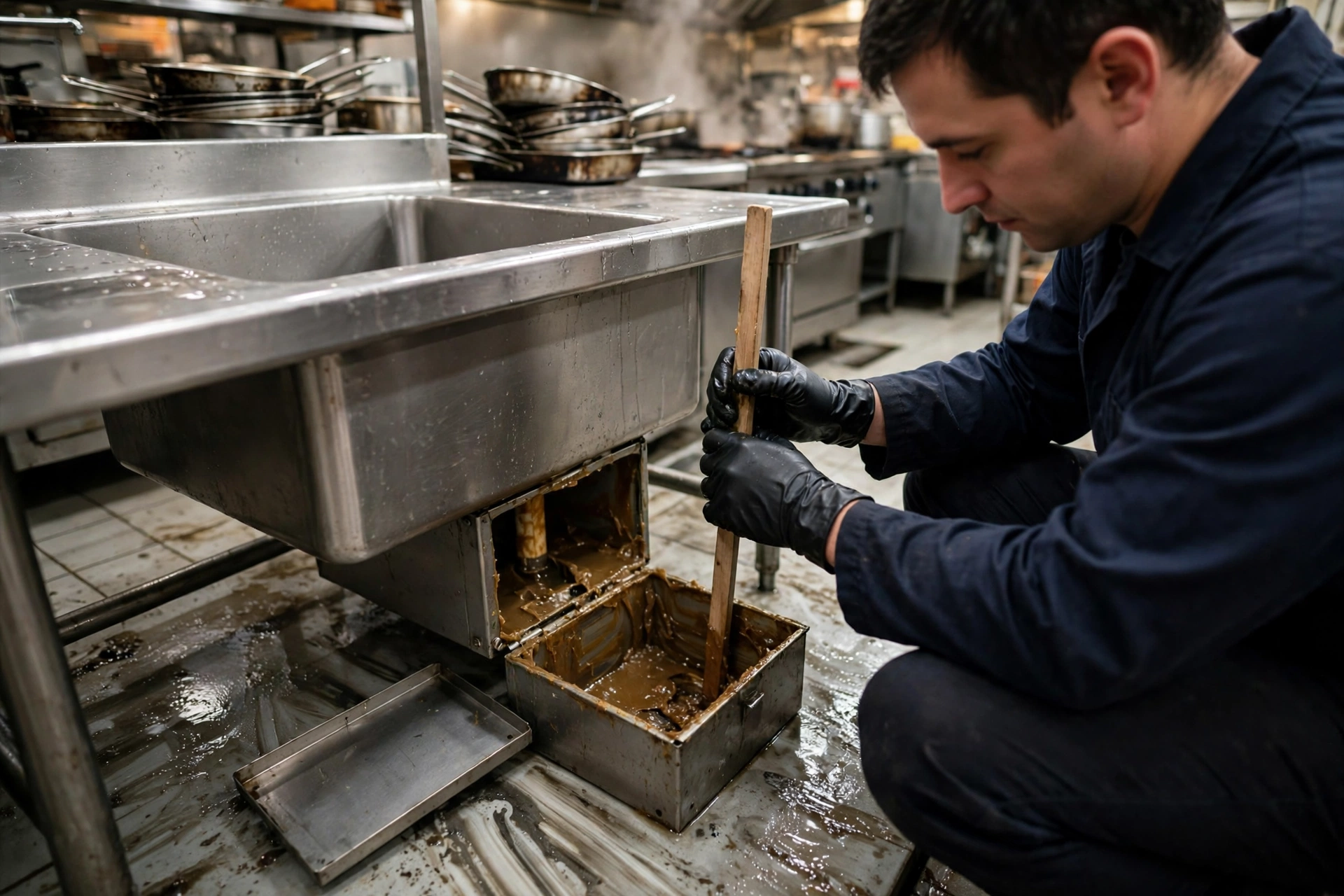
We lift the lid and measure what is in the trap against the 25 percent line, taken to the outlet invert. That reading, not the date, tells us whether your interval is right.
2. We pump and scrape.
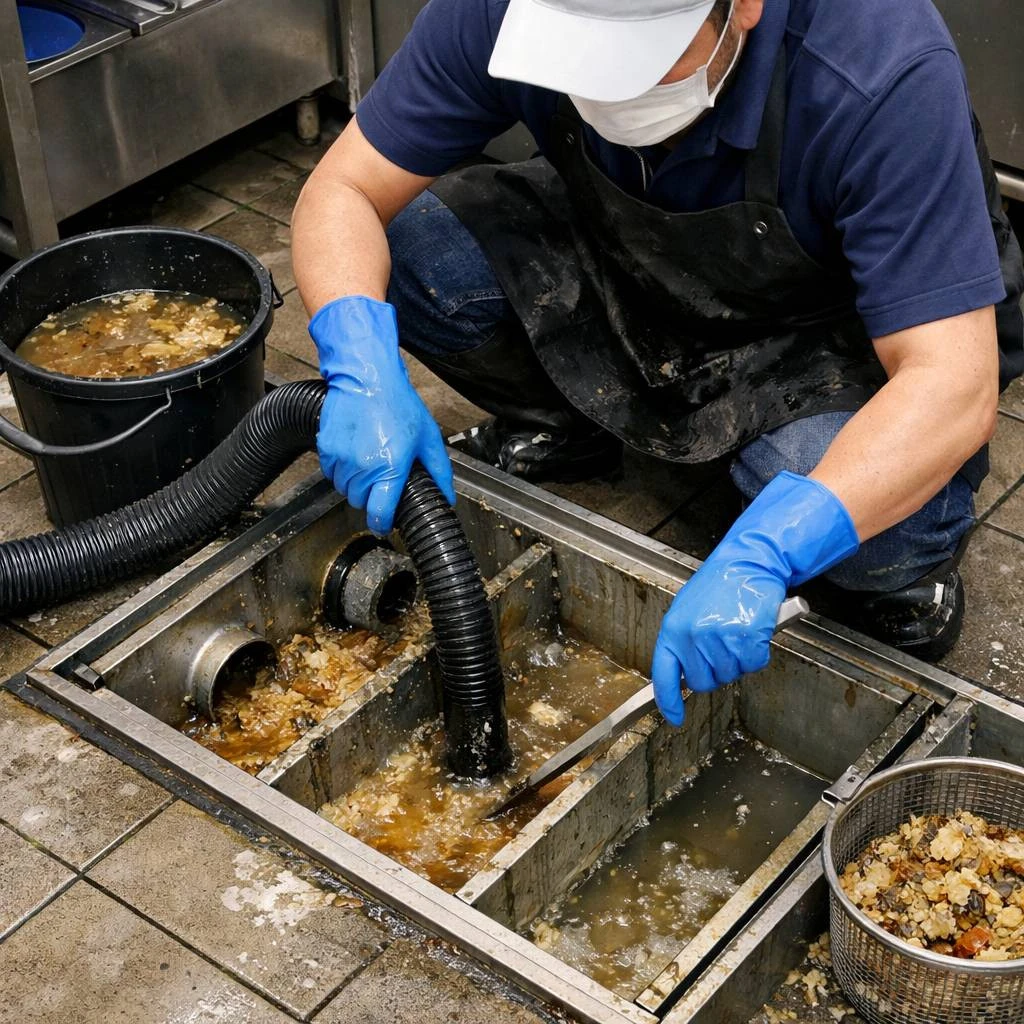
We empty the whole trap, not just the liquid on top, and scrape the walls, baffles and underside of the lid.
3. We check the trap and what feeds it.
We look at the inlet and outlet fittings, the baffle condition, the lid gasket and the access. A cracked baffle or a lid that will not seal is a defect an inspector will write up, so we tell you on the spot. Where you have defects flagged at an inspection, the rule we work to is correction within 90 days.
4. We write it down.
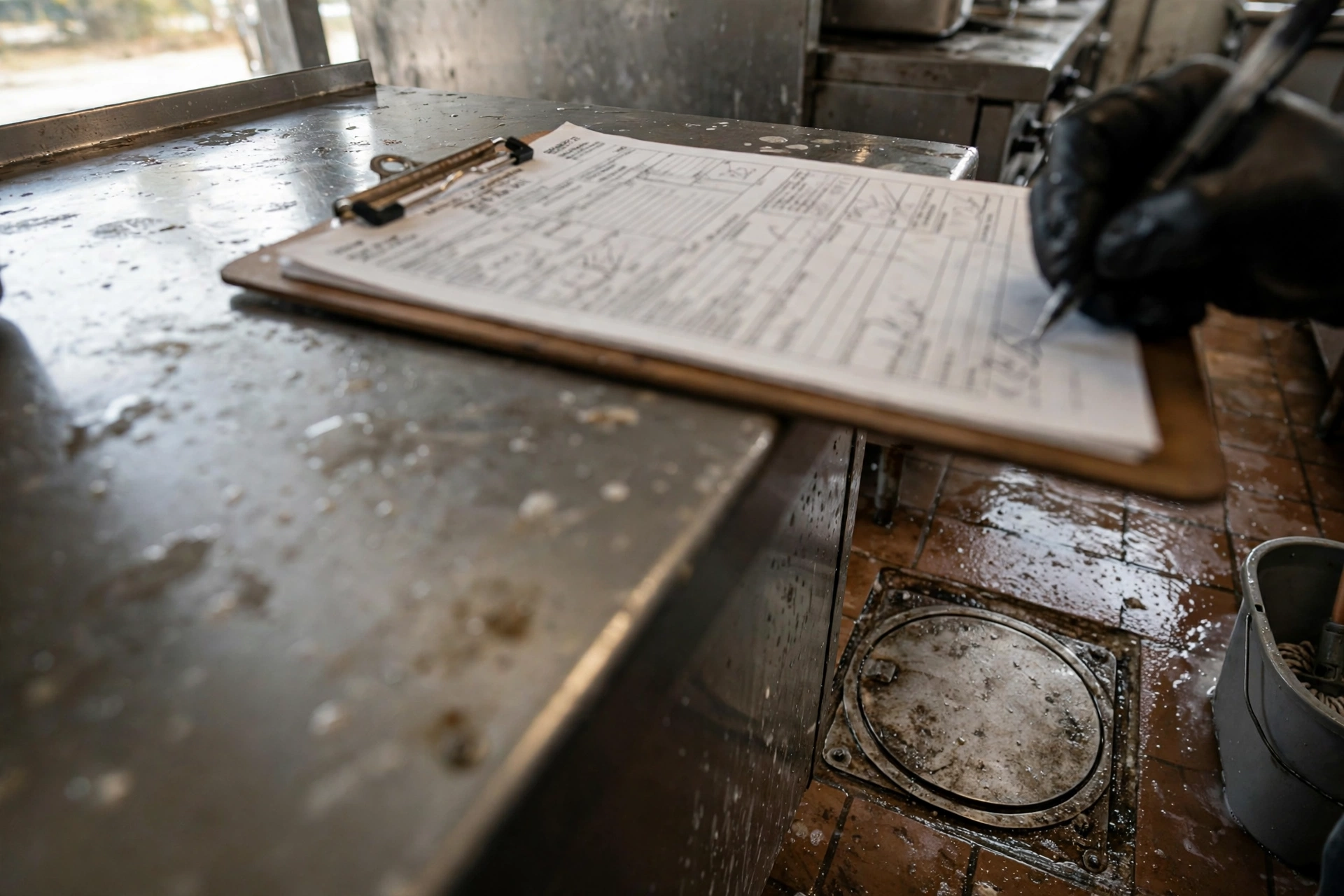
Every visit produces a service record. Grease trap waste travels on an LDEQ manifest with the hauler's name, address, phone, vehicle number and LDEQ hauler registration number, plus the date and volume. We hand you your copy, and you keep it on site for three years.
What it costs
These are our prices for trap cleaning on a scheduled visit.
| What we service | Our price per scheduled visit |
|---|---|
| Indoor trap up to 200 gallons | $125 to $180. |
| Indoor trap 201 to 500 gallons | $175 to $475. |
| Line jetting done during a service visit | $100. |
| Heavy jetting | $300 to $600. |
| Emergency call-out for an indoor trap | $190 to $240. |
| Used cooking oil collection | no charge for clean oil, in containers from 30 to 320 gallons. |
Where you land inside a range depends on the trap's size, how hard it is to reach, and how full it is when we arrive. A neglected trap with hardened crust takes longer than one kept on interval. Setting a schedule is the quickest way to stay at the low end.
When to call
Call us to set up a schedule if you do not have one, or if your current one has slipped. Call if the trap smells, if your dish sink drains slowly, if water backs up near the floor drain, or if an inspector has given you a date. If it has already backed up, call the same day and ask for an emergency visit.
On the rules: the standard we know and work to is the New Orleans one. Traps are pumped at least every 90 days. When the contents reach 25 percent of design capacity, they are pumped within two working days. Defects found at inspection are fixed within 90 days, and manifests and service records stay on site for three years. Luling is in St. Charles Parish, so the parish inspector decides what applies at your door. Louisiana DEQ sets the manifest paperwork statewide, and we handle that part on every visit. A weekly or two-week interval is common for a busy small kitchen, and we will tell you plainly if yours needs tighter.
Call us to set up your Luling schedule
Tell us the kitchen, the trap size if you know it, and when your rush hits. We will give you a visit day and a price from the list above. Call (504) 360-9231, Monday to Friday, 9:00 AM to 5:30 PM.
Featured job: a plate-lunch kitchen on the US-90 strip
A plate-lunch restaurant on the highway strip in Luling fed a steady weekday crowd of plant and shop workers. Its fryers and steam table ran hard from late morning on. The trap sat under the three-compartment sink. It had been pumped every couple of months, whenever someone remembered. Then the dish sink began draining slowly in the middle of a Thursday rush.
Chapter 1: The call during the lunch rush
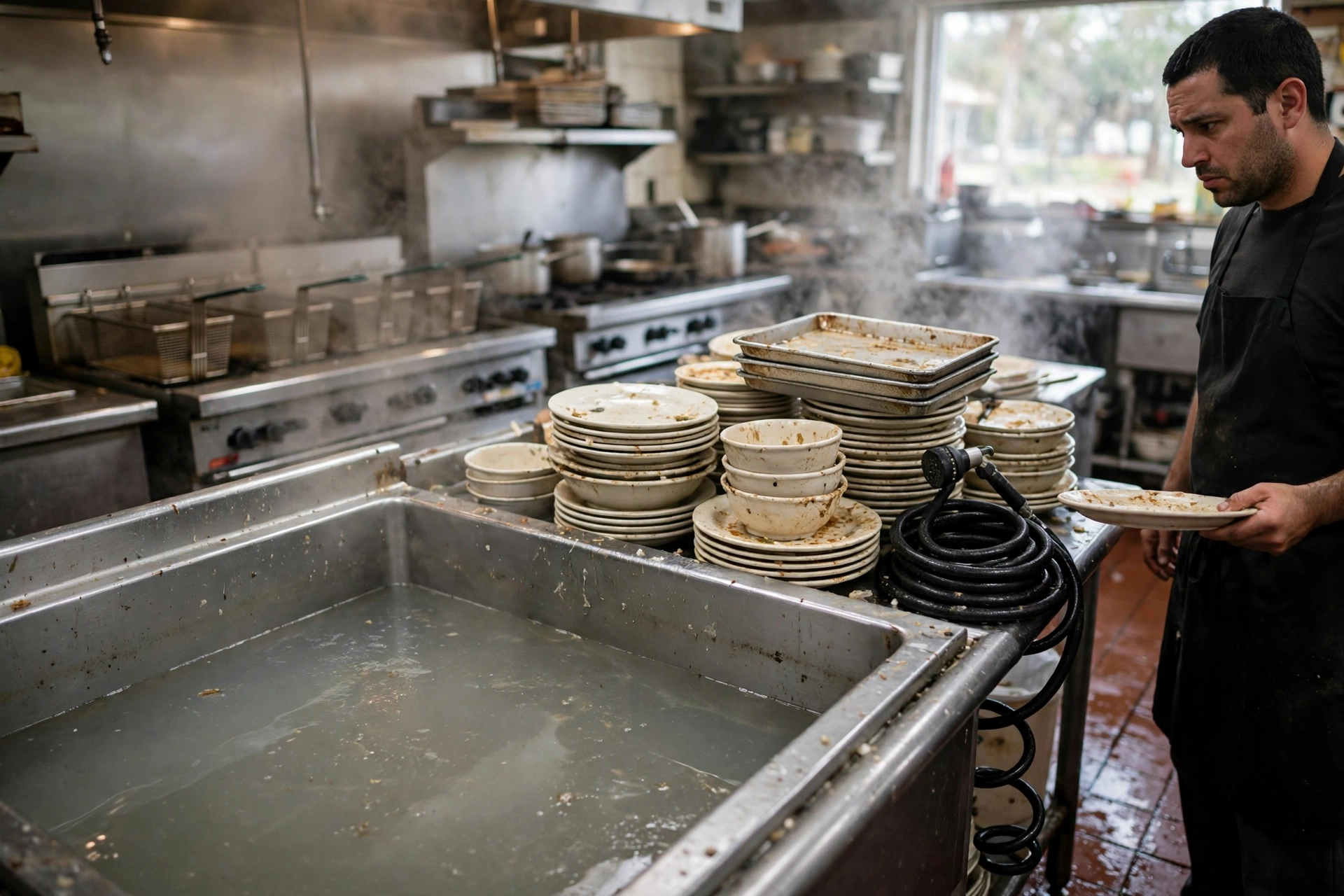
The kitchen called us mid-morning. We booked the emergency indoor trap visit at $190 to $240 and drove out from New Orleans. The trap was an indoor unit in the up-to-200-gallon band.
Chapter 2: What the trap showed
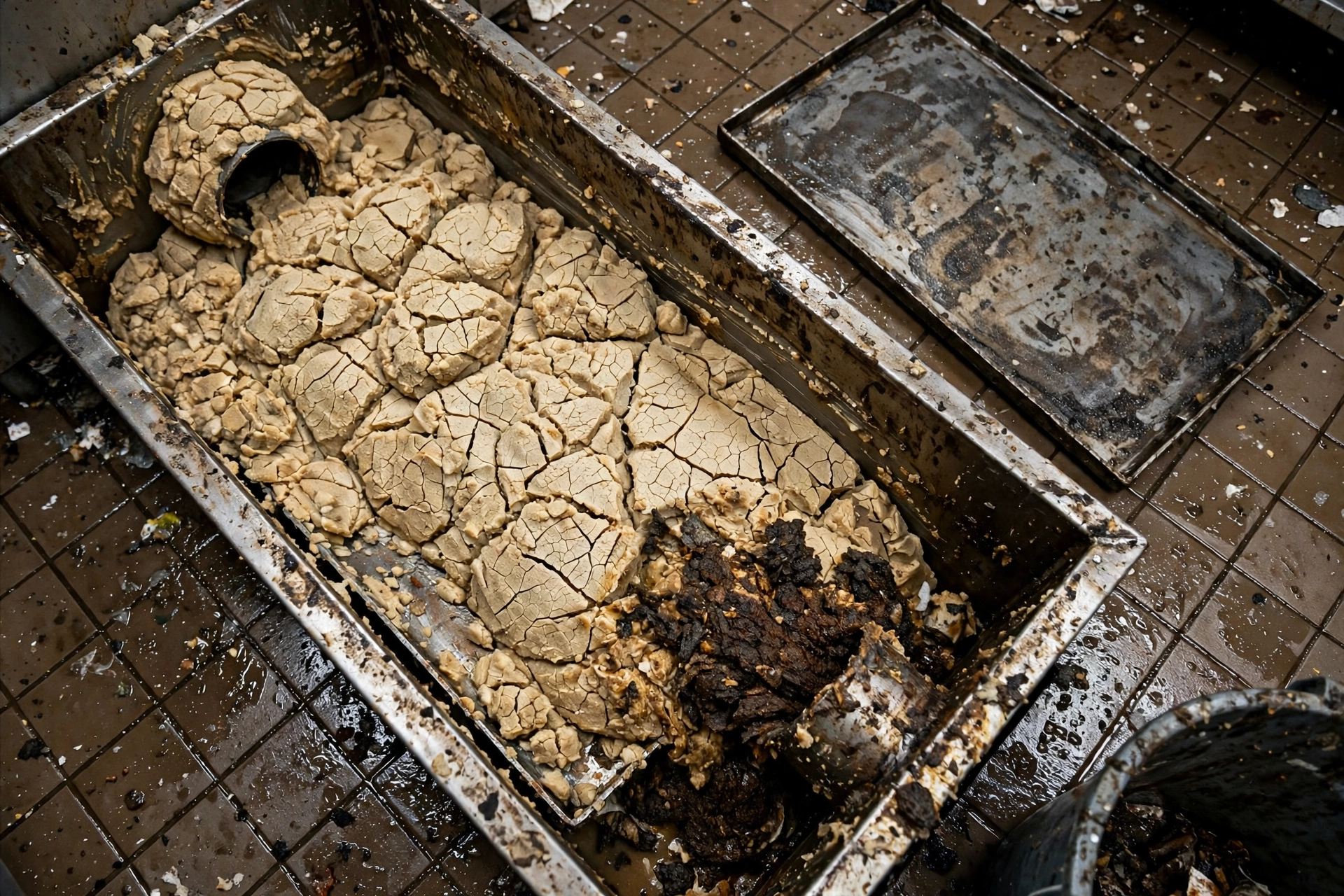
The contents were far beyond the 25 percent line. That is the point at which the rule says pump within two working days. This kitchen had run well past that. We emptied and scraped the trap and found the outlet baffle partly coated and sagging, which we noted for repair.
Chapter 3: Jetting the line
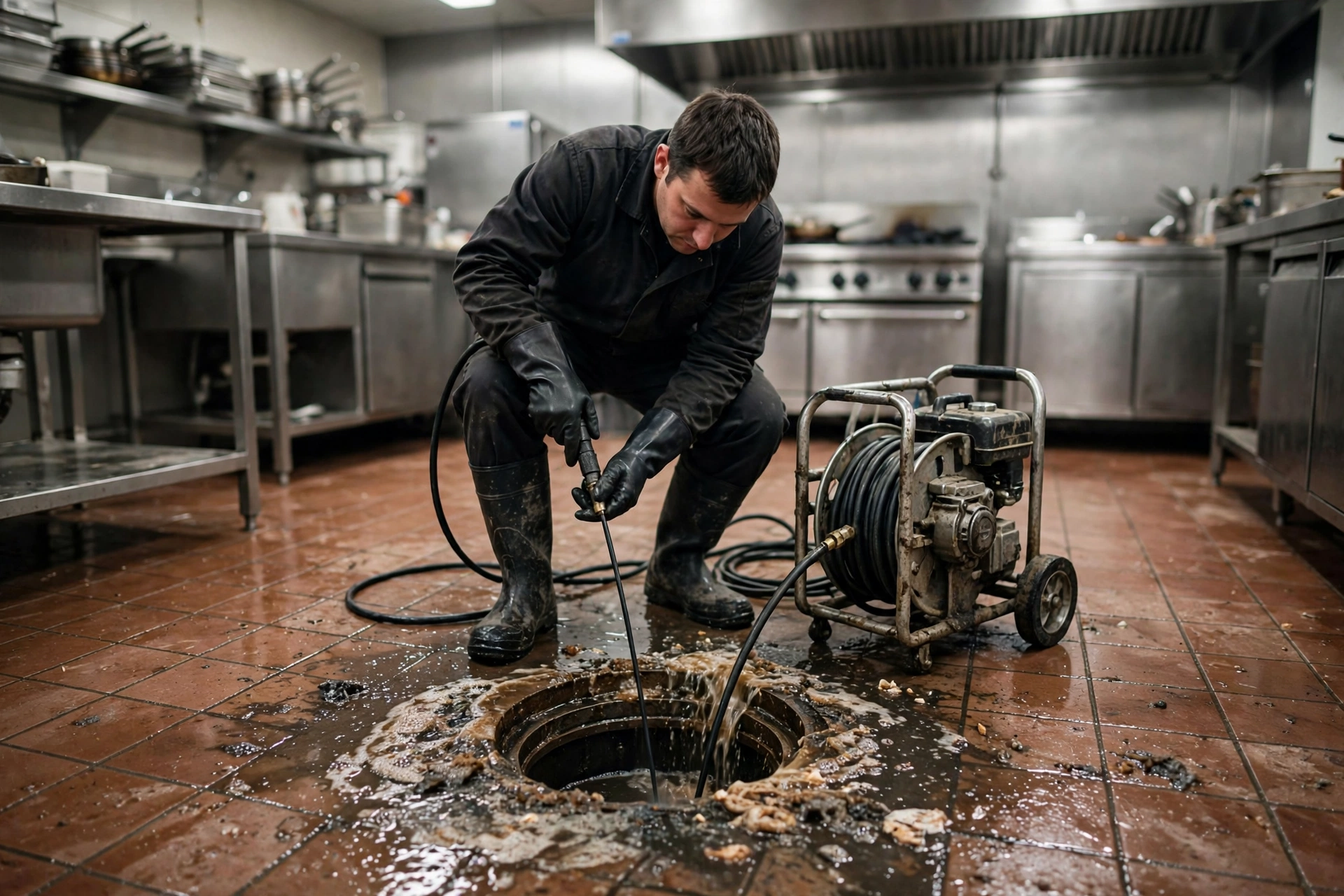
Because grease had already gone into the line, we jetted it on that visit at $100. Heavy jetting at $300 to $600 was not needed. Catching it early kept it at the lower figure.
Chapter 4: The schedule that followed
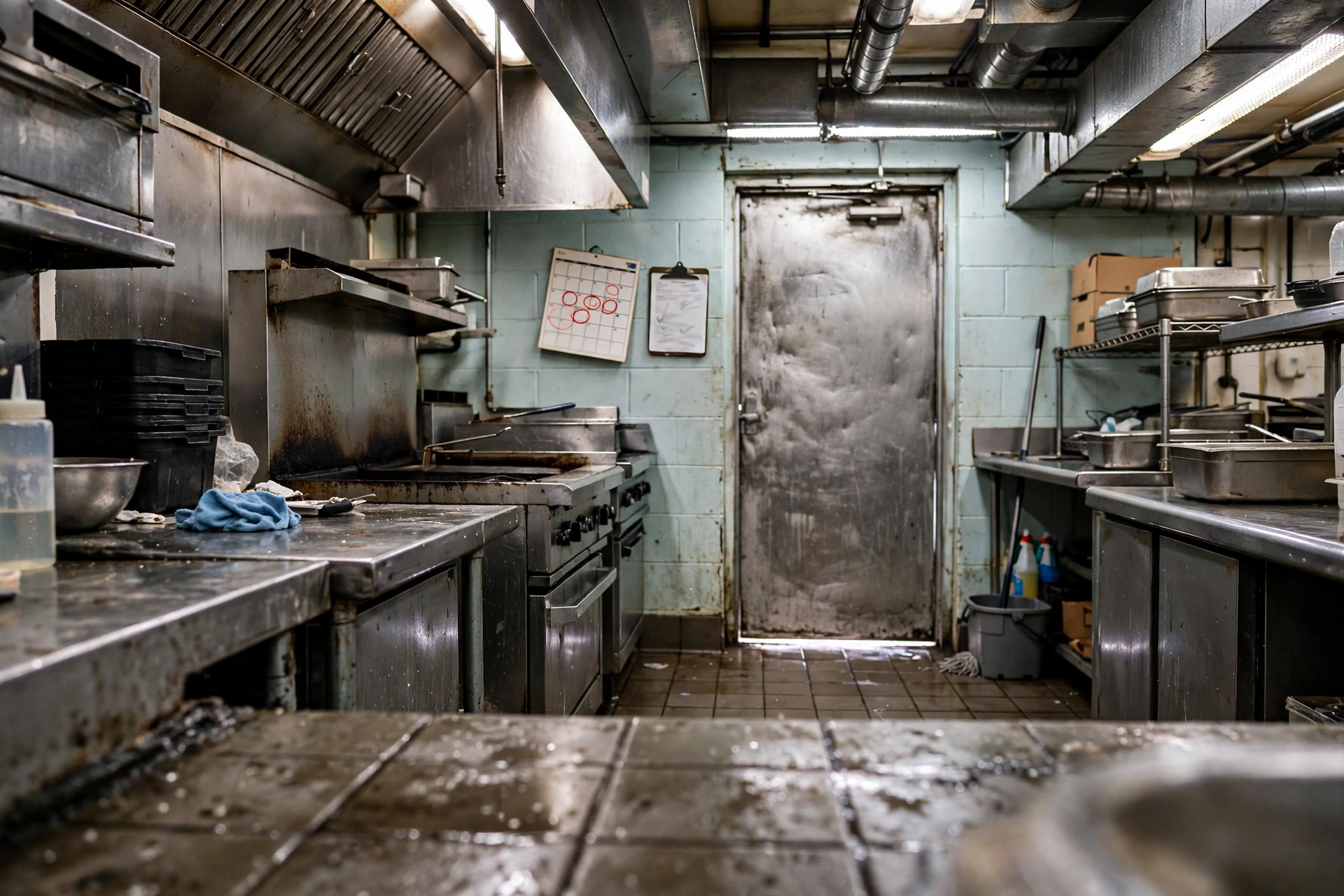
We measured the trap again a week later and moved the kitchen to a regular visit, scheduled before the lunch push. The scheduled visit price for that trap size is $125 to $180, well under the cost of another emergency. The kitchen now keeps its manifests in a folder by the office door.
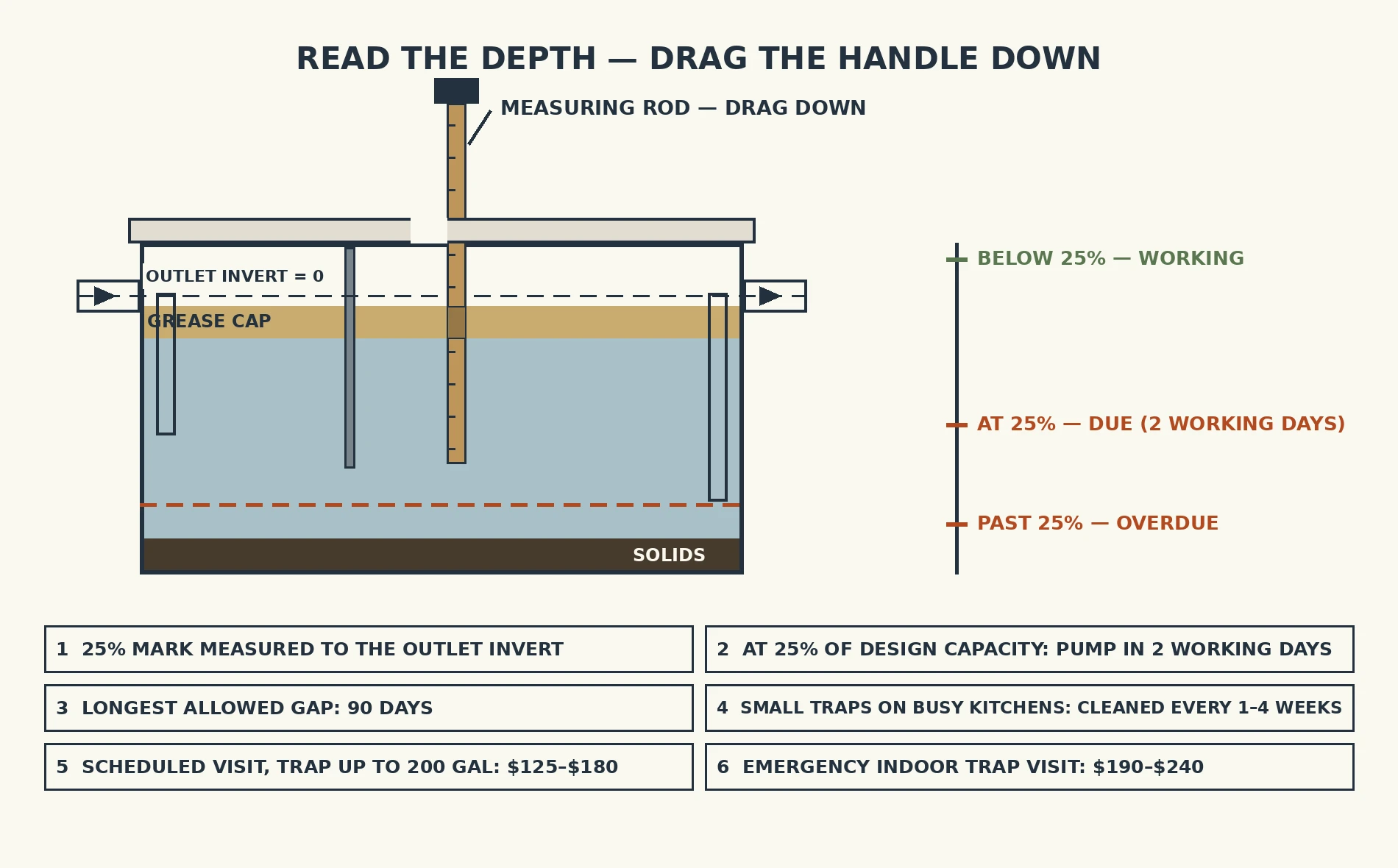
The 25 percent mark is measured to the outlet invert.
At 25 percent of design capacity the trap is pumped within two working days.
The longest allowed gap is 90 days.
Small traps on busy kitchens are commonly cleaned every one to four weeks.
Scheduled visit price for an up-to-200-gallon trap is $125 to $180.
Emergency indoor trap visit is $190 to $240.
Questions
Do you really come all the way to Luling for a small trap?
Yes. Luling is about 30 to 40 minutes from our base in New Orleans, and we book fixed visit days so the trip is planned rather than a one-off. A scheduled visit for a trap up to 200 gallons is $125 to $180.
How often should my Luling kitchen have its trap cleaned?
Most local restaurants clean small traps every one to four weeks. The rule that governs is the 25 percent measure: when grease and solids reach 25 percent of the trap's design capacity, it is due. We measure at each visit and adjust your interval.
What is the 25 percent rule?
It is the trade standard that a trap is full enough to need pumping once its contents reach 25 percent of design capacity, measured to the outlet invert. Under the New Orleans rules we work to, you then pump within two working days.
Are the New Orleans rules the ones that apply in Luling?
The New Orleans rules are the standard we know and run to: pumping at least every 90 days, the 25 percent trigger, defects fixed in 90 days and records kept three years. Luling is in St. Charles Parish, so ask your parish inspector what applies at your kitchen. The LDEQ manifest rules apply statewide, and we handle them.
What does a trap cleaning cost?
For an indoor trap up to 200 gallons, our price is $125 to $180 on a scheduled visit. For 201 to 500 gallons it is $175 to $475. The range depends on size, access and how full the trap is on arrival.
What if my trap has already backed up?
Call us the same day and ask for an emergency visit. An emergency call-out for an indoor trap runs $190 to $240. We empty it, scrape it and tell you what caused it.
Do you clear the line too?
Yes. Line jetting done with a service visit is $100. Heavy jetting, for a line that is well packed, is $300 to $600.
What paperwork will I get?
A service record and your copy of the LDEQ manifest with the hauler's name, address, phone, vehicle number, registration number, date and volume. Keep these on site for three years. An inspector will usually ask for them first.
What will an inspector check?
The permit and the records, the trap's condition and access, whether the lid seals, whether the baffles are intact, and whether the pump-out dates fit the rules. If something is found, the rule is to correct it within 90 days. We will flag defects on our visit so they are not a surprise.
Can you take my used cooking oil?
Yes. Clean used cooking oil is collected at no charge, in containers from 30 to 320 gallons.
What are your hours, and how do I book?
Monday to Friday, 9:00 AM to 5:30 PM. Call (504) 360-9231 or send the form below.
I run a very small kitchen. Does a trap my size need a schedule?
Yes. A smaller trap fills faster, so a fixed interval matters more, not less. We will set one after we see how it loads.
Send us your Luling kitchen
Tell us who you are and where to reach you. Add the trap size, the day your rush hits and anything you have noticed. The more details you give, the better we are able to help you.
Submit.
Or call (504) 360-9231, Monday to Friday, 9:00 AM to 5:30 PM.