For Destrehan kitchens, grease trap cleaning is the work New Orleans Grease Trap does most often on this side of the river parishes: a technician comes to the kitchen, opens the trap under the sink or along the dish line, removes the grease and solids, scrapes the walls and baffles, and leaves the trap ready for the next rush. We drive up from New Orleans, about 30 minutes, and we book Destrehan visits in the same weekday window as the rest of our route.
Most of the traps out here are small indoor units under a three-compartment sink or a prep sink, and they fill faster than people expect. A cafe that fries all day, or a counter that sends plate scrapings down the drain, can find a trap at its limit in a week or two. Cleaning it on a schedule that matches how your kitchen actually runs is cheaper than a backed-up line on a Saturday.
If you want a visit set up, call (504) 360-9231, Monday to Friday, 9:00 AM to 5:30 PM, or send the form at the bottom. Give us the trap size if you know it, or just tell us what kind of kitchen you run and what the trap looks like.
Destrehan kitchens and why the trap is the job
Destrehan's food service is clustered, not sprawling. There is a run of independent restaurants, cafes and counter-service spots along Ormond Boulevard, and there is visitor traffic on River Road, where plantation tours bring in lunch crowds that arrive all at once. Both patterns put hard use on a small trap. A weekday kitchen has a steady flow. A tour-season kitchen has a pile of plates in a short window, and everything on those plates goes to the same sink.
That is why interior trap work is the fit here. The kitchens are mostly small to mid-size, the traps are indoors and under 200 gallons or not much over, and the problem is frequency, not tank size. Passive traps run roughly 40 to 200 gallons, and most local restaurants clean small traps every one to four weeks. Where your kitchen lands in that range depends on your menu and your volume, and we measure it instead of guessing.
If you also have a large outside tank, that is an interceptor, and we pump those too. Most Destrehan kitchens will not have one.
What the work looks like
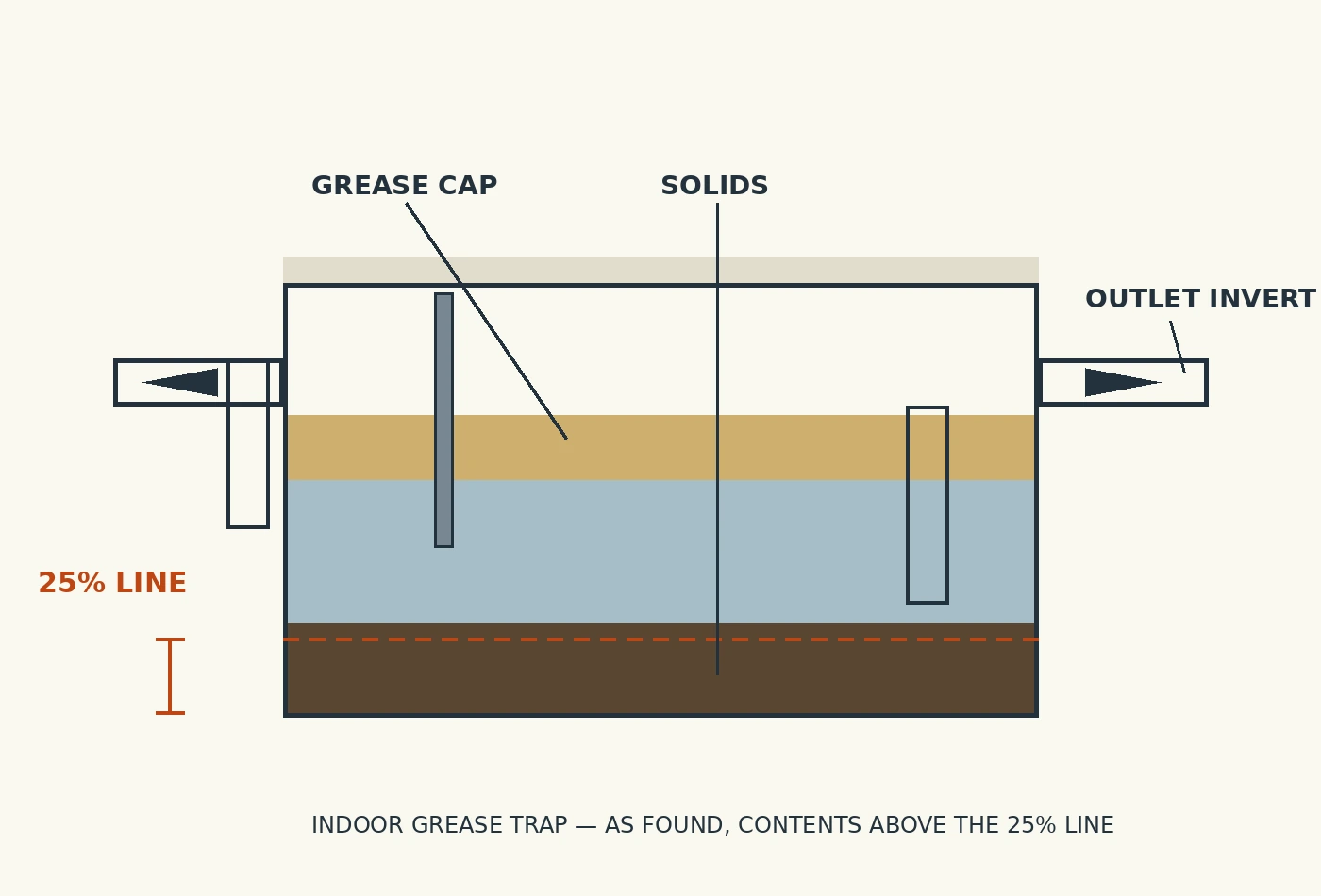
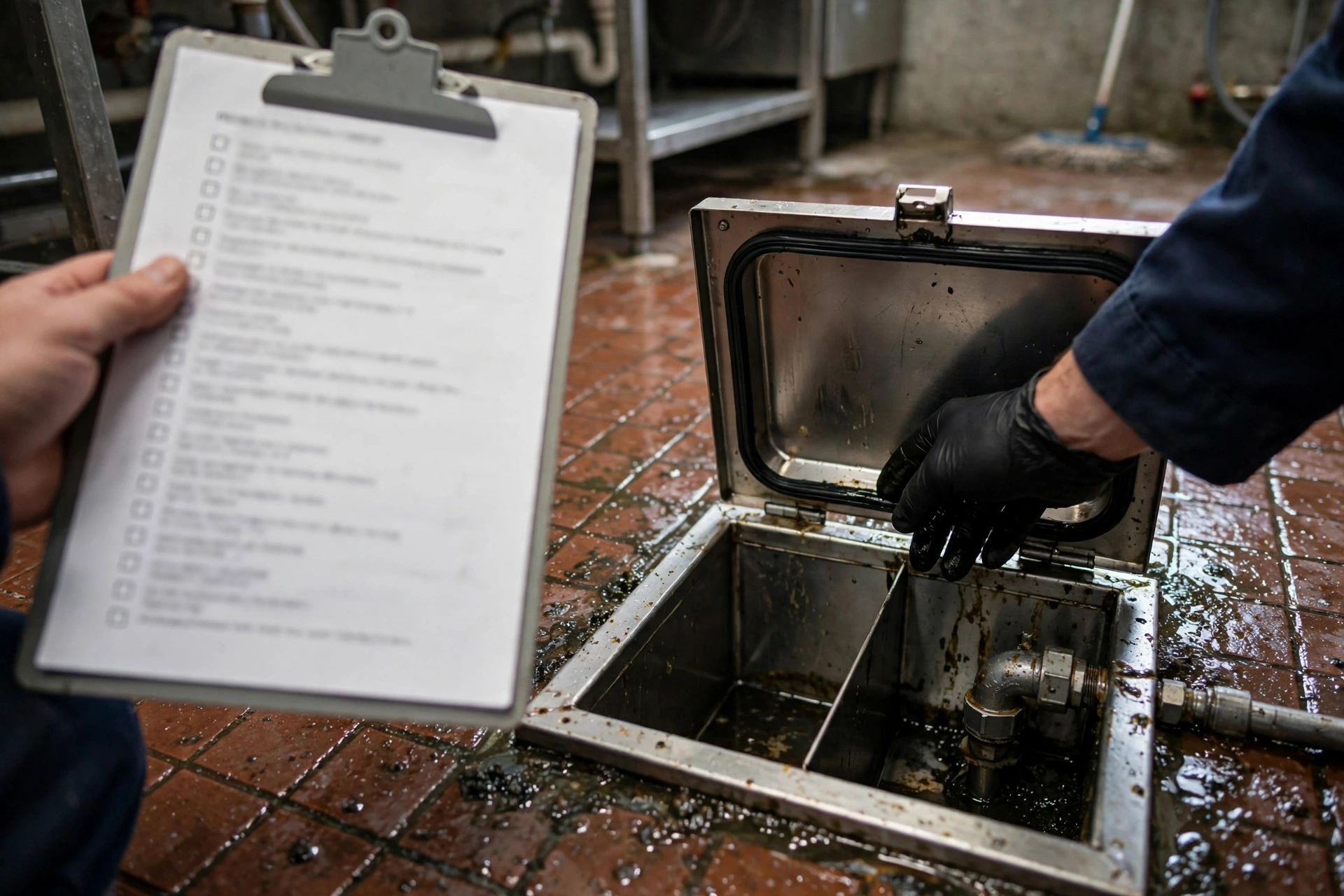
A visit starts with the lid off and a measurement. We check the depth of grease and solids against the trap's design capacity, measured to the outlet invert. The trade rule is simple: when the contents reach 25 percent of design capacity, the trap is due. That one measure tells us whether your interval is right.
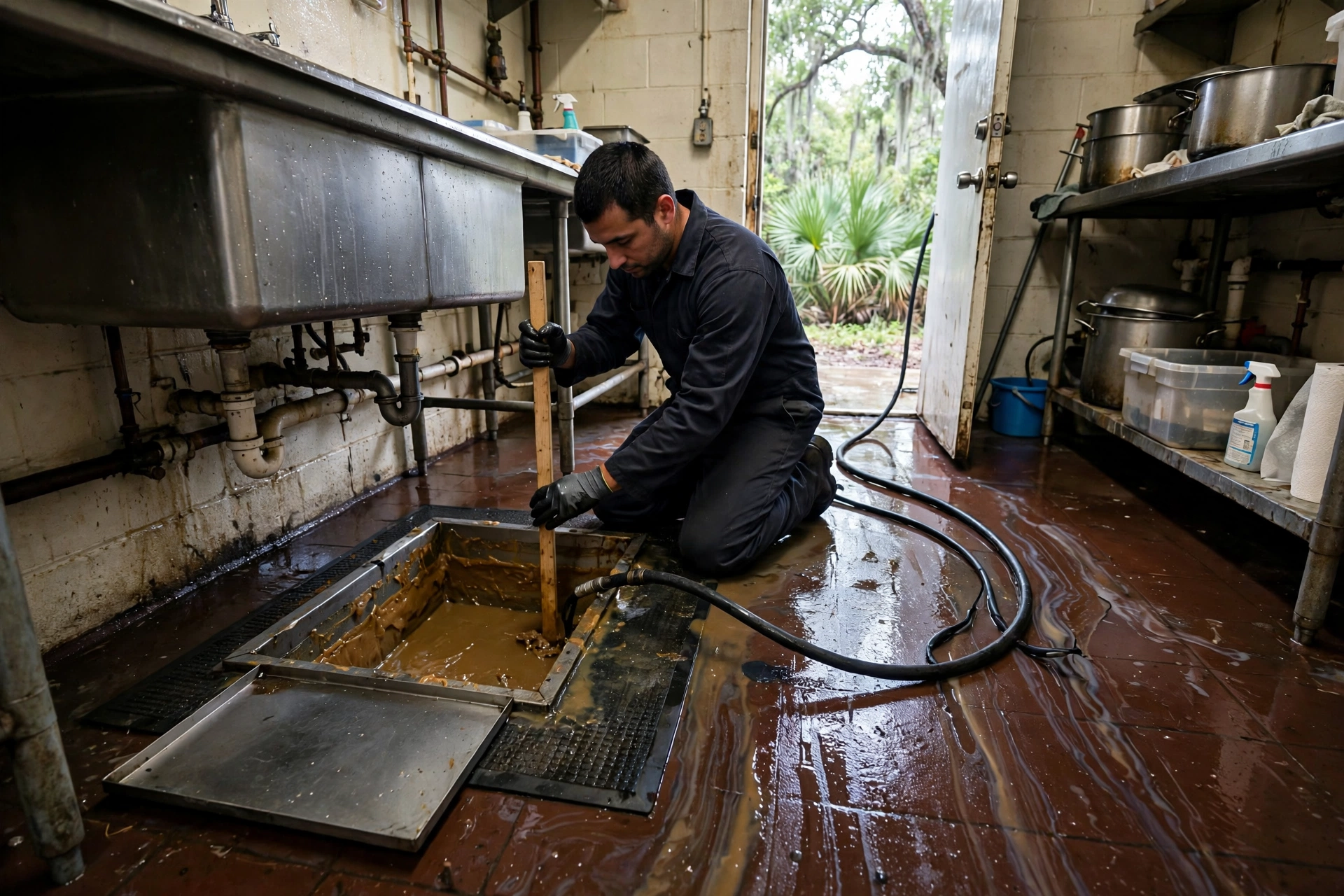
Then we pump out the contents, scrape the walls, baffles and lid, and check the inlet and outlet fittings and the gasket. We look for cracked baffles, a loose or missing lid seal, and a flow-control fitting that has been taken off or clogged, because those are the things an inspector writes up. We close the trap, wipe the area, and leave you the paperwork.
Grease trap waste moves under Louisiana DEQ rules on a manifest that carries the hauler's name, address, phone, vehicle number and LDEQ hauler registration number, plus the date and volume. You get a copy. Keep it on site, because the City of New Orleans rule is that service records stay on premises for three years, and we run Destrehan kitchens to the same record standard.
How it goes for a Destrehan kitchen
You call or send the form, and we ask three things: the kind of kitchen, the trap size or location if you know it, and when it was last cleaned. We book the first visit, measure, and tell you at that visit how fast the trap is filling. From there we set an interval, and we hold to it.
For reference, the rules we work to are the New Orleans ones: pump-out at least every 90 days, pump within two working days once contents reach 25 percent of design capacity, correct any defect found at inspection within 90 days, and keep manifests on site for three years. The Sewerage & Water Board runs the permit program for the city. Destrehan is in St. Charles Parish, so your own parish and permit requirements apply to you, and we can work from whatever your inspector gives you. The 25 percent measure and the paperwork are the same either way.
Our prices for Destrehan kitchens
These are our prices for scheduled visits.
| What we service | Our price per scheduled visit |
|---|---|
| Indoor trap, up to 200 gallons | $125 to $180. |
| Indoor trap, 201 to 500 gallons | $175 to $475. |
| Line jetting, done with a service visit | $100. |
| Heavy jetting | $300 to $600. |
| Emergency visit, indoor trap up to 200 gallons | $190 to $240. |
| Used cooking oil collection | no charge for clean oil, in containers from 30 to 320 gallons. |
| Interceptor pumping, 1,000 to 1,500 gallons | $225 to $450. 1,501 to 2,000 gallons: $600 to $1,200. 2,001 to 3,000 gallons: $800 to $2,500. |
Where a price sits in a range depends on trap size, how much has built up, and how easy the trap is to reach. We tell you the number on the phone, before the truck rolls.
Featured job: a River Road tour-season cafe on Ormond Boulevard
This is a job for a kind of kitchen Destrehan really has: a small cafe on Ormond Boulevard that serves a steady local lunch, then takes on tour groups in the busy season.
The call
The cafe's cook rang on a Monday. The sink had been draining slowly since the weekend, and there was a smell by the dish station. The kitchen had added fried items for the visitor season, and the trap had been cleaned on a loose schedule, whenever someone remembered. We booked the next available visit, and the cook was told to keep scraping plates into the bin instead of the sink until we arrived.
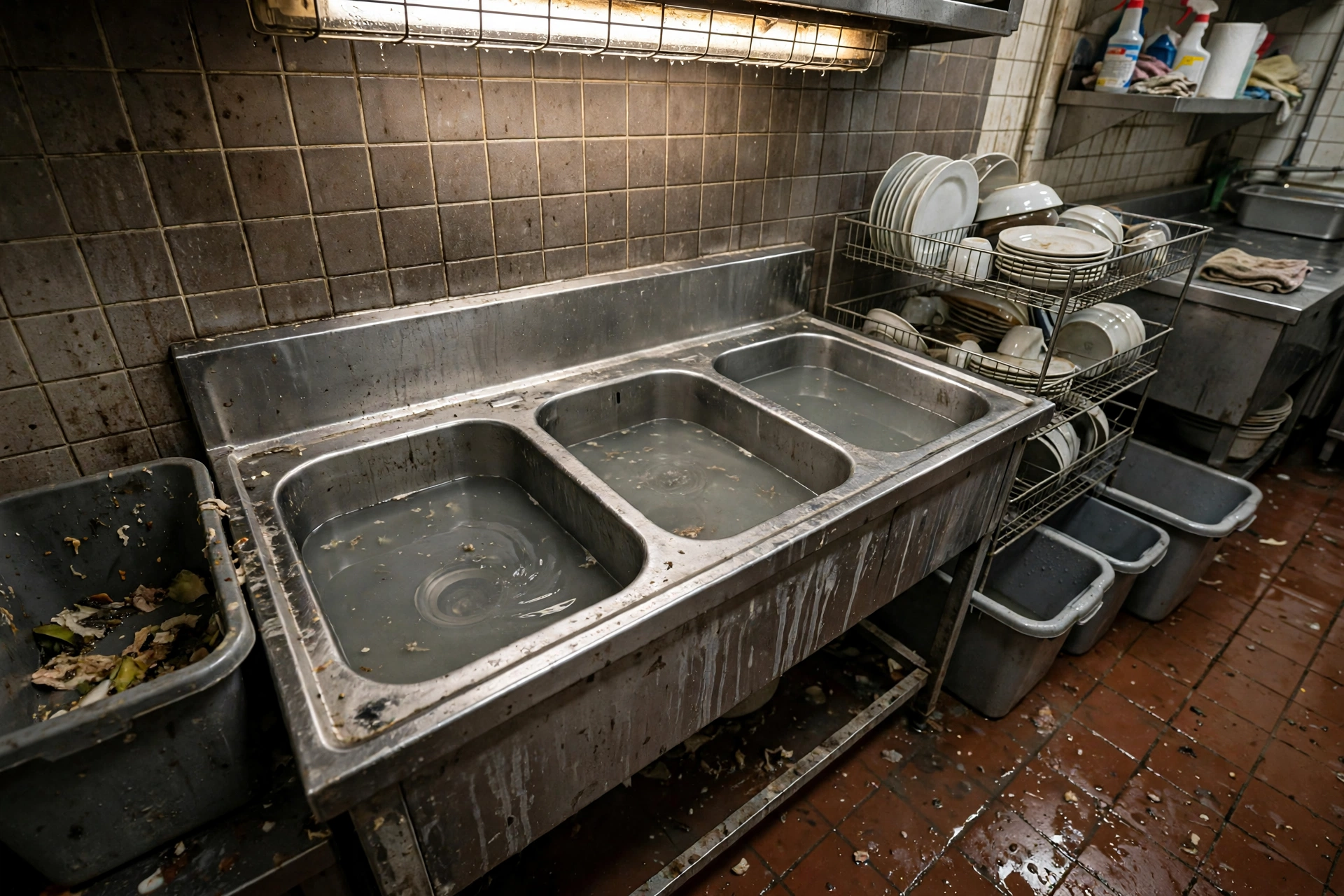
The trap opened
The trap was an indoor unit under 200 gallons, under the prep sink. When we lifted the lid, the grease cap had set thick and the solids had settled well past the 25 percent line. We pumped it out, scraped the walls and baffles, and found the lid gasket worn. We replaced it as part of the visit. The line was slow too, so we jetted it on the same visit, which at our price is $100 on top of the trap cleaning, within the up-to-200-gallon band of $125 to $180.
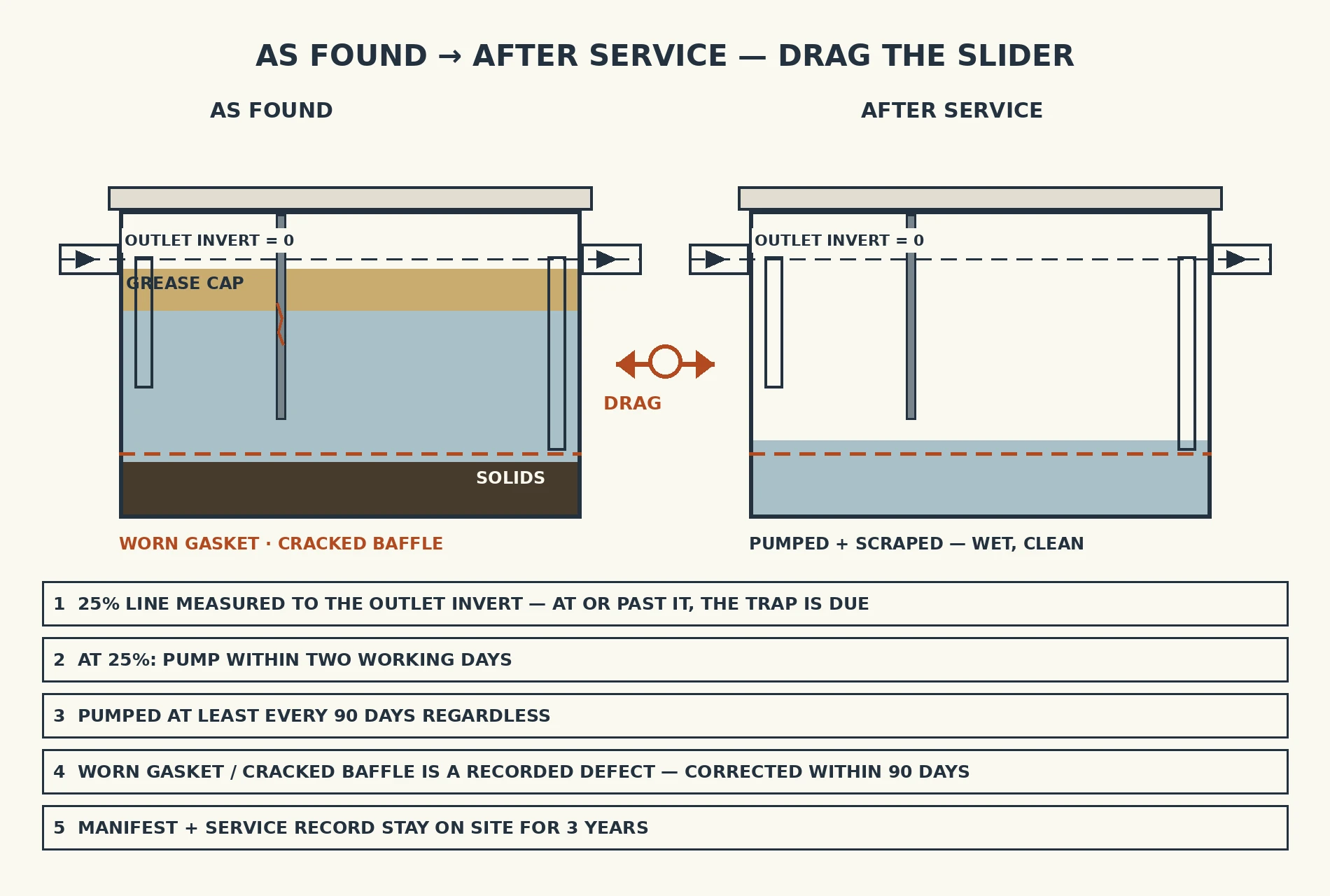
the 25 percent line is measured to the outlet invert, and a trap at or past it is due
once contents reach 25 percent, pump within two working days
a trap is pumped at least every 90 days regardless
a worn gasket or cracked baffle is a defect an inspector records, and defects are corrected within 90 days
the manifest and service record stay on site three years.
The schedule
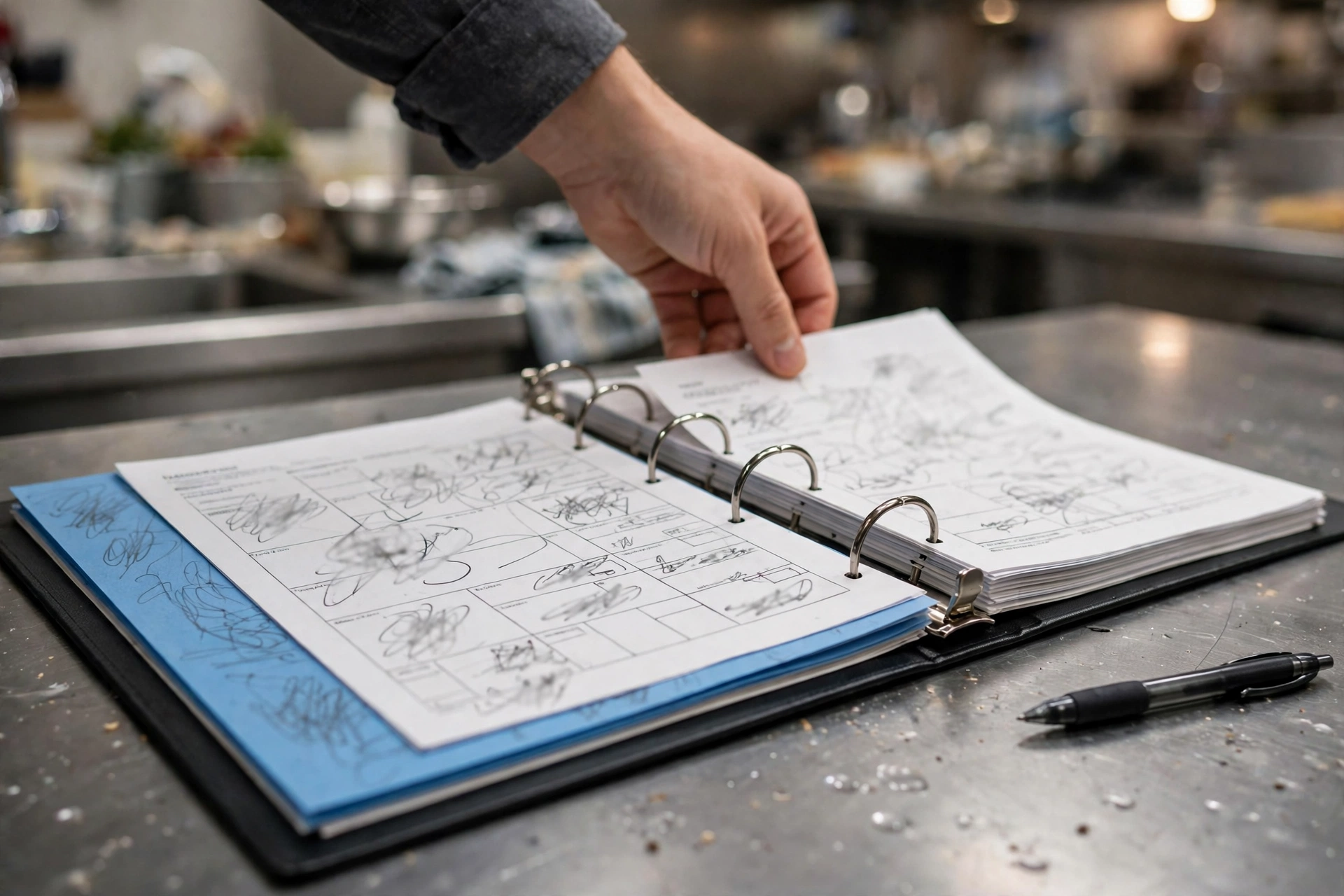
We did not leave it at one visit. After the cleaning, we talked through the kitchen's volume and set a shorter interval for the visitor season, with a longer one for the slow months. The cook now checks the depth between visits with the same measure we use. The manifest from the visit went into the cafe's binder, ready for the inspector.
Mid-page invitation: set up a visit
If the story sounds like your kitchen, call (504) 360-9231, Monday to Friday, 9:00 AM to 5:30 PM. Tell us about the trap and the menu, and we will give you the price for your size and the interval we would start with.
When to call
The sink drains slowly or smells, and the trap has not been cleaned in a while.
Your last measurement put the contents at or near 25 percent of capacity.
It has been close to 90 days since the last pump-out.
You added fried food, a new menu, or a busy season is coming.
An inspector wrote up a defect, and the 90-day window is running.
The trap backed up and you need a same-day visit. Emergency visits for indoor traps up to 200 gallons are $190 to $240.
Questions
Do you come out to Destrehan?
Yes. Destrehan is about a 30-minute drive from New Orleans, and we serve restaurants, cafes and commercial kitchens there on a scheduled route.
How much does it cost to clean my trap?
An indoor trap up to 200 gallons runs $125 to $180 on a scheduled visit. A trap of 201 to 500 gallons runs $175 to $475. We confirm the figure for your size by phone before we come.
How often should my trap be cleaned?
Most local restaurants clean small traps every one to four weeks. The measure that decides it is depth: when contents reach 25 percent of design capacity, the trap is due. The New Orleans rule also requires pump-out at least every 90 days.
What is the 25 percent rule?
When grease and solids reach 25 percent of the trap's design capacity, measured to the outlet invert, the trap is full enough that it should be pumped. In New Orleans, that means within two working days.
Do Destrehan kitchens follow the New Orleans rules?
Those rules are the City of New Orleans and Sewerage & Water Board's. Destrehan is in St. Charles Parish, so your own parish requirements apply. We service to the same standard, and we work from whatever your inspector requires.
What paperwork do I get?
A manifest on the Louisiana DEQ form, with our name, address, phone, vehicle number and LDEQ hauler registration number, plus the date and volume. Keep it on site. In New Orleans the rule is three years.
What does an inspector look at?
The trap's condition, the lid seal, baffles and flow control, how full it is, and your records. If a defect is found, New Orleans rules give 90 days to correct it.
Can you do an emergency call-out?
Yes. An emergency visit on an indoor trap up to 200 gallons is $190 to $240. For larger traps, we price it when you call with the size.
Do you jet drain lines?
Yes. Line jetting is $100 when done with a service visit. Heavy jetting is $300 to $600.
What about used cooking oil?
We collect clean used cooking oil at no charge, in containers from 30 to 320 gallons.
Do you also pump outside interceptors?
Yes. A 1,000 to 1,500 gallon interceptor is $225 to $450, 1,501 to 2,000 gallons is $600 to $1,200, and 2,001 to 3,000 gallons is $800 to $2,500.
What are your hours?
Monday to Friday, 9:00 AM to 5:30 PM, at (504) 360-9231.
Book a visit in Destrehan
Call (504) 360-9231, Monday to Friday, 9:00 AM to 5:30 PM, or send the form. Name and phone are required. Service, town and message are optional. The more details you give, the better we are able to help you.
[FORM: Name (required) · Phone (required) · Service (optional) · Town (optional) · Message (optional) · Consent checkbox (required)]