New Orleans Grease Trap does grease trap cleaning for the restaurants and small commercial kitchens in Arabi, and we reach the St. Claude Avenue strip from our base in New Orleans in about 15 minutes. Most of the kitchens down there are small, owner-run and busy at the lunch rush. They run an indoor trap under a prep sink or beside the dish station, and that trap is the part that decides whether the kitchen passes.
If your trap is smelling, draining slowly, or you can't remember the last time anyone measured it, call (504) 360-9231 and tell us the kitchen and the trap size if you know it. We answer Monday to Friday, 9:00 AM to 5:30 PM, and we will tell you the price on the phone.
We pull the lid, measure what is inside, scrape and empty it, clean the baffles and the outlet, and put the trap back in working order. Then we write it all down on a service record you can hand to an inspector.
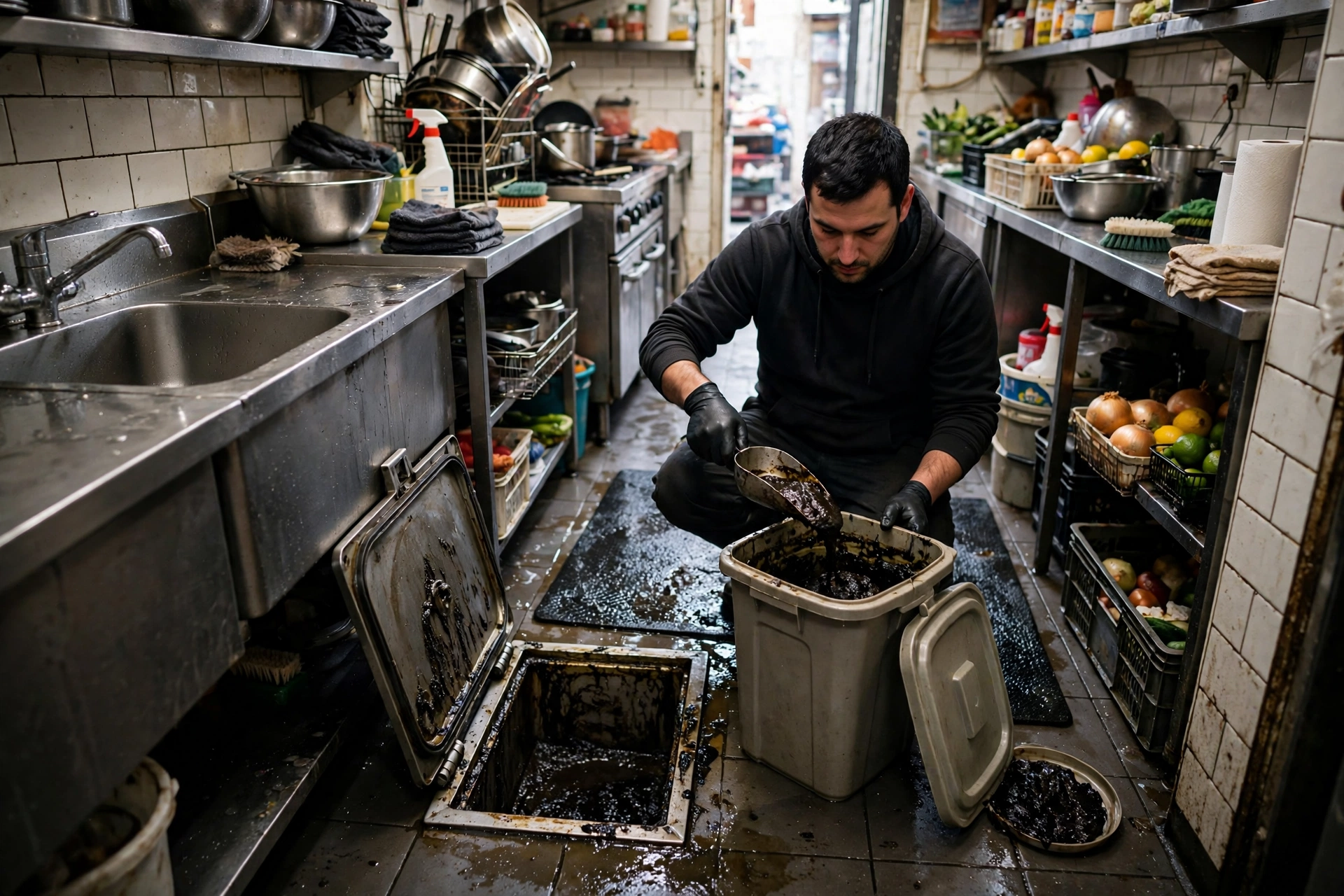
What Arabi's kitchens are like
Arabi is a small stretch of ground. The food service is a short run of independents along St. Claude Avenue: plate-lunch counters, po'boy and breakfast spots, a corner bar that cooks, a bakery or two. It is not a big dining district and we won't pretend it is. Chalmette is next door, and a good share of the kitchens here share suppliers, habits and inspection pressure with the ones there.
What the kitchens have in common is size. Small kitchens run small traps, and small traps fill fast. A fryer, a three-compartment sink and a flat-top feed the same line, and a passive trap in the range of 40 to 200 gallons has very little room to spare. That is why interior trap cleaning is the work in Arabi. You rarely need a big exterior tank pumped. You need the trap under your sink emptied before it is full.
If a kitchen does have an exterior interceptor, we pump those as well. A 1,000 to 1,500 gallon interceptor runs $225 to $450 with us.
How the service runs
Most local restaurants clean small traps every one to four weeks. Where you land in that range depends on how much you fry, how many covers you do and how well the scraping at the sink is done. The city sets the outer limit, though.
Every trap and interceptor is permitted through the Sewerage & Water Board's FOG Program. It must be pumped at least every 90 days, whatever the volume. Separately, when the contents reach 25 percent of the trap's design capacity, measured to the outlet invert, it has to be pumped within two working days. Defects found at inspection must be corrected within 90 days. Manifests and service records stay on site for three years.
So the visit looks like this:
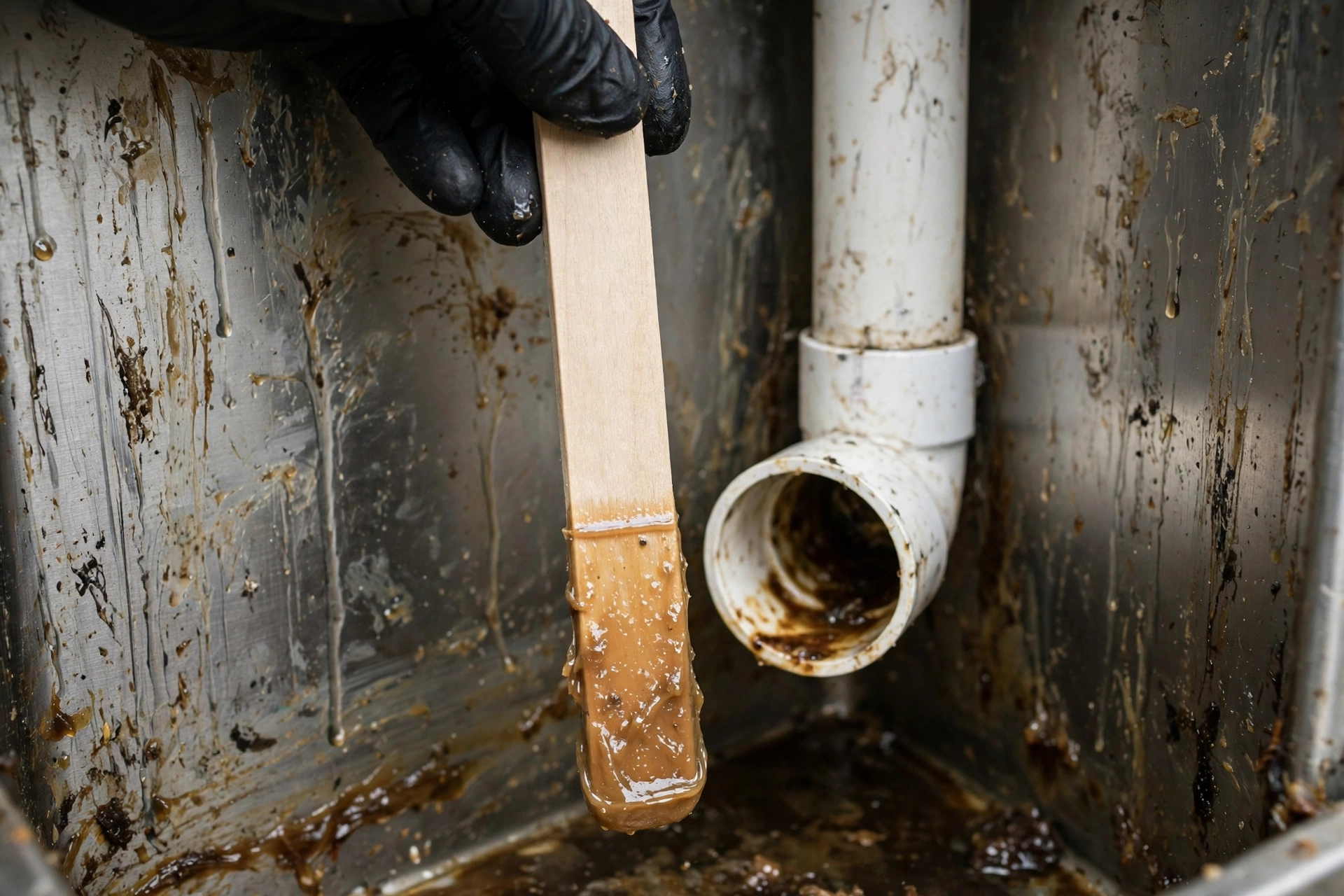
We arrive, measure, and record what we find. We then remove the grease, water and solids, scrape the walls and baffles, check the inlet and outlet for damage, and close and seal the lid. The waste goes out on an LDEQ manifest carrying our name, address, phone, vehicle number and LDEQ hauler registration number, with the date and volume. Louisiana sets no pumping interval of its own. Enforcement here is local, which is why the SWBNO schedule is the one that matters.
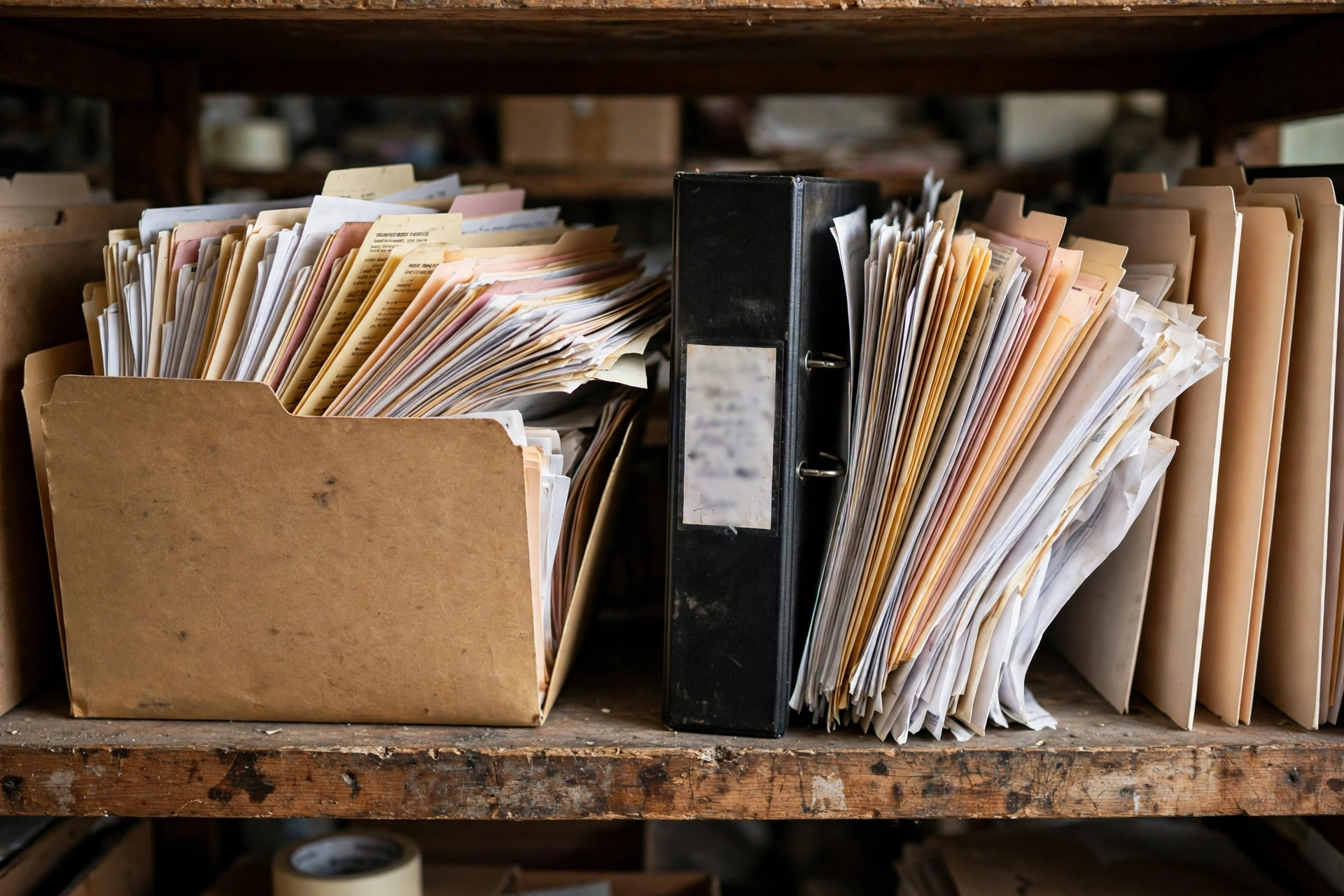
You keep a copy of the record. When an inspector asks to see it, it is in the drawer.
What it costs
These are our prices.
An indoor trap up to 200 gallons runs $125 to $180 on a scheduled visit. Most Arabi kitchens fall here.
A trap of 201 to 500 gallons runs $175 to $475.
Line jetting is $100 when done with a service visit. Heavy jetting runs $300 to $600.
An emergency visit on an indoor trap runs $190 to $240.
Clean used cooking oil is collected at no charge, in containers from 30 to 320 gallons.
We have no set price to quote here for traps from 501 to 749 gallons, or for emergency work on traps of 201 to 500 gallons. If you have one of those, call and we will go through it with you.
Featured job: a breakfast and lunch counter on St. Claude Avenue
This is the kind of call we get in Arabi. A neighbourhood breakfast and lunch counter on St. Claude Avenue fries potatoes, bacon and seafood plates, and had been cleaning its own trap when it remembered to. The owner called after the sink began backing up during a Friday lunch.
The call
The owner described slow drains and a smell near the dish station. The trap was an indoor passive unit under the 200-gallon band, so we quoted $125 to $180 for the cleaning, and $100 more to jet the line while we were there. We were on the street the next morning.
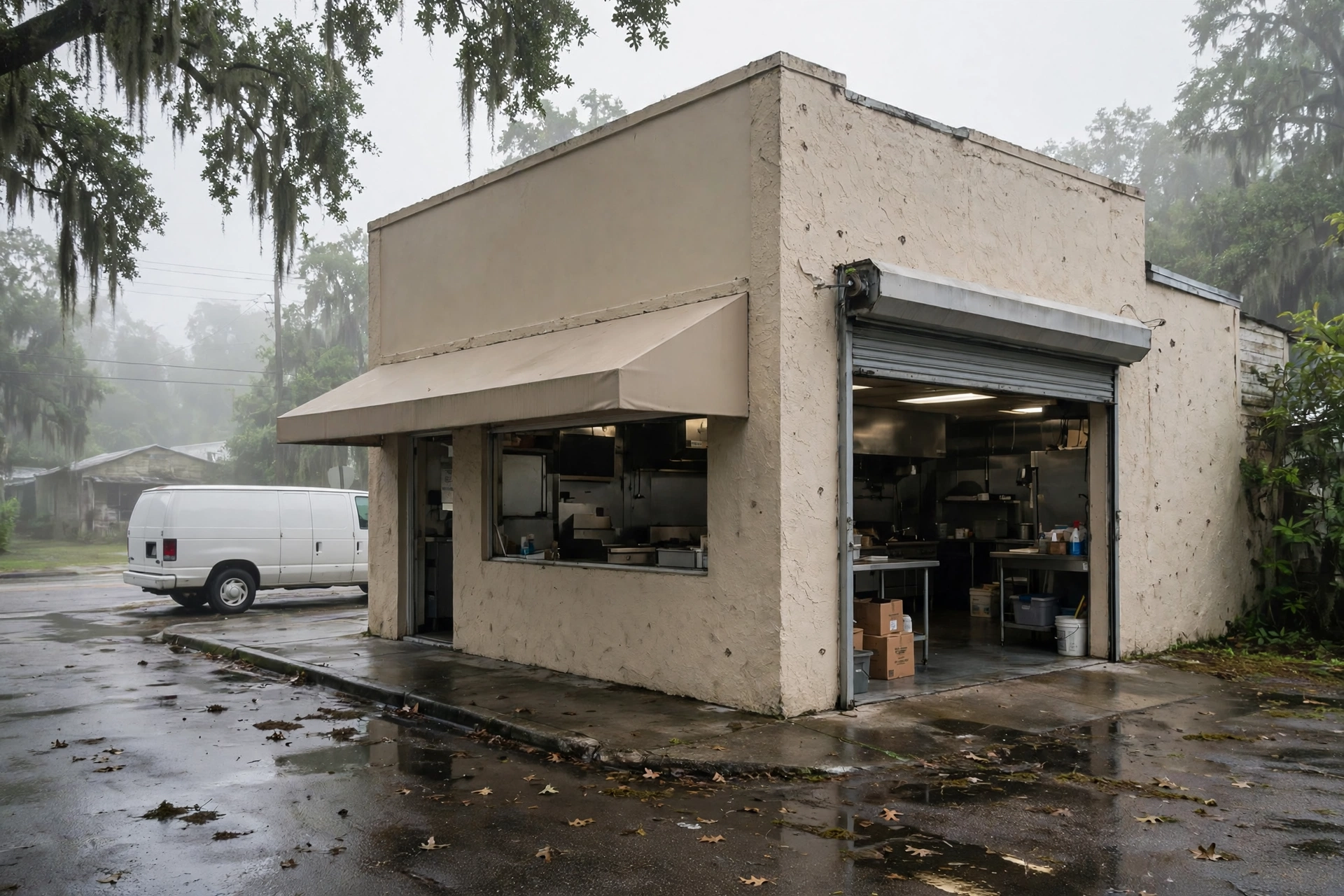
What we found
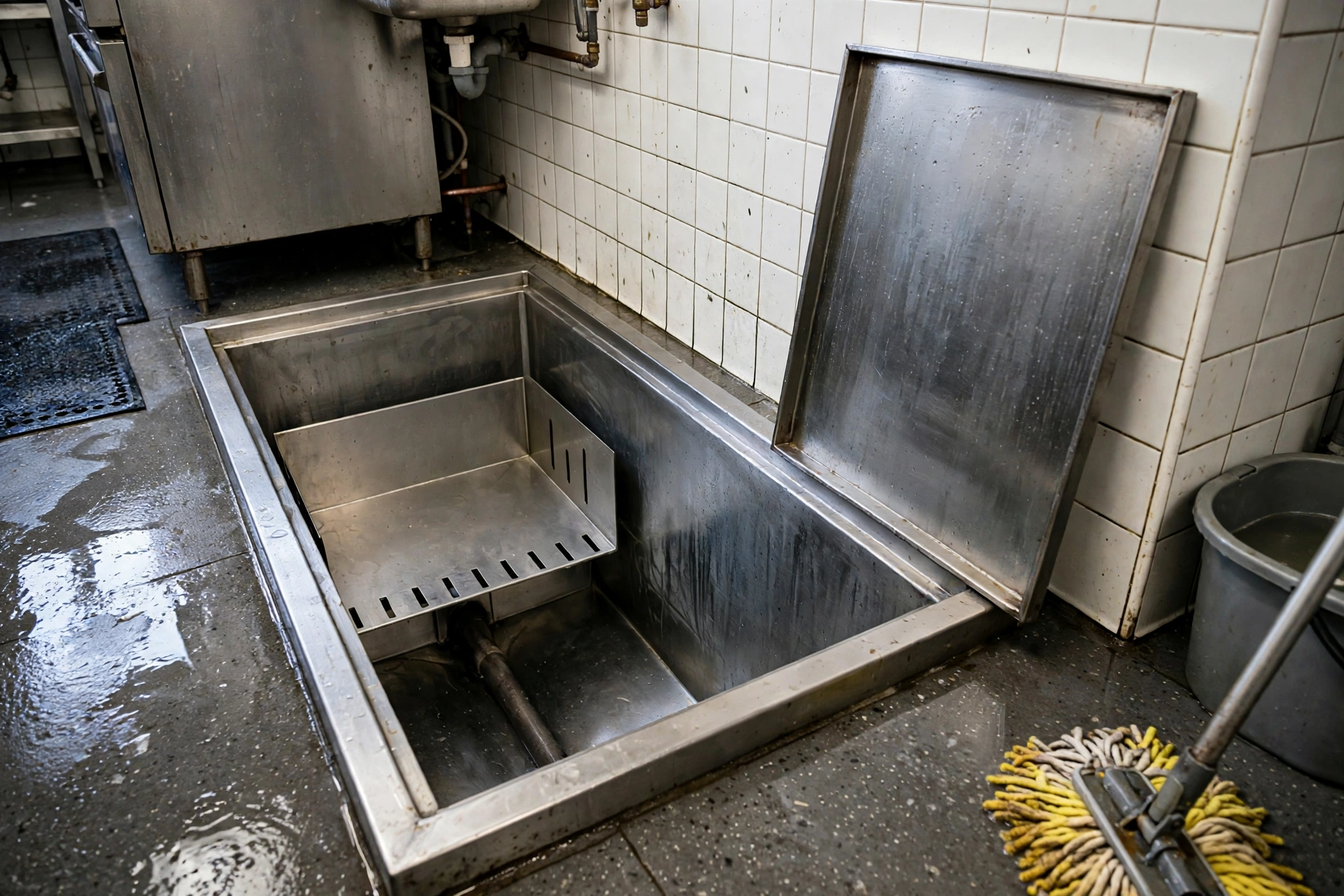
The measure told the story. The grease layer stood well past the 25 percent line, which meant the trap had been due for days. The outlet baffle was also coated and partly blocked, and that was what pushed water back up the line.
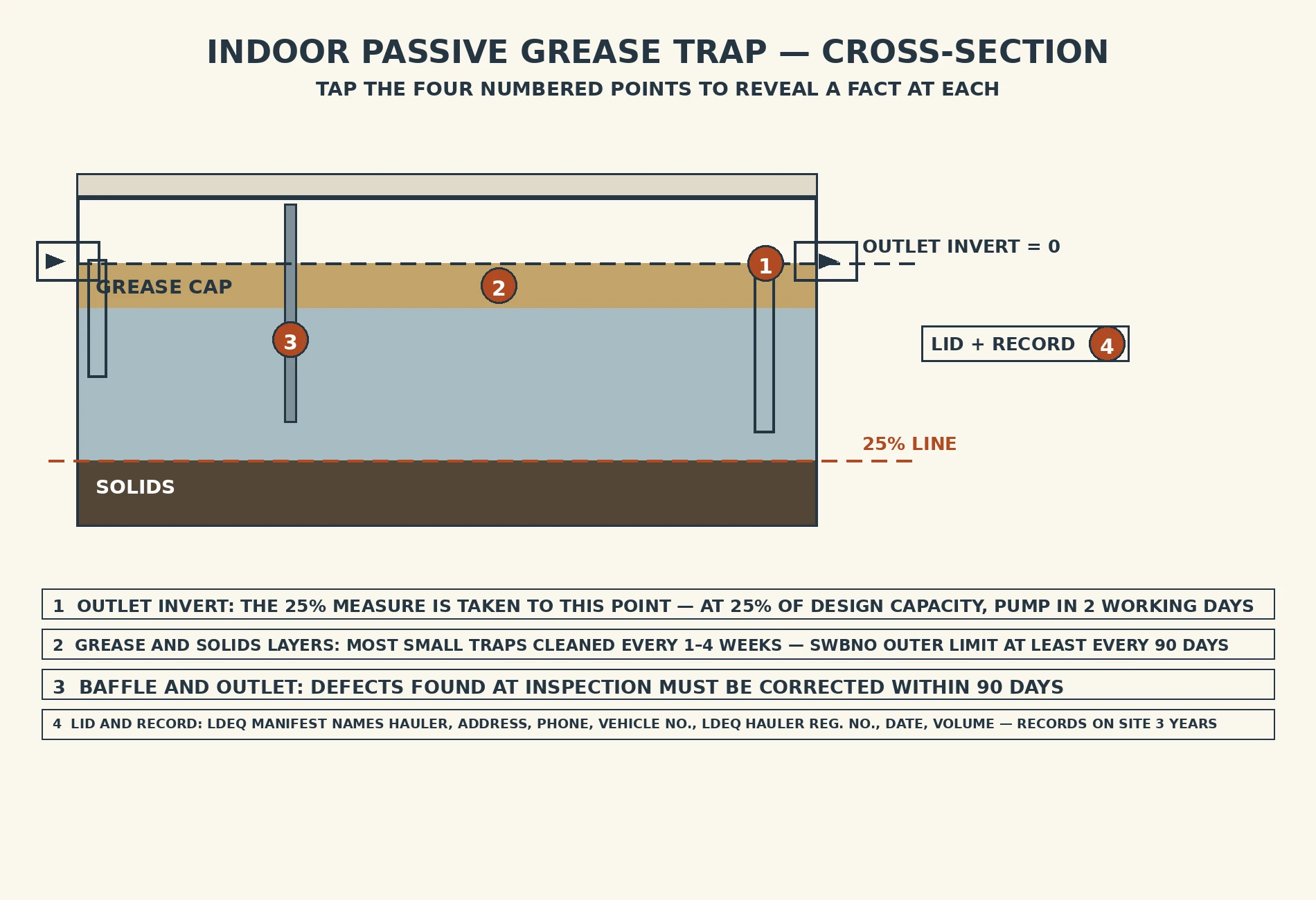
Outlet invert: the 25 percent measure is taken to this point, and at 25 percent of design capacity the trap must be pumped within two working days.
Grease and solids layers: most small traps are cleaned every one to four weeks, and the SWBNO outer limit is at least every 90 days.
Baffle and outlet: defects found at inspection must be corrected within 90 days.
Lid and record: the LDEQ manifest names the hauler, address, phone, vehicle number, LDEQ hauler registration number, date and volume, and records stay on site three years.
The cleaning
We emptied the trap, scraped the walls, cleaned the baffle and outlet, and jetted the line. The waste left on a manifest. The work was a standard visit in the under-200-gallon band plus the $100 jetting add-on, with no emergency charge because the owner called before it became an overflow.
The schedule after
The owner asked how often to call. With fryer volume that size, we set a cleaning every few weeks, adjusted by the measure on each visit, and stayed well inside the 90-day outer limit. The records from each visit now sit in a binder by the office door.
Call us when
Call (504) 360-9231 when the trap is near its measure line, when drains are slow or smell, when an inspection is coming, or when you can't find your last record. Call if the 25 percent line has been passed, because the two working days start then. If water is already coming up on the floor, say so, and we treat it as an emergency visit.
Start with a call or the form
Tell us the kitchen, the trap size if you know it, and when it was last cleaned. We will tell you the price and when we can be there. The more details you give, the better we are able to help you.
Request service in Arabi
Name (required) Phone (required) Service (optional) Town (optional) Message (optional) [ ] I agree to be contacted about my request. (required)
Or call (504) 360-9231, Monday to Friday, 9:00 AM to 5:30 PM.
Questions
Do you really come to Arabi?
Yes. Arabi is about a 15 minute drive from our base in New Orleans, and we service the St. Claude Avenue kitchens on scheduled visits and for emergency calls.
What is the main service for Arabi kitchens?
Interior trap cleaning. Most kitchens here are small and run indoor passive traps that fill quickly, so regular emptying keeps them in compliance.
How much does it cost to clean my trap?
An indoor trap up to 200 gallons runs $125 to $180 on a scheduled visit. A trap of 201 to 500 gallons runs $175 to $475. Line jetting is $100 when done with a service visit.
What if my trap is between 501 and 749 gallons?
We do not publish a figure for that band. Call (504) 360-9231 and describe the trap, and we will go through it with you.
How often does my trap need cleaning?
Most local restaurants clean small traps every one to four weeks. The city requires pumping at least every 90 days, and sooner when the contents reach 25 percent of design capacity.
What is the 25 percent rule?
When grease and solids reach 25 percent of the trap's design capacity, measured to the outlet invert, the trap must be pumped within two working days. We measure on every visit and write the reading on your record.
Who regulates grease traps in Arabi?
Every trap and interceptor is permitted through the Sewerage & Water Board's FOG Program under the city's rules. Louisiana DEQ governs how the waste is hauled and manifested. The state sets no pumping interval, so enforcement is local.
What paperwork do I get?
A service record from each visit, and the waste leaves on an LDEQ manifest with our name, address, phone, vehicle number and LDEQ hauler registration number, plus the date and volume. Keep these on site for three years.
What happens if an inspector finds a defect?
Defects found at inspection must be corrected within 90 days. If it is a cracked baffle, a blocked outlet or a damaged lid, call us and we will look at it.
Can you clean my line as well?
Yes. Line jetting is $100 when done with a service visit. Heavier buildup needs heavy jetting, which runs $300 to $600.
Do you take my used cooking oil?
Yes. Clean used cooking oil is collected at no charge, in containers from 30 to 320 gallons.
What does an emergency visit cost?
An emergency visit on an indoor trap runs $190 to $240. For emergency work on traps of 201 to 500 gallons we have no set figure, so call and we will tell you what applies.
Do you pump exterior interceptors in Arabi?
Yes, though most kitchens here have indoor traps. A 1,000 to 1,500 gallon interceptor runs $225 to $450.